Loading subject page…


114,600 views

Video Summary: What Is Coriolis Force
Ever wonder why hurricanes spin counterclockwise in the Northern Hemisphere? The Coriolis force creates this mesmerizing rotation pattern that affects everything from storm systems across the Gulf Coast to baseball trajectories in major league stadiums. This fictitious force emerges in rotating reference frames, causing moving objects to deflect perpendicular to their motion-transforming straight-line paths into curved trajectories through a simple cross-product relationship between angular velocity and object velocity. Watch the full video on JoVE Coach to master this concept with expert-led visuals and step-by-step explanations.
The Coriolis force represents one of physics' most elegant examples of how reference frames shape our perception of motion. Unlike gravitational or electromagnetic forces, Coriolis force is fictitious-it only appears when we analyze motion from within a rotating reference frame. This concept proves crucial for students preparing for AP Physics exams and college-level mechanics courses, where rotating reference frames frequently challenge intuitive understanding.
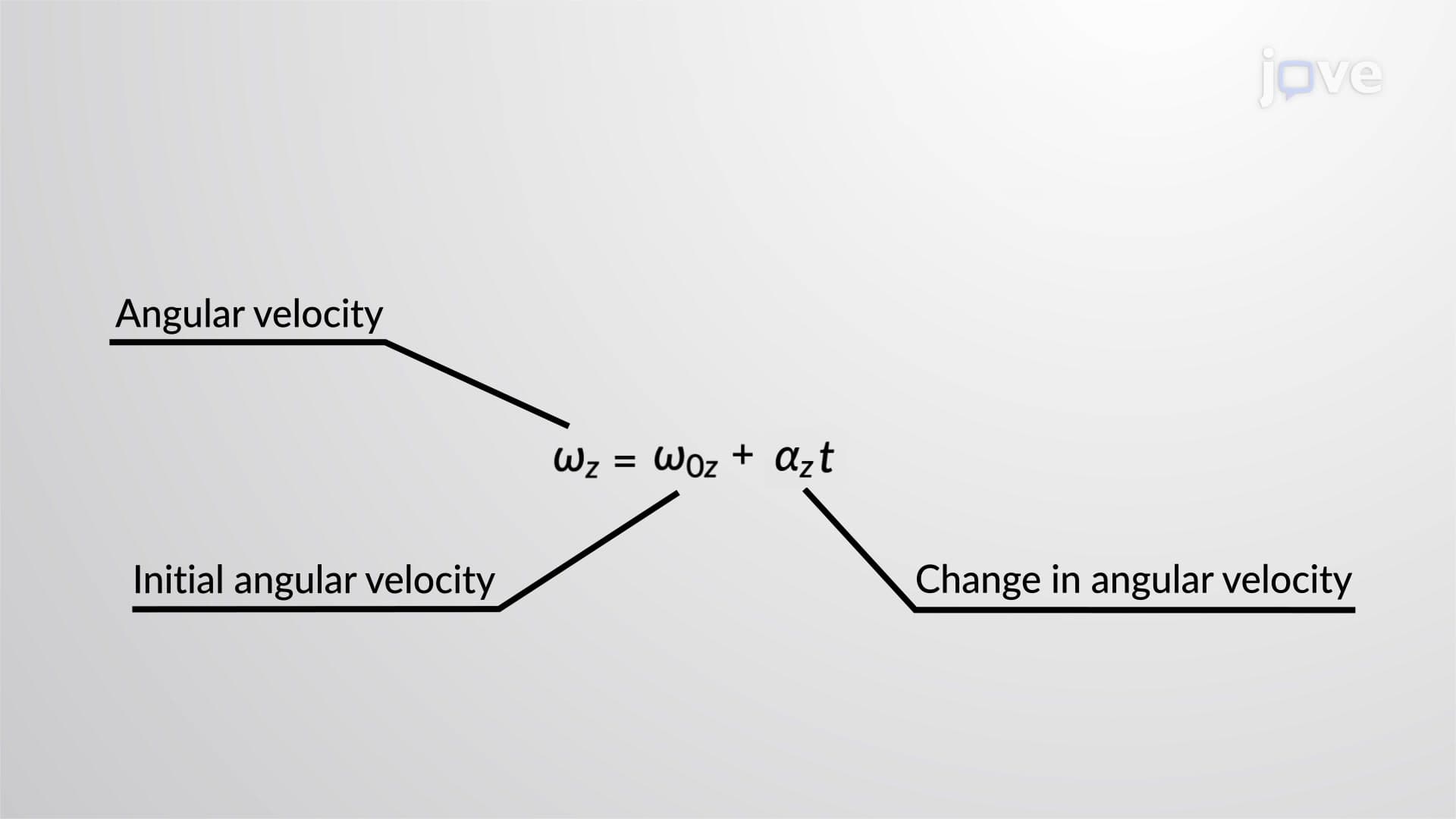
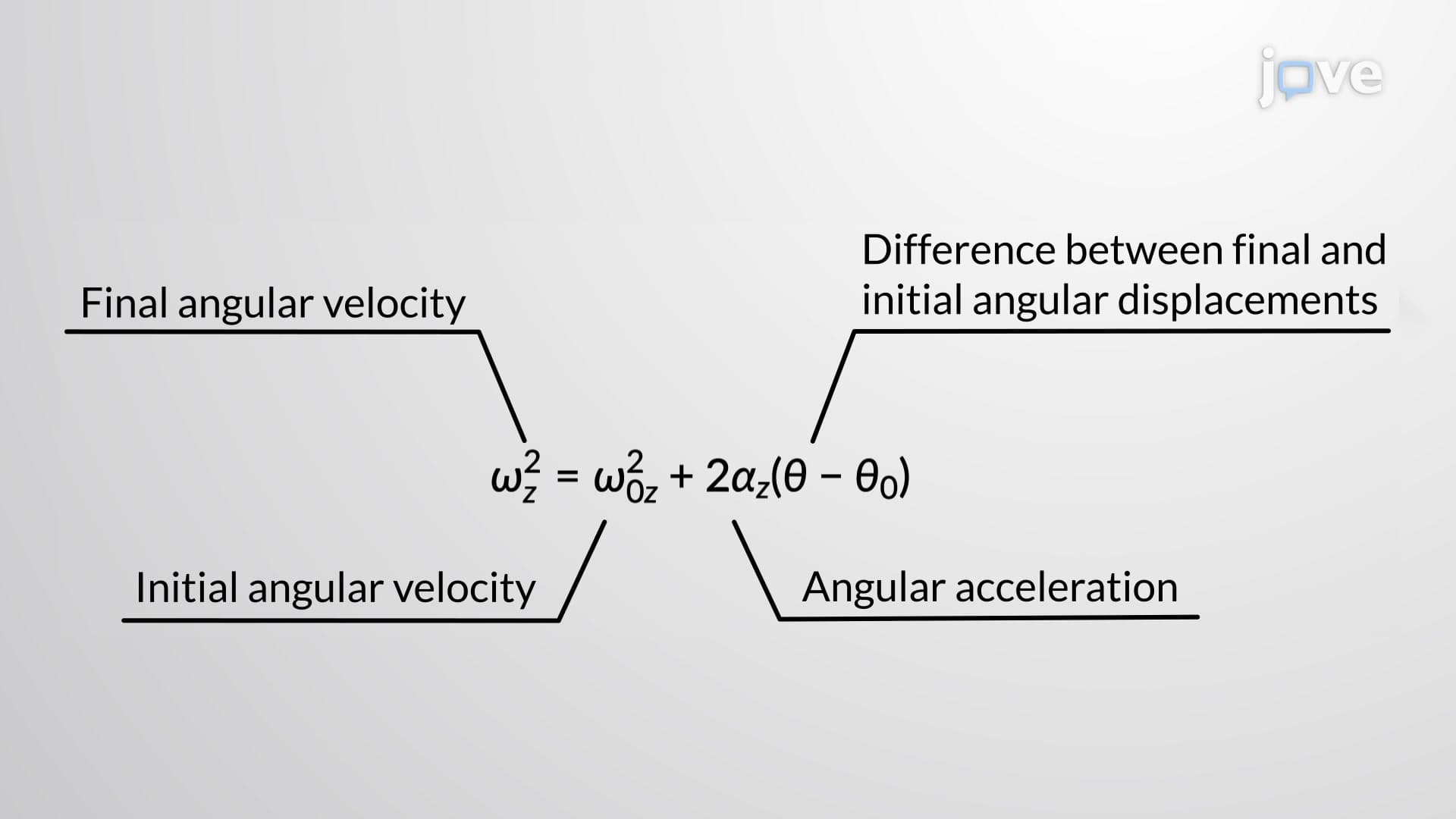
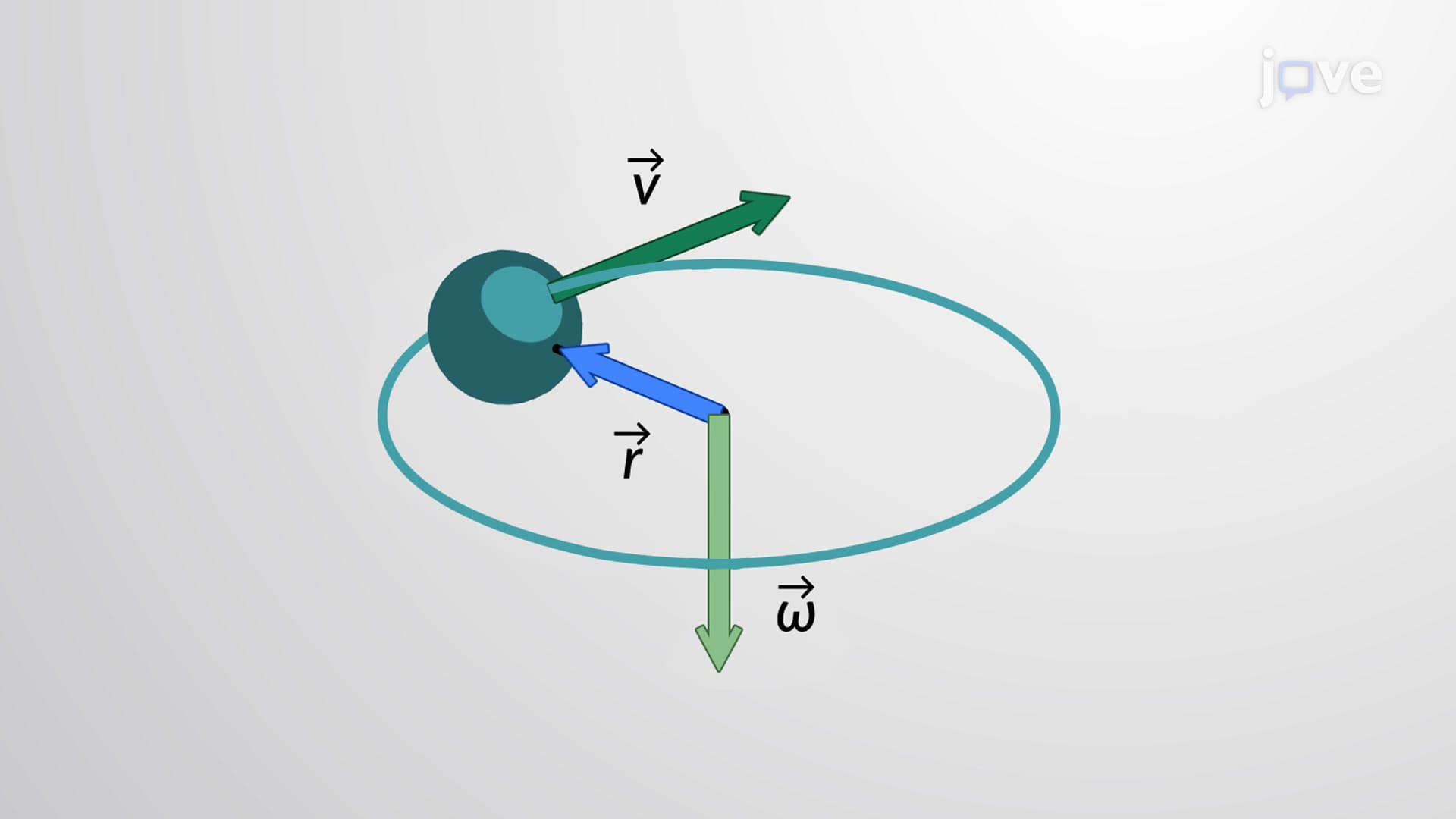
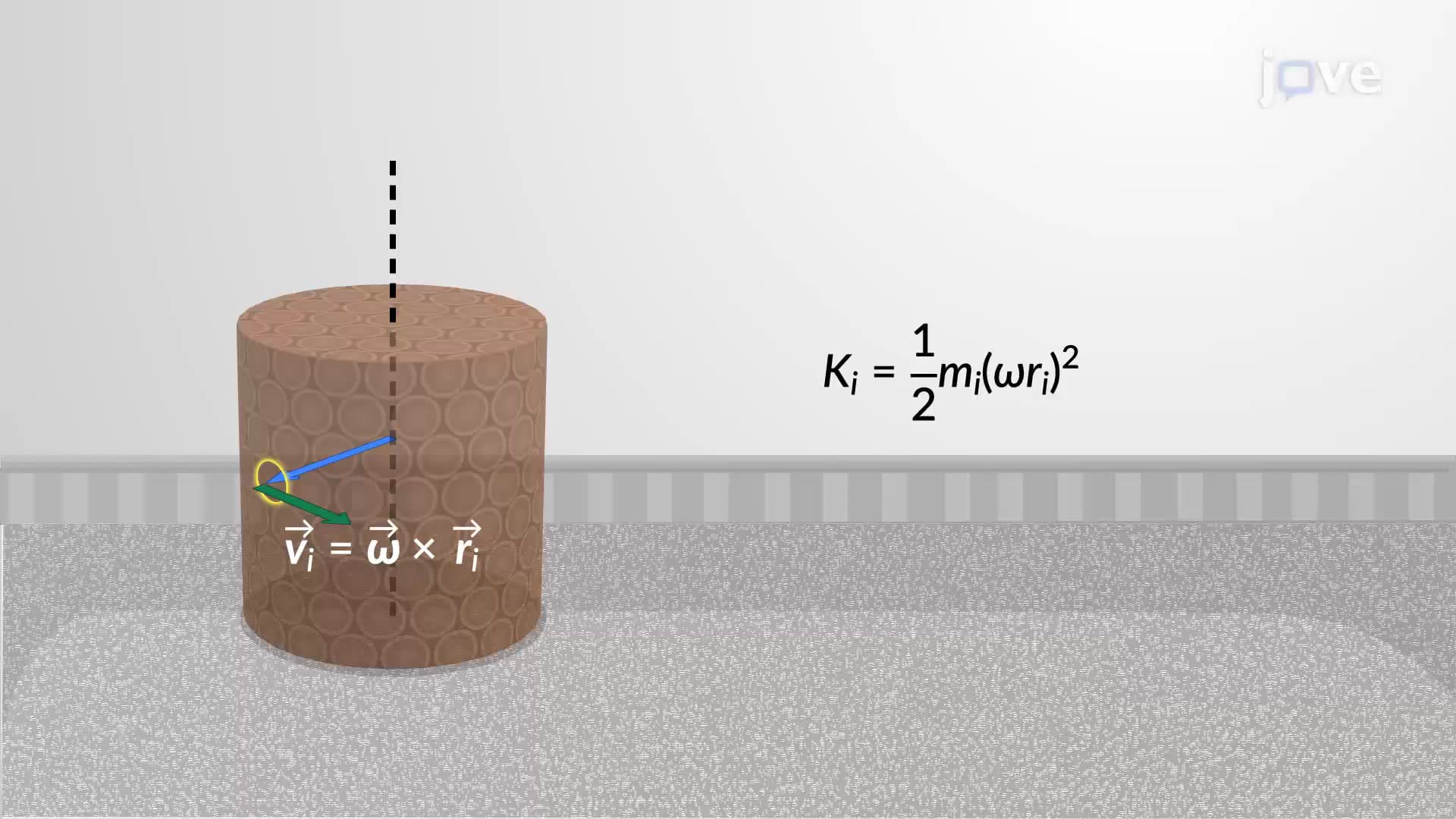
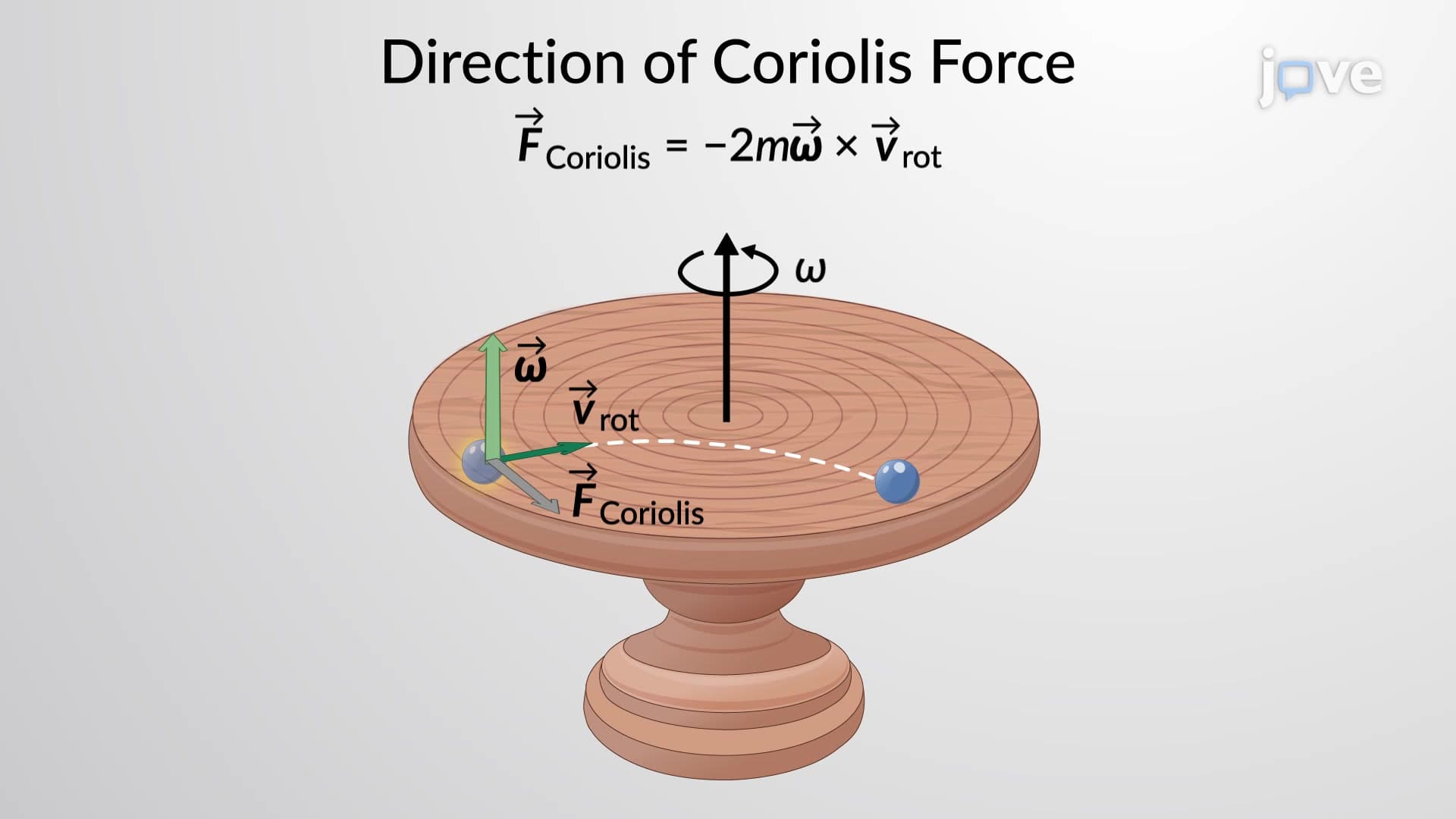
The Coriolis force equation, F = -2m(ω × v), reveals the force's dependence on three key factors: object mass (m), angular velocity of the rotating frame (ω), and object velocity (v). The cross-product operation determines both magnitude and direction, making the right-hand rule essential for problem-solving. Students tackling SAT Subject Test Physics or MCAT physical sciences sections must master this vector relationship to predict deflection patterns accurately.
The negative sign indicates that Coriolis force acts perpendicular to both the rotation axis and velocity vector, but in the direction opposite to what the right-hand rule initially suggests. This mathematical subtlety often appears in college physics midterms and requires careful attention to vector orientations.
Coriolis effects manifest dramatically in atmospheric systems across the United States. Hurricane formation and rotation patterns depend critically on Earth's rotation, with storms spinning counterclockwise in the Northern Hemisphere due to Coriolis deflection. Meteorology students at institutions like the National Weather Service Training Center study these patterns extensively.
In ballistics, long-range artillery and sniper calculations must account for Coriolis drift. Military academies like West Point incorporate these principles into advanced physics coursework. Even baseball trajectories experience minute Coriolis effects, though other forces typically dominate at those scales.
While both Coriolis and centrifugal forces appear in rotating frames, they serve different roles. Centrifugal force depends only on position relative to the rotation axis, pushing objects radially outward. Coriolis force, conversely, depends on velocity and acts perpendicular to motion, creating the characteristic deflection patterns students observe in laboratory demonstrations using rotating platforms.
This distinction proves vital for engineering students analyzing rotating machinery, where both fictitious forces influence component design and performance optimization in applications from turbine engineering to spacecraft attitude control systems.
Related Micro-courses