Loading video…


 14 Concepts
 114.6K views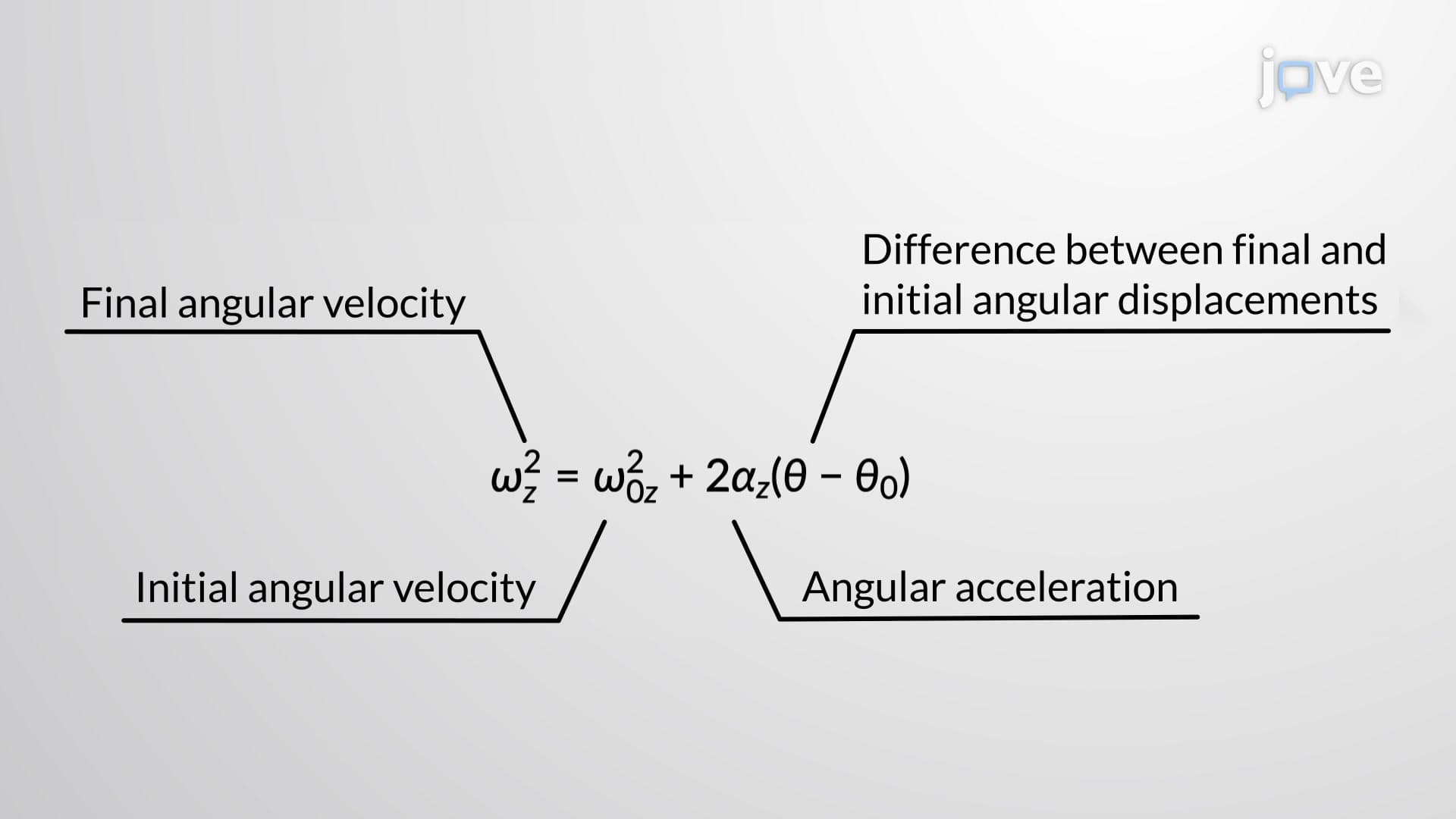

Video Summary: Rotation with Constant Angular Acceleration Ii Explained
Ever wondered how NASA engineers calculate the precise spin needed for satellite solar panels to track the sun? Rotation with constant angular acceleration II reveals the time-independent equations that make such calculations possible. Unlike the first two rotational motion equations, the third and fourth equations eliminate time as a variable, allowing engineers at companies like SpaceX to directly relate angular velocity, acceleration, and displacement. These fundamental physics principles power everything from turbine design to robotic arm programming. Watch the full video on JoVE Coach to master this concept with expert-led visuals and step-by-step explanations.
The Rotation With Constant Angular Acceleration II concept introduces two powerful equations that eliminate time as a variable, providing direct relationships between angular motion parameters. These equations are particularly valuable because they allow engineers and physicists to solve problems where time is either unknown or irrelevant to the desired outcome.
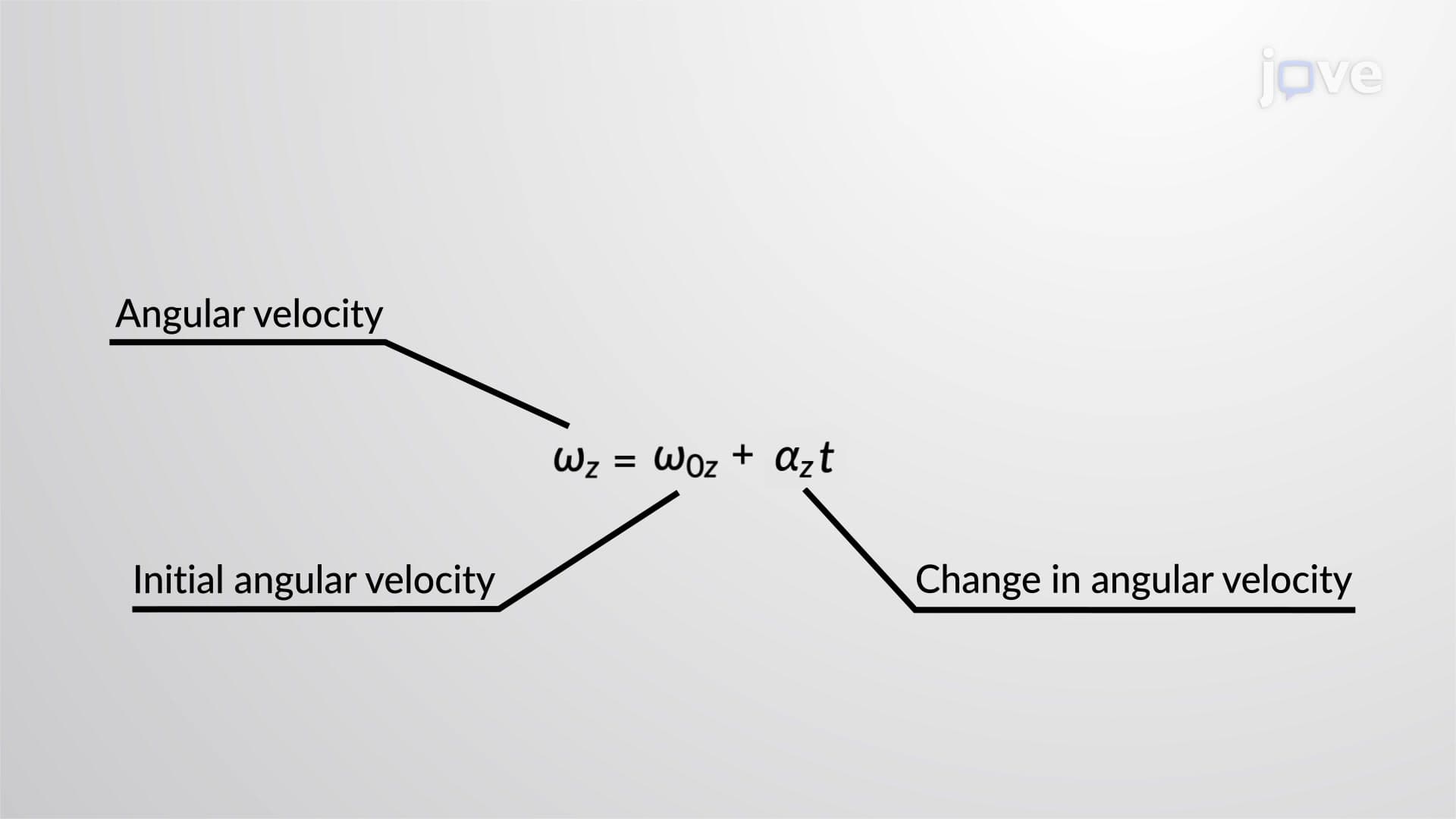
The third equation of rotational motion emerges through elegant mathematical manipulation. Starting with the first equation (ω = ω₀ + αt), we solve for time: t = (ω - ω₀)/α. Substituting this expression into the second equation (θ = θ₀ + ω₀t + ½αt²) and simplifying yields: ω² = ω₀² + 2α(θ - θ₀). This equation directly relates final angular velocity to initial conditions and displacement, making it invaluable for applications like determining the rotational speed of wind turbine blades after a specific angular displacement.
The fourth equation provides another time-independent relationship by combining the first two equations differently. This yields: θ = θ₀ + ½(ω₀ + ω)t, which when combined with the time relationship gives us additional solving flexibility. Engineers at companies like General Electric use these principles when designing jet engine components, where precise angular positioning is critical for optimal performance.
These equations are fundamental to numerous US industries. NASA's Jet Propulsion Laboratory relies on these principles for spacecraft attitude control systems. Similarly, automotive engineers at Ford and Tesla use these concepts when designing electric motor controllers for vehicles. The time-independent nature of these equations makes them particularly useful in robotics programming, where precise angular positioning is required without concern for timing constraints.
Students preparing for AP Physics C exams will encounter these equations regularly, particularly in rotational mechanics problems. College-level engineering courses at institutions like MIT and Stanford extensively cover these principles in mechanical engineering curricula. The MCAT also tests understanding of rotational motion concepts, making mastery of these equations essential for pre-med students. Understanding when to apply time-independent versus time-dependent equations is a key skill that distinguishes advanced students in physics and engineering programs.
Related Micro-courses