Loading video…


 14 Concepts
 114.6K views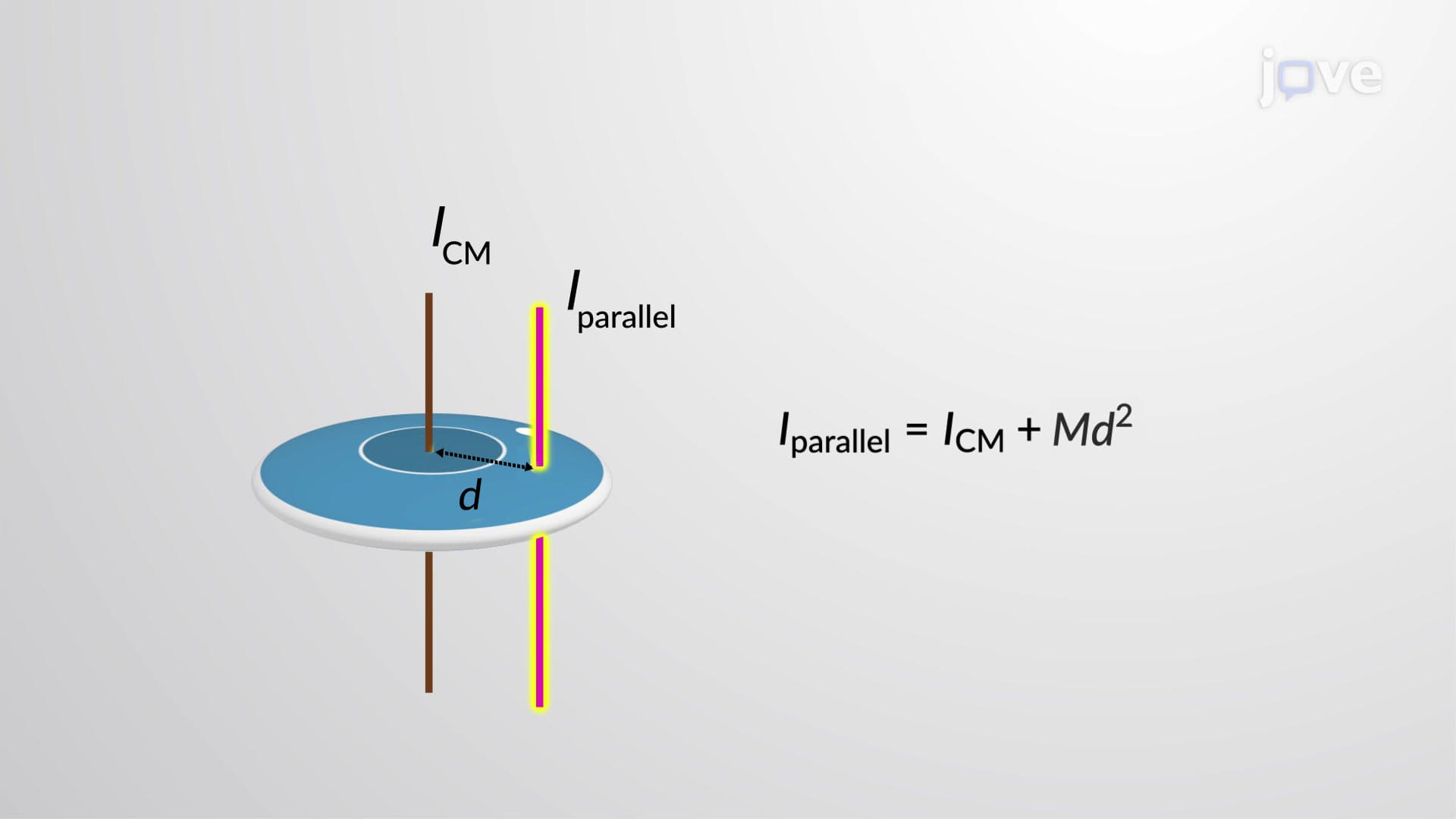

Video Summary: What Is Parallel Axis Theorem
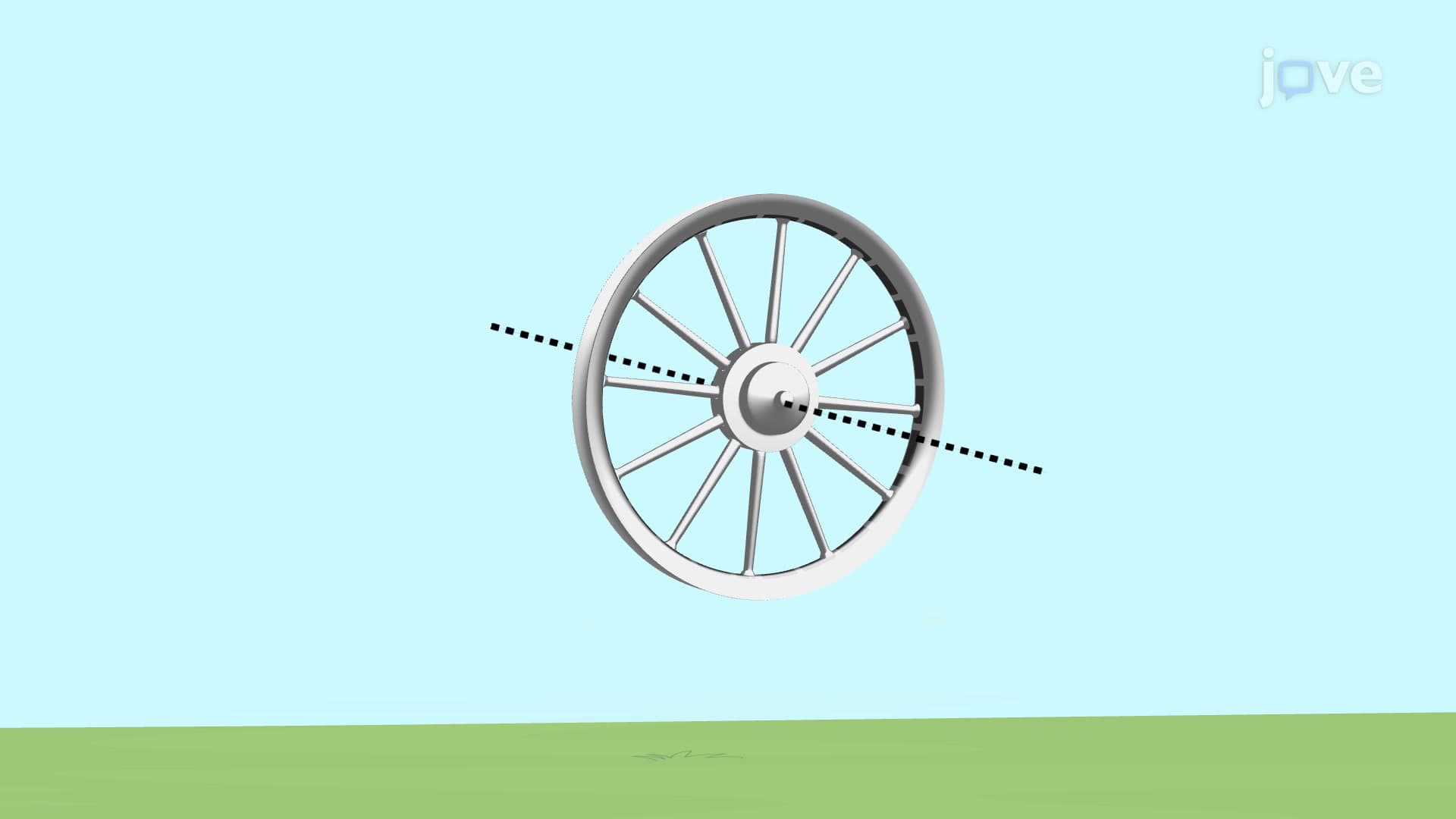
Ever wonder why opening a heavy door by pushing near the hinges feels nearly impossible, but becomes effortless when you push at the handle? The parallel axis theorem explains this phenomenon by showing how an object's resistance to rotation changes based on the axis of rotation. Consider a car wheel spinning on different axes-the effort required varies dramatically depending on whether it rotates through its center or through a point on its rim. Watch the full video on JoVE Coach to master this concept with expert-led visuals and step-by-step explanations.
The parallel axis theorem serves as a fundamental bridge in rotational mechanics, connecting the moment of inertia of an object about its center of mass to its moment of inertia about any parallel axis. This powerful tool eliminates the need for complex integral calculations when determining rotational properties of real-world objects that rarely rotate about their geometric centers.
The theorem's mathematical expression, I = I(CM) + Md², reveals that the moment of inertia about any parallel axis equals the center-of-mass moment of inertia plus the product of the object's mass and the square of the perpendicular distance between axes. This relationship demonstrates why objects become increasingly difficult to rotate as the axis moves farther from the center of mass.
Consider a baseball bat swinging in a major league game. When a player grips the bat at different positions, they're effectively changing the rotational axis, directly applying the parallel axis theorem. The bat's moment of inertia increases dramatically when choked up versus held at the end, affecting swing speed and power-principles that MLB hitting coaches intuitively understand.
Similarly, automotive engineers use this theorem when designing crankshafts and flywheels. A car's flywheel, typically weighing 15-30 pounds, stores rotational energy more effectively when its mass is distributed away from the center, following parallel axis theorem principles to smooth engine operation.
The parallel axis theorem appears frequently on AP Physics C: Mechanics exams, particularly in free-response questions involving compound objects or systems with multiple rotational axes. College-level physics courses extensively cover this concept in mechanics units, often requiring students to calculate moments of inertia for irregular objects like T-shaped beams or L-brackets commonly found in structural engineering.
Pre-medical students encounter this theorem in MCAT physics sections, where understanding rotational dynamics helps explain biomechanical principles. For instance, analyzing how gymnasts manipulate their moment of inertia during routines requires parallel axis theorem applications.
Successful application begins with clearly identifying the center of mass and measuring perpendicular distances accurately. Students often struggle with the distance measurement, forgetting it must be perpendicular to both axes. Practice problems involving doors, rods, and geometric shapes build confidence before tackling complex engineering applications.
Related Micro-courses