Loading subject page…

- Physics
- Temperature and Heat
- Radiation: Applications
Micro-course: Temperature and Heat
62,490 views
Learn key concepts and earn your certificate.




Radiation: Applications

00:00
01:17
Video Summary: What Is Radiation Applications
Did you know that the silver windshield reflectors used in parked cars across Arizona and Texas during summer rely on the same physics principles that keep Earth habitable? Radiation applications encompass how electromagnetic energy transfer occurs in countless everyday scenarios, from NASA's spacecraft thermal management to your local weather patterns. Understanding what is radiation applications reveals the fundamental processes behind greenhouse effects, black body absorption, and reflective cooling systems. Watch the full video on JoVE Coach to master this concept with expert-led visuals and step-by-step explanations.
- Understand what is radiation applications and how electromagnetic energy transfer governs thermal processes in natural and engineered systems
- Identify the characteristics of ideal black bodies versus perfect reflectors and their roles in radiation absorption and emission
- Analyze how greenhouse gases like CO₂ and methane trap solar radiation to create Earth's life-sustaining atmospheric warming
- Compare absorption versus reflection properties in practical applications such as automotive cooling systems and building thermal management
- Evaluate the relationship between temperature and electromagnetic radiation emission according to fundamental thermodynamic principles
- Apply radiation concepts to solve problems involving heat transfer, energy efficiency, and climate science scenarios
- Recognize real-world examples of radiation applications in aerospace, meteorology, and renewable energy technologies
- Explore how black holes represent near-perfect black body radiators in astrophysical contexts
Understanding What is Radiation Applications in Thermal Physics
Radiation applications form the cornerstone of thermal energy transfer, governing how heat moves through space without requiring direct contact between objects. This electromagnetic phenomenon explains everything from why NASA's Mars rovers need specialized thermal coatings to how your home's energy-efficient windows reduce heating costs.
Black Body Radiation and Perfect Absorbers
The radiation applications definition begins with understanding ideal black bodies-theoretical objects that absorb 100% of incident electromagnetic radiation. While perfect black bodies don't exist in nature, black holes approximate this behavior by absorbing all radiation crossing their event horizons. In practical applications, materials with high absorptivity are crucial for solar panel efficiency and thermal imaging systems used by the U.S. military and medical diagnostics.
Engineering applications leverage near-black-body materials in satellite thermal control systems and concentrated solar power plants across the American Southwest. Students preparing for AP Physics or college thermodynamics courses should recognize that real materials exhibit selective absorption, meaning they absorb certain wavelengths more effectively than others.
Reflective Systems and Thermal Management
Perfect reflectors represent the opposite extreme, reflecting all incident radiation while absorbing none. The automotive industry extensively uses this principle-those familiar silver windshield shades contain aluminum coatings that reflect up to 97% of solar radiation, preventing interior temperatures from exceeding 150°F in states like Nevada and Arizona.
Understanding radiation applications in reflective systems extends to spacecraft design, where NASA engineers use multi-layer insulation (MLI) blankets combining reflective and absorptive layers. Architecture students studying for LEED certification exams encounter these principles in cool roof technologies that reduce urban heat island effects in cities like Phoenix and Las Vegas.
Greenhouse Effect and Atmospheric Radiation
The greenhouse effect demonstrates radiation applications on a planetary scale. Solar radiation passes through Earth's atmosphere, but greenhouse gases like water vapor, carbon dioxide, and methane absorb and re-emit infrared radiation. This process maintains Earth's average temperature around 59°F rather than the -0.4°F that would occur without atmospheric greenhouse gases.
Climate science students preparing for environmental science AP exams should understand that this natural greenhouse effect differs from enhanced greenhouse warming caused by increased atmospheric CO₂ concentrations. MCAT preparation often includes questions about radiation balance and its biological implications for temperature regulation in organisms.
Frequently Asked Questions
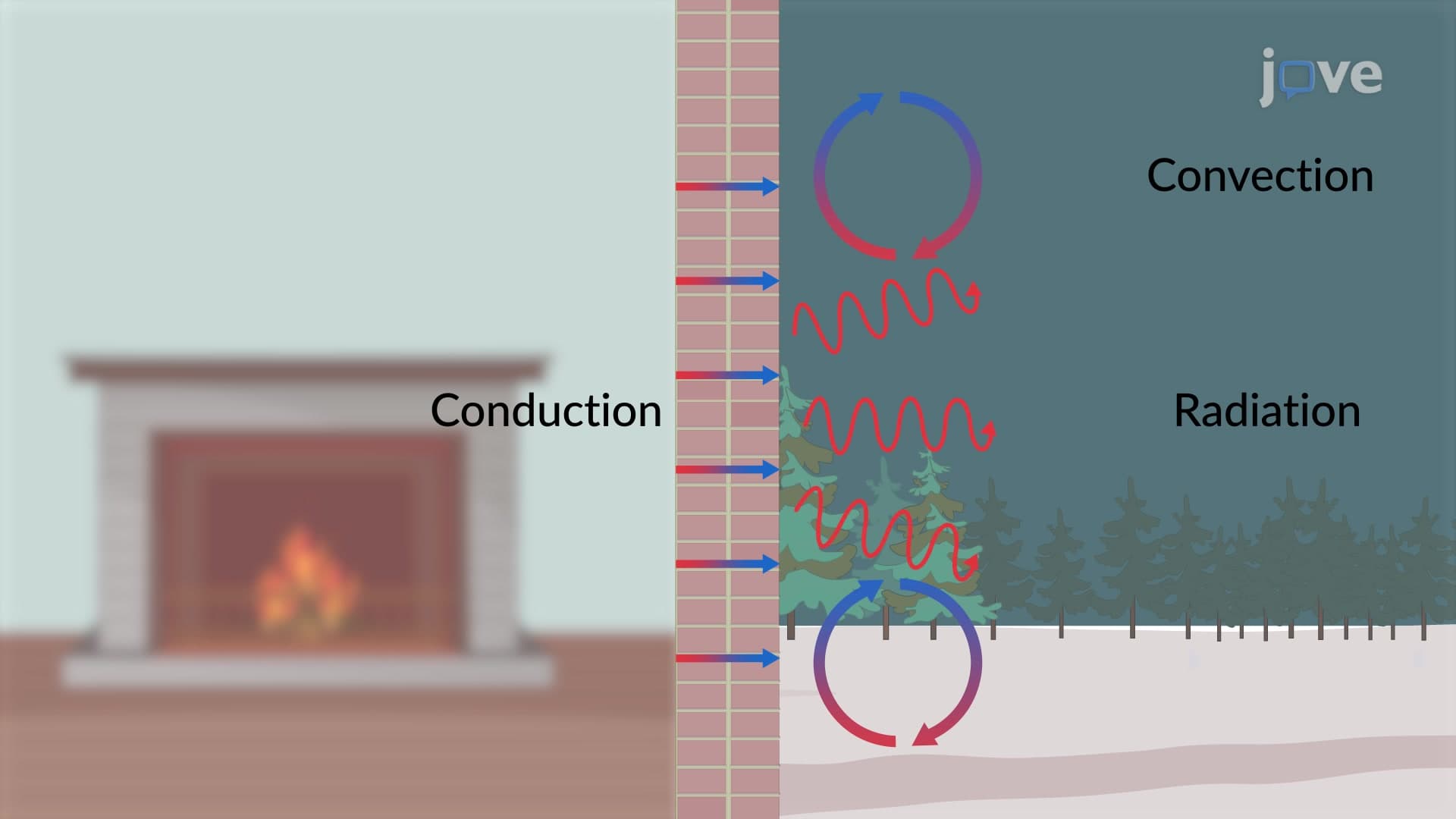
Radiation applications involve electromagnetic energy transfer through space without requiring matter as a medium, unlike conduction (direct contact) or convection (fluid movement). This makes radiation the primary heat transfer method in vacuum environments like space, where NASA spacecraft rely entirely on radiative cooling systems. Radiation also enables solar energy collection and explains how greenhouse gases warm our atmosphere by trapping re-emitted infrared energy.
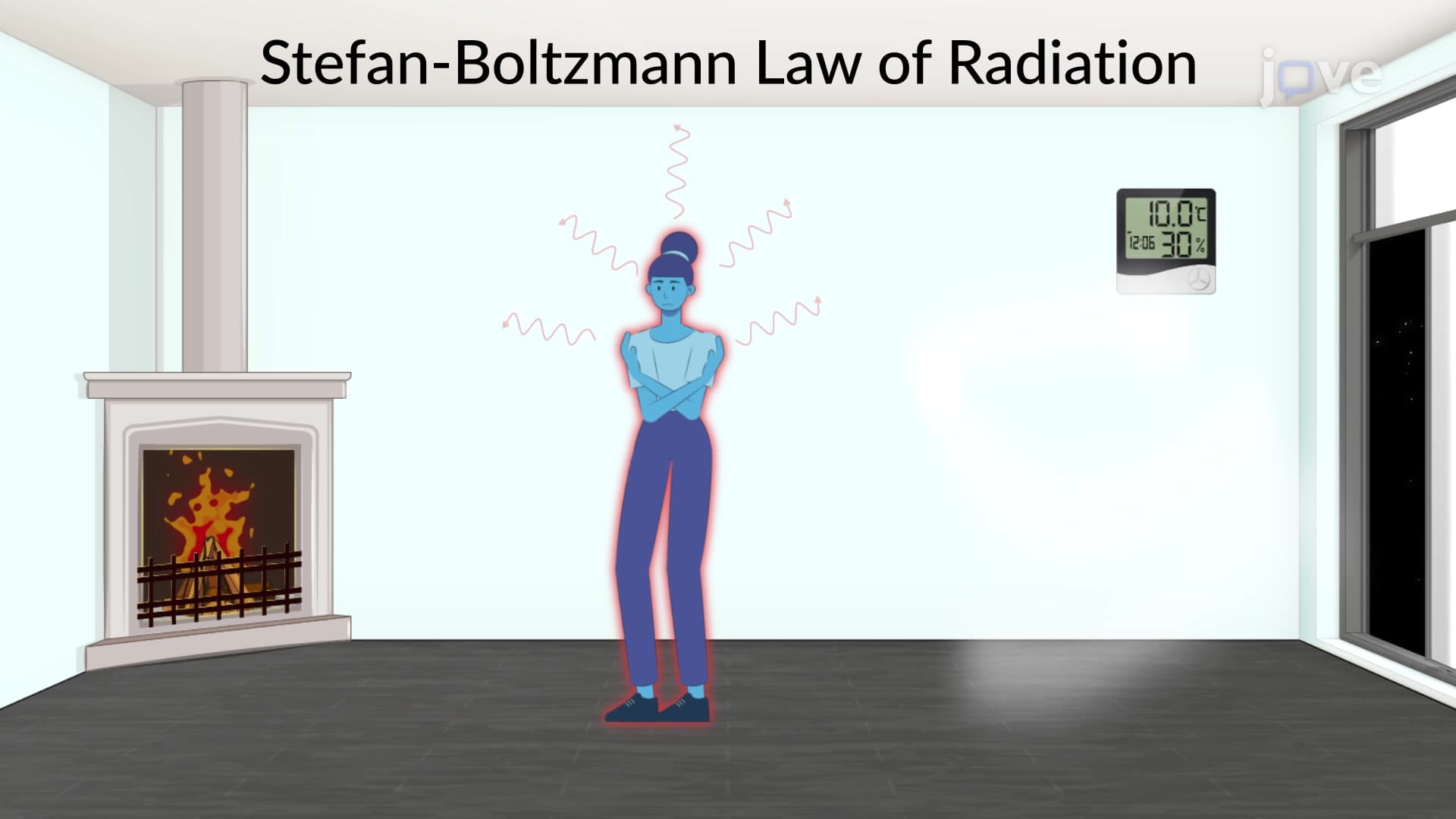
AP Physics C and college exams frequently test Stefan-Boltzmann law applications, asking students to calculate radiative heat transfer rates based on temperature differences. Typical problems involve comparing absorption versus reflection in materials, analyzing greenhouse effect mechanisms, or solving thermal equilibrium scenarios. MCAT physical sciences sections often include radiation principles in biological temperature regulation questions.
Standard quiz topics include identifying black body versus reflective materials, calculating temperature-dependent emission rates, and explaining greenhouse effect mechanisms. Students should practice problems involving automotive thermal management, solar panel efficiency, and atmospheric radiation balance. College thermodynamics courses expand these concepts to include spectral distribution and quantum mechanical foundations.
Radiation applications are everywhere in U.S. infrastructure-from cool roofing systems reducing air conditioning costs in Texas and Florida to thermal imaging cameras used by firefighters and law enforcement. Automotive window tinting utilizes selective absorption to reduce cabin heating while maintaining visibility. Even household appliances like toaster ovens and infrared heaters rely on controlled electromagnetic radiation for efficient energy transfer.
Basic radiation applications concepts require only algebra and understanding of proportional relationships-most high school physics students can grasp fundamental principles without calculus. While advanced applications involve differential equations and quantum mechanics, introductory concepts focus on qualitative understanding and simple calculations using formulas like the Stefan-Boltzmann equation. AP Physics preparation emphasizes conceptual mastery over mathematical complexity.
Create comparison charts contrasting absorption, reflection, and emission properties across different materials and temperatures. Practice identifying radiation applications in everyday scenarios, from car windshield reflectors to building insulation systems. Focus on understanding energy conservation principles and how electromagnetic radiation transfers heat without requiring physical contact between objects.
Advanced students should investigate blackbody spectral distribution, Wien's displacement law, and quantum mechanical explanations for electromagnetic emission. Engineering applications include thermal system design, solar energy optimization, and climate modeling. Pre-med students benefit from studying biological temperature regulation and medical imaging technologies that rely on radiation principles.
Radiation applications form the foundation of climate science, explaining how solar energy drives weather patterns and how greenhouse gases affect global temperature regulation. Understanding these principles helps students analyze climate change mechanisms, evaluate renewable energy technologies, and interpret atmospheric data. Environmental science courses emphasize radiation balance in ecosystem energy flows and urban heat island mitigation strategies.
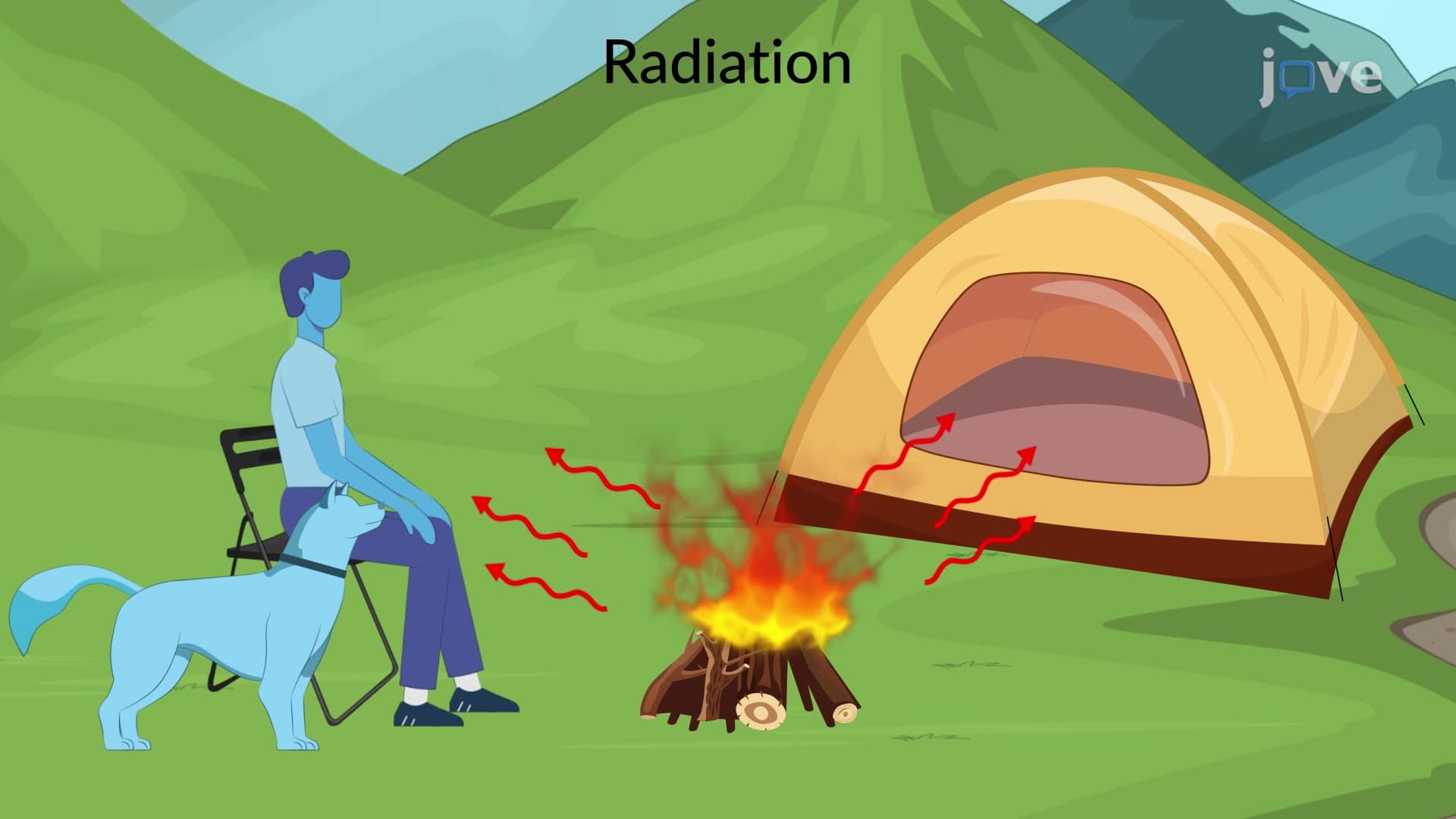
Students often struggle with the invisible nature of electromagnetic radiation and distinguishing between different heat transfer mechanisms in complex scenarios. The mathematical relationship between temperature and emission rates can seem abstract without concrete examples. However, connecting radiation principles to familiar experiences like feeling warmth from sunlight or campfires helps build intuitive understanding before tackling quantitative problems.
Related Micro-courses

13 Concepts

19 Concepts

12 Concepts