Loading…
Loading video…

61,845 views
Did you know that when a guitar string vibrates, its shape at any moment can be captured as a mathematical graph? Graphing the wave function reveals how particles move in waves, whether it's sound waves traveling through concert halls or seismic waves detected by US Geological Survey monitoring stations. This fundamental physics concept shows how displacement varies with both position and time, allowing scientists to determine crucial wave properties like wavelength and period. What is Graphing The Wave Function becomes clear through visual representations that transform abstract mathematics into understandable patterns. Watch the full video on JoVE Coach to master this concept with expert-led visuals and step-by-step explanations.
Graphing the wave function transforms abstract wave mathematics into visual representations that reveal how waves behave in real systems. When physicists study phenomena like the vibrations in suspension bridges during earthquakes or the sound waves in Carnegie Hall's acoustics, they rely on these graphical tools to understand wave motion. The wave function describes how particles in a medium are displaced from their equilibrium positions as waves pass through.
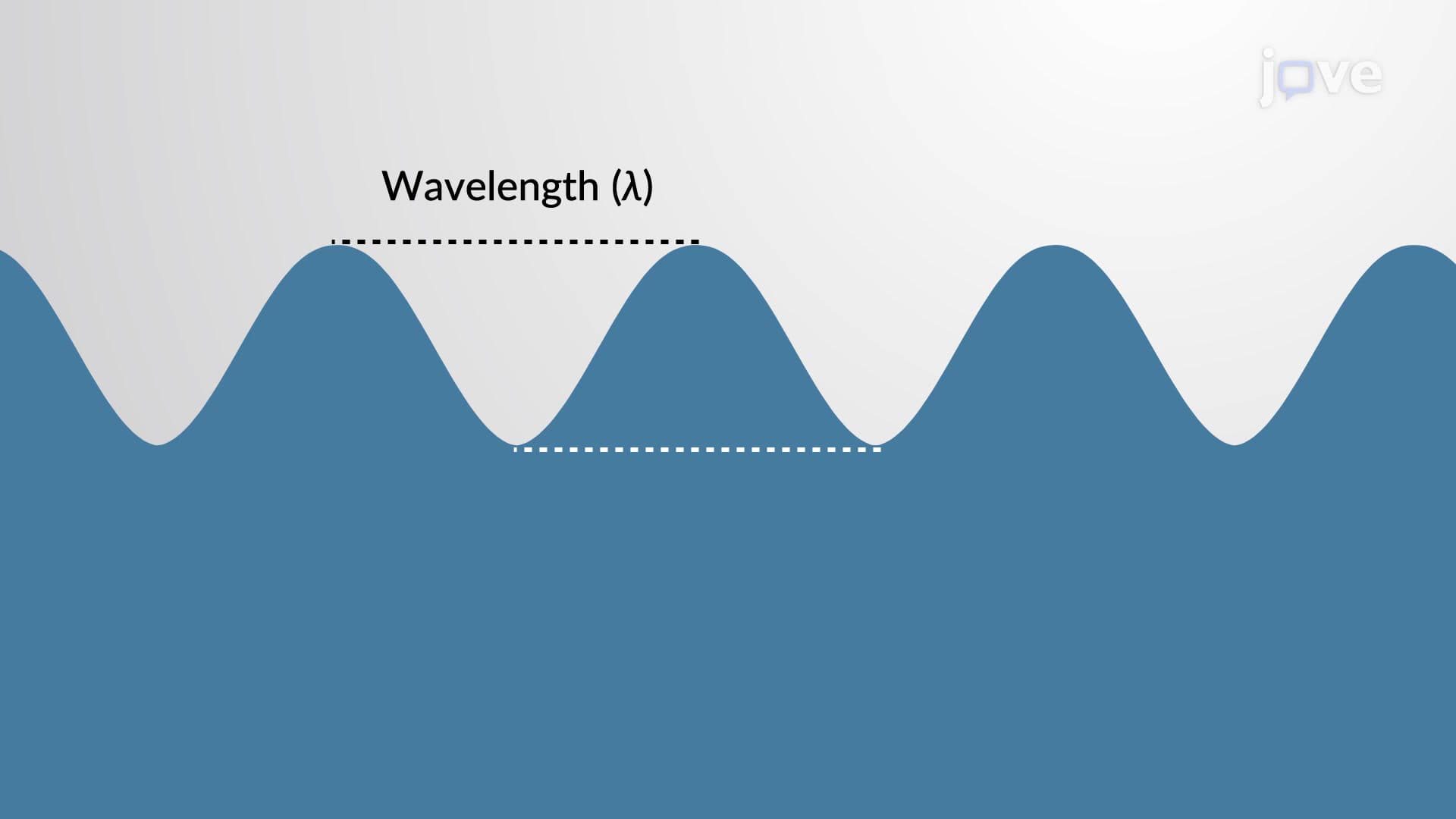
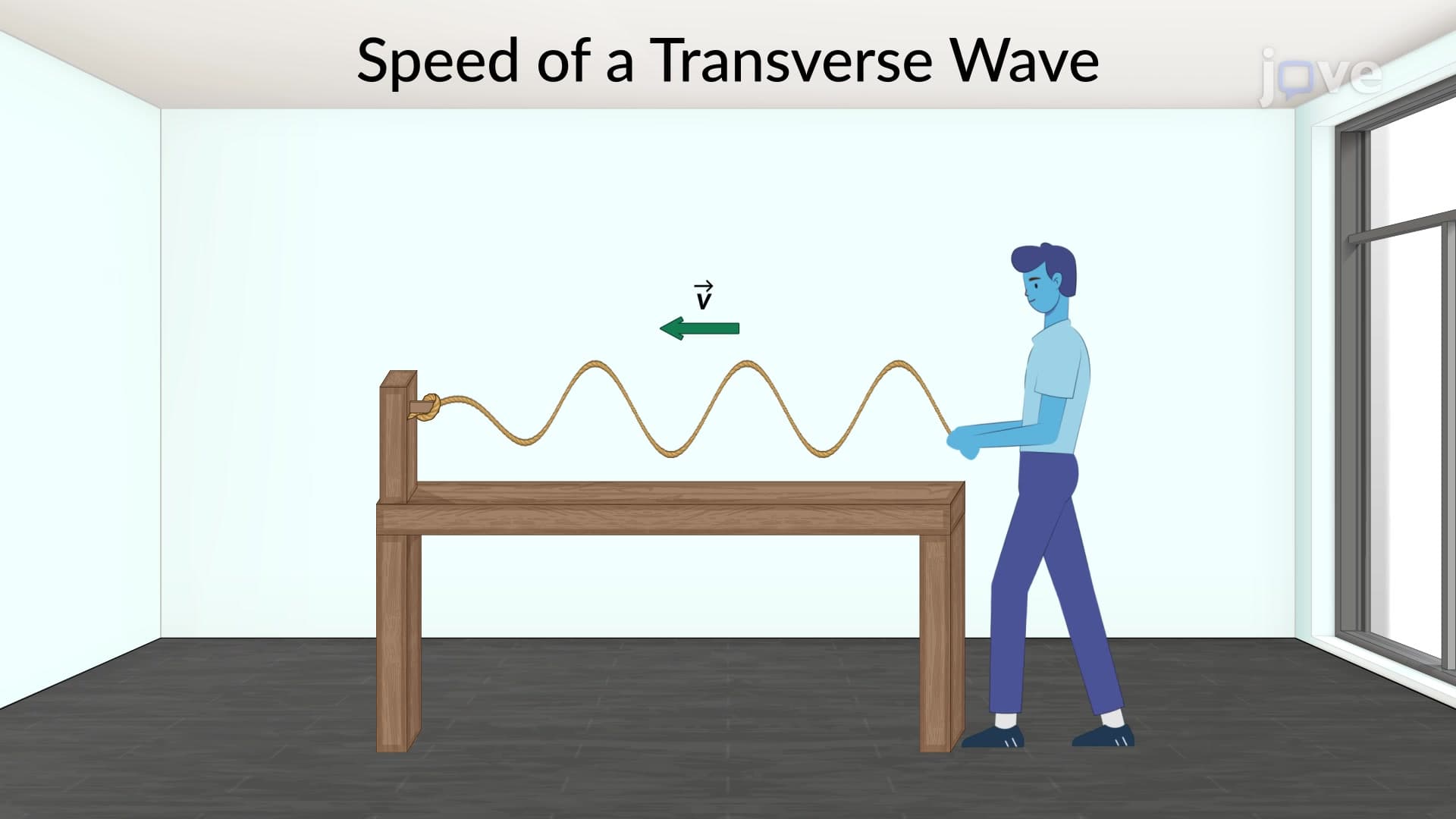
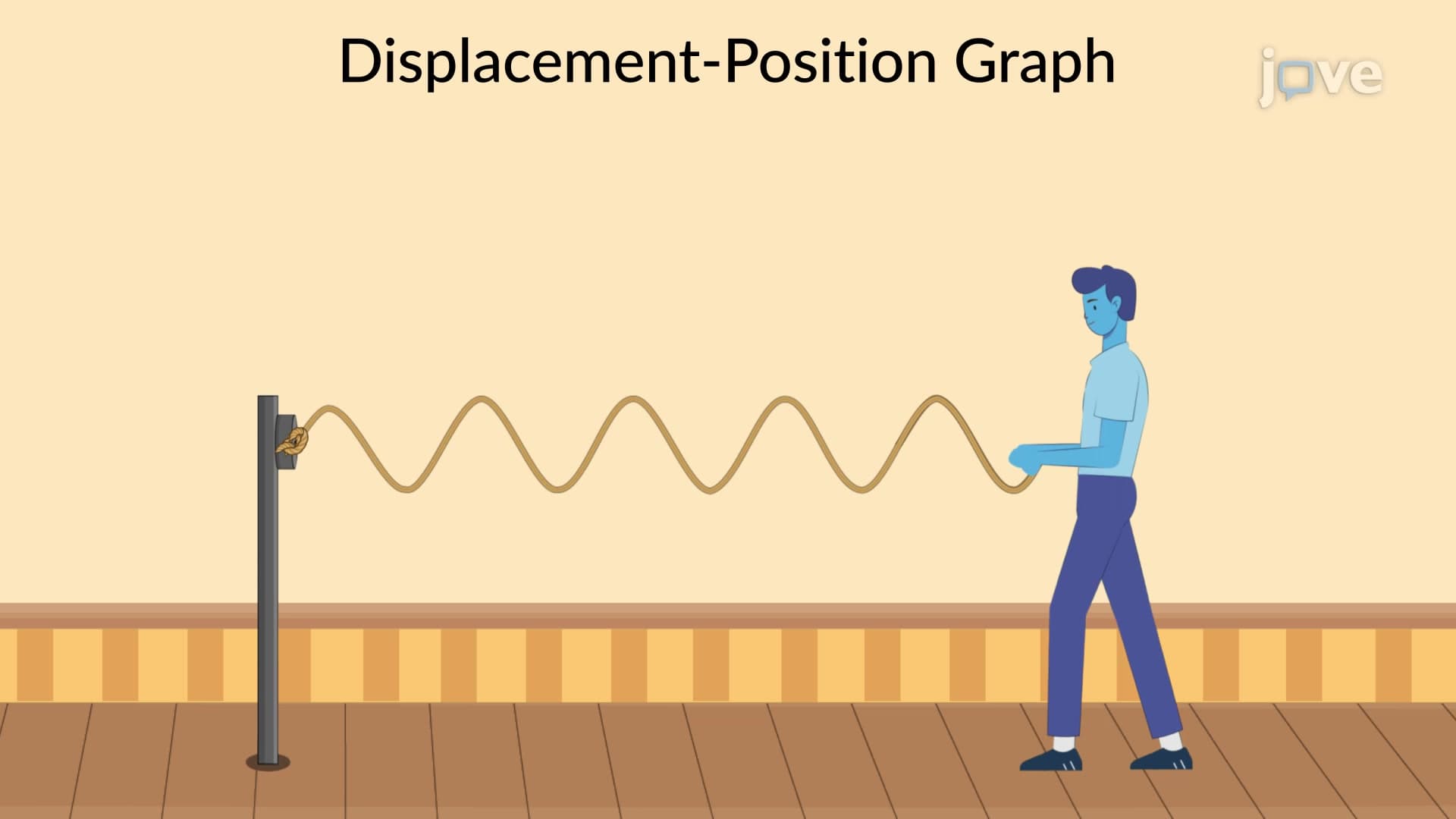
The displacement-position graph shows a "snapshot" of the wave at a specific moment in time. Imagine photographing a rope being shaken up and down – the resulting image captures the rope's curved shape, which directly corresponds to this type of graph. For transverse waves like those on guitar strings, this graph literally shows the string's physical shape. The horizontal distance between repeating patterns reveals the wavelength (λ), a crucial parameter that determines properties like pitch in musical instruments or the resolution capabilities of medical ultrasound equipment used in US hospitals.
Students preparing for AP Physics exams frequently encounter problems requiring them to read wavelength values directly from these position graphs. The key insight is recognizing that one complete cycle – from peak to peak, or trough to trough – represents one wavelength.
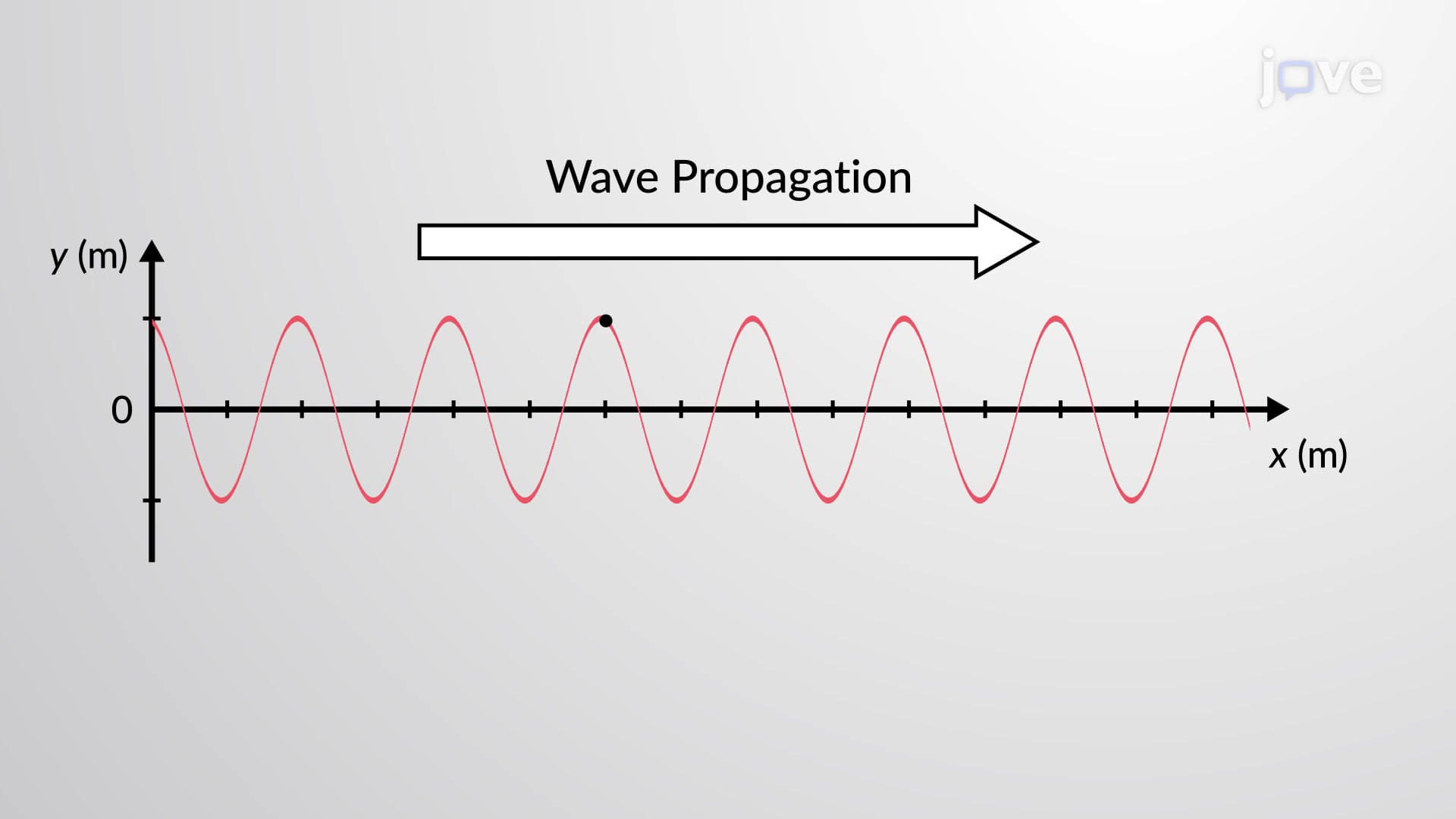
When focusing on a single point in space, the displacement-time graph reveals how one particle oscillates as waves pass by. This is analogous to watching a single cork bobbing on ocean waves – the cork's up-and-down motion over time creates this graph type. From this representation, physicists determine the period (T), which is the time required for one complete oscillation cycle.
This concept proves essential in fields like seismology, where US Geological Survey scientists analyze earthquake data. The time between successive wave peaks helps determine earthquake characteristics and predict aftershock patterns.
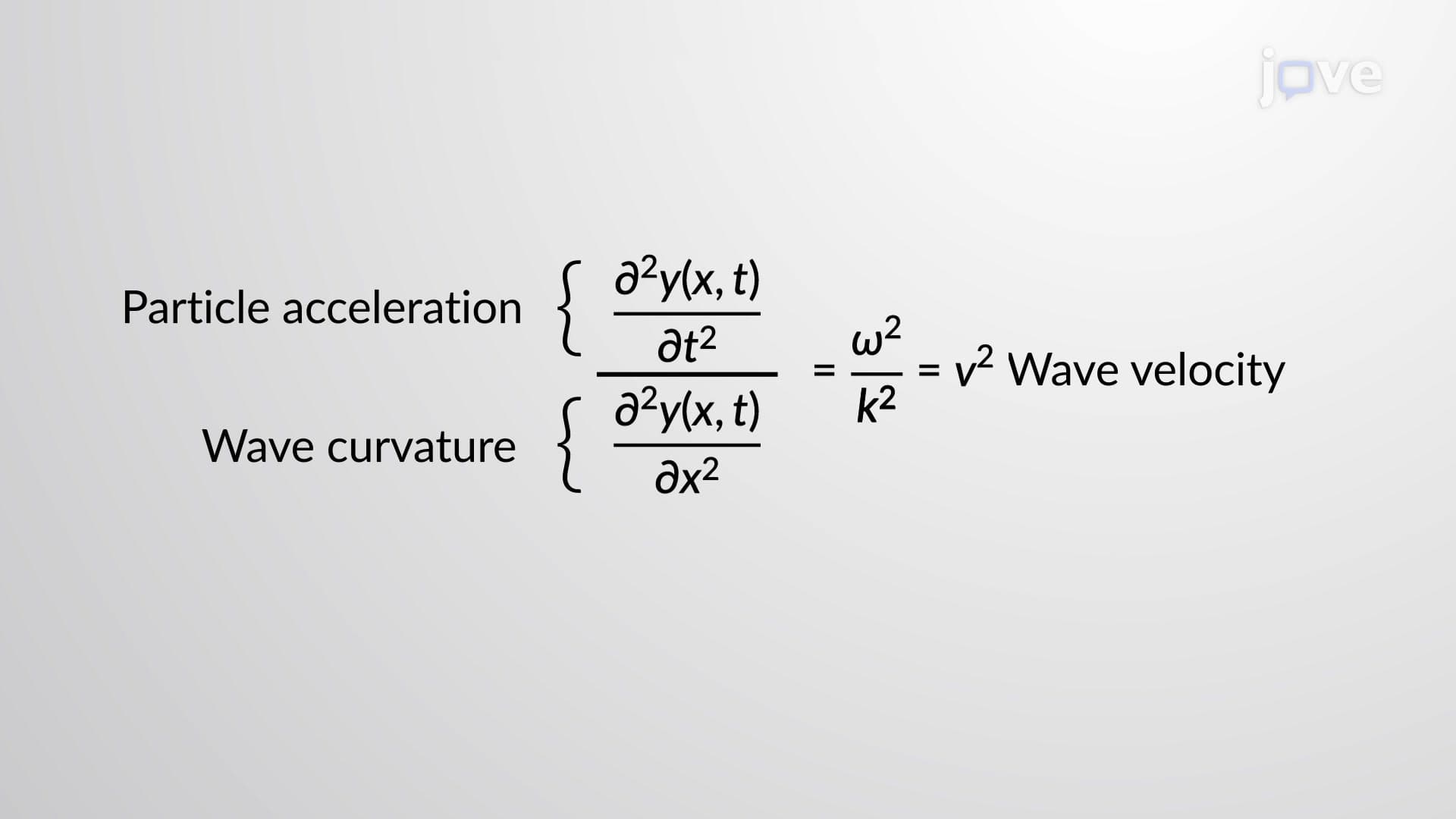
The phase of a wave function – the argument inside trigonometric functions like cosine or sine – determines which part of the wave cycle a particle experiences at any given moment. Phase velocity represents how quickly wave patterns propagate through the medium while maintaining constant phase values. Understanding this concept helps explain why sound travels faster in warm air than cold air, affecting everything from concert hall acoustics to weather radar systems used by the National Weather Service.
Frequently Asked Questions
Graphing the wave function creates visual representations of how particles move in wave motion, showing displacement versus position or time. It's essential because it transforms complex mathematical equations into understandable patterns that reveal wave properties like wavelength, frequency, and amplitude. This technique is fundamental for analyzing everything from sound waves to electromagnetic radiation in physics courses.
AP Physics exams frequently test wave graphing through problems requiring students to determine wavelength from position graphs or period from time graphs. Students might analyze sinusoidal waves on strings, sound waves, or electromagnetic waves. Common question types include calculating wave speed using v = λf after reading graph values, or predicting how graphs change when wave parameters are modified.
Displacement-position graphs show the wave's shape at one frozen moment in time, like a photograph of a vibrating string. Displacement-time graphs track how one specific point oscillates as waves pass by over time. Position graphs reveal wavelength and spatial patterns, while time graphs show period and temporal oscillations – both are needed to fully describe wave behavior.
US seismologists use wave graphs to analyze earthquake data from monitoring stations, helping predict aftershocks and assess damage risks. Medical professionals rely on ultrasound wave patterns for diagnostic imaging, while audio engineers use waveform displays to optimize sound quality in recording studios and concert venues like those on Broadway.
No, wave function graphing primarily requires understanding basic trigonometry (sine and cosine) and graph reading skills taught in Algebra II. While the underlying wave equations involve calculus, interpreting the graphs themselves relies on pattern recognition and measuring distances between peaks or time intervals between cycles – skills accessible to high school students.
Practice identifying wavelength and period from graphs by measuring distances between identical points (peak-to-peak or trough-to-trough). Create flashcards linking graph features to physical quantities: horizontal distance = wavelength, vertical distance = amplitude, time between cycles = period. Work through problems calculating wave speed using v = λf after extracting values from graphs.
Wave graphing skills form the foundation for quantum mechanics, electromagnetic theory, and signal processing in engineering programs. The visualization techniques learned here apply directly to analyzing electron wave functions, electromagnetic field patterns, and digital signal processing used in telecommunications and computer engineering careers.
Focus on trigonometric functions (sine, cosine), understanding how amplitude and frequency affect graph shape, and basic coordinate geometry for reading position and time values. Review unit conversion for wavelength (meters, centimeters) and frequency (Hertz) measurements. Practice with periodic functions helps recognize repeating patterns essential for wave analysis.
Wave graphs directly connect to oscillatory motion (springs, pendulums), electromagnetic radiation (light, radio waves), and quantum mechanics where particles exhibit wave properties. The same graphing principles apply to AC electrical circuits, optical interference patterns, and even probability waves in advanced physics courses, making this a foundational skill for physics majors.
Related Micro-courses
Related Subjects
 Math Fundamentals 11 micro-courses›
 Statistics 17 micro-courses›