Loading…
Loading video…

13,330 views

Ever wondered if Americans really prefer dogs over cats? The sign test for nominal data provides a statistical method to answer this question using categorical preferences that can't be ranked or ordered. When surveying pet preferences across US households, researchers use this non-parametric test to determine if one category significantly outnumbers another, converting qualitative responses into quantifiable evidence through positive and negative signs. Watch the full video on JoVE Coach to master this concept with expert-led visuals and step-by-step explanations.
The sign test represents one of the most accessible non-parametric statistical methods for analyzing categorical data. Unlike ordinal or interval data, nominal data consists of distinct categories without inherent ranking—think pet preferences, political affiliations, or brand choices. This limitation means we cannot calculate means or standard deviations, restricting our analysis to counting frequencies and examining proportions.
The sign test becomes invaluable when dealing with binary categorical outcomes or when comparing two related groups. Consider a scenario where Netflix surveys 100 American teenagers about their streaming preferences between two platforms. Since preferences represent nominal data (Platform A vs. Platform B), traditional parametric tests like t-tests become inappropriate. The sign test converts these preferences into positive and negative signs, enabling statistical analysis of whether one option significantly dominates.
This method proves particularly useful in AP Statistics courses and college-level research methods classes, where students encounter real-world scenarios requiring categorical data analysis. The test's simplicity makes it an excellent introduction to hypothesis testing concepts before tackling more complex statistical procedures.
The sign test begins with establishing clear hypotheses. The null hypothesis (H₀) typically states that the population proportion equals 0.5, indicating no preference between categories. The alternative hypothesis (H₁) suggests a directional preference—for instance, that dog lovers comprise more than 50% of the population.
When sample sizes exceed 25, the test statistic follows a normal distribution, allowing use of the z-statistic formula: z = (x - 0.5n) / (0.5√n), where x represents the count of one category and n equals the total sample size. This transformation enables comparison with critical values from the standard normal distribution.
The sign test's real-world applications span market research, political polling, and healthcare preferences. For example, pharmaceutical companies might use sign tests to determine patient preferences between two treatment options, while political consultants analyze voter preferences in swing states.
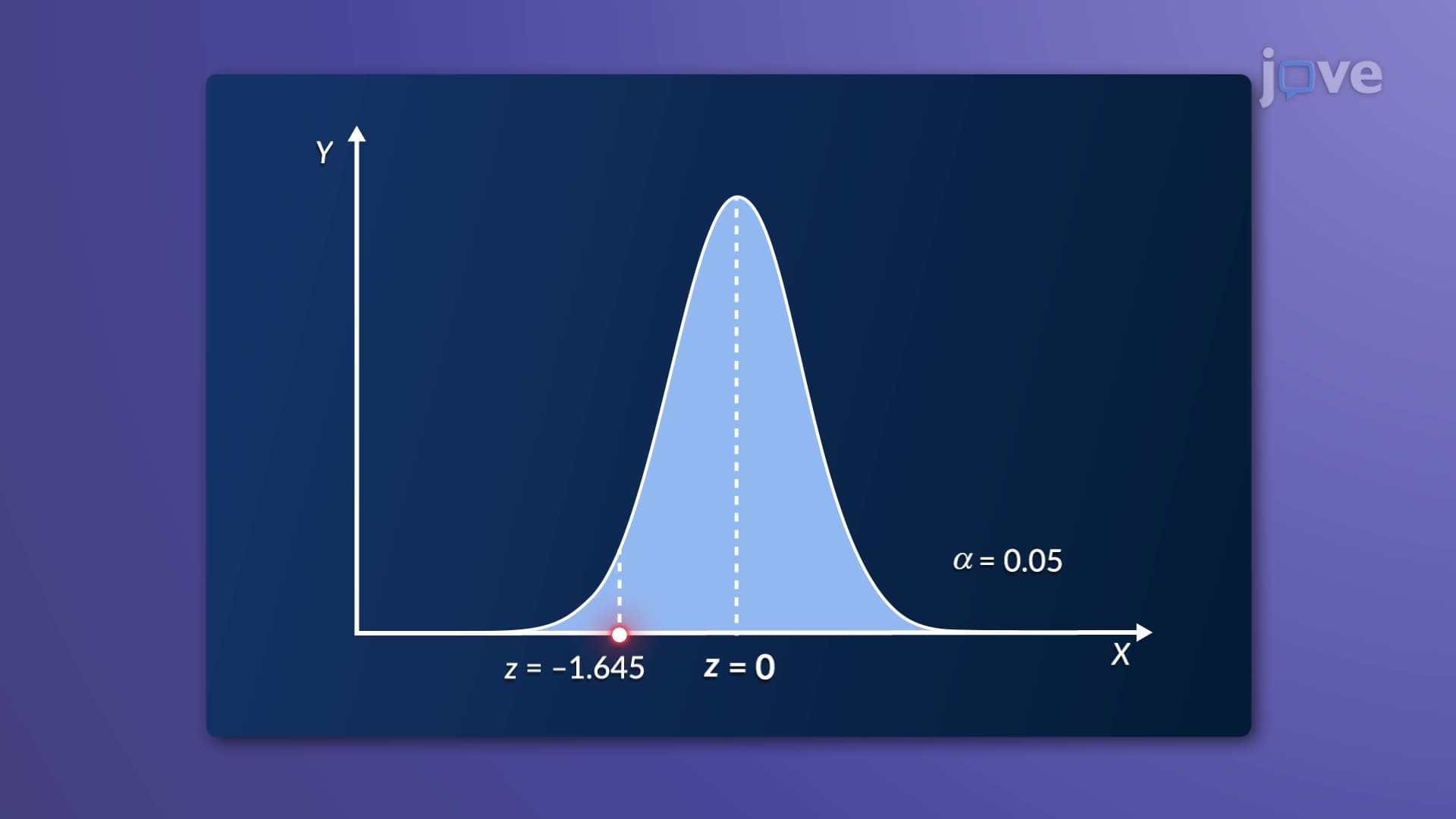
Critical values determine the rejection region based on the chosen significance level (commonly α = 0.05). In left-tailed tests, we examine whether one category occurs significantly less frequently than expected. Students preparing for the MCAT or AP Statistics exam should understand that rejecting the null hypothesis requires the test statistic to fall beyond the critical value in the specified direction.
Frequently Asked Questions
The sign test for nominal data is a non-parametric statistical method used to analyze categorical variables that cannot be ranked or ordered. Use it when comparing two categories (like brand preferences or yes/no responses) to determine if one occurs significantly more often than the other. It's perfect for situations where you have binary categorical data and want to test population proportions.
The sign test frequently appears in AP Statistics free-response questions and college midterm exams as part of hypothesis testing units. Expect questions about identifying appropriate test conditions, setting up null and alternative hypotheses, and interpreting results. The College Board often includes real-world scenarios like consumer preferences or medical treatment comparisons that require sign test analysis.
While both tests work with categorical data, the sign test specifically compares two categories or examines whether one category's proportion differs from 0.5. Chi-square tests can handle multiple categories and test for independence between variables. Use the sign test for simpler binary comparisons and chi-square for more complex categorical relationships or goodness-of-fit tests.
The Pew Research Center might use sign tests when analyzing American political preferences between two candidates in swing states like Ohio or Florida. If they survey 200 voters and find 130 prefer Candidate A, they can use the sign test to determine if this represents a statistically significant preference rather than random variation, helping predict election outcomes.
Not at all! The sign test requires only basic algebra and understanding of percentages. If you can calculate proportions and use a z-table, you can master this concept. The most complex part involves the z-statistic formula, but even that uses simple arithmetic operations that high school students regularly perform in Algebra II.
Focus on practicing hypothesis setup, identifying when sample sizes require normal approximation (n > 25), and interpreting critical values correctly. Create flashcards for the z-statistic formula and practice with real-world scenarios. Work through at least five different examples involving consumer preferences, medical treatments, or political polling to build confidence.
Progress to the Wilcoxon signed-rank test for ordinal data, then explore chi-square tests for more complex categorical analysis. Understanding the sign test provides an excellent foundation for learning about other non-parametric methods and helps bridge the gap to parametric hypothesis testing like t-tests and ANOVA.
Converting categories to signs standardizes the analysis process and connects to the mathematical foundation of hypothesis testing. This approach allows us to use established statistical distributions and critical values, making the test more rigorous and comparable across different studies and contexts.
Related Micro-courses
Related Subjects
 Physics 33 micro-courses›
 Math Fundamentals 11 micro-courses›