Loading…
Loading video…

13,330 views
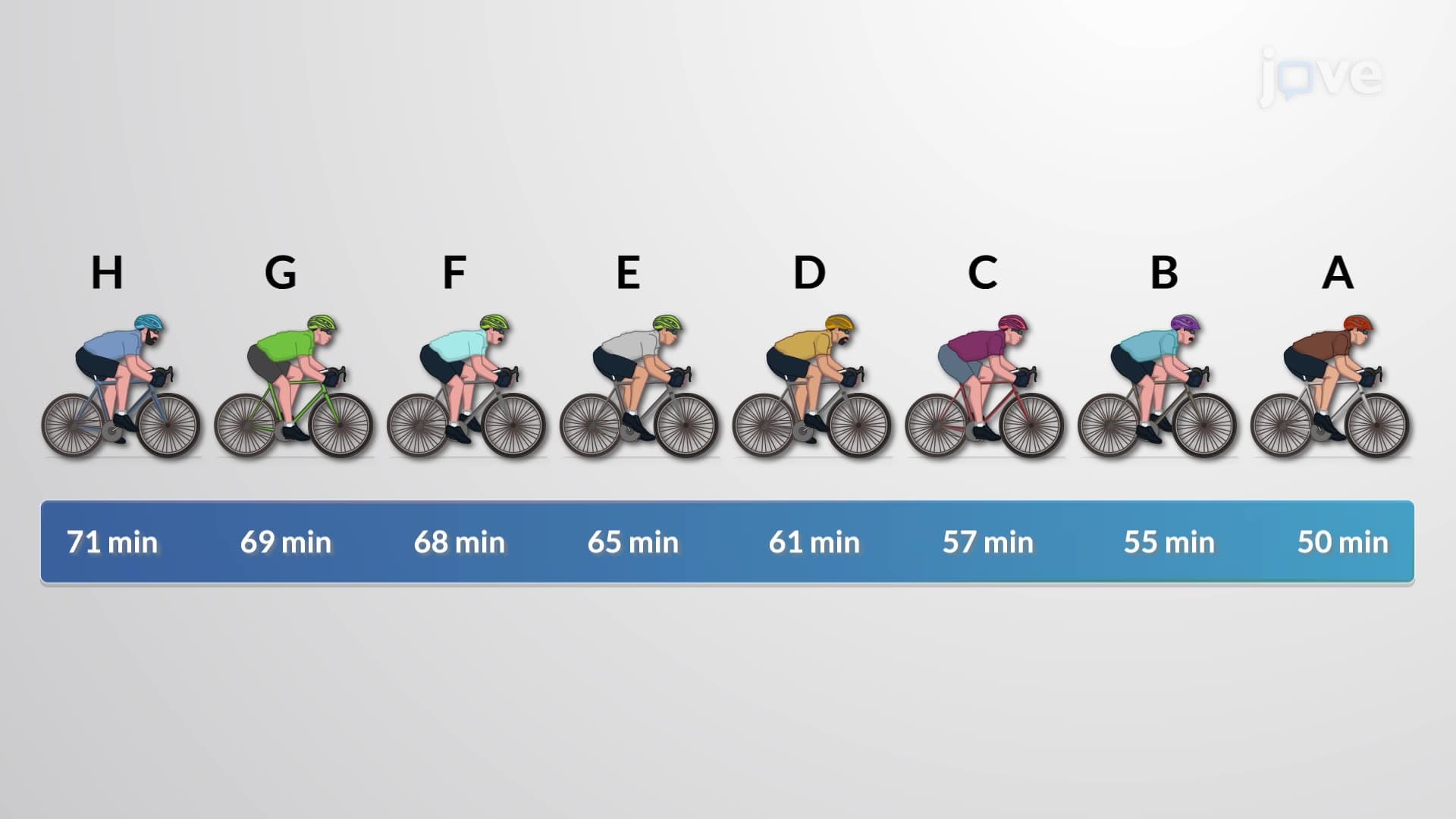
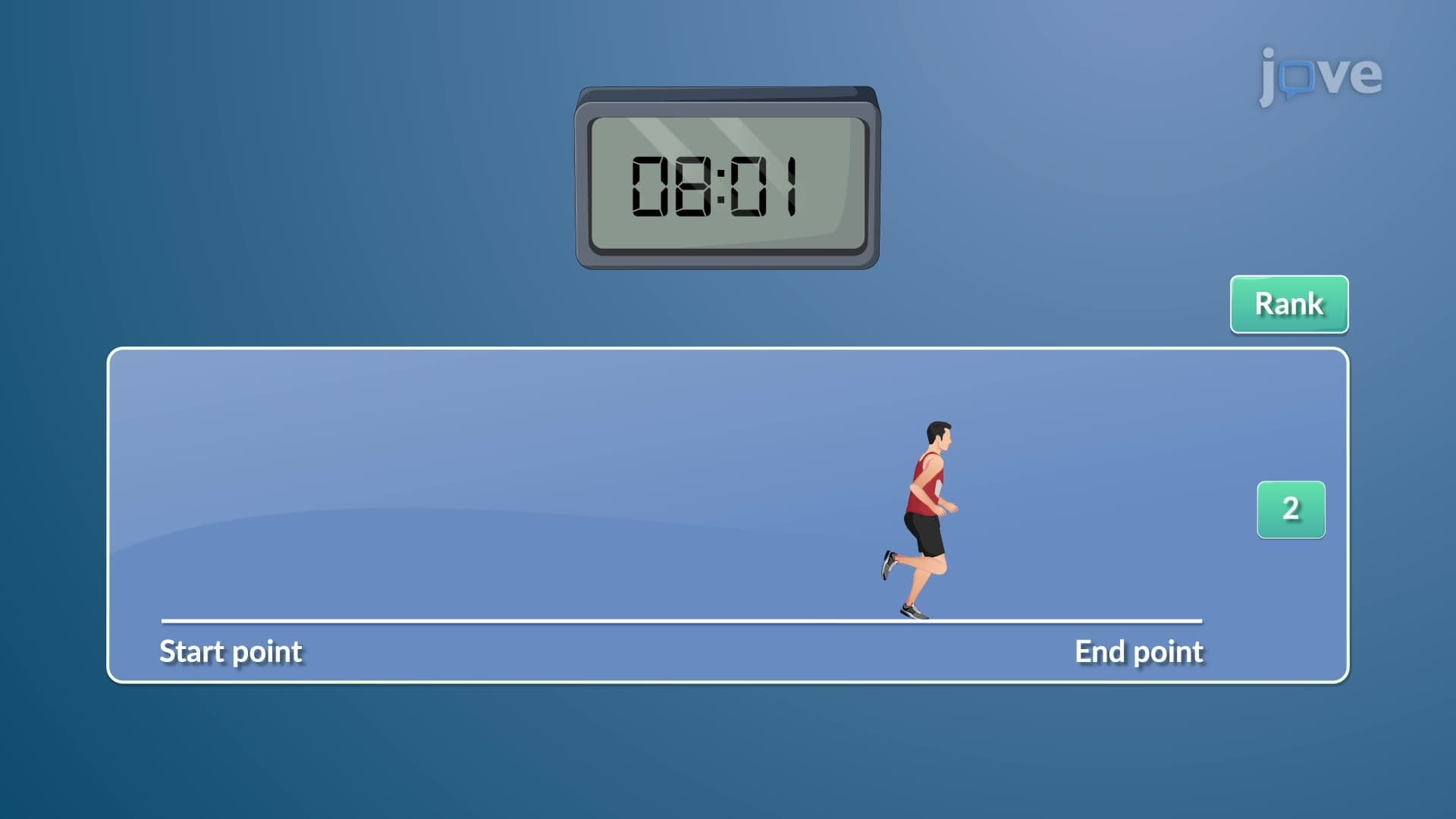
Did you know that ranks determine everything from your SAT percentile to which medical school candidates get accepted first? Ranks represent a fundamental nonparametric method that orders data points based on specific criteria, transforming raw measurements into meaningful positions. Picture the NCAA March Madness tournament seeding—teams receive ranks from 1 to 16 based on their season performance, creating a structured hierarchy for competition brackets. This statistical concept underpins crucial tests like the Wilcoxon signed-rank test and Spearman's correlation analysis. Watch the full video on JoVE Coach to master this concept with expert-led visuals and step-by-step explanations.
Ranks serve as the backbone of nonparametric statistics, converting complex datasets into simple, ordered sequences that reveal meaningful patterns without requiring assumptions about data distribution. Unlike parametric methods that rely on means and standard deviations, ranking systems focus purely on relative position—making them invaluable when dealing with skewed data, outliers, or ordinal measurements.
The ranking process follows systematic rules that ensure consistency across applications. Data points receive numerical positions based on their values when arranged in ascending or descending order. For example, if five students score 78, 85, 92, 92, and 98 on an AP Statistics exam, their ranks would be 1, 2, 3.5, 3.5, and 5 respectively. The tied scores at 92 share the average of ranks 3 and 4, demonstrating how statistical software handles duplicate values fairly.
Ranking systems dominate American educational assessment, from SAT percentile rankings that determine college admissions competitiveness to MCAT score percentiles used by medical schools. In clinical research, ranks become essential when analyzing patient satisfaction surveys (strongly disagree to strongly agree) or pain scales (1-10 ratings), where the intervals between responses aren't necessarily equal. The Wilcoxon signed-rank test, commonly taught in AP Statistics and undergraduate biostatistics courses, uses ranks to compare paired observations without assuming normal distributions.
Several cornerstone nonparametric tests depend entirely on rank calculations. The Kruskal-Wallis test, often called the nonparametric equivalent of ANOVA, ranks all observations together before comparing groups—making it perfect for analyzing Likert scale responses in psychology research. Spearman's rank correlation coefficient measures monotonic relationships by ranking both variables first, proving especially useful when examining relationships that aren't perfectly linear, such as the connection between hours studied and exam performance.
Understanding ranks provides students with powerful analytical tools for their statistics coursework and prepares them for advanced applications in fields ranging from business analytics to medical research, where assumption-free methods often prove more reliable than traditional parametric approaches.
Frequently Asked Questions
Ranks are numerical positions assigned to data points when arranged in order, forming the foundation of nonparametric statistics. They're crucial because they allow analysis of data without assuming normal distributions, making statistical tests more robust and applicable to real-world scenarios like survey responses and clinical assessments.
AP Statistics frequently tests ranking concepts through nonparametric test problems, especially Wilcoxon and Spearman correlation questions. Students must demonstrate rank assignment skills, handle tied values using mean ranks, and interpret results from rank-based statistical procedures in free-response sections.
Absolutely—MCAT psychology and sociology sections often include research methodology questions involving nonparametric statistics. Medical schools value students who understand rank-based analysis since clinical research frequently uses these methods for analyzing patient-reported outcomes and treatment effectiveness studies.
Hospitals use ranking systems to analyze patient satisfaction scores and prioritize organ transplant waiting lists, while universities rank applicants for admissions and scholarship awards. The US News & World Report college rankings demonstrate how institutional performance gets converted into meaningful comparative positions.
Not at all—ranks require only basic arithmetic and logical thinking about ordering data. If you can arrange numbers from smallest to largest and calculate simple averages for tied values, you have the mathematical foundation needed to master ranking methods successfully.
Focus on understanding when to use each test rather than memorizing formulas—Wilcoxon signed-rank for paired comparisons, Wilcoxon rank-sum for independent groups, Kruskal-Wallis for multiple groups, and Spearman for correlations. Create flowcharts connecting data types to appropriate ranking tests.
Build on ranking knowledge by exploring advanced nonparametric methods like Mann-Whitney U tests and Friedman's test, then transition into robust statistics and bootstrap methods. These concepts frequently appear in upper-level biostatistics and research methodology courses.
Related Micro-courses
Related Subjects
 Physics 33 micro-courses›
 Math Fundamentals 11 micro-courses›