Loading video…

 8 Concepts
 2.5K views
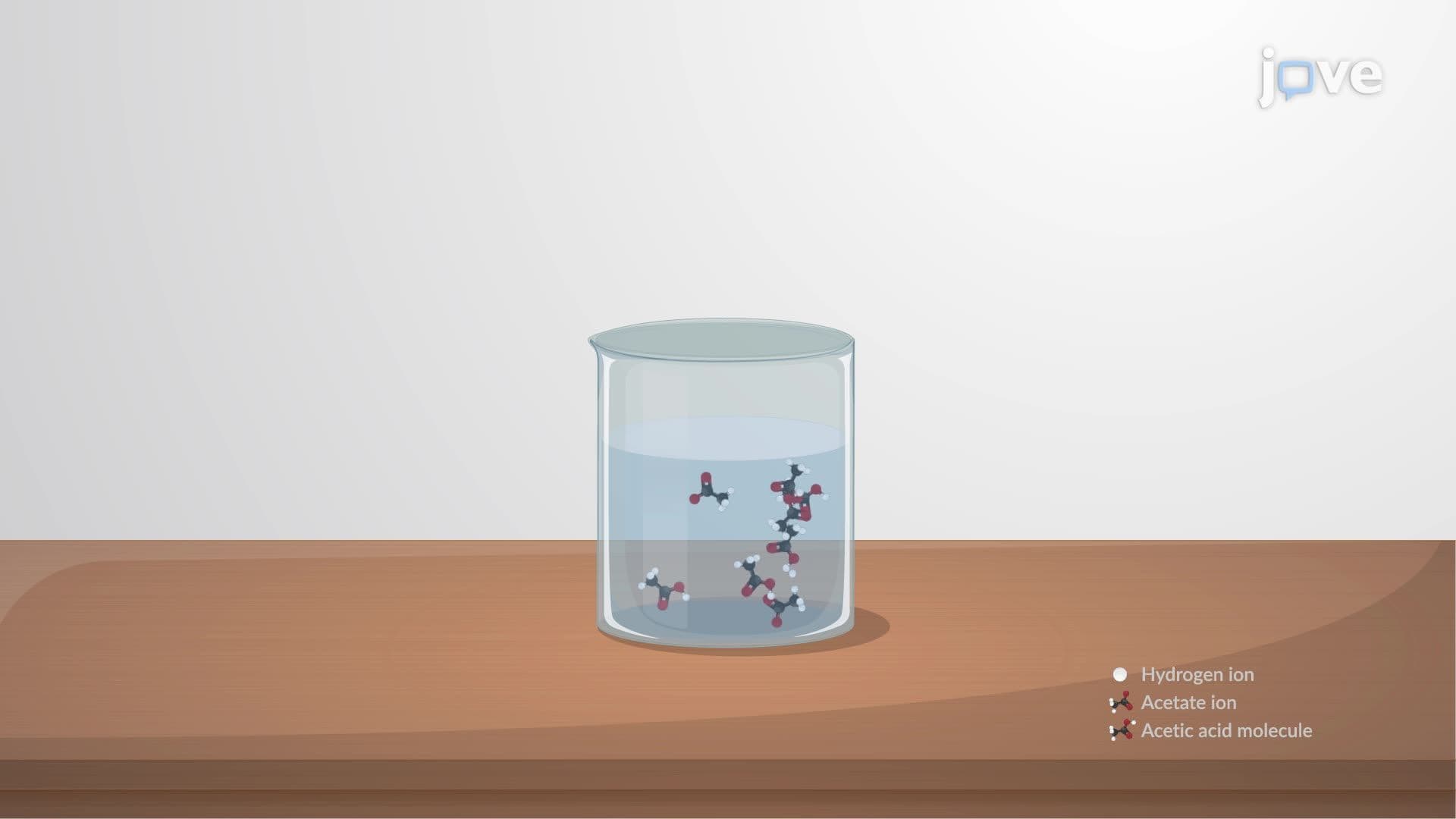

Video Summary: Kohlraushs Law and Its Applications Explained
Why does every ion in a solution behave like an independent contributor to electrical conductance? Kohlrausch's Law and Its Applications Explained reveals exactly that, each ion carries a fixed share of molar conductance at infinite dilution, no matter its partner ion. In US electrochemistry labs, this principle helps calculate the conductance of weakly ionizing acids like acetic acid indirectly. Watch the full video on JoVE Coach to master this concept with expert-led visuals and step-by-step explanations.
One of the most elegant principles in electrochemistry is that ions don't "know" what their partner ions are. Kohlrausch's Law, formally known as the Law of Independent Migration of Ions, states that at infinite dilution, each ion contributes a fixed and definite amount to the total molar conductance of an electrolyte, completely independent of the other ion present in solution. This means the molar conductance at infinite dilution (Λm°) is simply the sum of the limiting molar ionic conductances of the cation (λ+°) and the anion (λ−°):
Λm° = ν+ λ+° + ν− λ−°
where ν+ and ν− represent the number of positive and negative ions produced per formula unit.
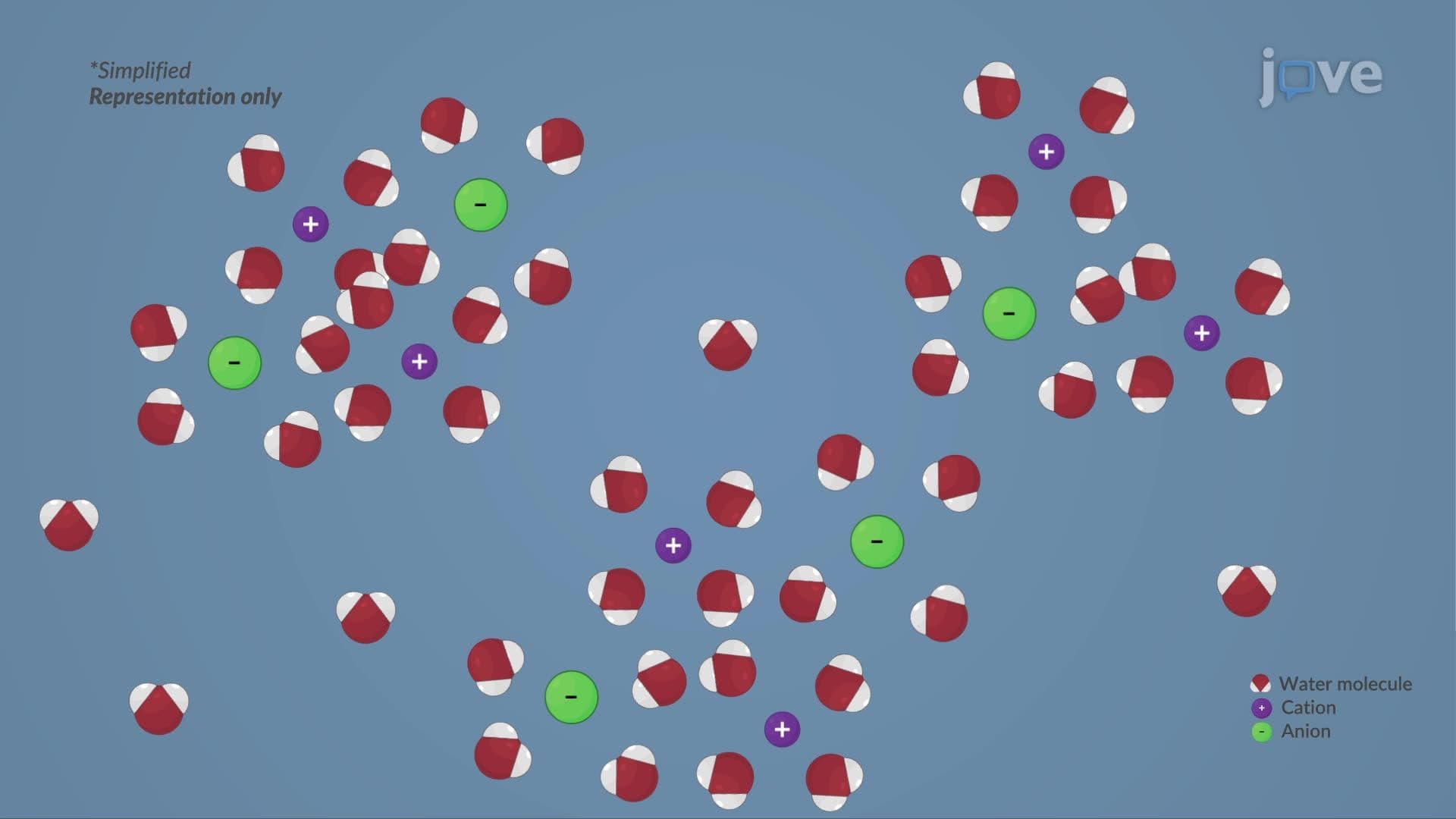
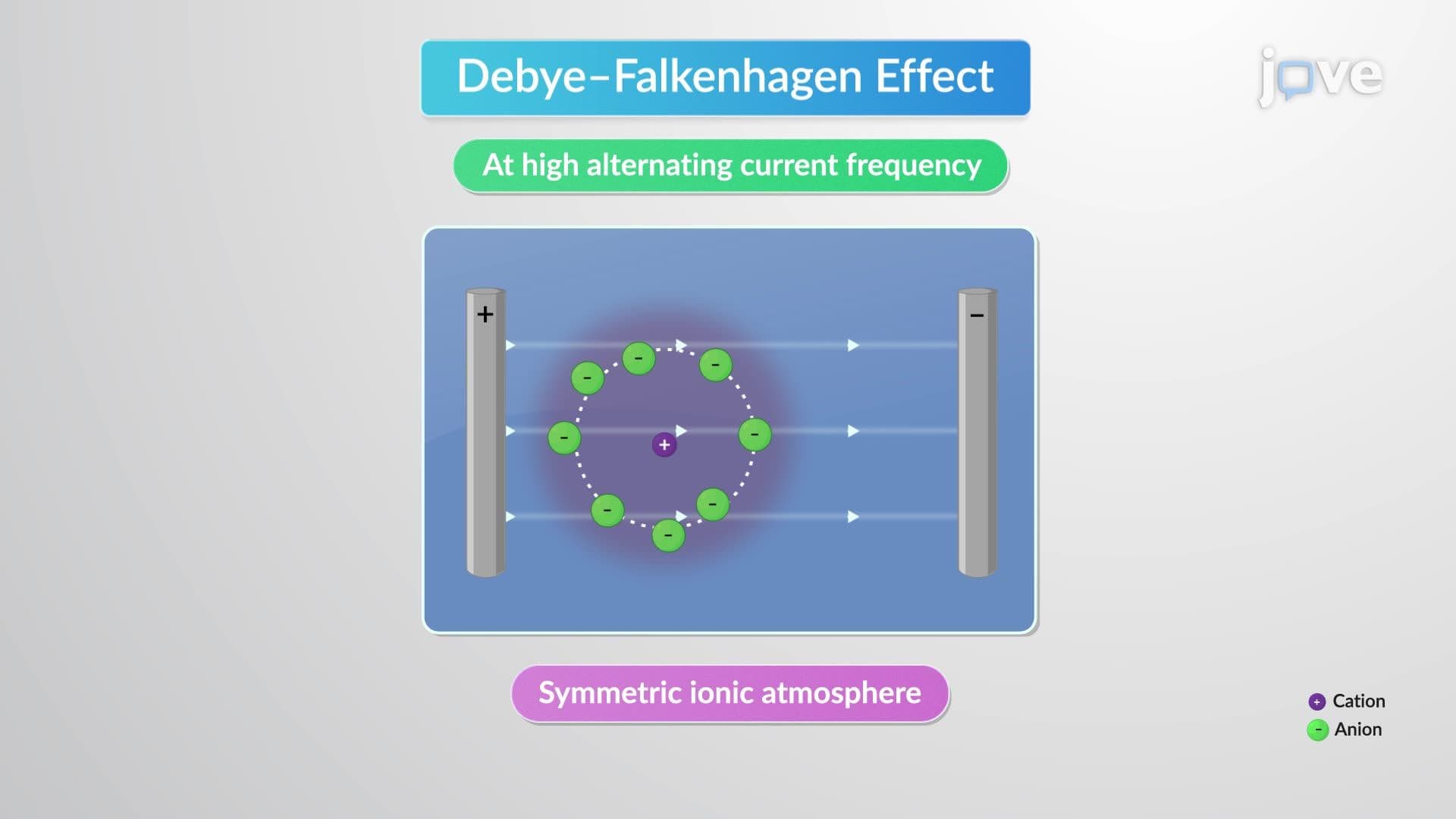
At higher concentrations, ions interact with one another through electrostatic forces, slowing each other down and complicating conductance measurements. As dilution increases, these inter-ionic interactions decrease until, at infinite dilution, every ion moves through the solution with maximum freedom. This is the condition under which Kohlrausch's Law holds exactly. Each ion's contribution is directly proportional to its ionic mobility, the speed at which it migrates under a unit electric field. Understanding how concentration affects molar conductivity is crucial for AP Chemistry students, as exam questions frequently test the relationship between dilution and conductance behavior across strong versus weak electrolytes.
A powerful application of Kohlrausch's Law is the calculation of transport numbers (also called transference numbers). The transport number of an ion represents the fraction of total electrical current it carries in solution. Since each ion's molar ionic conductance is proportional to its mobility at infinite dilution, the transport number of the cation (t+) is calculated as:
t+ = λ+° / (λ+° + λ−°)
The significance of the transference number lies in its ability to reveal how charge is distributed between ionic species during conductance, information critical in designing electrochemical cells and industrial electrolysis processes, including those used in US battery manufacturing and water treatment facilities.
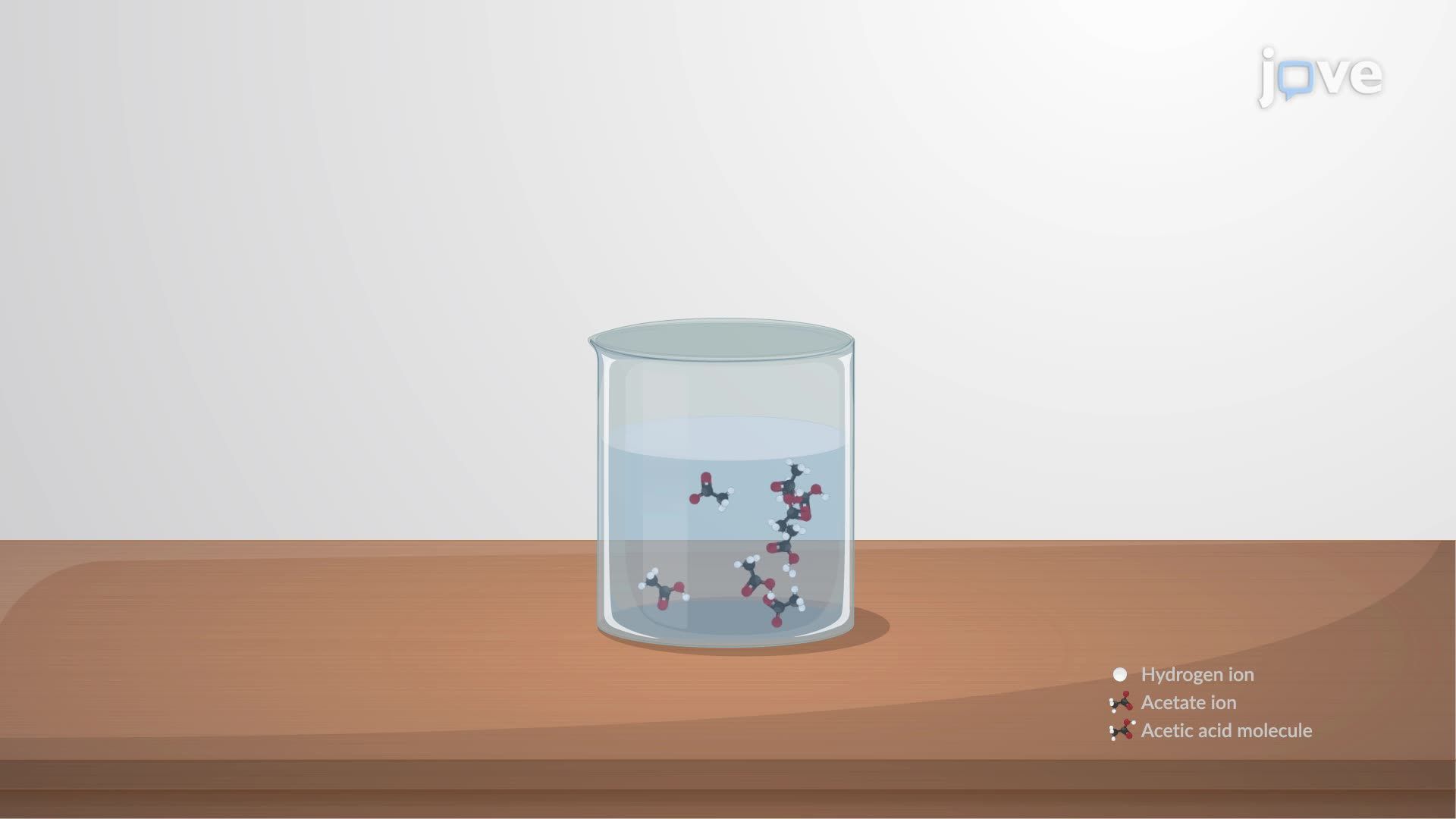
Weak electrolytes like acetic acid present a challenge: they never fully dissociate, so their Λm° cannot be measured directly by extrapolating conductance data to infinite dilution. Kohlrausch's Law solves this elegantly through an additive approach using experimentally accessible strong electrolytes:
Λm°(CH₃COOH) = Λm°(HCl) + Λm°(CH₃COONa) − Λm°(NaCl)
Once Λm° is known, the degree of dissociation (α) of the weak electrolyte at any given concentration can be determined:
α = Λm / Λm°
This connects directly to Ostwald's Dilution Law, which relates the dissociation constant (Ka) to concentration and degree of dissociation. Similarly, the molar conductance of sparingly soluble salts like AgCl, which cannot be measured in saturated solution easily, can be derived from strong electrolyte data. This indirect method is routinely tested on college general chemistry midterms and is a high-yield topic for MCAT preparation, particularly in the Physical and Chemical Foundations section. The principle also underpins conductometric titrations, where changes in solution conductance signal the equivalence point, a technique used in US pharmaceutical quality control labs.
Related Micro-courses