Loading concepts…


8 Concepts
14 Concepts
6 Concepts
6 Concepts
9 Concepts
8 Concepts
2 Concepts
8 Concepts
8 Concepts
9 Concepts
16 Concepts
6 Concepts
 16 Concepts
 3.1K Views
 Popular topics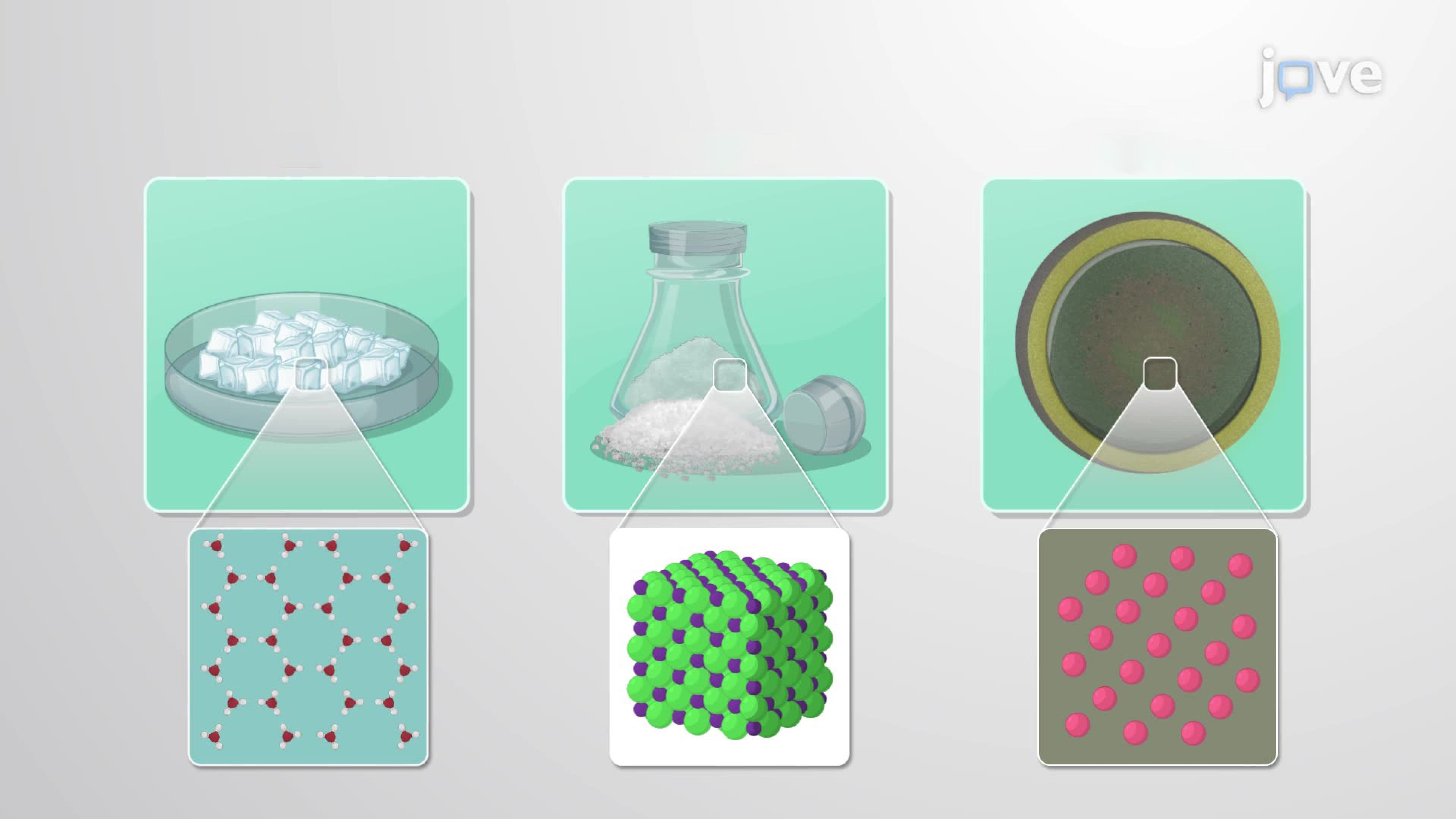
Solid state chemistry explores how atomic arrangement governs the physical and chemical behavior of crystalline materials. This micro-course covers crystal structures, symmetry, unit cells, X-ray crystallography, lattice energies, surface defects, adsorption isotherms, and electrode processes, topics central to materials science, pharmaceuticals, and semiconductor manufacturing across US industries. JoVE Coach guides students through each concept with clarity.
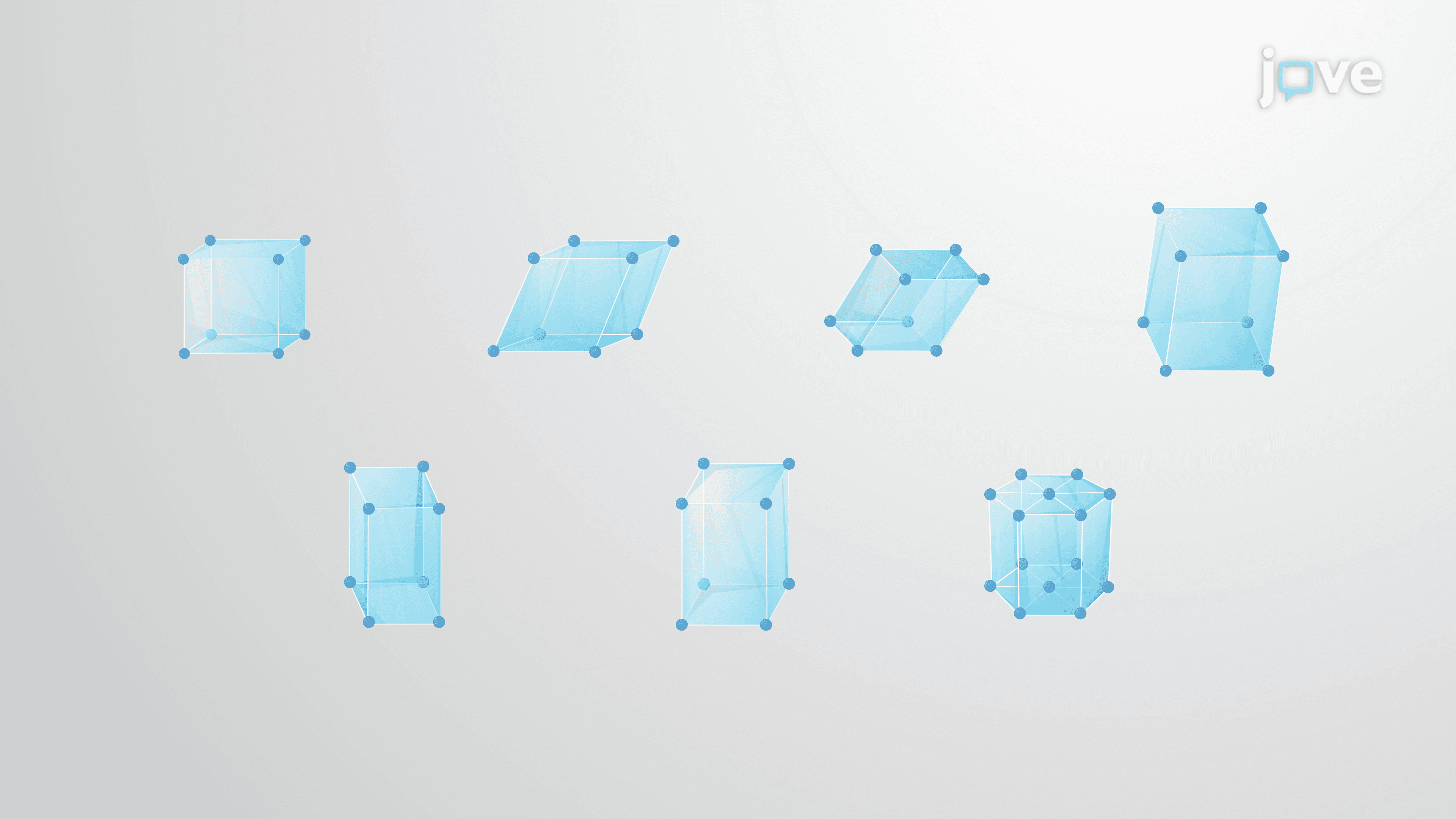
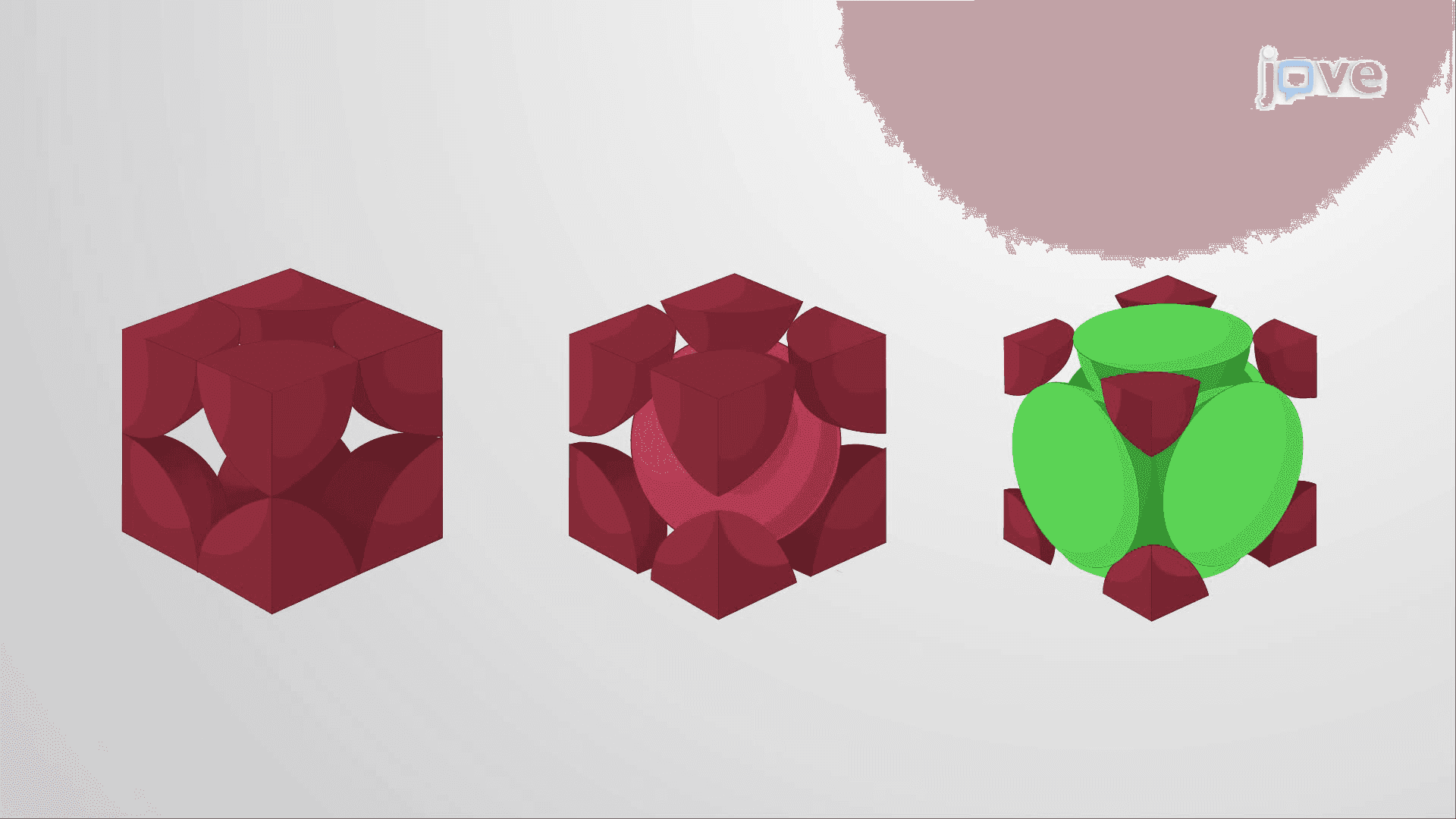
1. Unit Cells and Bravais Lattices A unit cell is the smallest repeating building block of a crystal lattice. Defined by edge lengths *a*, *b*, and *c* and the angles α, β, and γ between them, unit cells are chosen to have maximum symmetry and minimum volume. The number of atoms or formula units per unit cell, *Z*, varies by lattice type: *Z* = 1 for primitive, *Z* = 2 for body-centered cubic (BCC), and *Z* = 4 for face-centered cubic (FCC). For example, in cesium chloride, corner ions each contribute 1/8 to the unit cell, yielding a 1:1 Cs⁺:Cl⁻ ratio consistent with its formula. Bravais lattices extend these ideas across all 14 possible three-dimensional periodic arrangements of points in space.
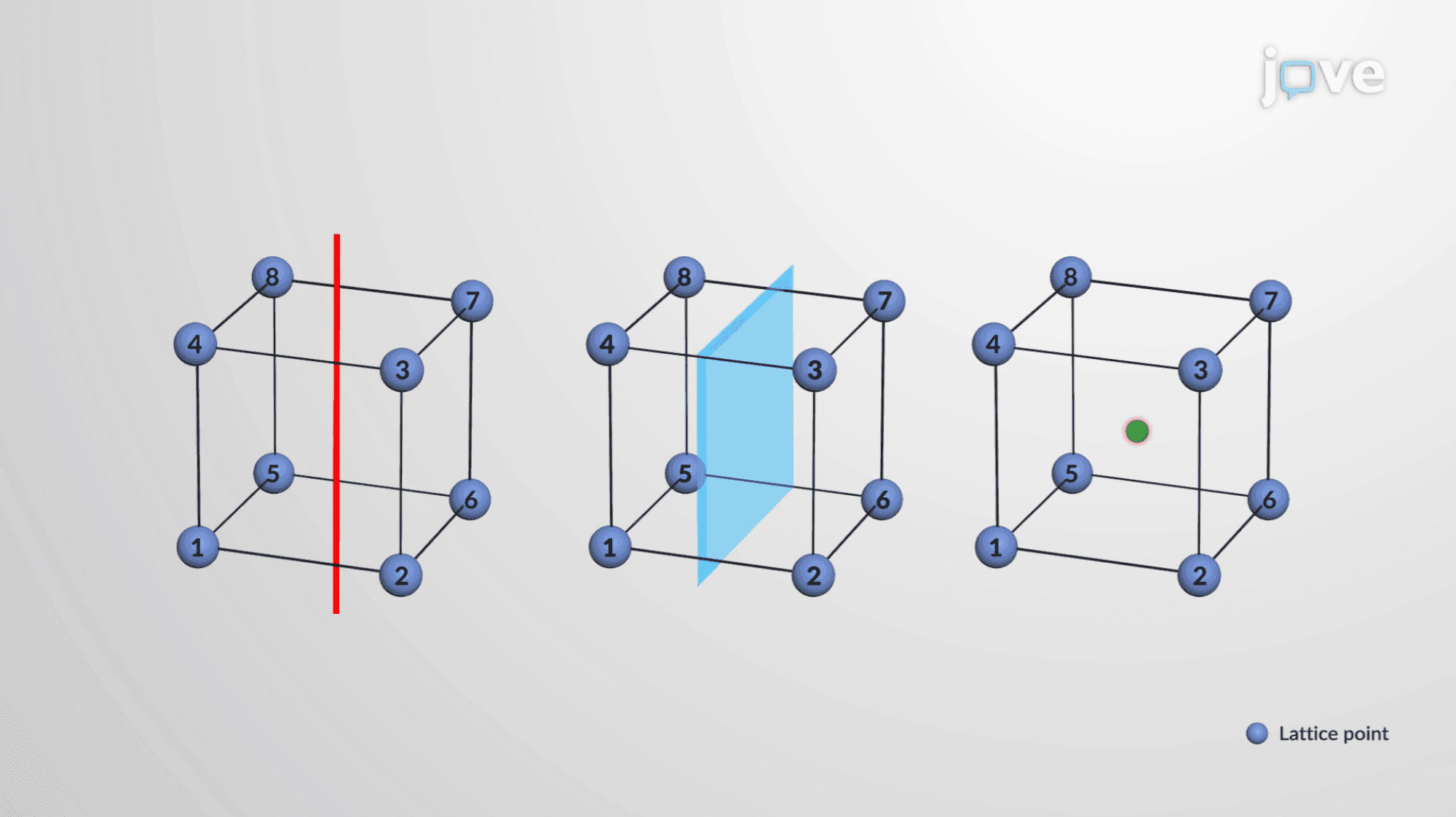
2. Symmetry Elements and the Seven Crystal Systems Crystals exhibit symmetry because their atoms repeat in predictable three-dimensional patterns. Symmetry operations, including rotation, reflection, inversion, translation, screw axes, and glide planes, describe how a crystal maps onto itself. These operations act on symmetry elements such as rotation axes, mirror planes, and inversion centers. Based on the relationships among lattice vectors and angles, all crystals are classified into seven systems: cubic, tetragonal, orthorhombic, monoclinic, triclinic, trigonal (rhombohedral), and hexagonal. Each system has distinct geometric constraints. For instance, the cubic system requires *a* = *b* = *c* with all right angles, a symmetry seen in common table salt (NaCl) and many semiconductor materials like silicon.
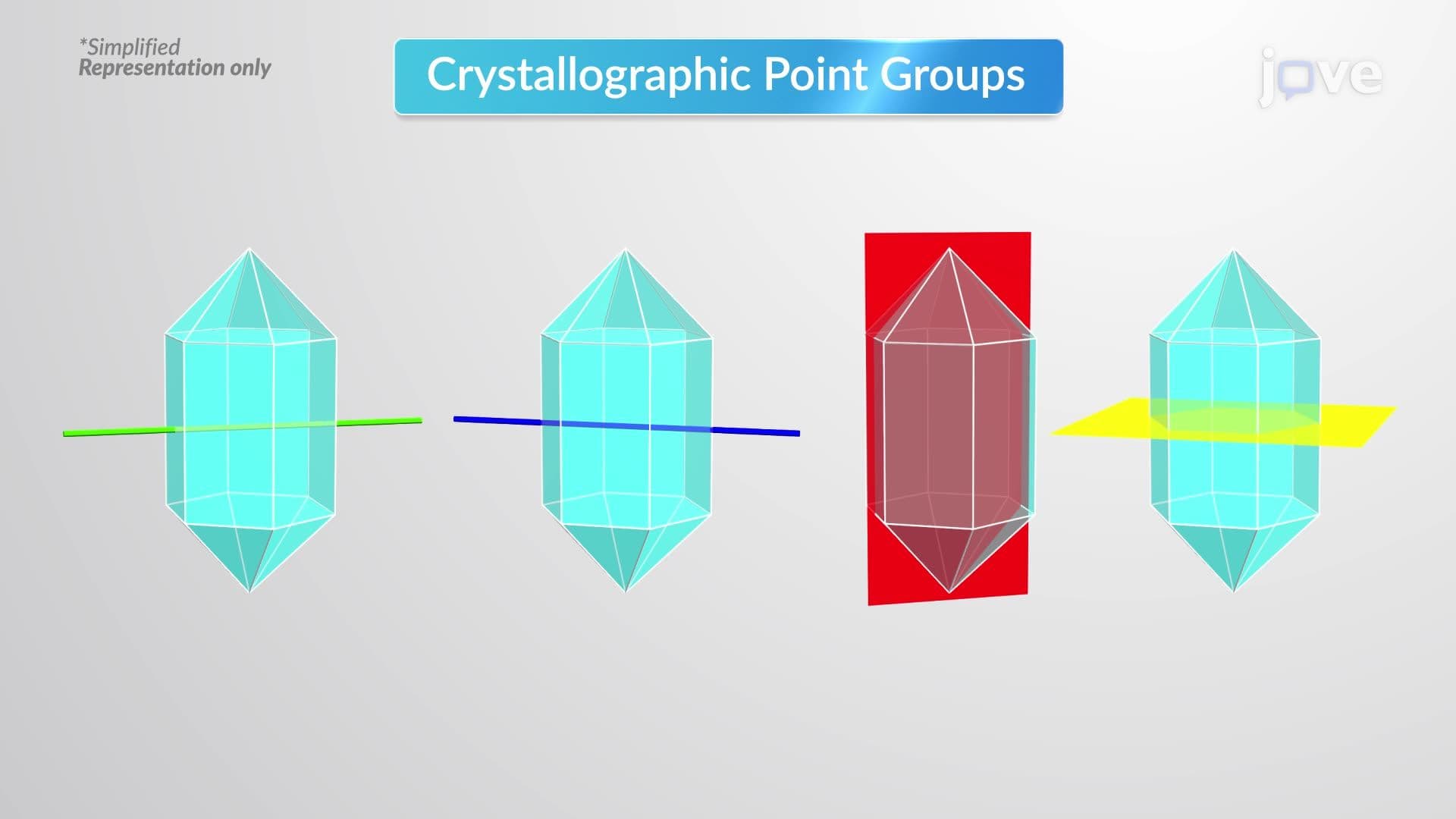
3. Crystallographic Point Groups Point groups classify the complete set of symmetry operations that leave at least one point in the crystal fixed. Each of the seven crystal systems contains specific point groups. The triclinic system, with minimal symmetry, contains only C₁ and Cᵢ groups. The cubic system, with the highest symmetry, includes T, Tₕ, Tᵈ, O, and Oₕ groups. Altogether, there are 32 crystallographic point groups distributed across the seven systems. These groups are essential for predicting crystal properties, including optical activity, piezoelectricity, and vibrational spectra, and are heavily used in materials characterization at US research institutions and national laboratories such as Argonne and Brookhaven.
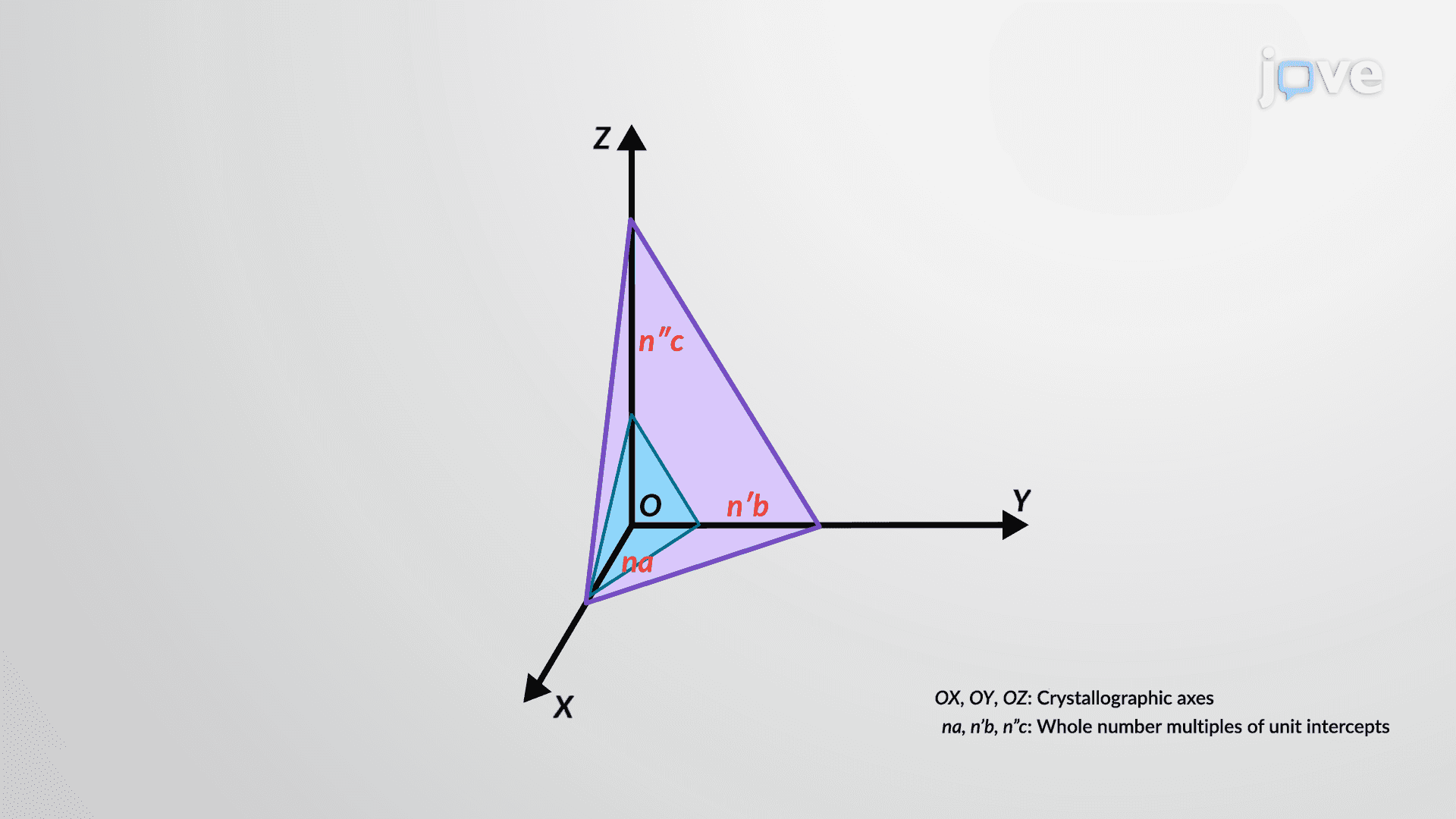
4. Crystal Density and the Law of Rational Indices Crystal density (ρ) is calculated from the unit cell's mass and volume: mass equals *Z* × molar mass ÷ Avogadro's number, while volume is the product of edge lengths for orthogonal cells. This formula connects measurable macroscopic density to atomic-scale structure. Separately, the Law of Rational Indices states that crystal faces intersect crystallographic axes at distances that are simple whole-number multiples of the unit intercepts, the basis for Miller indices notation. Miller indices, written as (*hkl*), are widely used in US materials science and semiconductor industries to specify crystal planes, guide thin-film deposition, and predict surface reactivity in processes like silicon wafer fabrication.
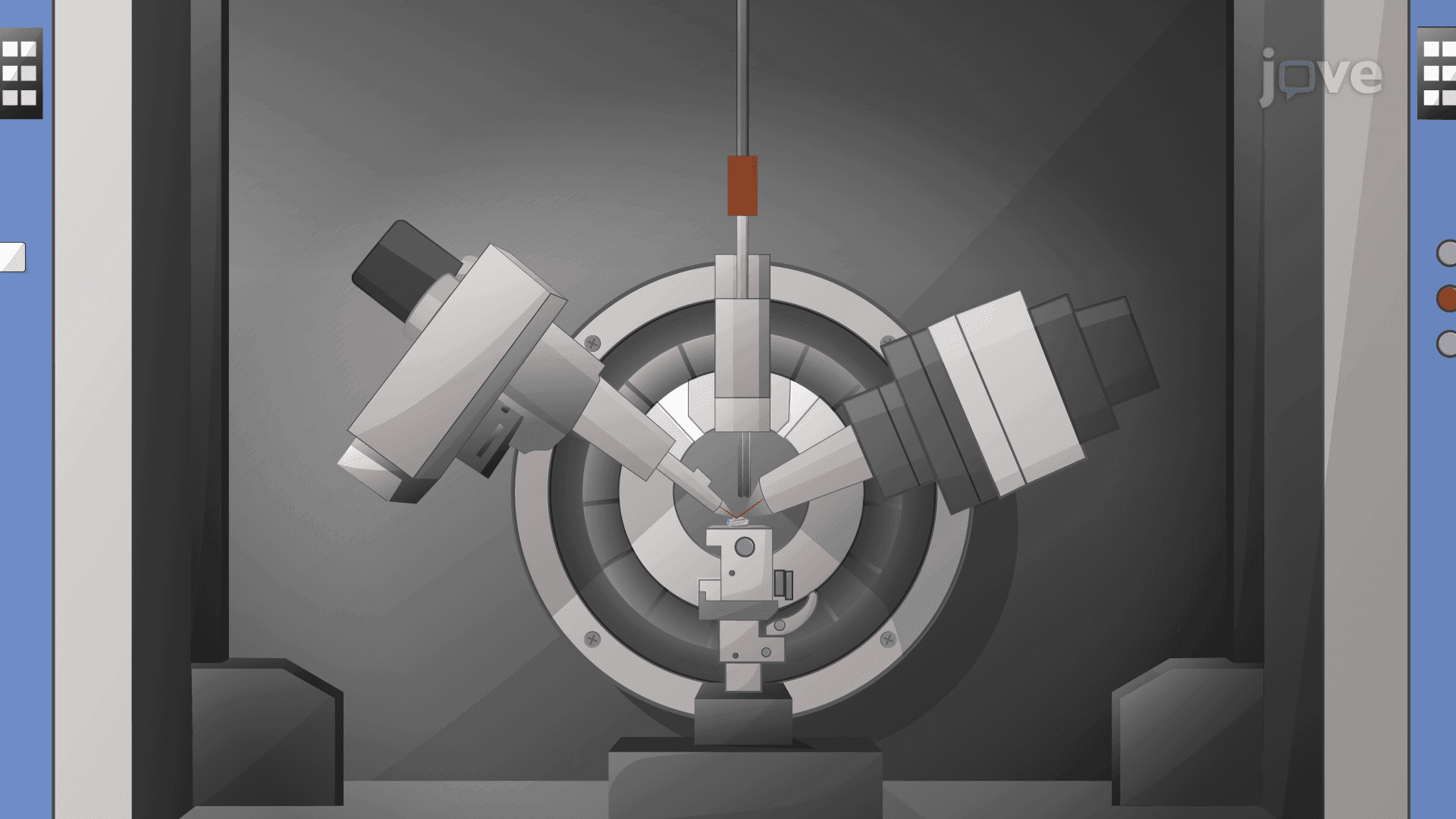
5. X-Ray Crystallography and Bragg's Law X-ray crystallography is the primary experimental technique for determining crystal structures. When monochromatic X-rays strike ordered atomic planes separated by a spacing *d*, constructive interference occurs only at specific angles, a relationship captured by Bragg's Law: *nλ* = 2*d* sin θ. Measuring diffraction angles allows scientists to calculate interplanar distances and ultimately reconstruct three-dimensional atomic arrangements. This technique has been central to landmark discoveries, including the structure of DNA by Watson and Crick using Franklin's X-ray data, and the structures of thousands of pharmaceutical compounds and proteins solved at US research facilities. It remains the gold standard for crystal structure determination.
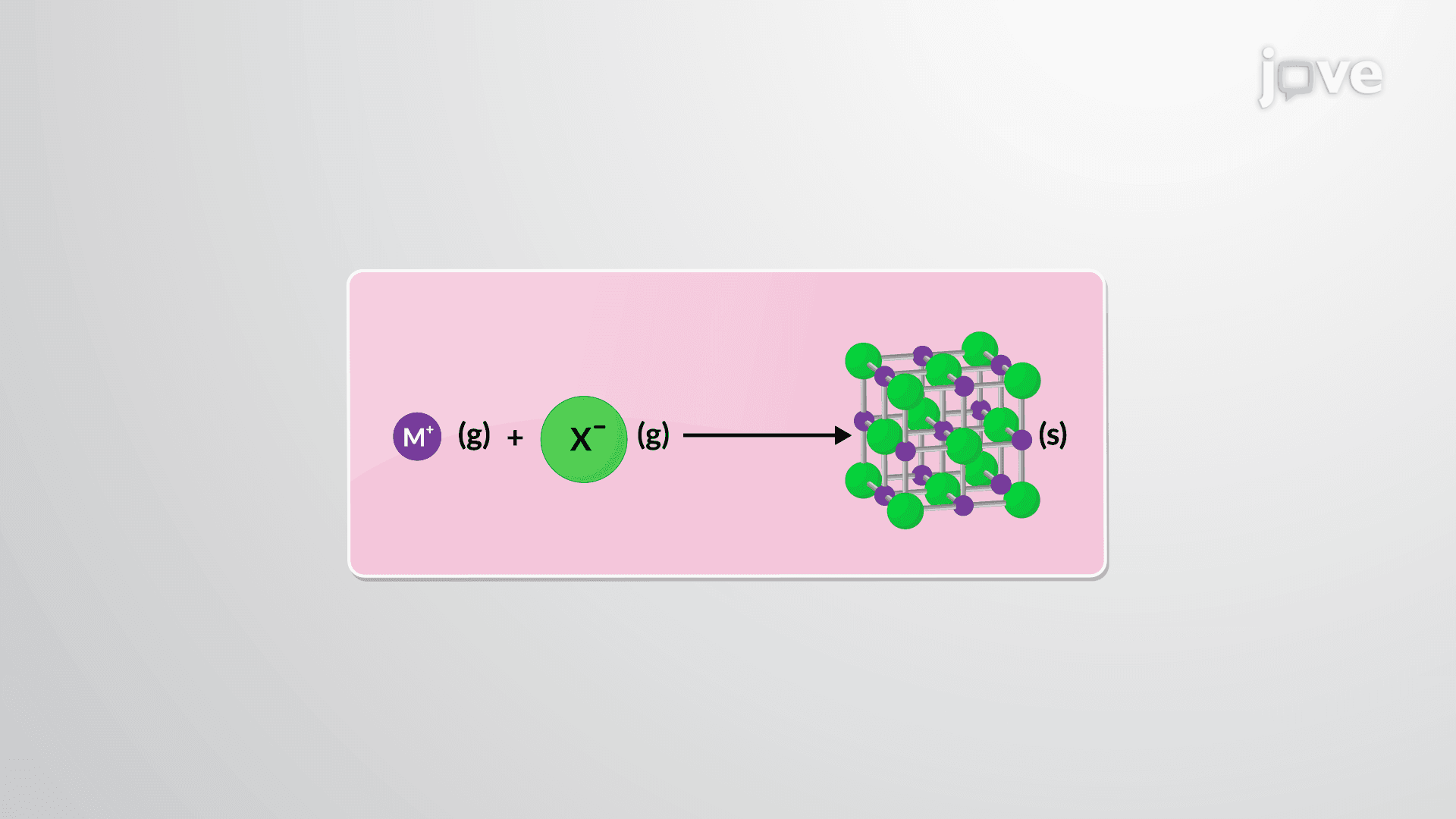
6. Lattice Energies of Ionic Crystals Lattice energy is the energy released when one mole of gaseous ions combines to form one mole of ionic crystal. It reflects the electrostatic strength holding the lattice together and is governed by Coulomb's Law, increasing with larger ionic charges and decreasing with greater interionic distances. Because each ion interacts with many neighbors, the Madelung constant (*M*) accounts for all attractive and repulsive interactions in the lattice geometry. The Born-Landé equation incorporates both attraction and short-range electron cloud repulsion to give a complete expression for lattice energy. The Born-Mayer refinement adds a repulsive range parameter. Lattice energies help predict solubility, melting point, and hardness of ionic compounds such as NaCl, MgO, and CaF₂.
7. Crystal Defects: Point, Line, and Plane Real crystals deviate from perfect periodic order, these deviations are called defects. Point defects affect individual atomic sites: Schottky defects involve paired ion vacancies in ionic crystals (e.g., NaCl), while Frenkel defects involve cations displaced into interstitial sites (e.g., AgBr). Schottky defects lower observed crystal density relative to X-ray predictions; Frenkel defects do not. Non-stoichiometric defects, metal excess (F-centers) and metal deficiency, alter electrical and optical properties. F-centers in sodium chloride produce characteristic yellow coloring. Line defects (edge and screw dislocations) reduce long-range order and influence mechanical strength. Plane defects involve stacking errors between crystal layers and commonly occur at grain boundaries in polycrystalline metals used in US aerospace and automotive industries.
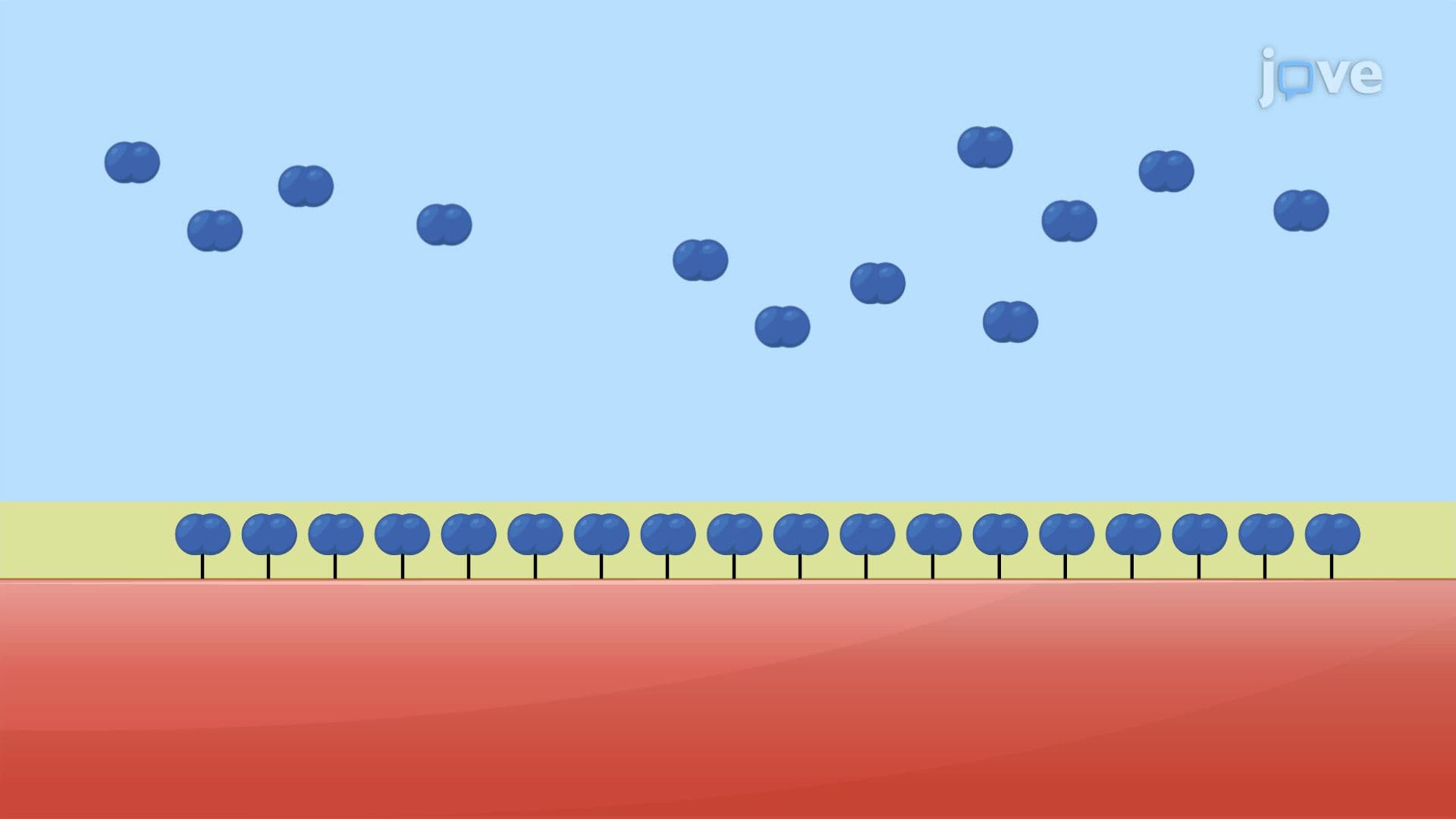
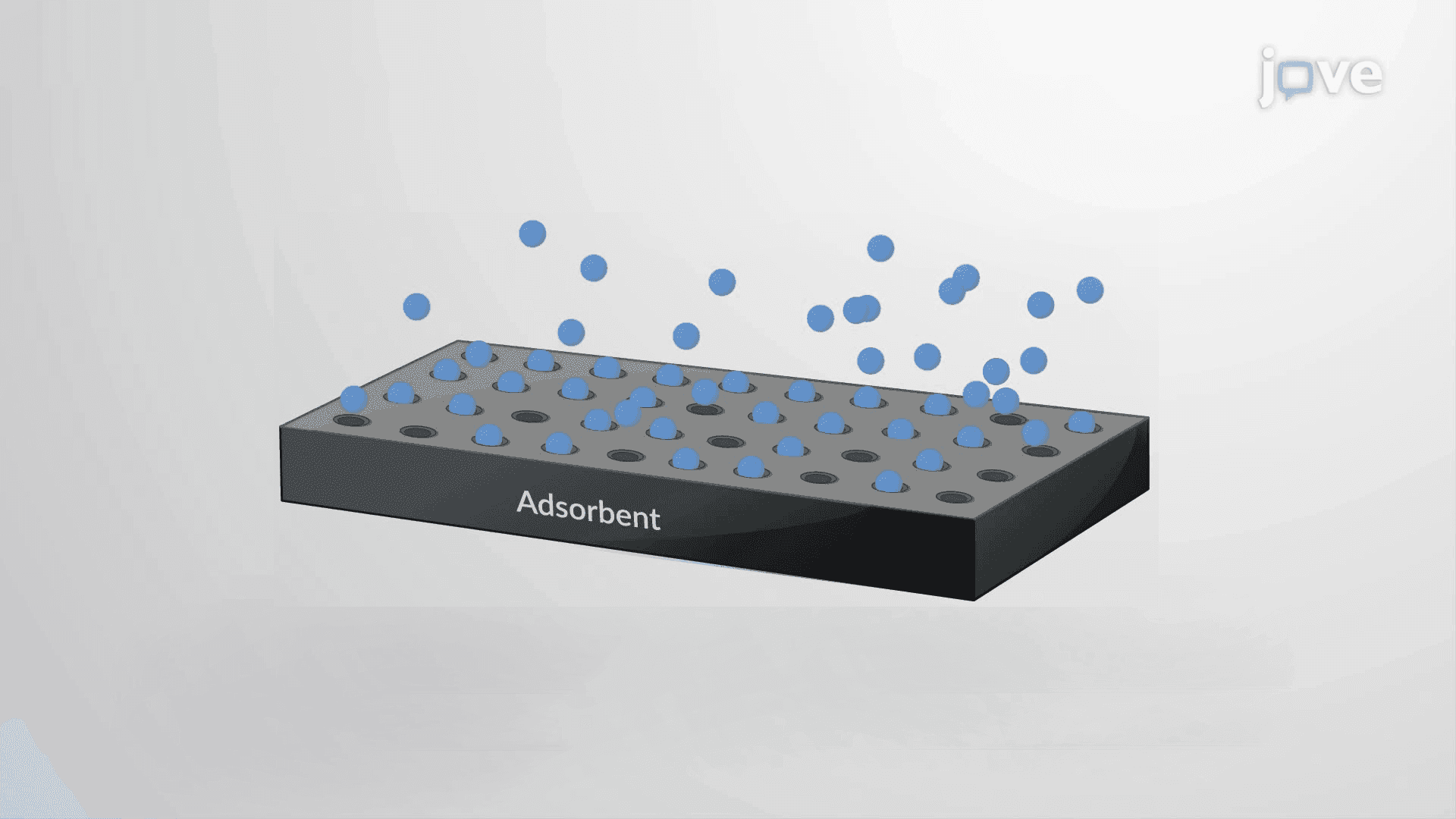
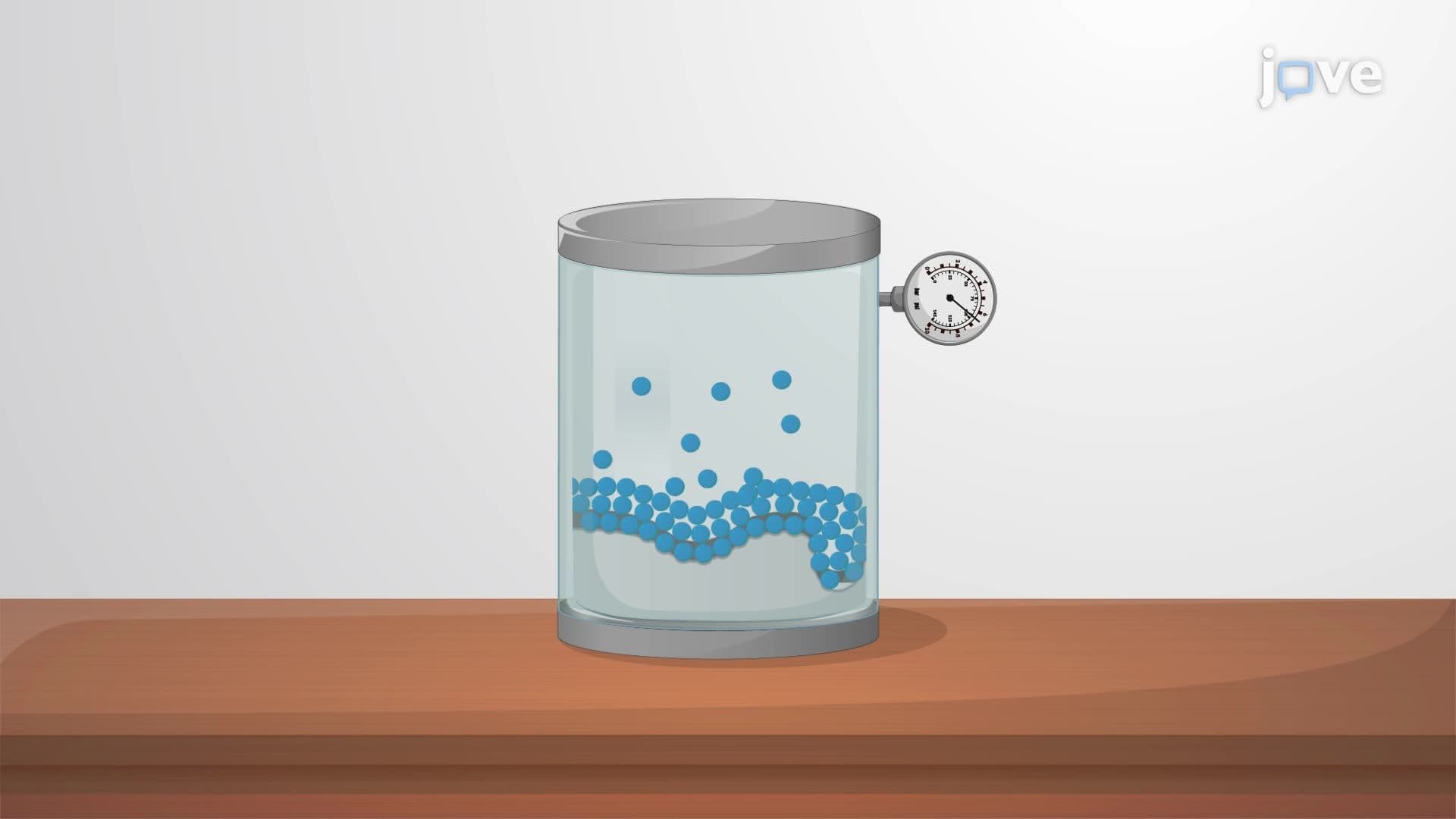
8. Adsorption of Gases on Solids and Adsorption Isotherms Adsorption describes how gas molecules (adsorbates) bind to solid surfaces (adsorbents). Physisorption involves weak van der Waals forces and forms multilayers; chemisorption forms strong chemical bonds and typically produces a single monolayer. The Langmuir isotherm models reversible monolayer chemisorption on identical, non-interacting surface sites, yielding fractional surface coverage (θ) as a function of pressure. A modified Langmuir model handles dissociative adsorption (e.g., H₂ on metal catalysts). The BET isotherm extends this to multilayer physisorption, using a linear BET plot to determine monolayer volume and surface area per unit mass, a critical measurement in characterizing catalysts, activated carbons, and porous materials used in US industrial filtration and drug delivery systems.
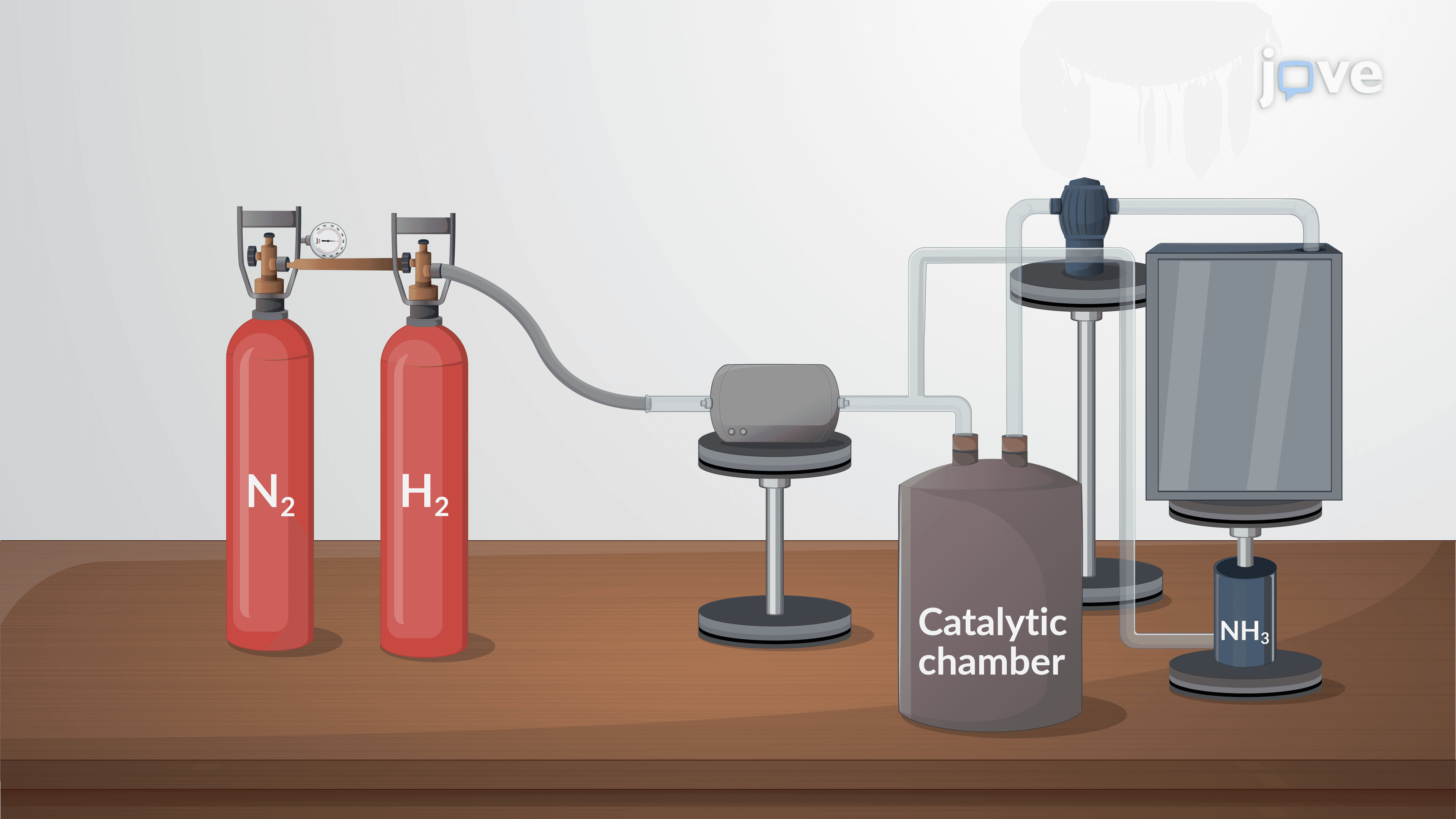
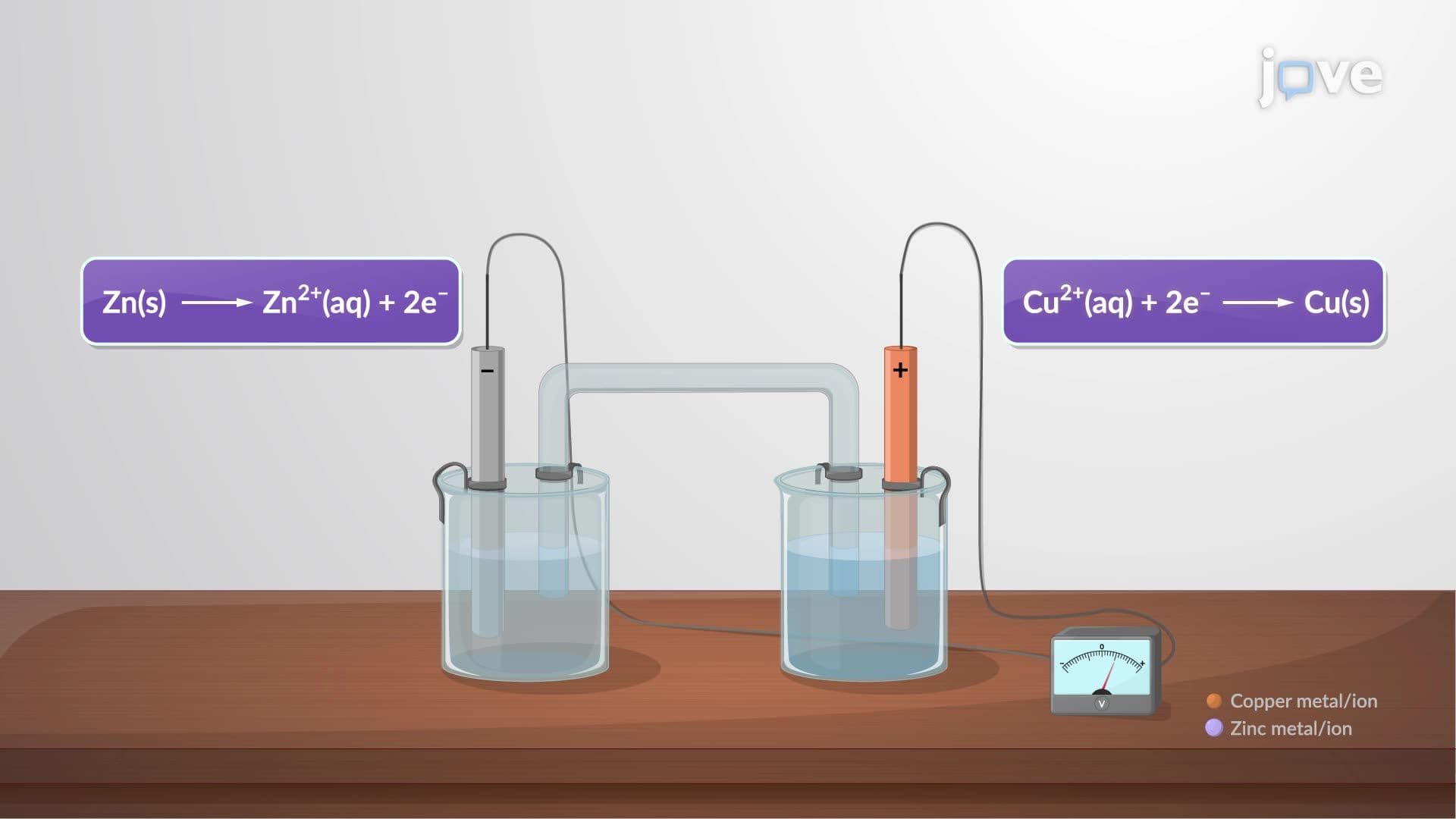
9. Heterogeneous Catalysis and Electrode Processes Heterogeneous catalysis occurs when reactants and catalyst exist in different phases, typically gas-phase reactants on a solid metal or metal oxide catalyst. The process involves chemisorption of reactants, surface reaction, and product desorption. Promoters preserve catalytic surface area by preventing sintering; poisons block active sites. Two surface reaction mechanisms dominate: the Langmuir-Hinshelwood (LH) mechanism, where two adsorbed species react on the surface, and the Eley-Rideal (ER) mechanism, where a gas-phase molecule reacts with an adsorbed one. Electrode processes involve oxidation and reduction at surfaces, described by electrical double-layer models (Helmholtz, Gouy-Chapman, Stern) and the Butler-Volmer equation, which relates current density to overpotential, foundational knowledge for US electrochemical industries including battery technology and fuel cells.