Loading concepts…


8 Concepts
14 Concepts
6 Concepts
6 Concepts
9 Concepts
8 Concepts
2 Concepts
8 Concepts
8 Concepts
9 Concepts
16 Concepts
6 Concepts
 8 Concepts
 1.8K Views
 Popular topics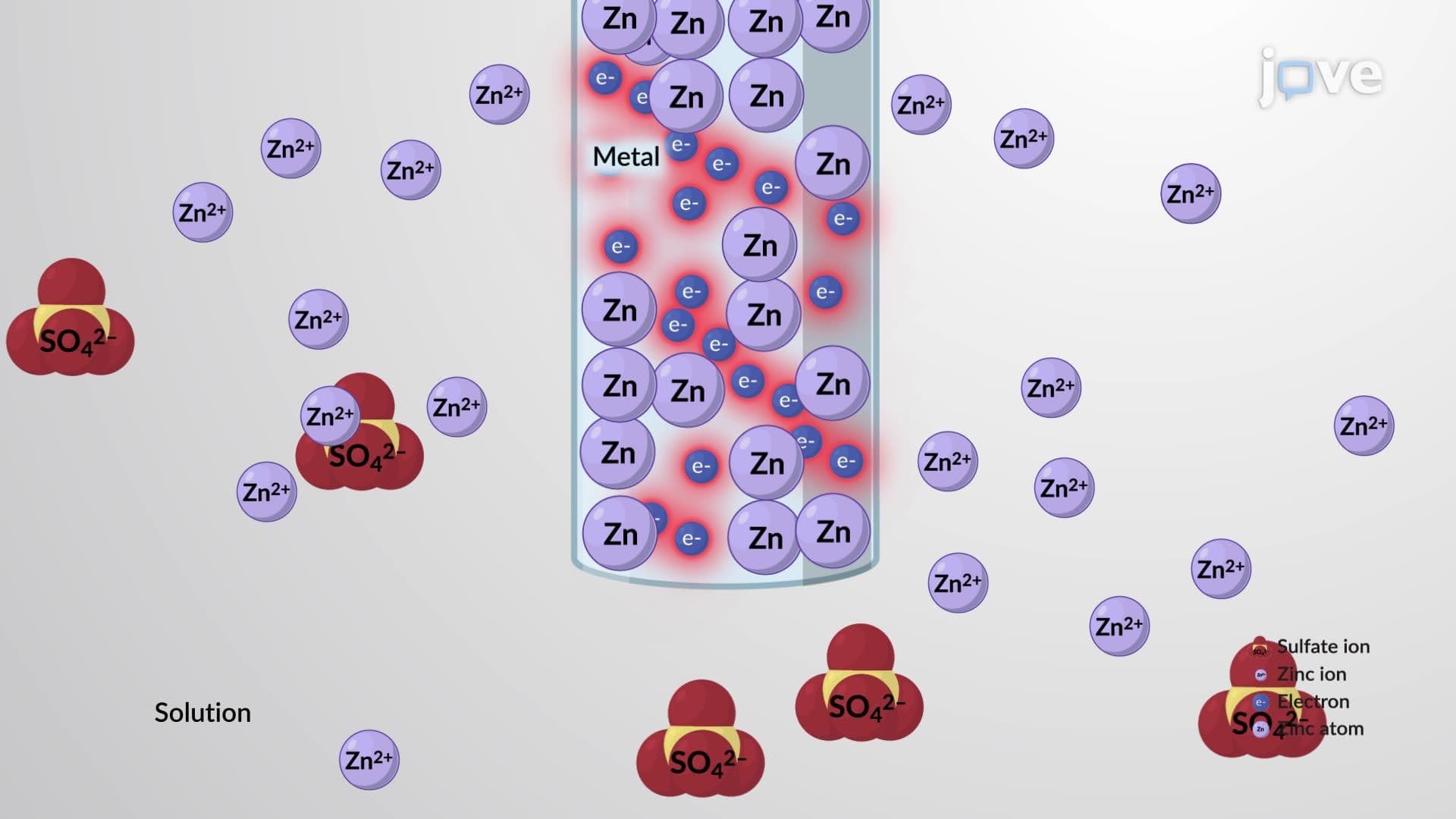
Electrochemical systems, where chemical energy converts to electrical energy and back, are foundational to batteries, fuel cells, corrosion prevention, and biosensors across US industries. This micro-course explores advanced electrochemistry through electrochemical cells, cell diagrams, electrode types, junction potentials, concentration cells, EMF applications, and the electrical double layer. Guided by JoVE Coach, students build the conceptual framework needed for rigorous STEM coursework.
1. Electrochemical Systems and Interphase Potential When a metal contacts an electrolyte solution, ions transfer across the interface until equilibrium is reached, generating an electric potential difference between the two phases. The charge carried by these ions is calculated using the Faraday constant (≈96,485 C/mol). The direction and magnitude of this potential depend on temperature, pressure, metal identity, solvent, and ion concentration. This principle underpins everyday technologies, from the zinc-based anodes used to protect steel pipelines from corrosion across the US to thermocouples used in industrial temperature measurement.
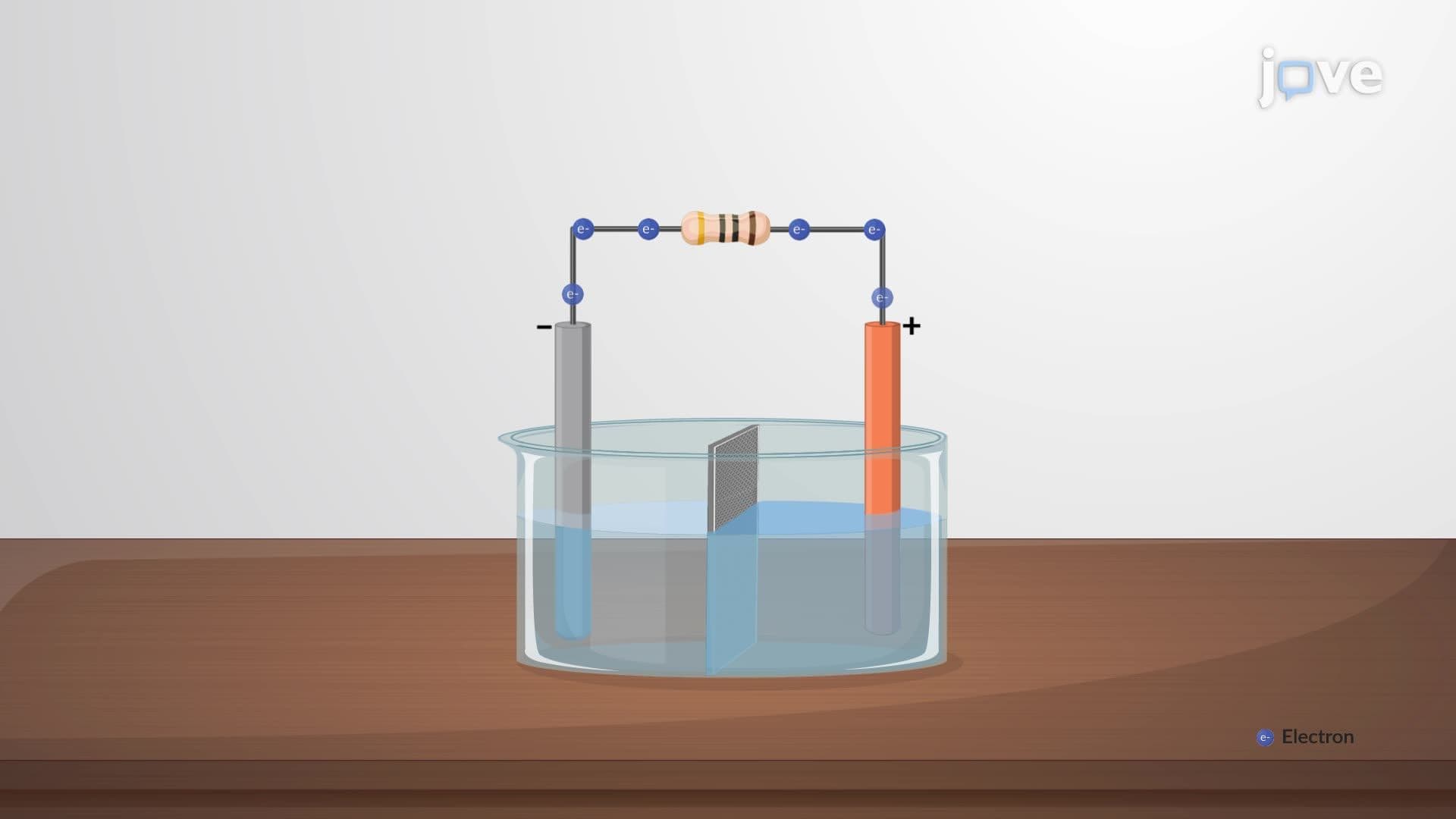
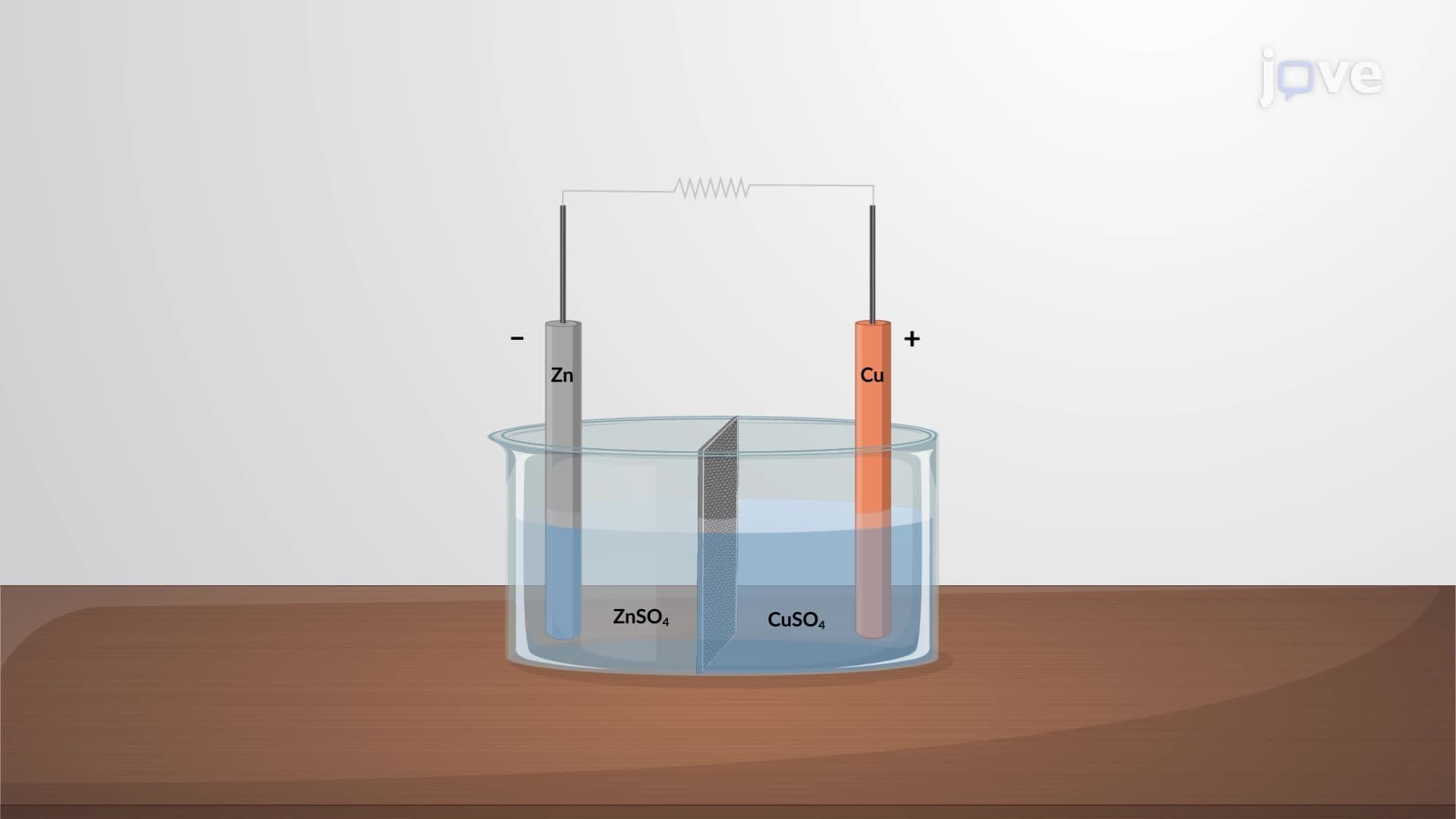
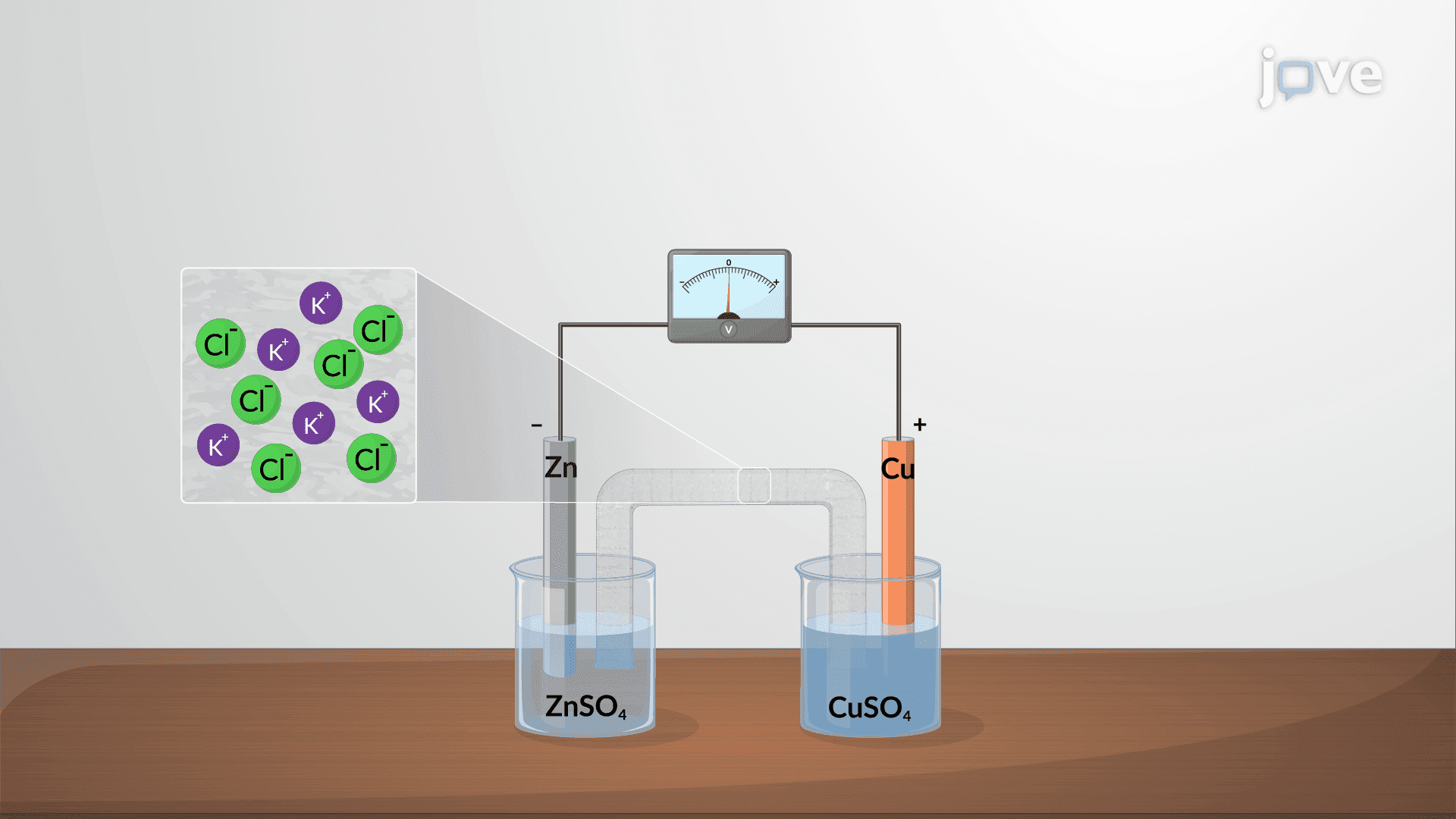
2. Galvanic and Electrolytic Cells Electrochemical cells consist of two half-cells, each containing an electrode immersed in an electrolyte, connected by a salt bridge and an external wire. A galvanic (voltaic) cell converts spontaneous chemical reactions into electrical energy, the classic example being the Daniell cell, where zinc oxidizes at the anode and copper ions reduce at the cathode. An electrolytic cell reverses this process: external electrical energy drives a non-spontaneous reaction, as seen in the industrial electroplating of metals or the chlor-alkali process used throughout the US chemical industry.
3. Cell Diagrams and IUPAC Conventions Electrochemists use standardized cell notation to compactly describe cell components and directionality. A single vertical bar ( | ) marks a phase interface; a double vertical bar ( || ) marks a junction where potential is neglected; a comma separates species in the same phase. By IUPAC convention, EMF = E(right electrode) − E(left electrode). A positive EMF confirms a spontaneous reaction as written, oxidation at the left, reduction at the right. This notation is directly tested in AP Chemistry free-response questions and appears throughout US electrochemistry textbooks such as Atkins' *Physical Chemistry*.
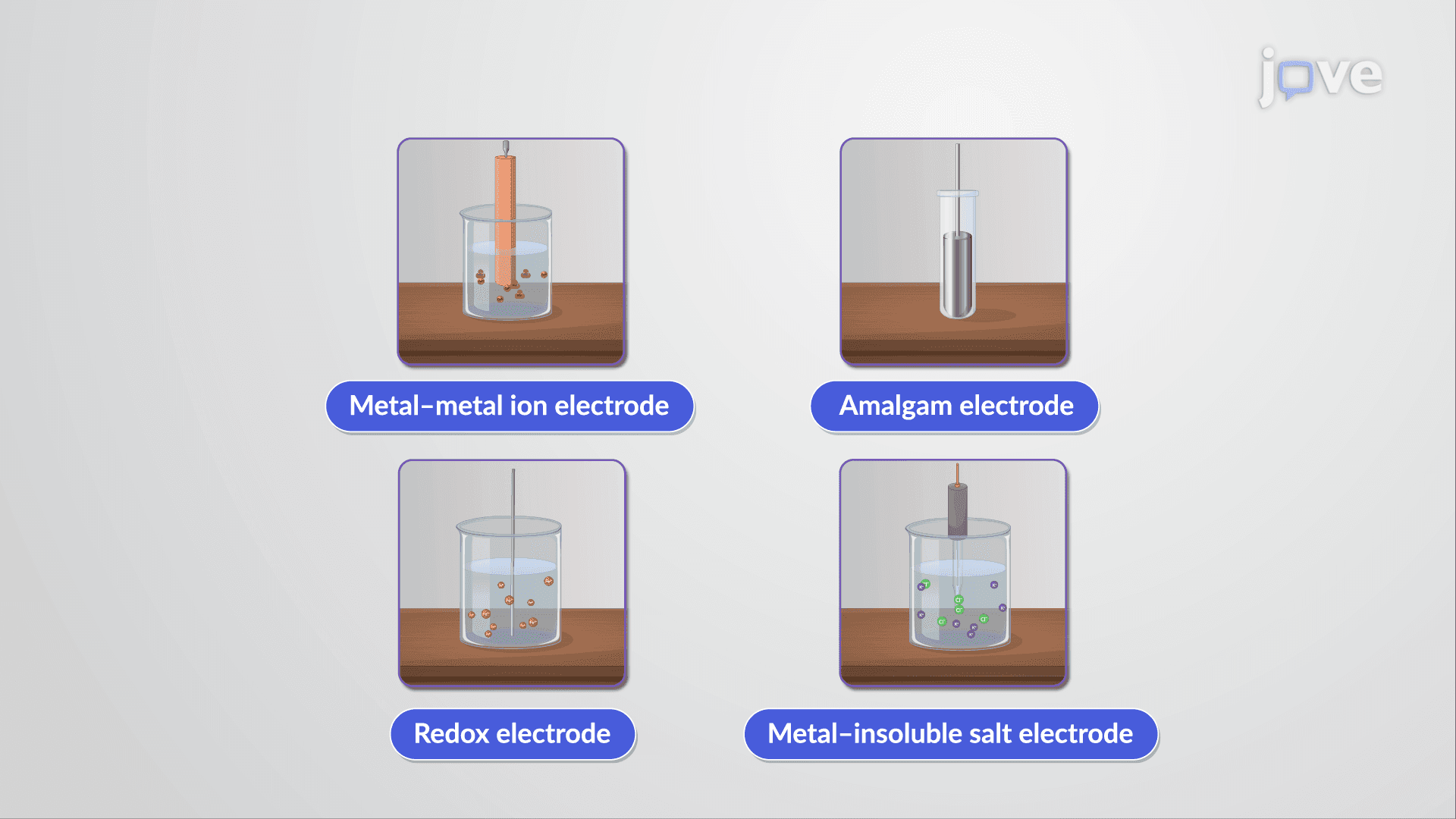
4. Types of Reversible Electrodes Reversible electrodes respond to small potential changes by shifting reaction direction. The four main types are: (1) metal-metal ion electrodes, such as a copper rod in CuSO₄ solution; (2) amalgam electrodes, where reactive metals like sodium are dissolved in mercury and equilibrated with their ions; (3) redox electrodes, involving two oxidation states of the same ion (e.g., Fe²⁺/Fe³⁺) with a platinum conductor; and (4) metal-insoluble salt electrodes, like the silver-silver chloride (Ag/AgCl) electrode widely used as a reference electrode in US biomedical and laboratory instrumentation.
5. Junction Potentials and Salt Bridges When two electrolyte solutions of different compositions meet, ions diffuse across the boundary at different rates, a phenomenon governed by ionic mobility. This unequal diffusion creates a charge separation called the liquid junction potential (E_J), which adds an uncontrolled error to measured EMF values. Salt bridges packed with concentrated KCl in agar gel minimize this effect because K⁺ and Cl⁻ have nearly equal mobilities, so their diffusion rates roughly cancel. This strategy is standard practice in US analytical chemistry laboratories and is critical for accurate potentiometric measurements.
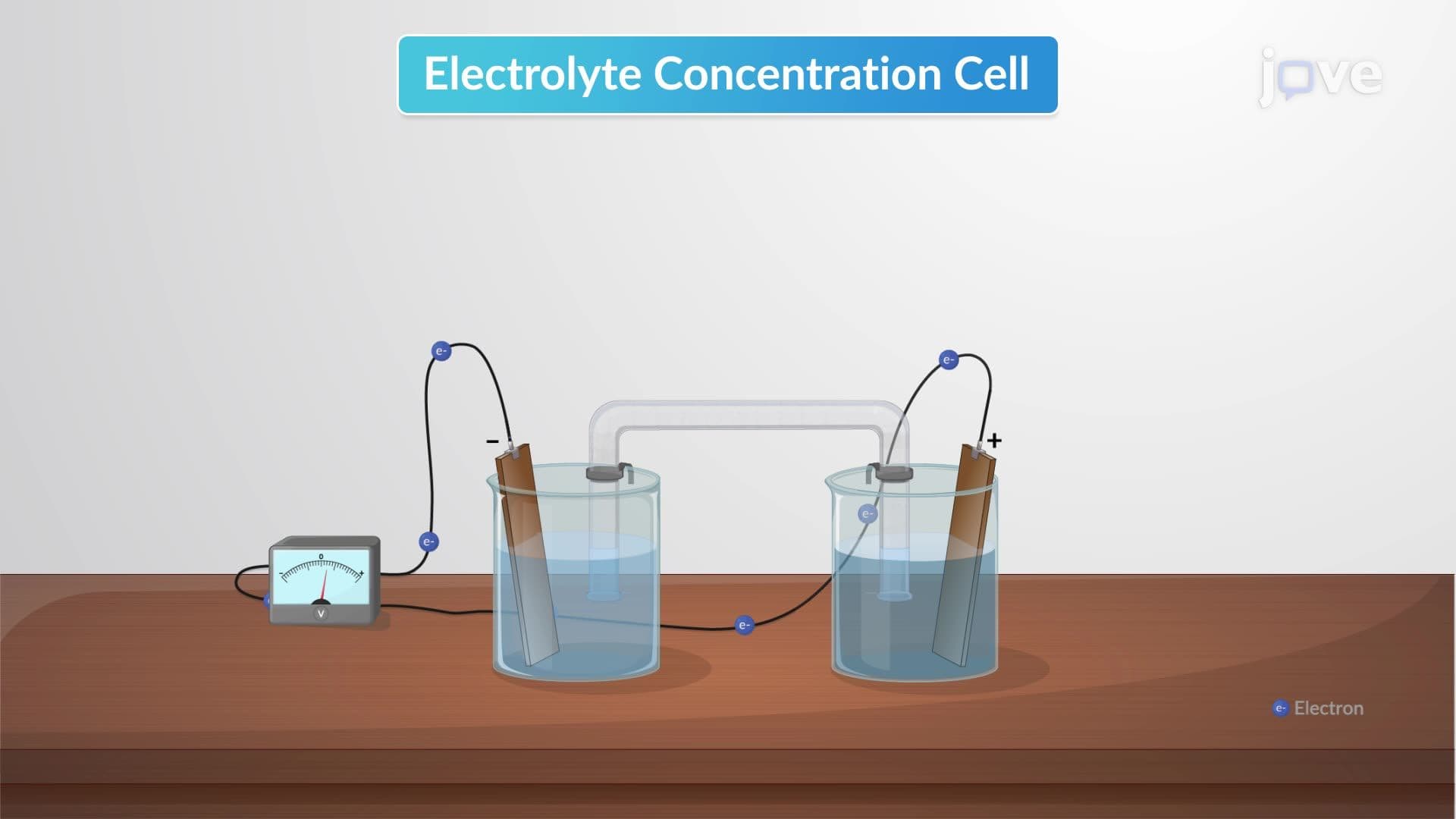
6. Concentration Cells Concentration cells generate EMF entirely from differences in ion activity or gas pressure between two identical half-cells, no net chemical transformation of species occurs. In electrode concentration cells, identical inert electrodes (e.g., platinum) are exposed to the same electrolyte but at different gas pressures, as in a hydrogen electrode pair. In electrolyte concentration cells, identical metal electrodes (e.g., zinc) are placed in solutions of different ion concentrations. The Nernst equation predicts EMF and spontaneity directly from the activity ratio. These cells are foundational to understanding pH meters and ion-selective electrodes used in clinical labs across the US.
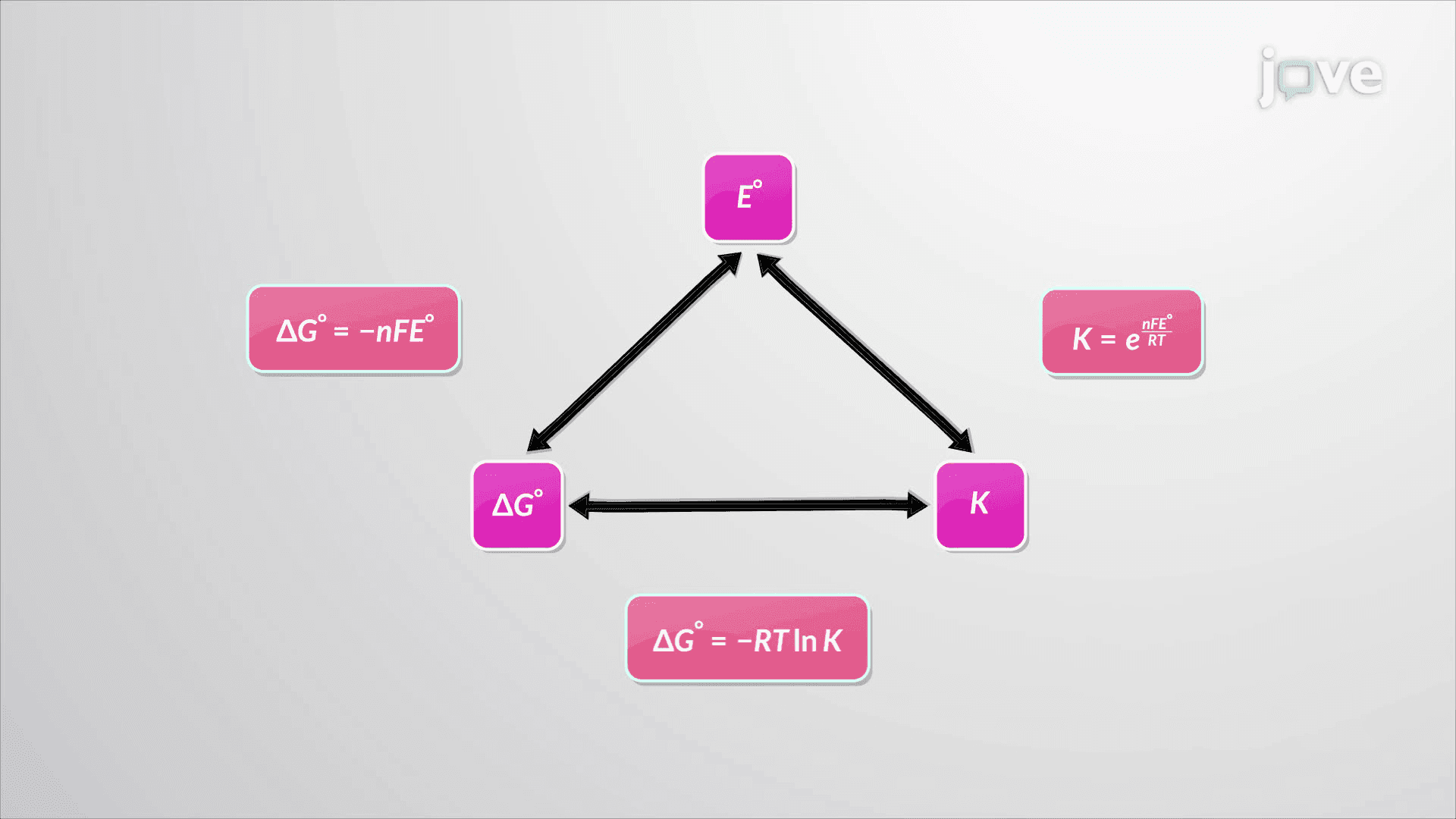
7. Applications of EMF Measurements Measured standard cell potentials (E°) connect directly to key thermodynamic quantities. The relationship ΔG° = −nFE° links EMF to Gibbs free energy, from which the equilibrium constant K can be extracted. The temperature dependence of E° (its temperature coefficient, dE°/dT) yields the standard entropy change (ΔS°), and combining this with ΔG° gives the standard enthalpy change (ΔH°), all without calorimetry. The electrochemical series, ranking metals by standard electrode potential, predicts reactivity: for example, zinc can reduce H⁺ (used in industrial acid cleaning) but cannot reduce Mg²⁺. Transference numbers of ions can also be measured by comparing EMF values from cells with and without transference.
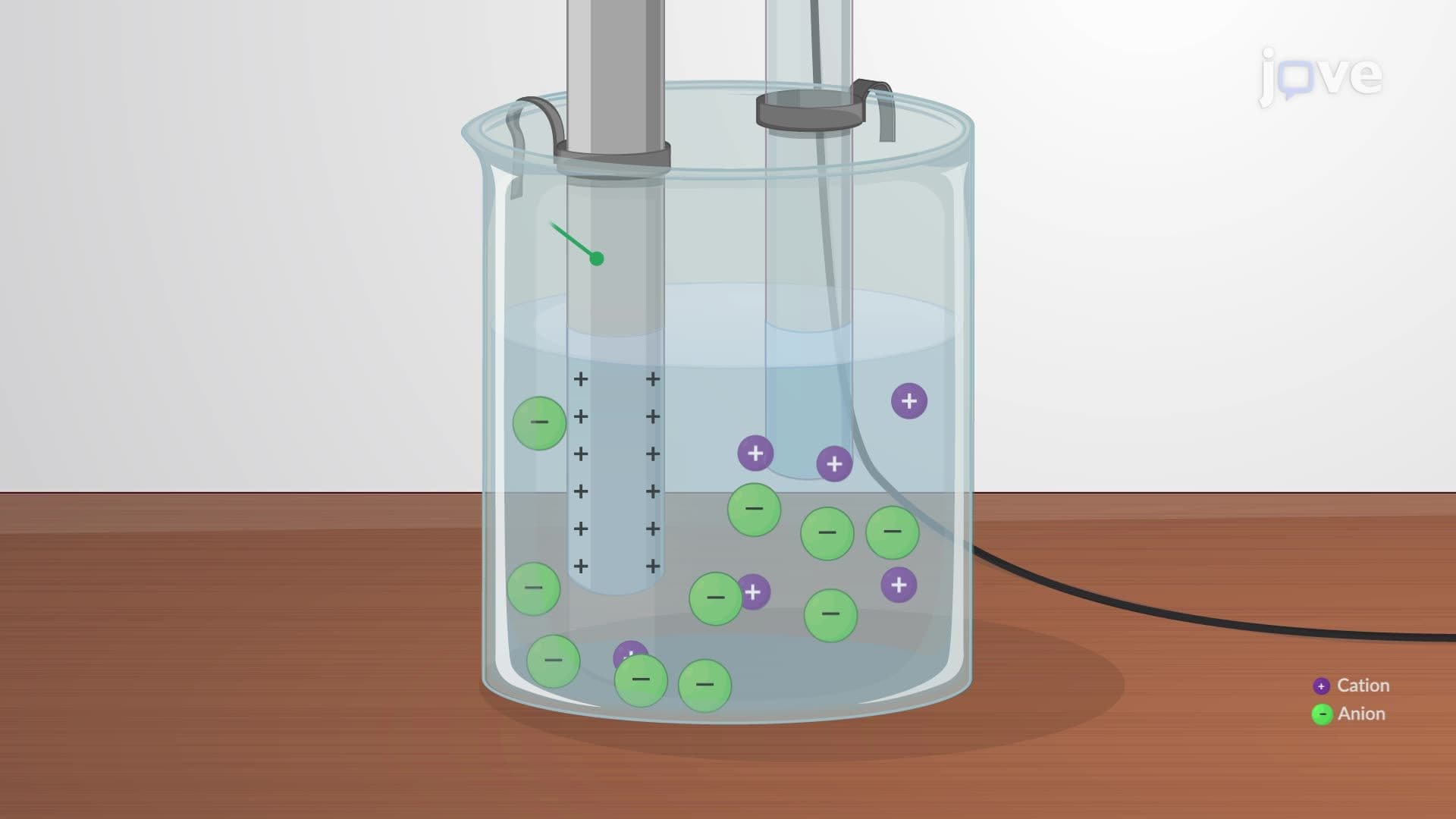
8. The Electrical Double Layer At the electrode-electrolyte interface, charge reorganizes into the electrical double layer (EDL), which governs capacitance, reaction kinetics, and sensor sensitivity. The simplest (primitive) model treats both surface charges as flat sheets. Helmholtz refined this by recognizing that solvated ions cannot contact the electrode directly, their closest approach defines the outer Helmholtz plane (OHP), producing a linear potential drop. The Gouy-Chapman model introduced a diffuse layer shaped by thermal motion, producing a non-linear potential profile. The Stern model combines both: a compact inner layer plus a diffuse outer region. Understanding the EDL is essential for designing supercapacitors and electrochemical biosensors, both active research areas at US national laboratories and universities.