Loading subject page…

1,788 views

Video Summary: What Is the Electrical Double Layer
Ever wonder why batteries stop working or how corrosion eats through metal pipes? The answer lies in the electrical double layer, a thin but powerful charge zone that forms where a solid electrode meets a liquid electrolyte. This phenomenon drives real-world technologies like the lithium-ion batteries in your Tesla or iPhone. Watch the full video on JoVE Coach to master this concept with expert-led visuals and step-by-step explanations.
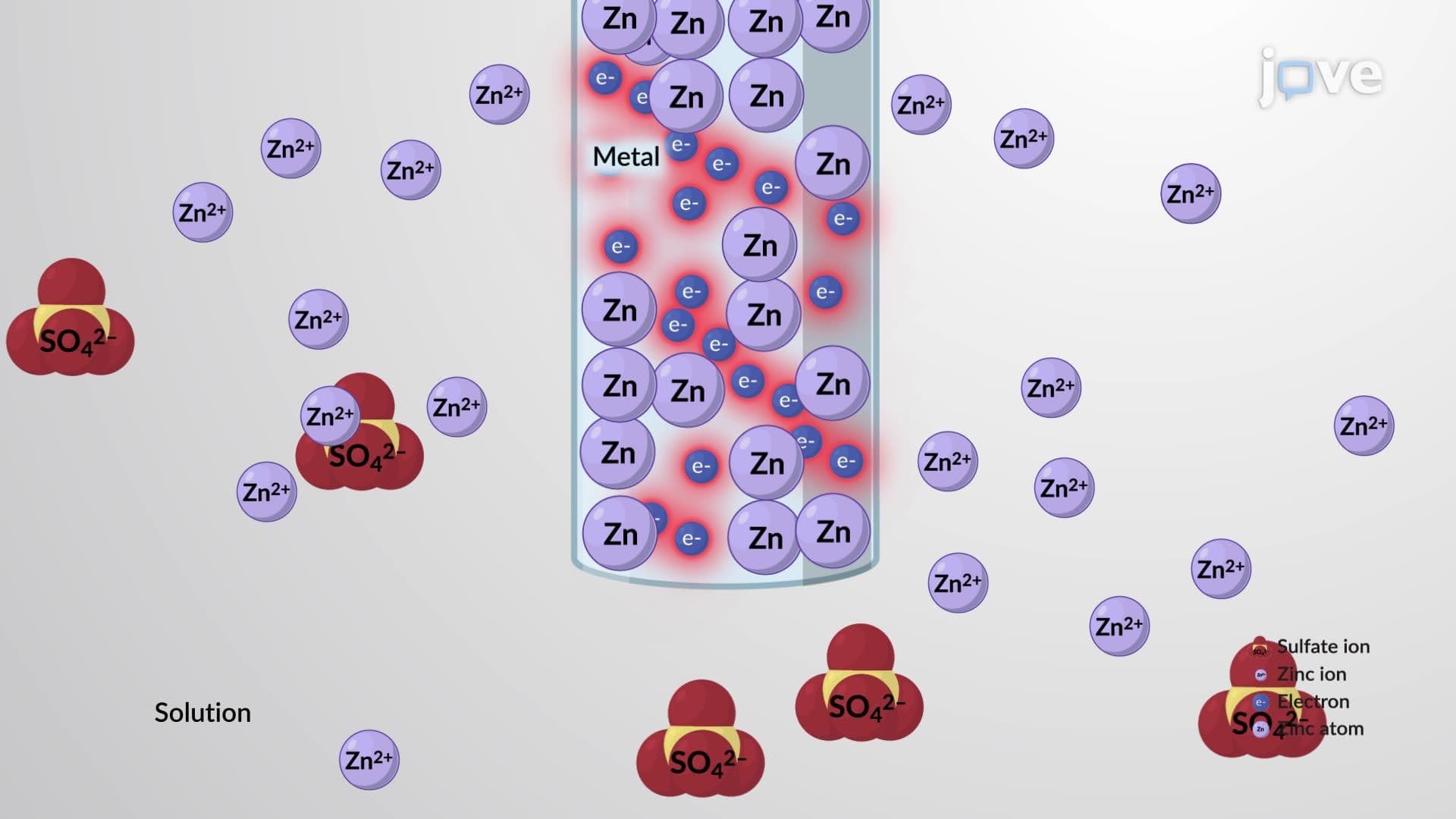
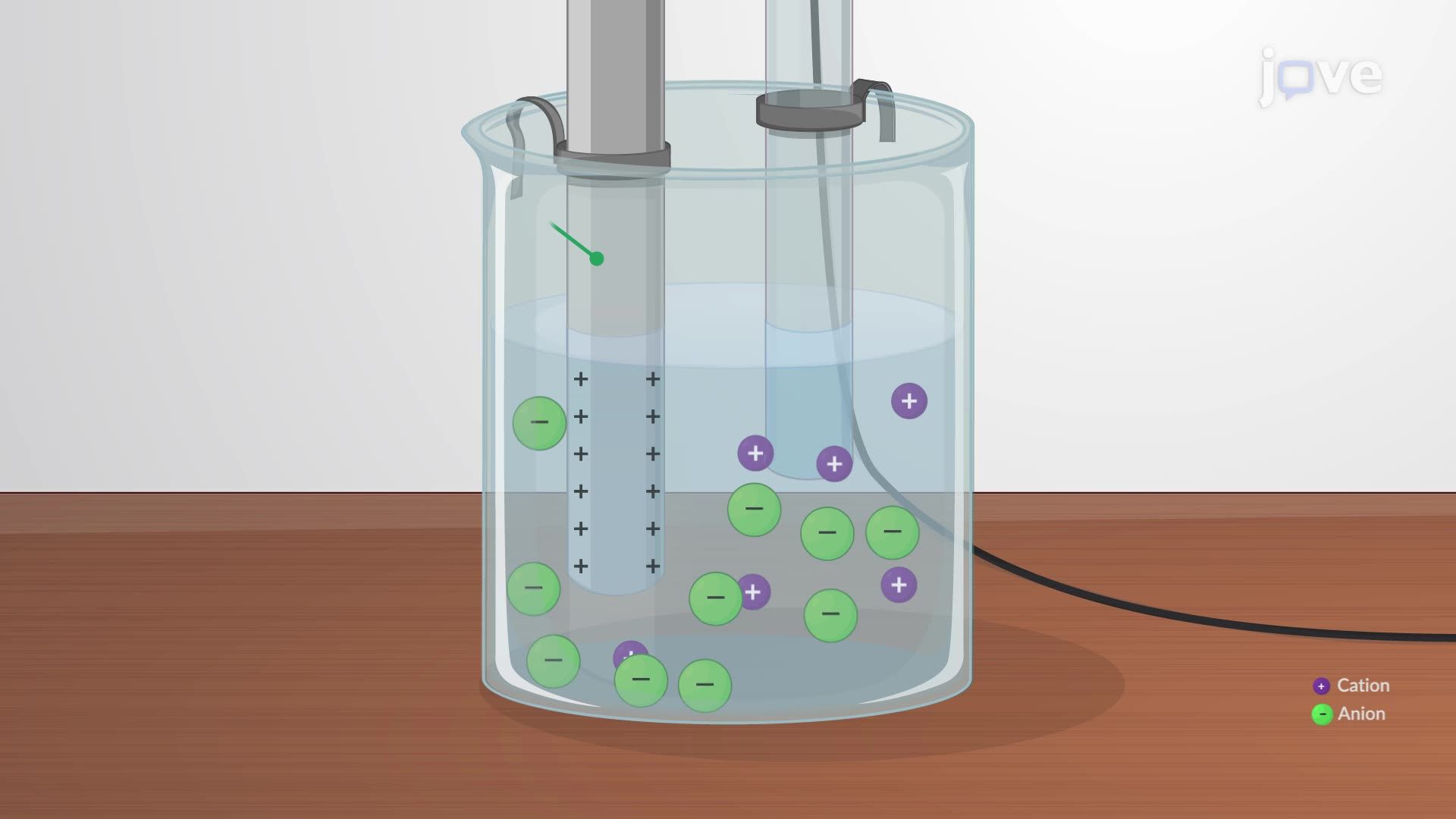
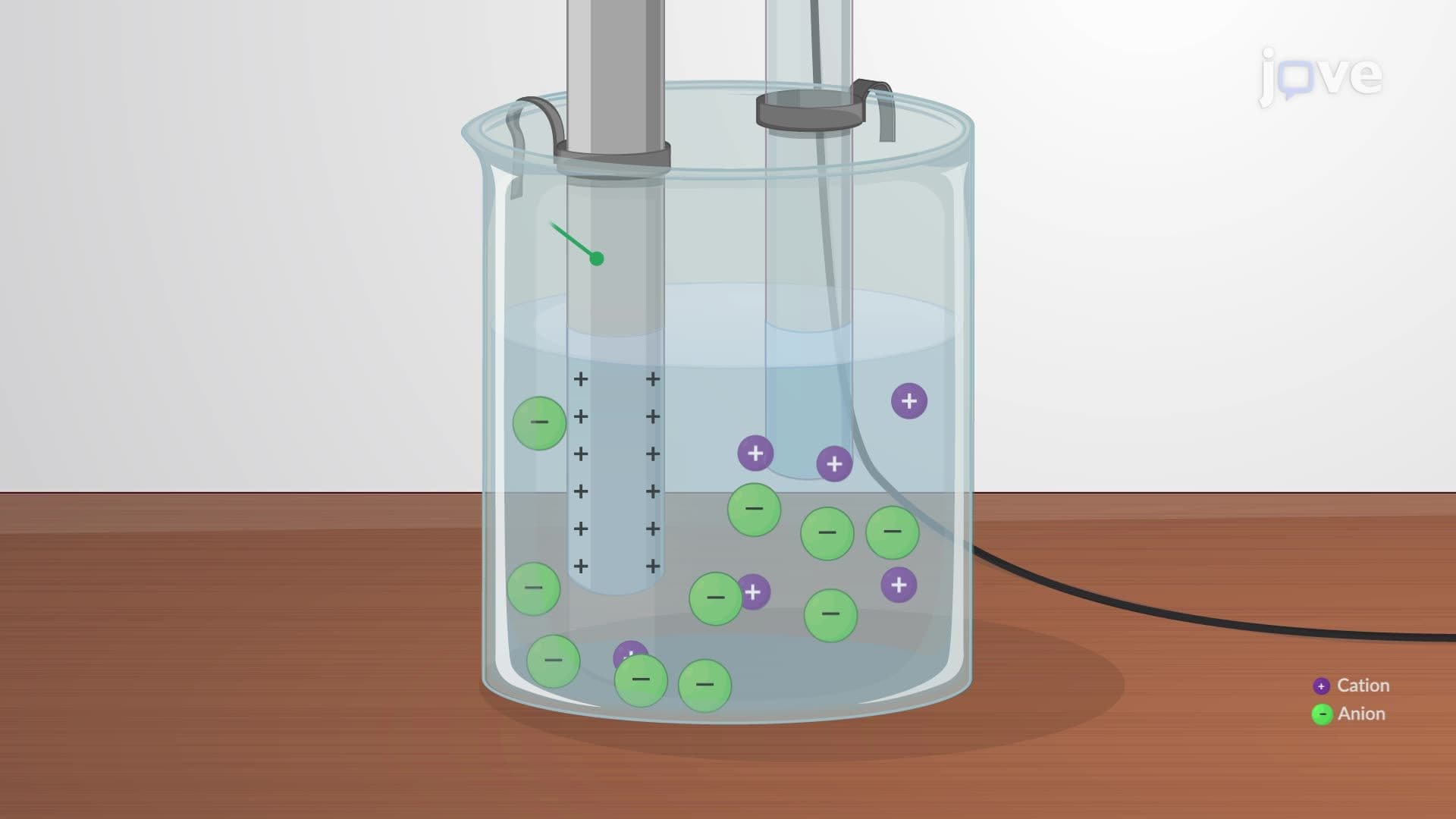
The electrical double layer (EDL) is one of the most important and elegant concepts in electrochemistry. It describes the structured arrangement of electric charges that spontaneously forms whenever a solid conductor, such as a metal electrode, comes into contact with an ionic solution, like a salt dissolved in water. This nanometer-thin interface is not just a scientific curiosity; it controls how energy is stored in batteries, how fuel cells generate electricity, and how metal surfaces corrode in the presence of moisture and salts.
The earliest attempt to describe the electrical double layer used a beautifully simple idea: treat the electrode surface and the nearby ions as two flat, parallel sheets of opposite charge, like a molecular-scale capacitor. This is called the Helmholtz model. However, this model ignored a critical physical reality: ions in solution are surrounded by water molecules (a process called solvation or hydration). These hydration shells prevent ions from sitting directly on the electrode surface. Instead, they are held at a fixed distance, defining a boundary called the Outer Helmholtz Plane (OHP). Between the metal surface and the OHP, the electric potential drops in a straight, linear fashion, a clean and predictable relationship, but one that oversimplifies real behavior.
Real ions are not stationary. Thermal energy causes them to move constantly and randomly through the solution, a process analogous to Brownian motion. The Gouy-Chapman model accounts for this by replacing the rigid charge sheet with a "diffuse layer", a cloud of excess ions that gradually fades from high concentration near the electrode to the bulk solution composition further away. This produces a curved, non-linear potential drop rather than the straight-line drop of the Helmholtz model. While more realistic, this model has its own flaw: it predicts that ions can pack infinitely close to the electrode surface, which is physically impossible.
Otto Stern resolved the conflict by combining both approaches into a unified picture. In the Stern model, some ions adsorb directly onto the electrode surface and remain essentially fixed, limited in distance by their own ionic radius. This compact inner region behaves similarly to the Helmholtz layer. Beyond this fixed layer, the remaining excess ions are distributed diffusely through the solution due to thermal motion, mirroring the Gouy-Chapman description. The result is a two-part interphase: a steep, linear potential drop in the inner Stern layer, followed by a gradual, curved decay through the diffuse outer layer. This combined model is the standard framework used in college-level electrochemistry and physical chemistry courses across the US today.
Understanding the electrical double layer is directly relevant to AP Chemistry topics involving electrochemical cells and electrode behavior. In college courses, particularly physical chemistry, materials science, and chemical engineering, the EDL appears in discussions of the Nernst equation, corrosion mechanisms, and sensor design. In industry, the EDL governs the performance of supercapacitors, which are used in energy recovery systems on hybrid vehicles like the Toyota Prius. It also plays a central role in how electrochemical sensors detect glucose in devices used by diabetic patients across the US. Mastering this concept builds the foundation needed for understanding cyclic voltammetry, overpotential, and how fuel cells generate electricity through controlled electrochemical reactions.
Related Micro-courses