Loading video…

 9 Concepts
 730 views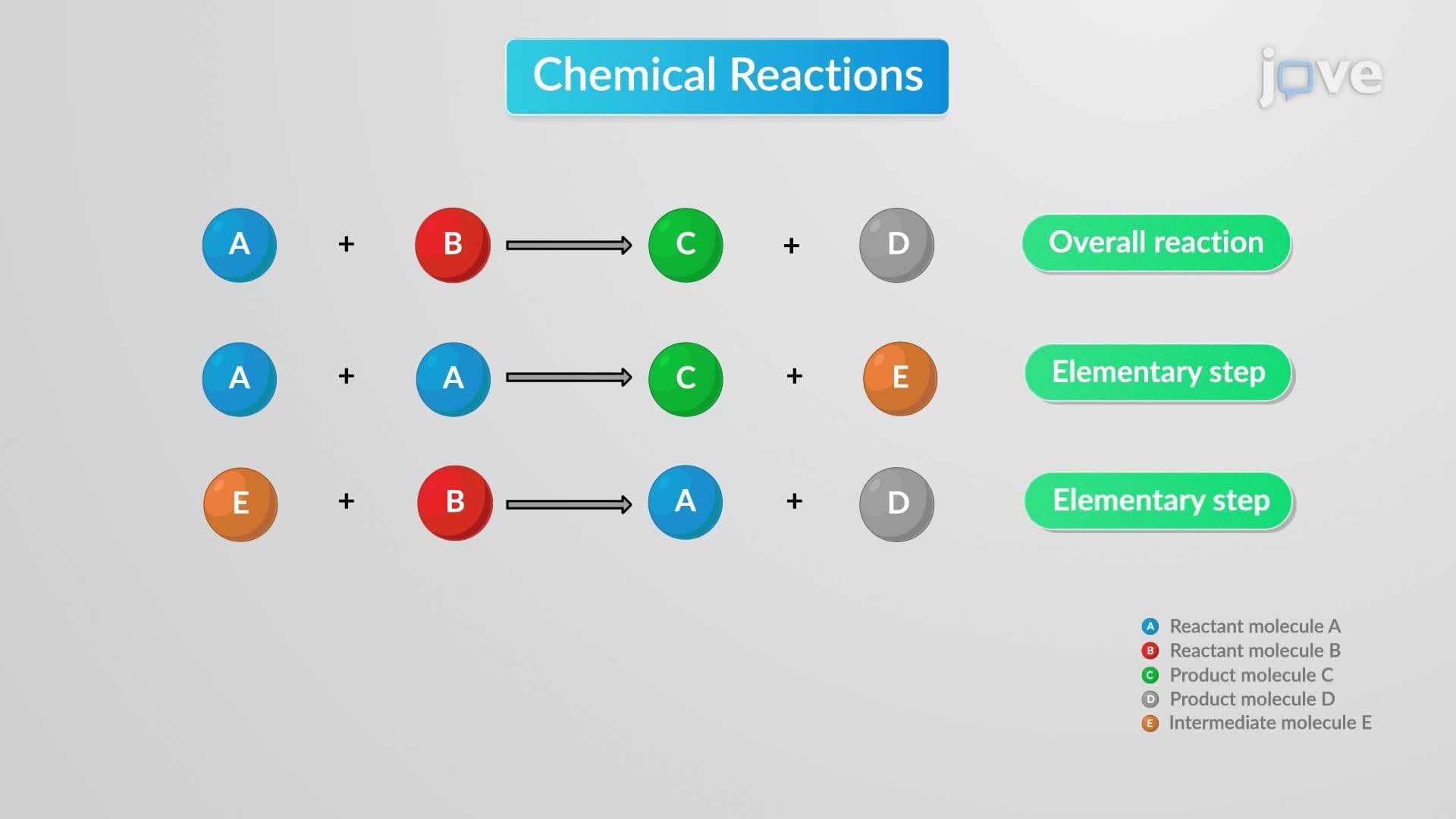

Video Summary: Rate Laws and Equilibrium Constants for Elementary Reactions Explained
Why do some chemical reactions explode in milliseconds while others take centuries to complete? Understanding rate laws and equilibrium constants for elementary reactions unlocks the answer. This concept reveals how reaction speed depends on molecular collisions and concentration, principles used in US pharmaceutical labs to design life-saving drugs. Mastering Rate Laws and Equilibrium Constants for Elementary Reactions Explained gives you the tools to predict and control chemical behavior. Watch the full video on JoVE Coach to master this concept with expert-led visuals and step-by-step explanations.
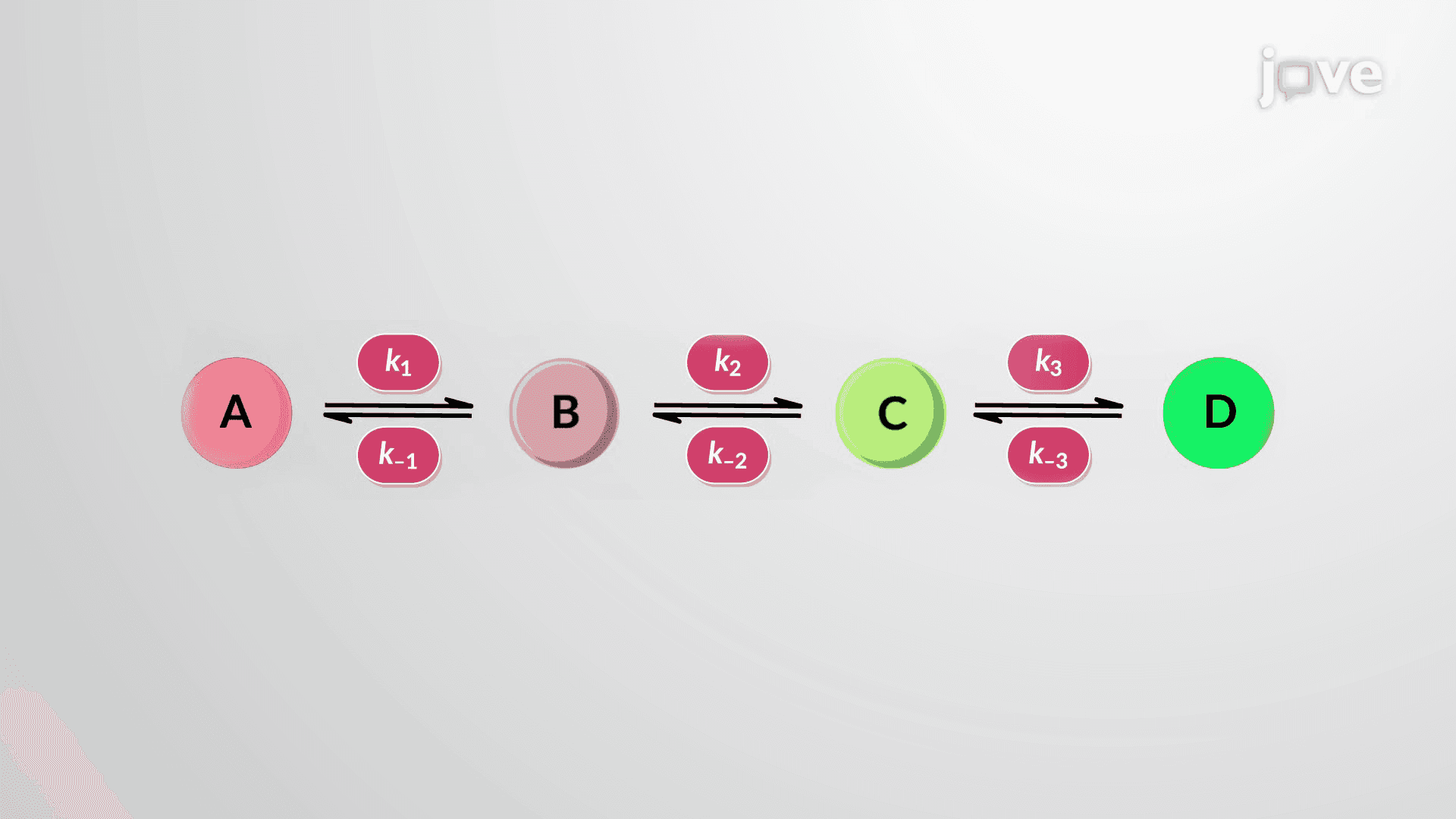
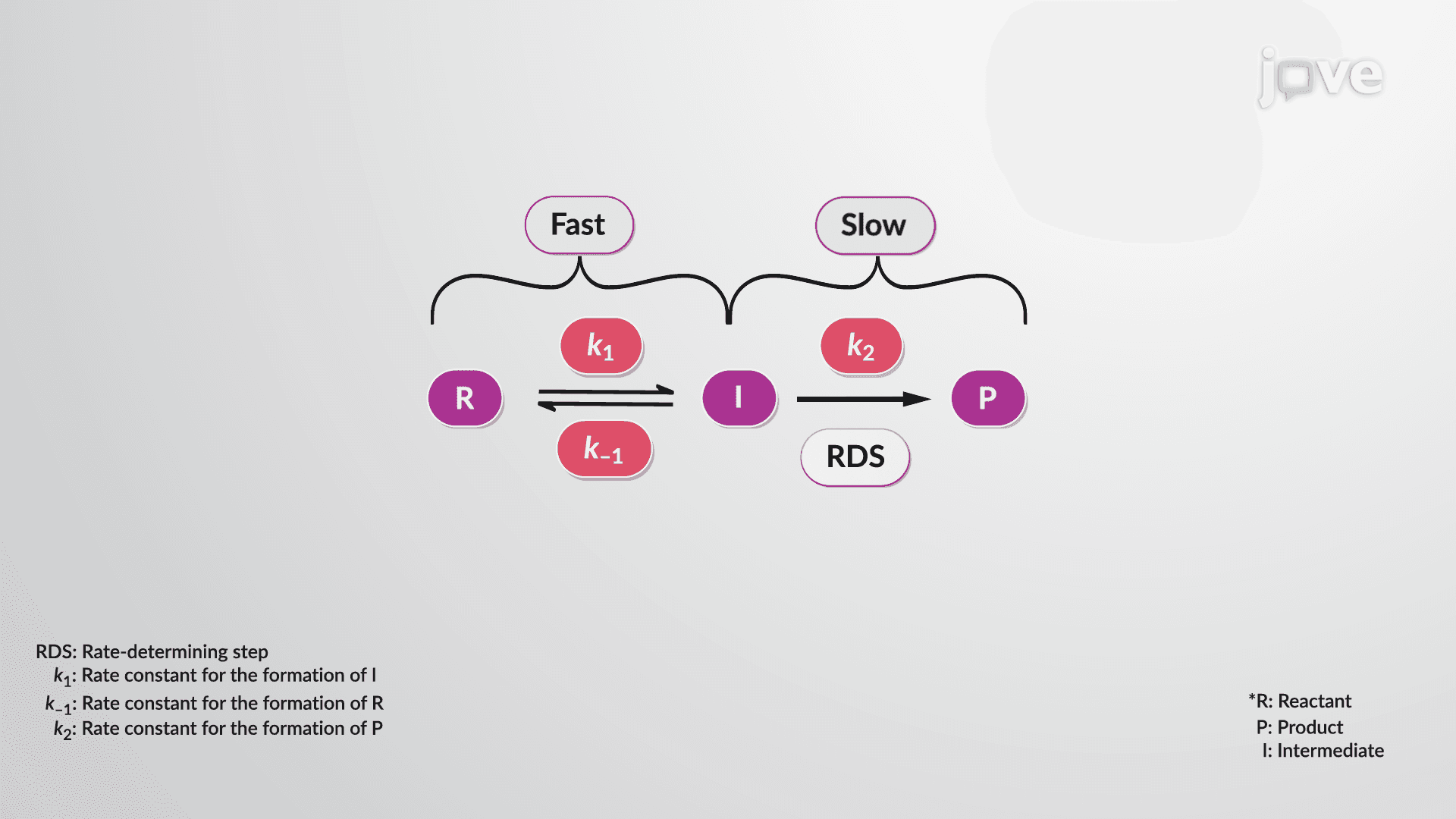
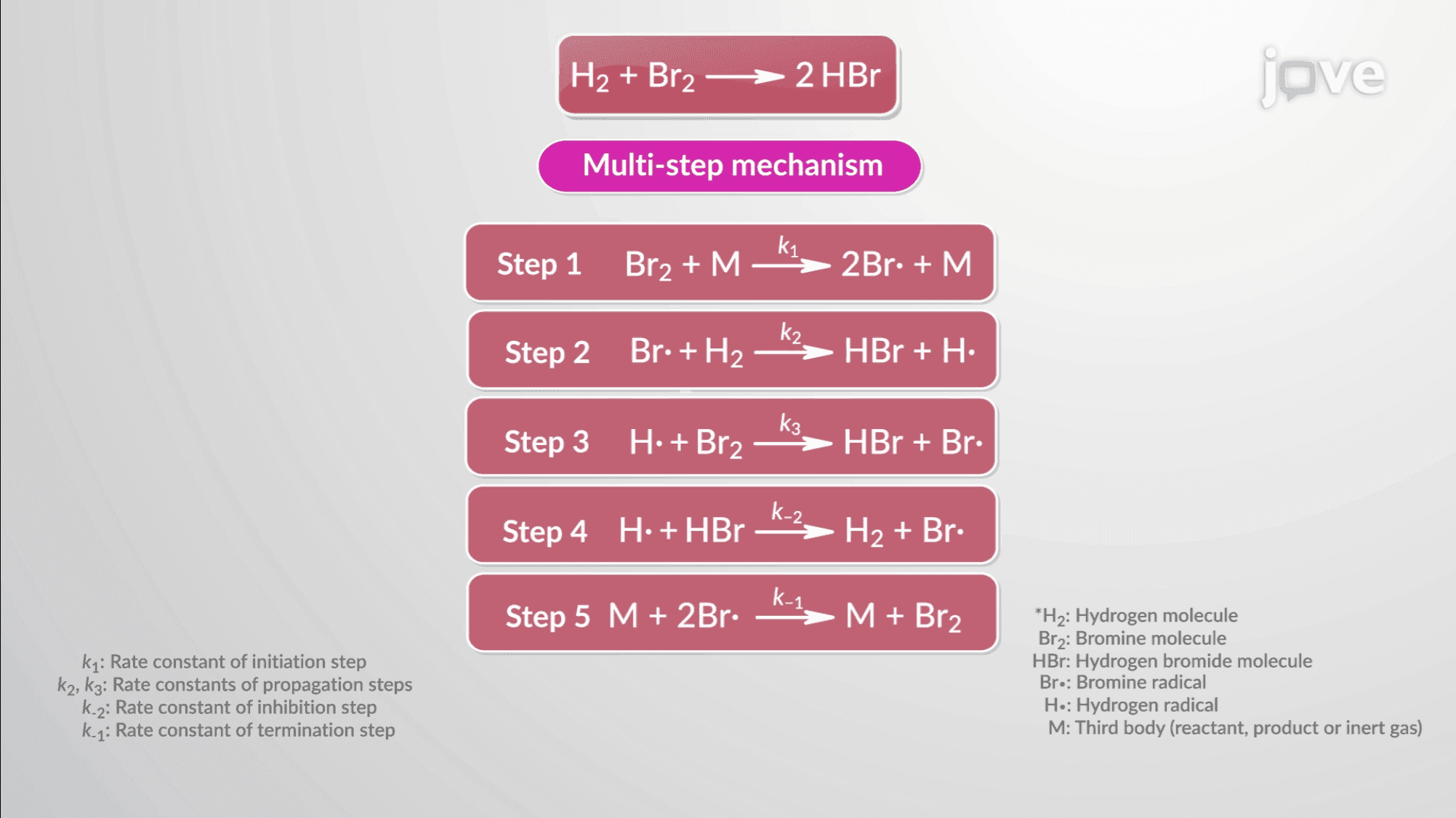
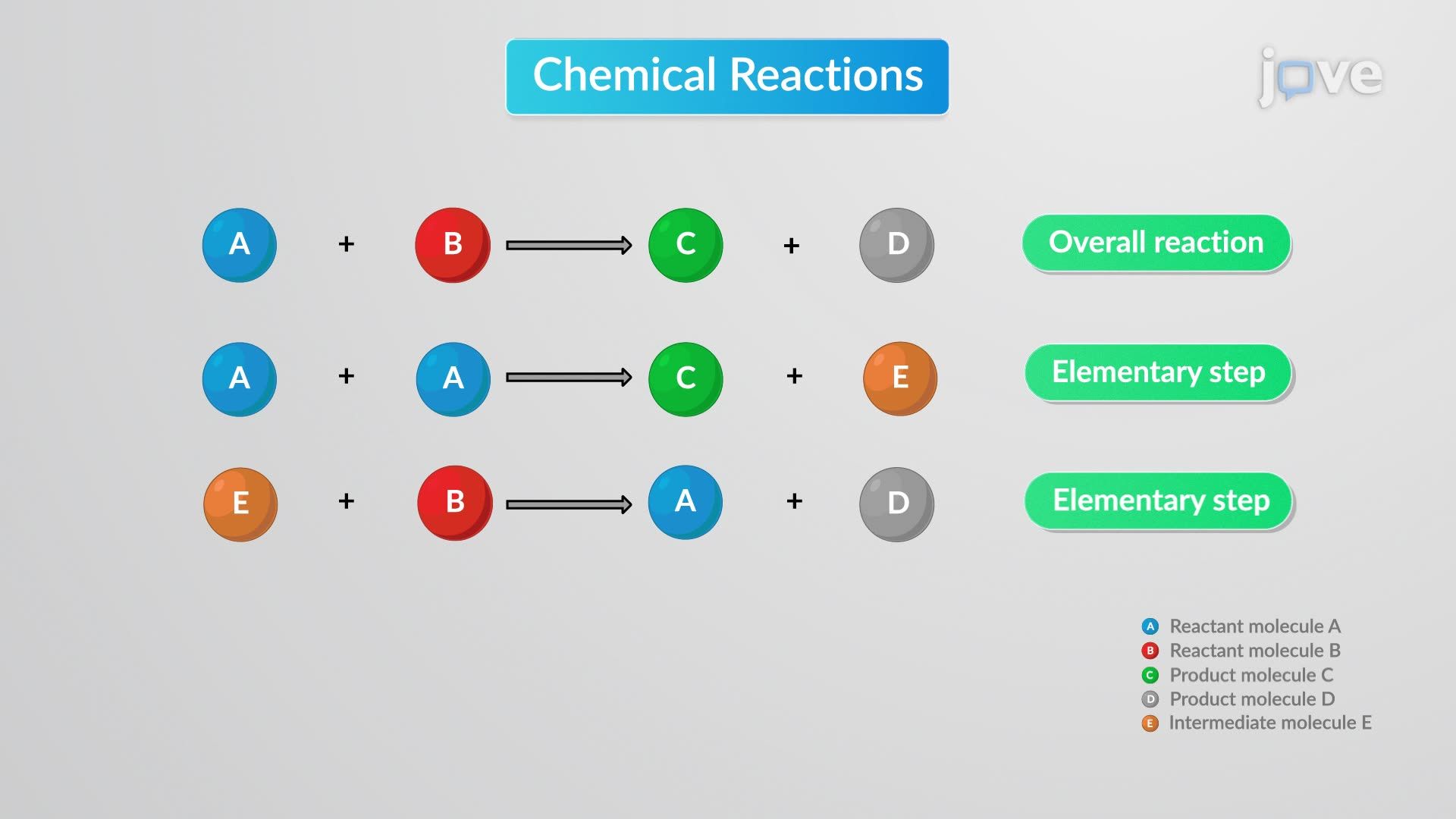
Chemistry rarely happens in a single, simple collision, most reactions unfold through a series of elementary steps, each with its own speed and direction. Grasping rate laws and equilibrium constants for elementary reactions is essential for any student in AP Chemistry, college general chemistry, or MCAT preparation. These ideas explain not just *how fast* a reaction proceeds, but *why*, and they connect seamlessly to equilibrium theory.
An elementary reaction is a single-step chemical event in which reactant molecules collide and directly form products, no intermediates, no hidden stages. Every multi-step mechanism, like those involved in industrial ammonia synthesis (the Haber-Bosch process widely used in US agriculture), is built from these individual elementary steps.
Molecularity describes how many molecules participate in one elementary step:
This matters because molecularity directly dictates the rate law for an elementary step. Unlike overall reactions where rate law orders must be determined experimentally, elementary steps allow you to write the rate law directly from stoichiometry.
For any elementary reaction, the rate law is written using the stoichiometric coefficients of the *reactants* in that step as the exponents (reaction orders). For example:
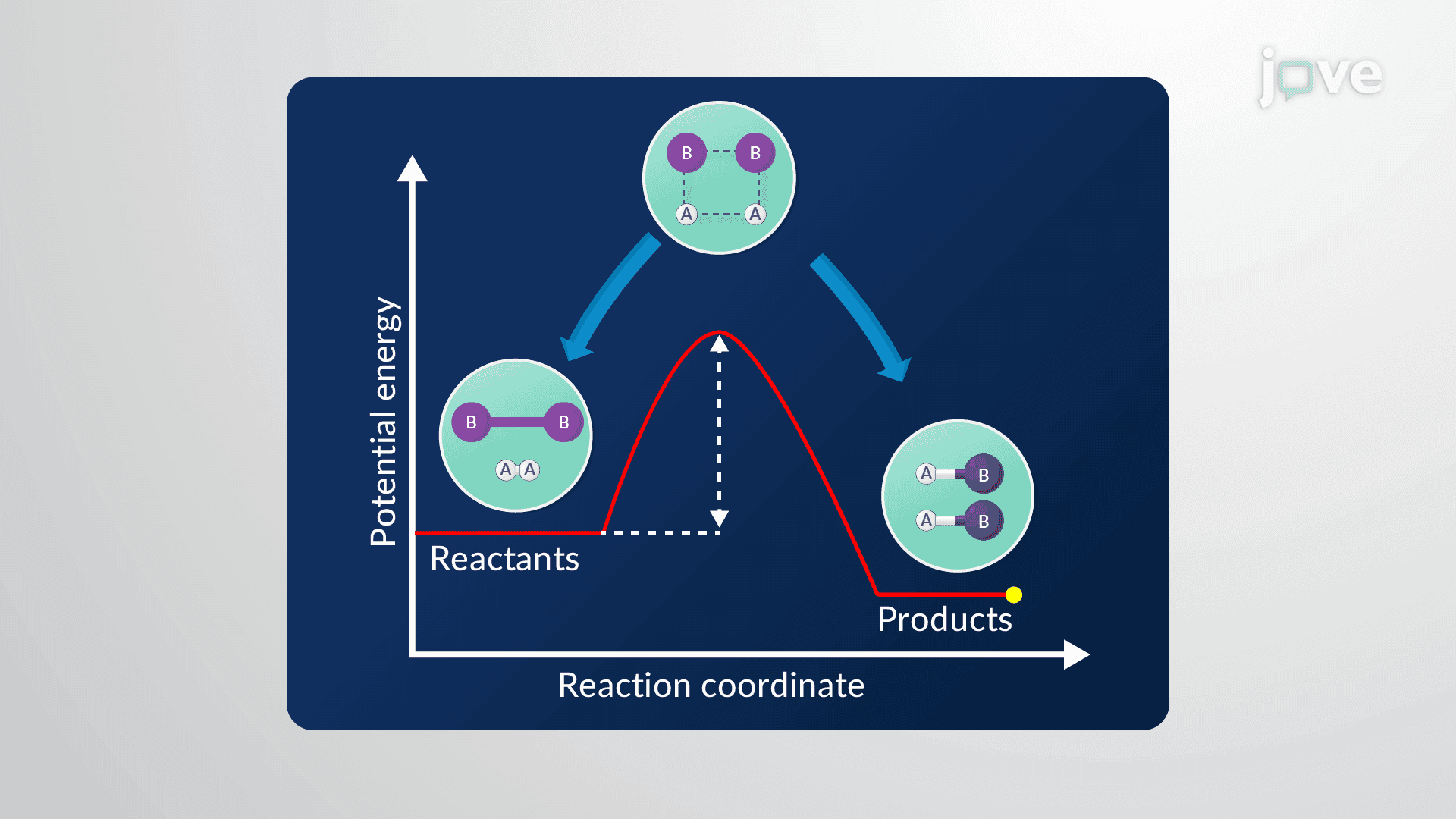
The rate constant k is a proportionality factor that captures everything *other* than concentration, especially temperature. This is where the Arrhenius equation enters: k = A × e^(−Ea/RT), where Ea is the activation energy, R is the gas constant, and T is absolute temperature. Higher temperatures increase k, meaning reactions speed up, a principle pharmaceutical chemists at companies like Pfizer and Merck exploit when optimizing drug synthesis conditions.
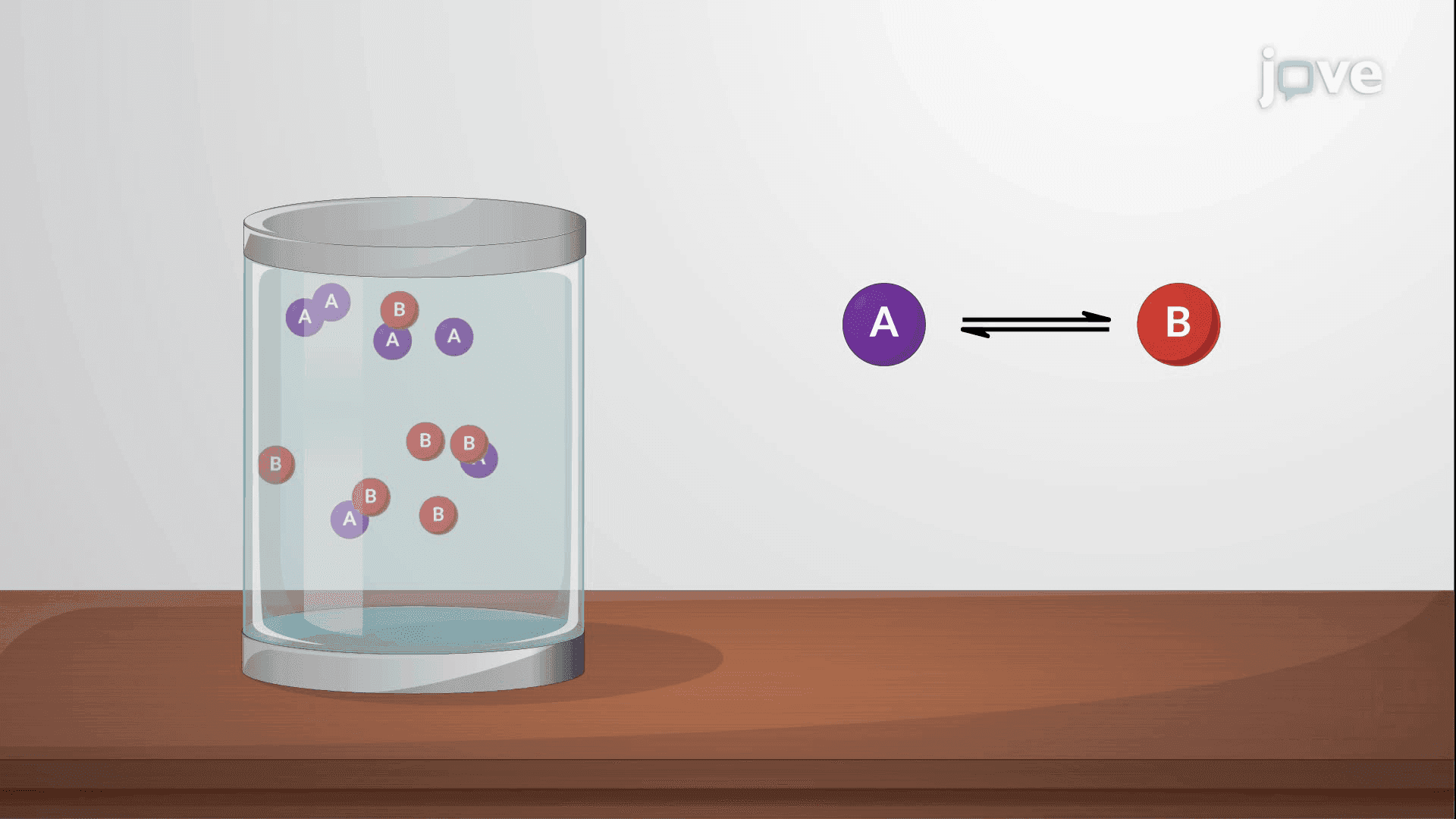
For a reversible elementary reaction, equilibrium is reached when the forward rate equals the reverse rate. At that point:
k(forward) × [Reactants] = k(reverse) × [Products]
Rearranging gives a powerful relationship:
Kc = k(forward) / k(reverse)
This elegant equation bridges kinetics and thermodynamics. If k(forward) >> k(reverse), then Kc >> 1, meaning the reaction strongly favors products at equilibrium. Conversely, a small Kc signals reactant favorability. On the AP Chemistry exam and in college general chemistry courses, students are frequently asked to use this relationship to interpret equilibrium behavior from kinetic data, making it one of the highest-yield concepts to master.
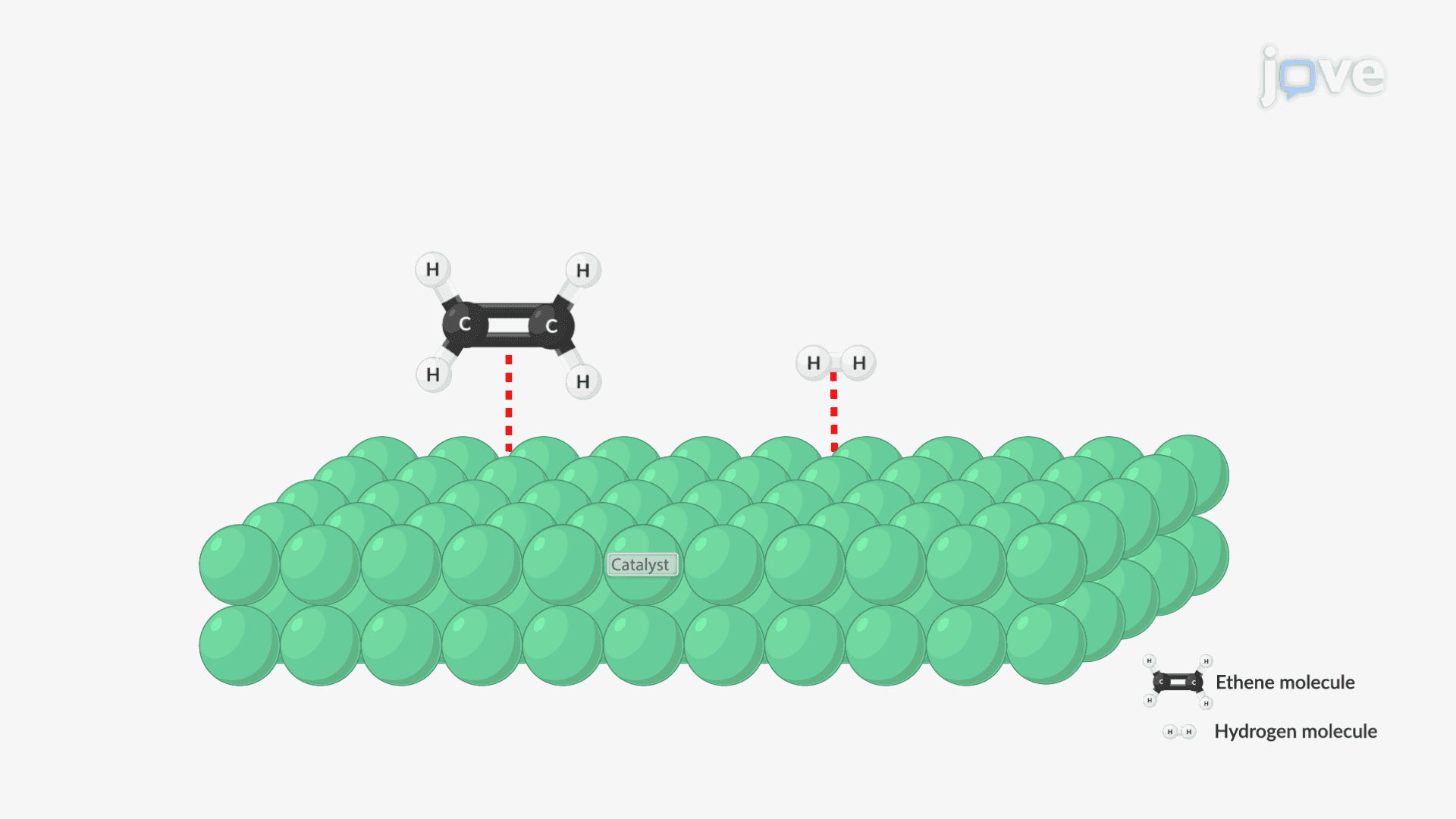
Understanding this connection also prepares students to explore catalysis: a catalyst increases both k(forward) and k(reverse) equally, leaving Kc unchanged while dramatically lowering activation energy and speeding up the approach to equilibrium.
Related Micro-courses