Loading video…

 9 Concepts
 730 views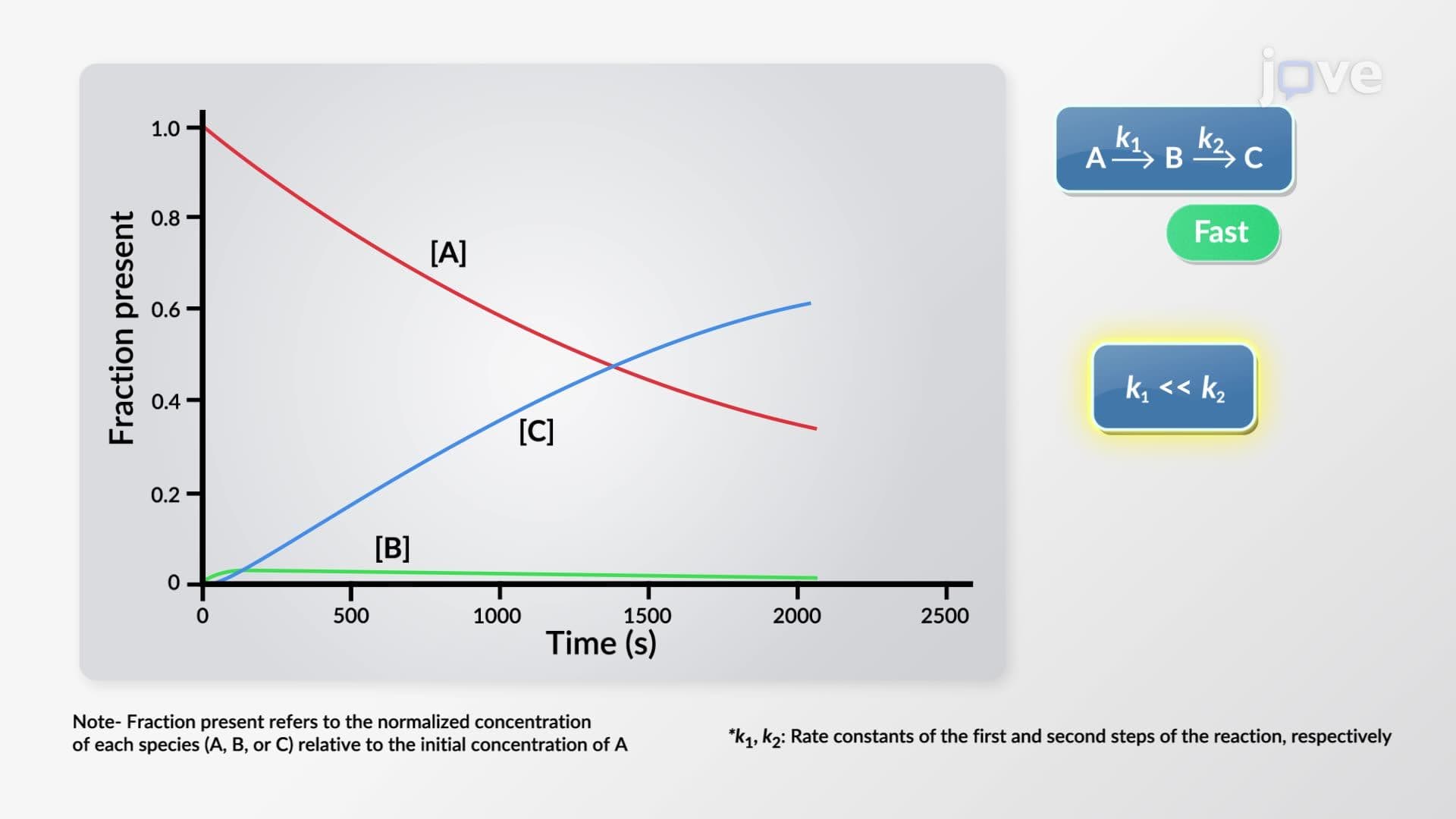

Video Summary: What are Consecutive Reactions
Did you know nuclear decay chains in US nuclear reactors follow the same math as chemical reactions happening in your lab? Consecutive reactions, also called sequential reactions, describe exactly this: a chain where A becomes B, which then becomes C. Understanding What are Consecutive Reactions? reveals how intermediate products build up and disappear over time. Watch the full video on JoVE Coach to master this concept with expert-led visuals and step-by-step explanations.
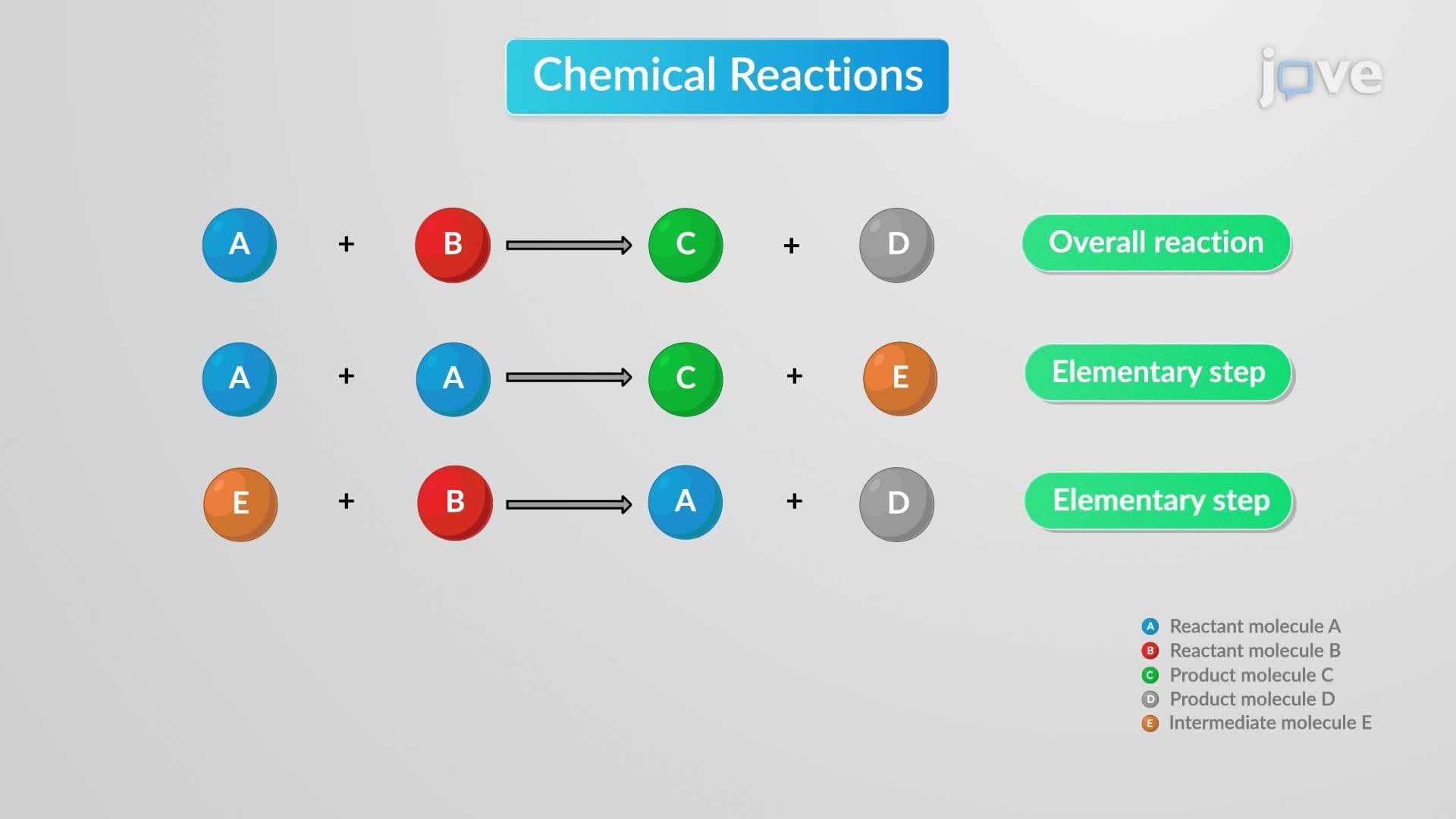
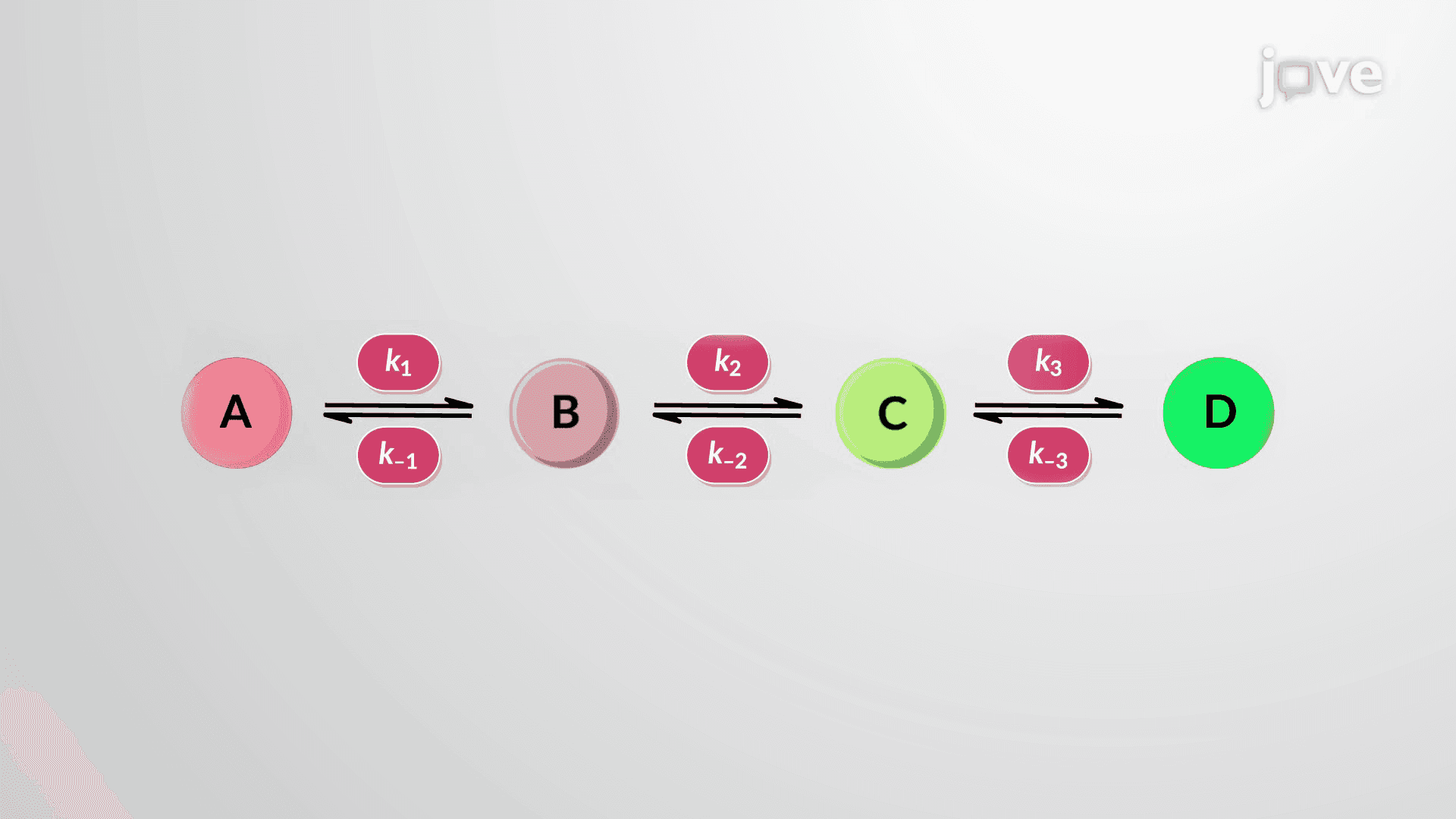
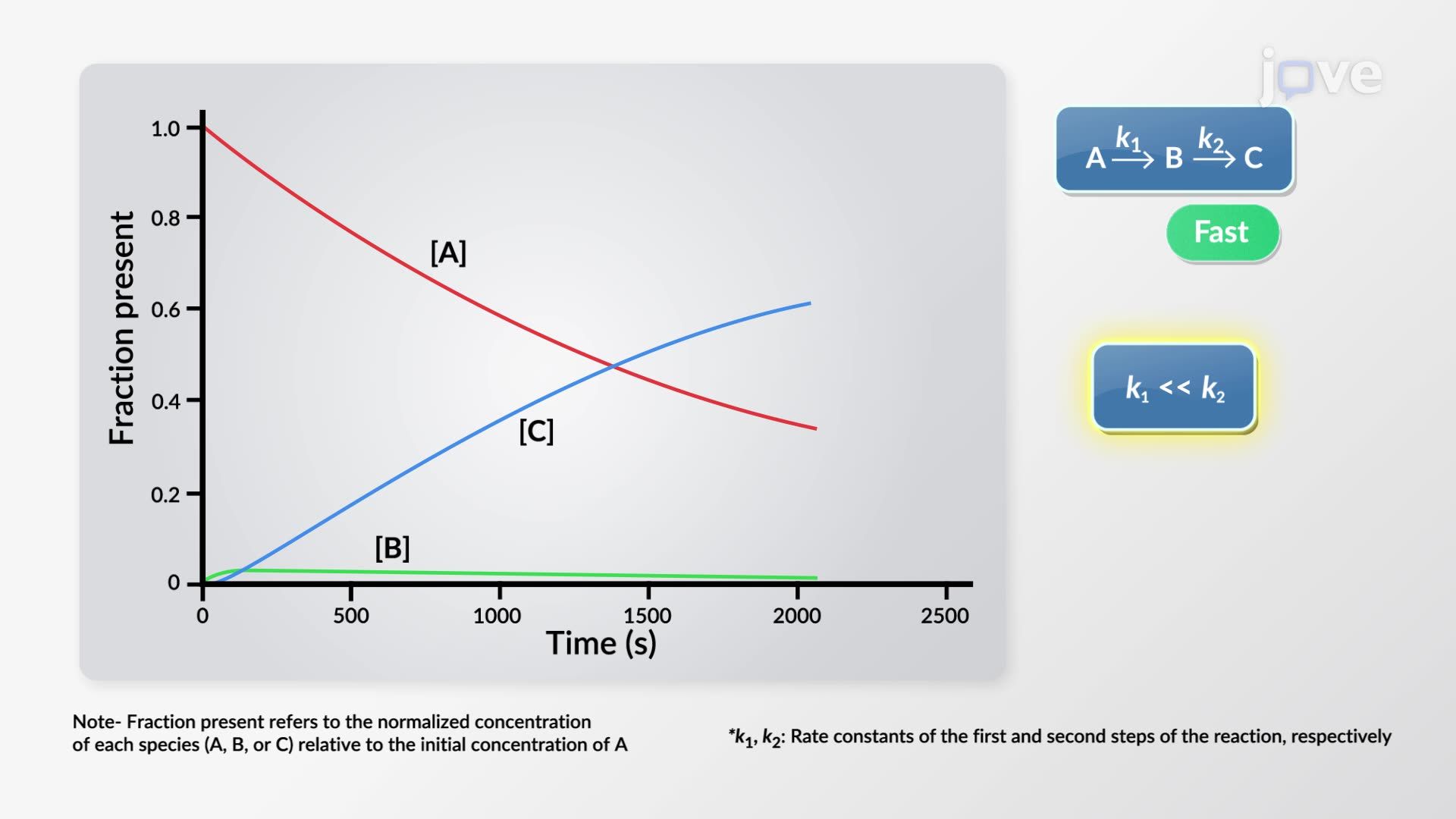
Consecutive reactions, sometimes called sequential reactions, occur when the product of one reaction immediately becomes the reactant of the next. Instead of a single transformation, you have a chain: A converts to B, and B converts to C. Each step proceeds at its own rate, governed by its own rate constant. This layered structure makes consecutive reactions more mathematically complex than simple one-step reactions, but they are extraordinarily common in both nature and industry.
Each step in a consecutive reaction follows its own rate law. For a two-step sequence where both steps are first-order:
Integrating the first expression gives [A] at time t as [A]₀ × e^(−k1 × t). Substituting into the differential equation for B and solving yields a more complex expression involving both k1 and k2. Because mass is conserved, [C] can be recovered simply: [C] = [A]₀ − [A] − [B]. These expressions become especially interesting when k1 and k2 are very different from each other.
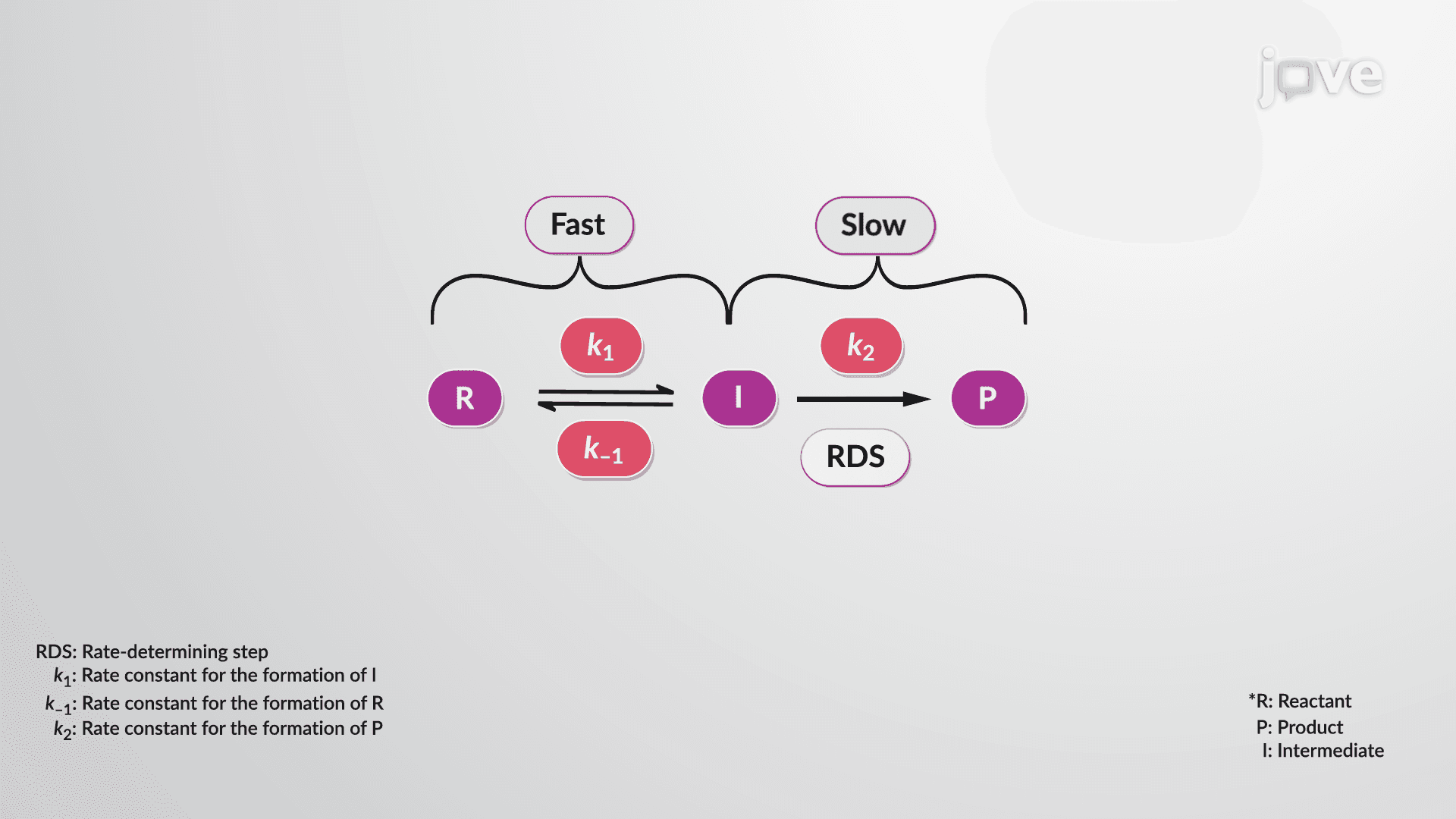
The ratio of k1 to k2 dramatically shapes the concentration-versus-time graph, a favorite visual on AP Chemistry exams and college midterms. When k2 is much smaller than k1 (the second step is slower), intermediate B builds up substantially before gradually converting to C. You can observe a clear peak in the [B] curve. Conversely, when k2 is much larger than k1 (the second step is faster), B is consumed almost as quickly as it forms, so its concentration stays very low throughout the reaction. Recognizing these two scenarios is critical for both exam success and practical laboratory interpretation.
One of the most cited real-world examples in US chemistry and physics courses is radioactive decay chains. Uranium-238, found in geological formations across the American Southwest, decays through a long series of consecutive nuclear reactions, ultimately producing stable lead-206. Each decay step has its own half-life, a direct consequence of its individual rate constant.
In pharmacology, drug metabolism in the human body often follows consecutive kinetics. A prodrug (A) is converted by liver enzymes into an active drug (B), which is then further metabolized into an inactive metabolite (C). The MCAT frequently tests students on how enzyme kinetics and multi-step reaction sequences relate to drug efficacy, making consecutive reactions a high-yield topic.
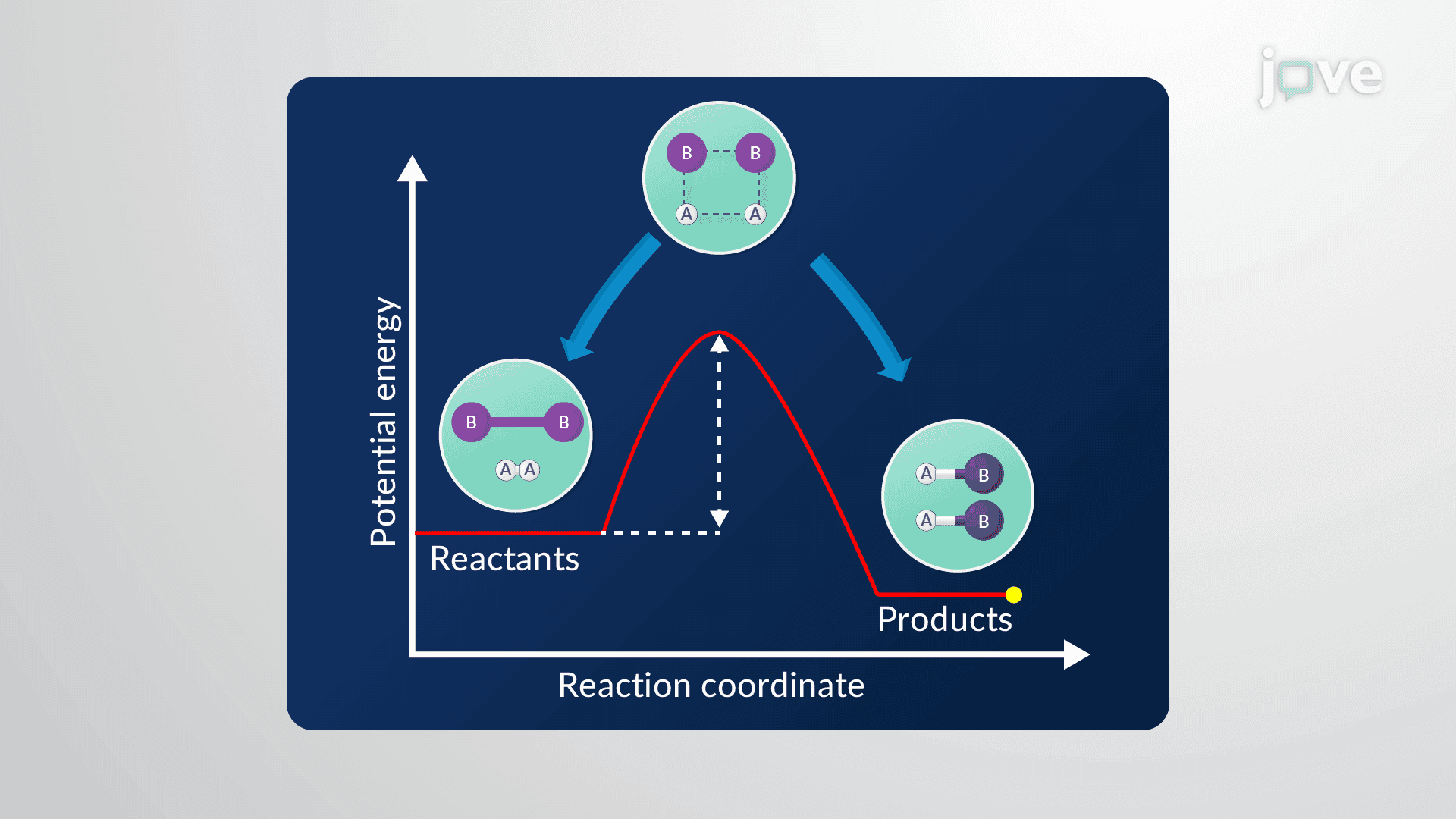
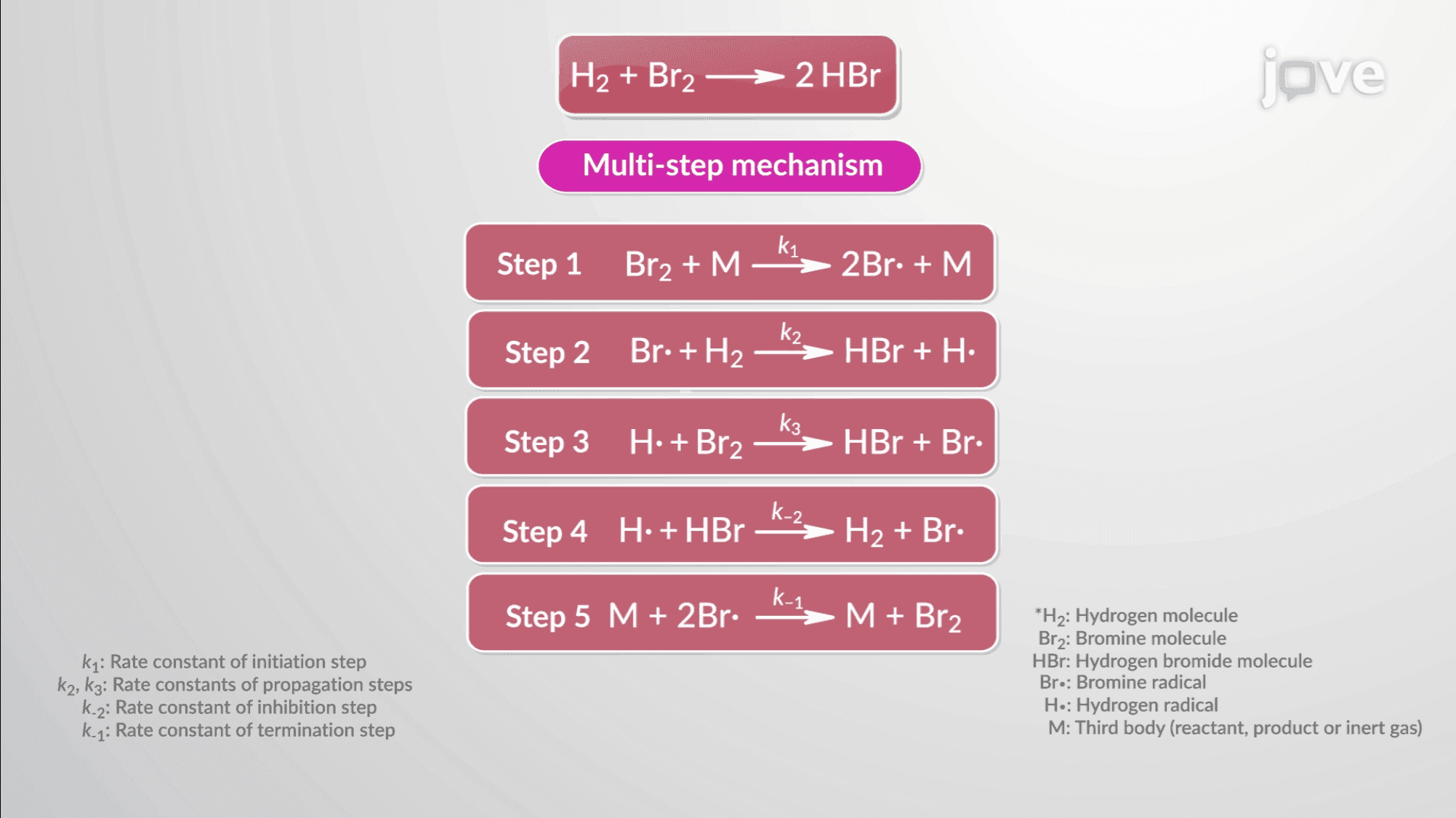
Consecutive reactions tie together several major chemistry themes. The Arrhenius equation (k = A × e^(−Ea/RT)) explains why each step has a unique rate constant, each has its own activation energy. Temperature changes, therefore, affect k1 and k2 differently, potentially shifting which step is rate-limiting. Understanding reaction mechanisms, the step-by-step molecular account of a reaction, is essentially understanding which consecutive steps occur and at what relative rates. These connections make consecutive reactions a conceptual hub for the entire kinetics unit in AP Chemistry, college general chemistry, and MCAT prep.
Related Micro-courses