Loading video…

 9 Concepts
 730 views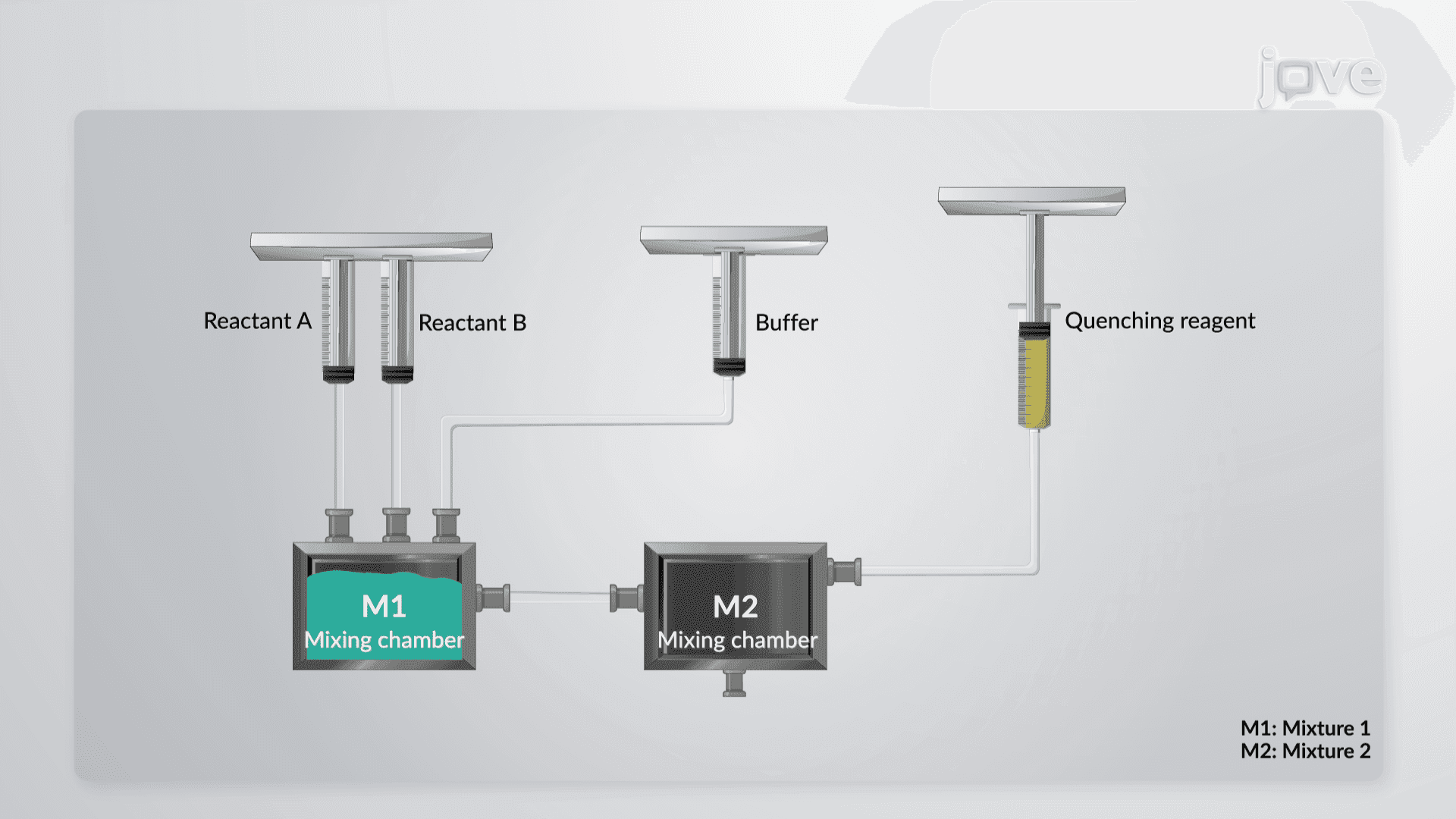

Video Summary: What are Fast Reactions
Some chemical reactions are so fast they're over before you can blink, and studying them requires far more than a stopwatch. Fast reactions are a key concept in chemistry, explaining why specialized techniques like stopped-flow, flash photolysis, and temperature-jump methods exist. US pharmaceutical labs rely on these tools daily to study drug-enzyme binding. Watch the full video on JoVE Coach to master this concept with expert-led visuals and step-by-step explanations.
Fast reactions are chemical reactions that occur on timescales far shorter than what conventional mixing and measurement methods can capture, often completing within milliseconds, microseconds, or even nanoseconds. In standard laboratory settings, simply combining two reagents and measuring the result is already too slow for these processes. That's why chemists have developed a suite of highly specialized techniques to study them. Understanding fast reactions is essential not only for academic chemistry but also for real-world fields like pharmacology, atmospheric science, and materials research.
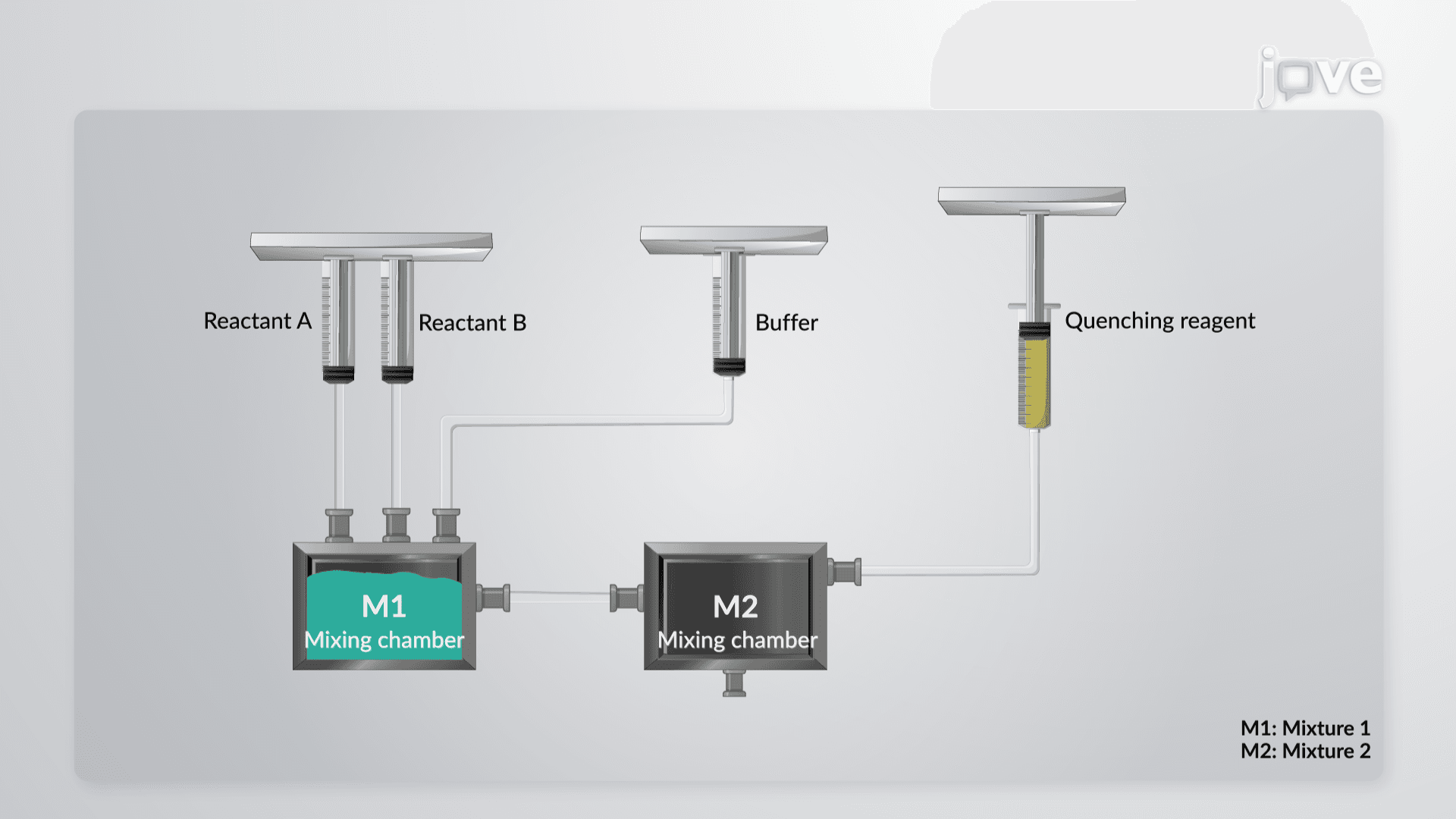
The continuous-flow method was one of the earliest approaches to studying fast reactions. Reactants are injected simultaneously from separate syringes into a mixing chamber, then driven through a flow tube. Light absorption measurements at different points along the tube correspond to different reaction times. While effective, this method consumes large volumes of solution, a significant drawback when working with rare or expensive reagents.
The stopped-flow technique improves on this by pushing reagents into a mixing chamber and then abruptly halting the flow with a physical barrier. A detector then records how the concentration changes over time from that stopping point forward. This method is widely used in US biochemistry research labs to study enzyme kinetics and protein-folding reactions, and it appears in college biochemistry and physical chemistry curricula nationwide.
Quenching methods take a different approach, allowing a reaction to proceed for a precisely controlled time before rapidly stopping it. A quenching reagent can be added to chemically "freeze" the reaction, or the mixture can be physically frozen for later analysis. This is especially useful when real-time detection isn't feasible. These techniques connect directly to concepts like half-life of a reaction and reaction mechanisms, since they allow chemists to isolate intermediates and map out step-by-step pathways.
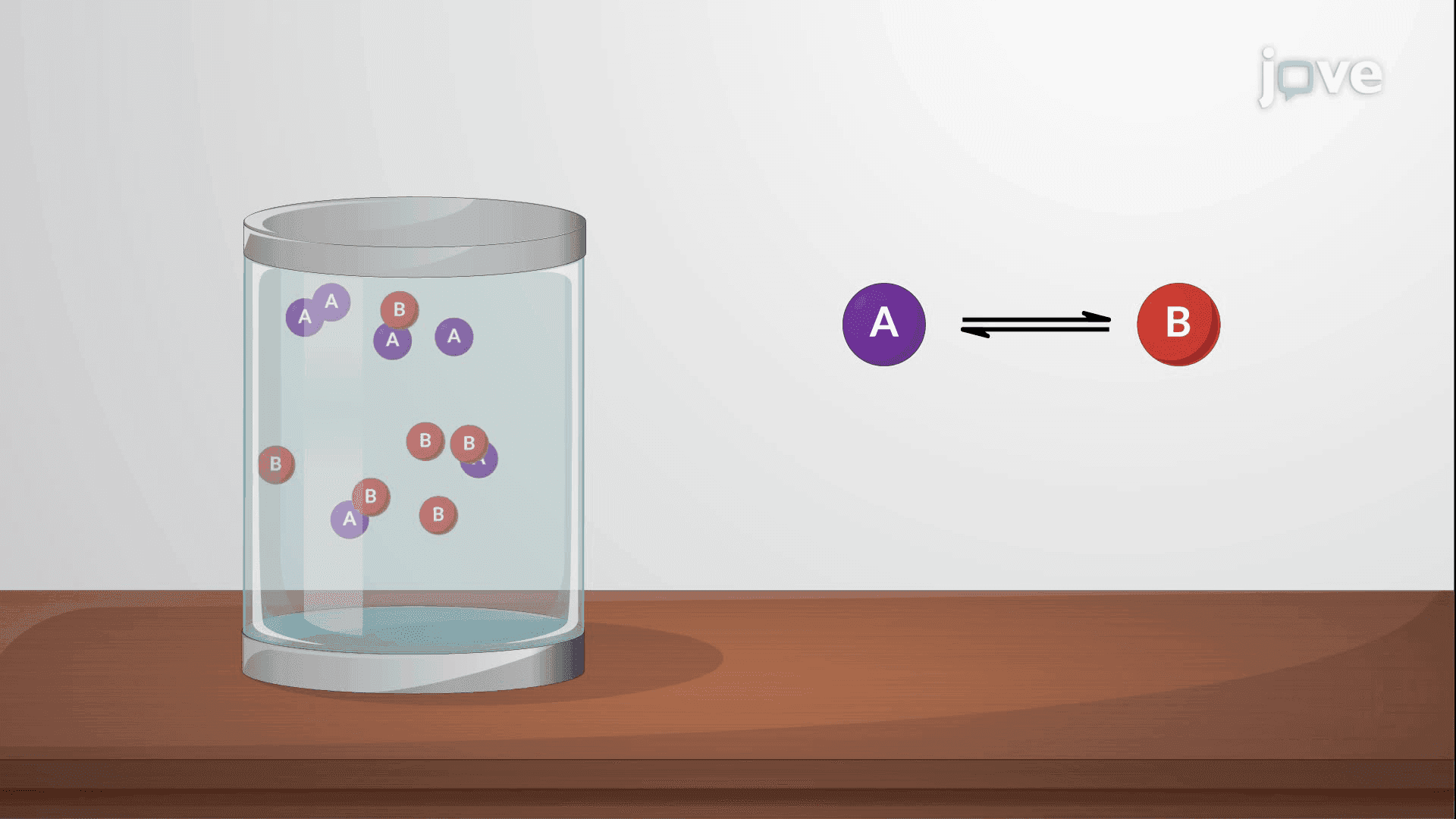
Relaxation methods are used when a system is already at equilibrium and needs to be disturbed to observe how it re-equilibrates. The temperature-jump technique delivers a rapid high-voltage electrical pulse that raises the sample's temperature in microseconds. This shift in temperature perturbs the equilibrium, directly relevant to understanding how temperature affects reaction rate and the Arrhenius equation, and the system's return to equilibrium is then monitored.
Flash photolysis uses an intense, brief burst of light to generate highly reactive radicals or electronically excited species. The subsequent reactions are tracked through light absorption spectroscopy. This technique has been instrumental in studying atmospheric chemistry, including ozone depletion reactions, and is used in US university research programs to explore ultrafast photochemical processes.
On AP Chemistry exams and college midterms, students are expected to connect these experimental methods to foundational concepts like rate laws, activation energy, and the order versus molecularity of a reaction. Knowing which technique applies under which conditions demonstrates a higher-order understanding that earns full credit on free-response questions.
Related Micro-courses