Loading concepts…


8 Concepts
14 Concepts
6 Concepts
6 Concepts
9 Concepts
8 Concepts
2 Concepts
8 Concepts
8 Concepts
9 Concepts
16 Concepts
6 Concepts
 8 Concepts
 2.7K Views
 Popular topics
The Zeroth Law of Thermodynamics and the properties of gases form the foundation of physical chemistry, connecting atomic-level behavior to measurable real-world outcomes. This micro-course, built with JoVE Coach, covers thermal equilibrium, ideal and real gas models, kinetic theory, and the Van der Waals equation, giving students the tools to understand everything from gas cylinders to pharmaceutical manufacturing.
1. What Is Physical Chemistry? Physical chemistry sits at the intersection of physics and chemistry, using mathematical and physical principles to explain chemical behavior at the atomic and molecular scale. It includes thermodynamics (macroscopic equilibrium systems), quantum chemistry (molecular energy levels and spectra), statistical mechanics (bridging molecular and macroscopic descriptions), and chemical kinetics (reaction rates and diffusion). These tools are applied in industries across the US, from designing catalysts in petroleum refining to optimizing drug synthesis in pharmaceutical companies like Pfizer or Merck.
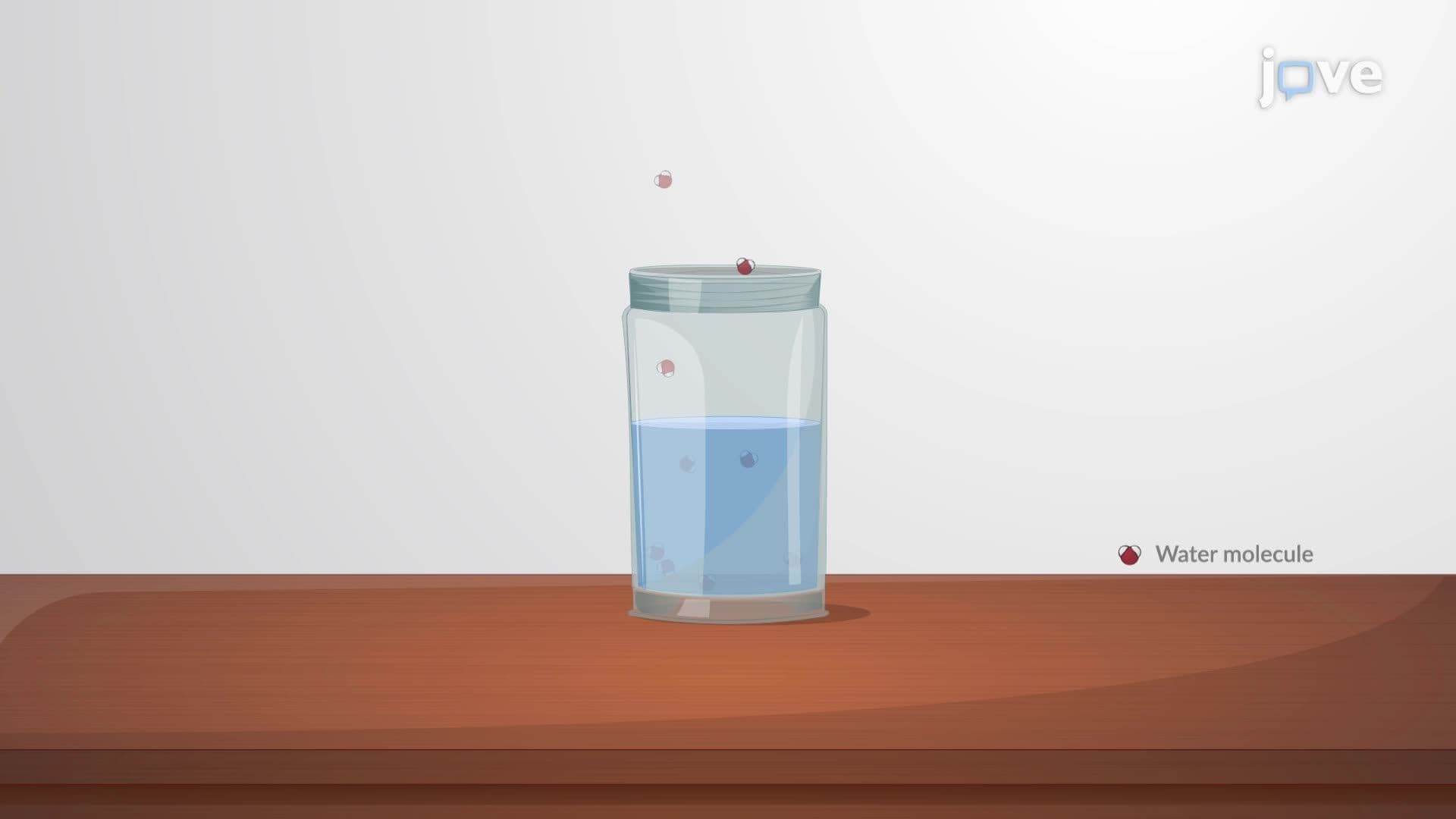
2. Systems, Surroundings, and Thermodynamic Walls In thermodynamics, a system is the portion of the universe being studied; everything else is the surroundings. Systems are classified by what they can exchange across their boundary: open systems exchange both matter and energy (e.g., a boiling pot with no lid), closed systems exchange only energy (e.g., a sealed pressure cooker), and isolated systems exchange neither (e.g., a well-insulated thermos). The boundary, or "wall," is further described as rigid or nonrigid, permeable or impermeable, and adiabatic or nonadiabatic, each distinction controlling how the system interacts with its environment.
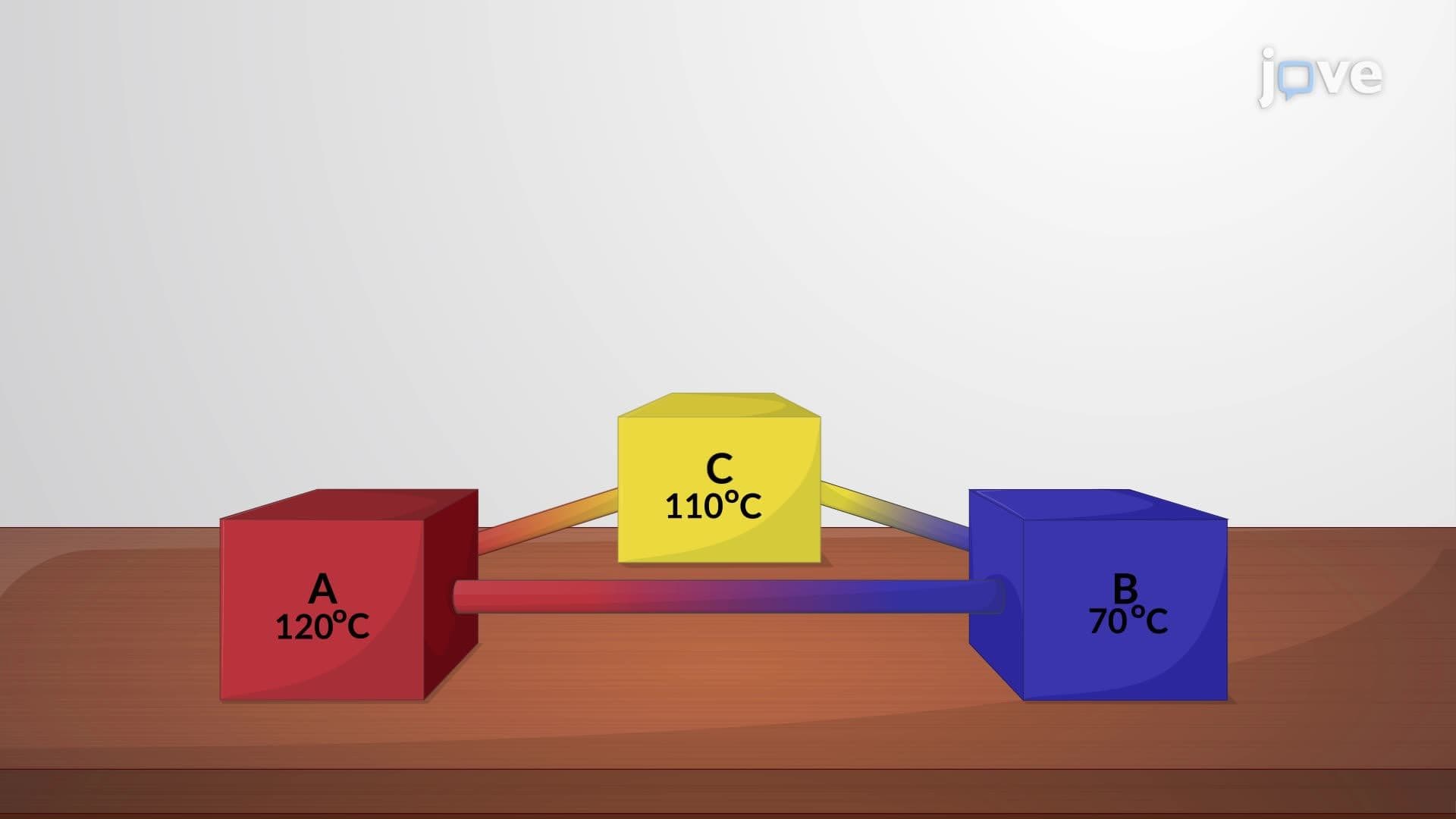
3. The Zeroth Law of Thermodynamics and Thermal Equilibrium The Zeroth Law of Thermodynamics states that if two systems are each in thermal equilibrium with a third system, they must also be in thermal equilibrium with each other. This seemingly simple law is what makes temperature a meaningful and measurable quantity. Thermal equilibrium means no net heat flows between systems, their temperatures are equal. This principle is the scientific basis for thermometry: when a thermometer reads the same temperature as a patient's body, both are in thermal equilibrium with the mercury or electronic sensor inside the device, validating the reading.
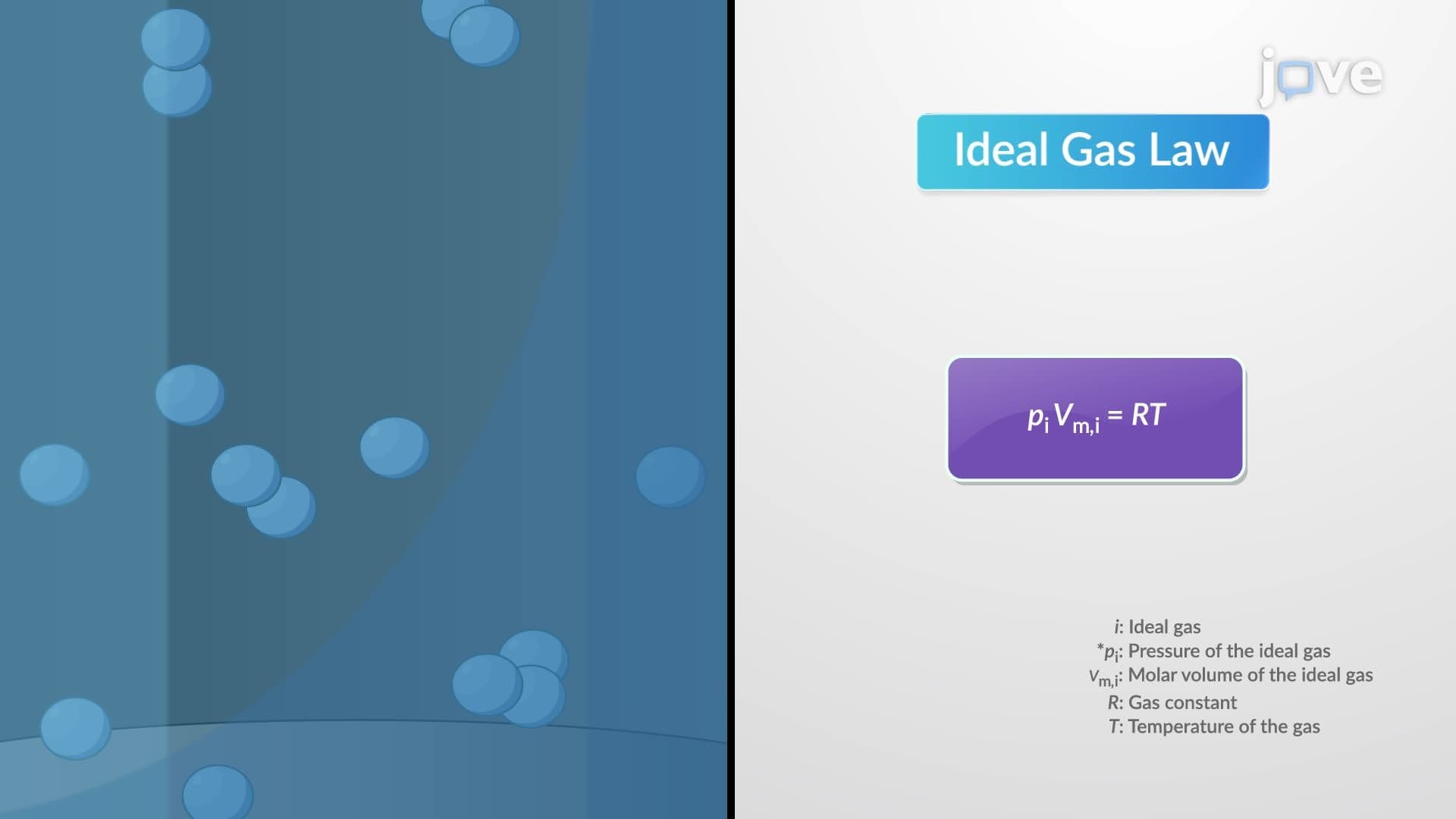
4. State Variables and the Ideal Gas Equation of State The physical state of any pure gas is fully described by four state variables: pressure (*p*), volume (*V*), temperature (*T*), and amount of substance (*n*). These are linked by an equation of state. For ideal gases, where molecular size and intermolecular forces are ignored, this equation is *pV = nRT*, where *R* is the universal gas constant. State variables are either extensive (scale with sample size, like volume) or intensive (independent of sample size, like temperature and pressure). Fixing any two variables for a fixed amount of ideal gas completely determines the third.
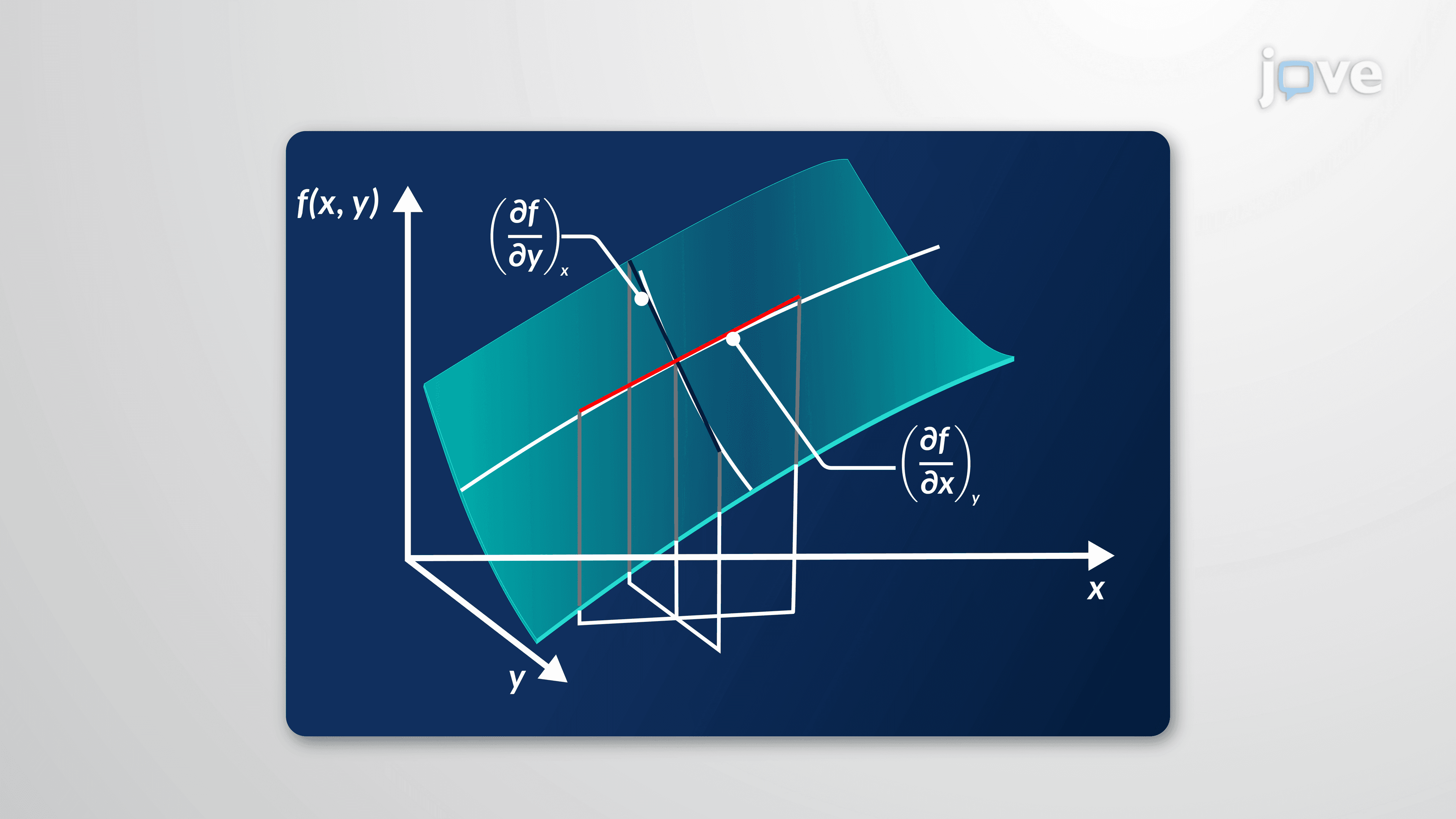
5. Partial Derivatives and Gas Law Relationships When three variables are connected by an equation of state, calculus allows us to measure how one variable responds when another changes and the third is held constant. This is a partial derivative. For example, taking the partial derivative of pressure with respect to temperature at constant volume reveals a direct, linear relationship for ideal gases. The total differential accounts for simultaneous changes in multiple variables. Euler's chain rule, a key mathematical identity, states that the product of three specific partial derivatives taken cyclically around three linked variables always equals −1, a powerful shortcut used throughout thermodynamics.
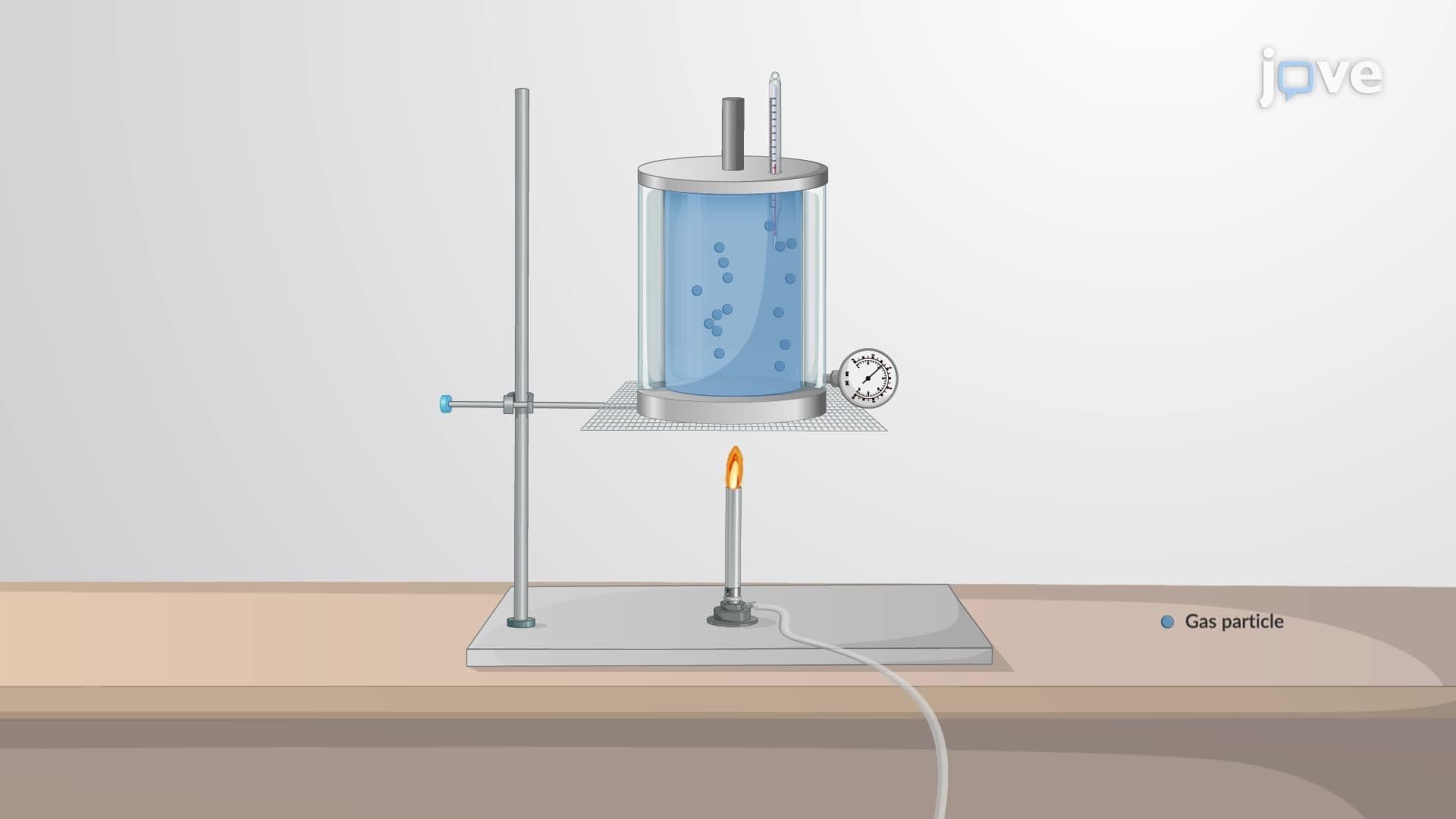
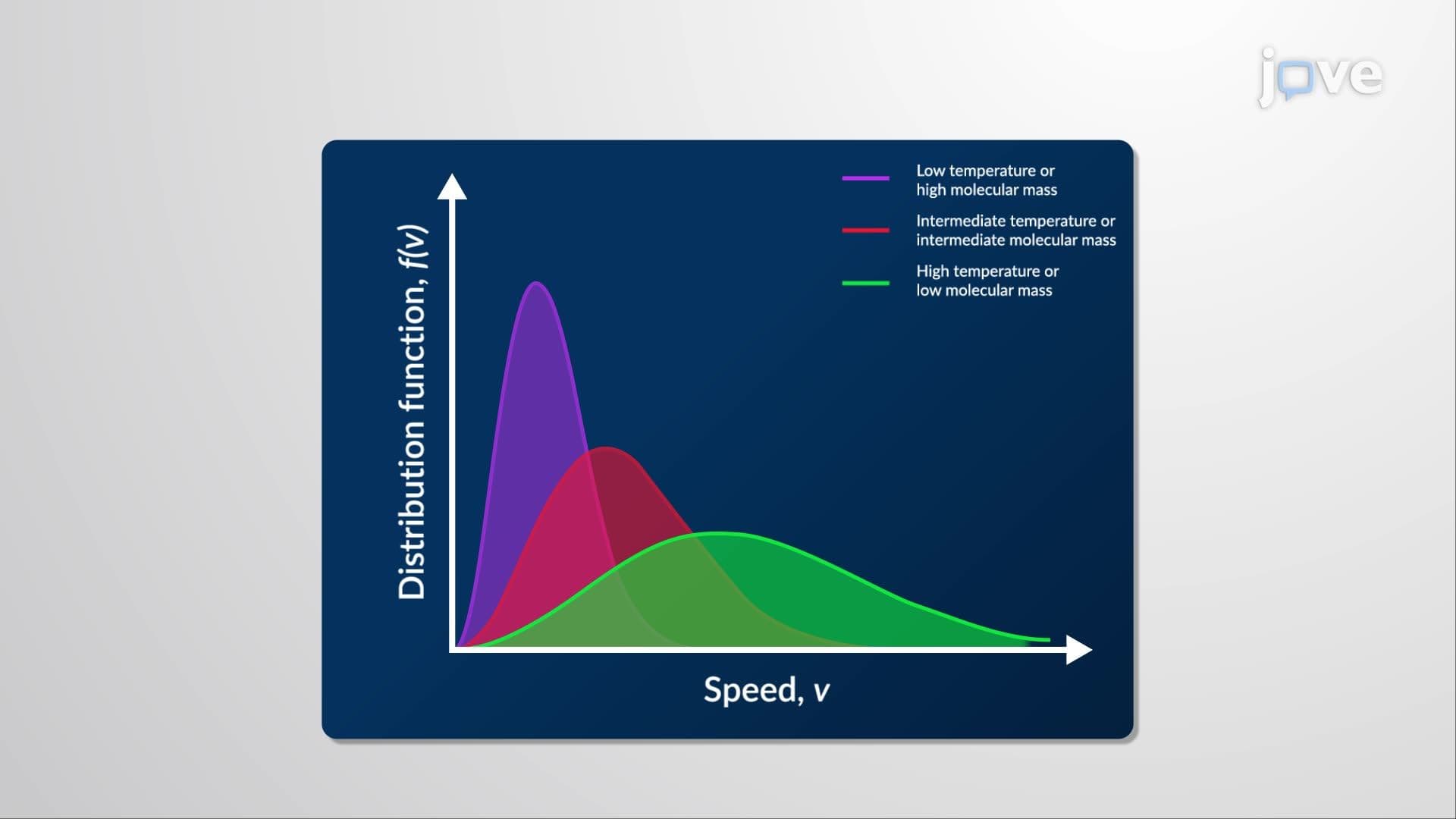
6. The Kinetic Theory of Gases and Gas Pressure The kinetic molecular theory models gas behavior using three core assumptions: molecules move randomly and continuously, their individual volumes are negligible compared to the container, and the only interactions between molecules are perfectly elastic collisions. Under this model, gas pressure emerges from the collective force of countless molecular collisions with container walls. Molecular speeds are not uniform but follow the Maxwell-Boltzmann distribution, at higher temperatures, the distribution shifts toward higher speeds and broadens. The mean free path (average distance between collisions) decreases and collision frequency increases as pressure rises, affecting reaction rates and gas transport.
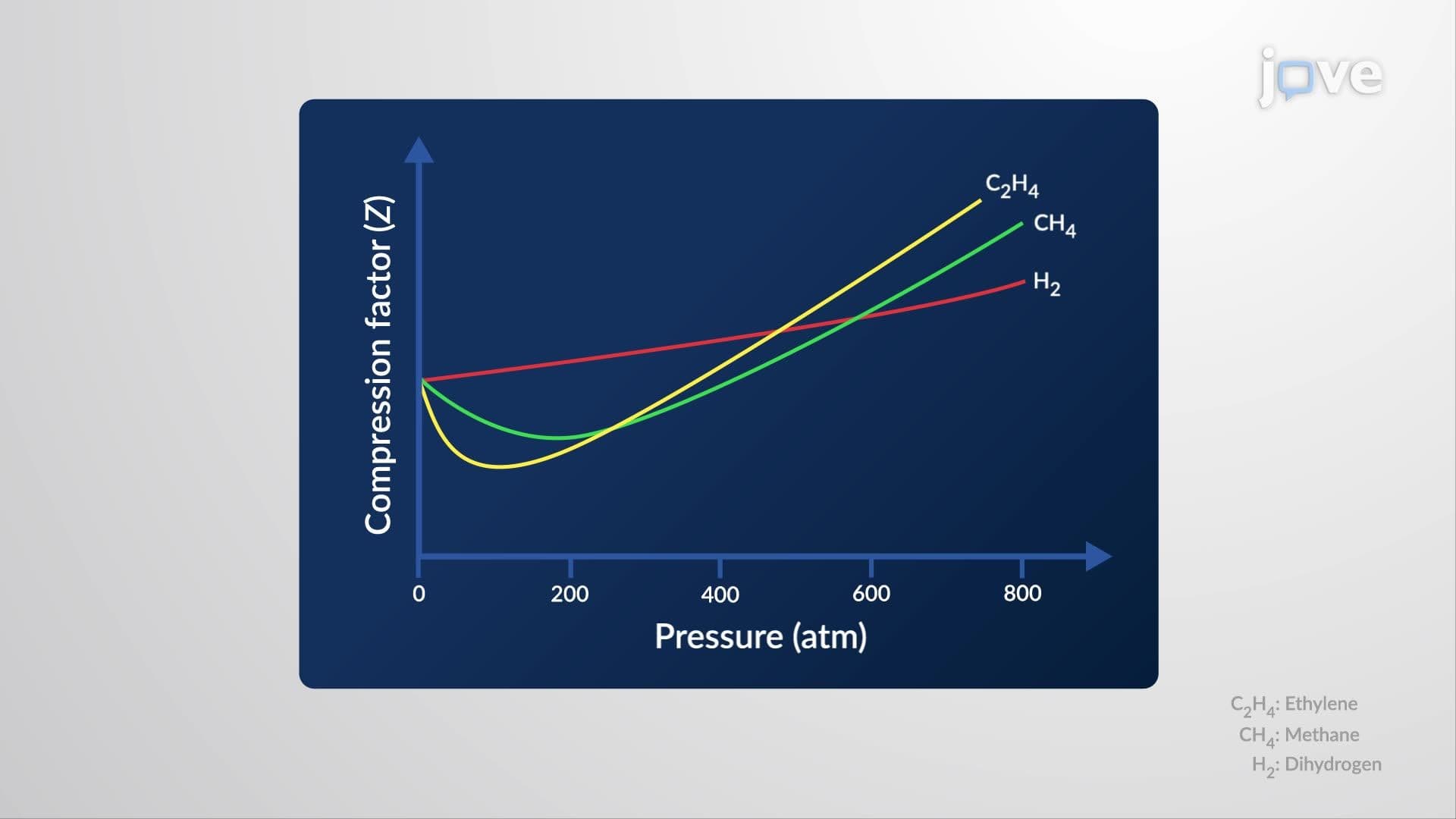
7. Real Gases and Deviations from Ideal Behavior Ideal gas behavior is a useful approximation at low pressures and high temperatures, where molecules are far apart. At high pressures or low temperatures, real gases deviate significantly because intermolecular attractions and actual molecular volumes matter. The compression factor *Z = pVₘ/RT* quantifies this deviation: *Z = 1* for ideal gases, *Z < 1* when attractions dominate (common at moderate pressures), and *Z > 1* when repulsions dominate (common at very high pressures). The virial equation of state refines the ideal gas law by adding pressure-dependent correction terms using empirically determined virial coefficients.
8. The Van der Waals Equation The Van der Waals equation modifies the ideal gas law with two physical corrections. The pressure correction adds a term (*a/Vₘ²*) to account for the fact that intermolecular attractions reduce the force and frequency of collisions with container walls, making real pressure lower than the ideal prediction. The volume correction subtracts a constant *b* from the molar volume to represent the space physically excluded by the molecules themselves. The constants *a* and *b* are unique to each gas, for example, CO₂ has a relatively high *a* value reflecting strong intermolecular attractions, which is why it liquefies more easily than gases like helium or hydrogen.