Loading concepts…


8 Concepts
14 Concepts
6 Concepts
6 Concepts
9 Concepts
8 Concepts
2 Concepts
8 Concepts
8 Concepts
9 Concepts
16 Concepts
6 Concepts
 6 Concepts
 2.3K Views
 Popular topics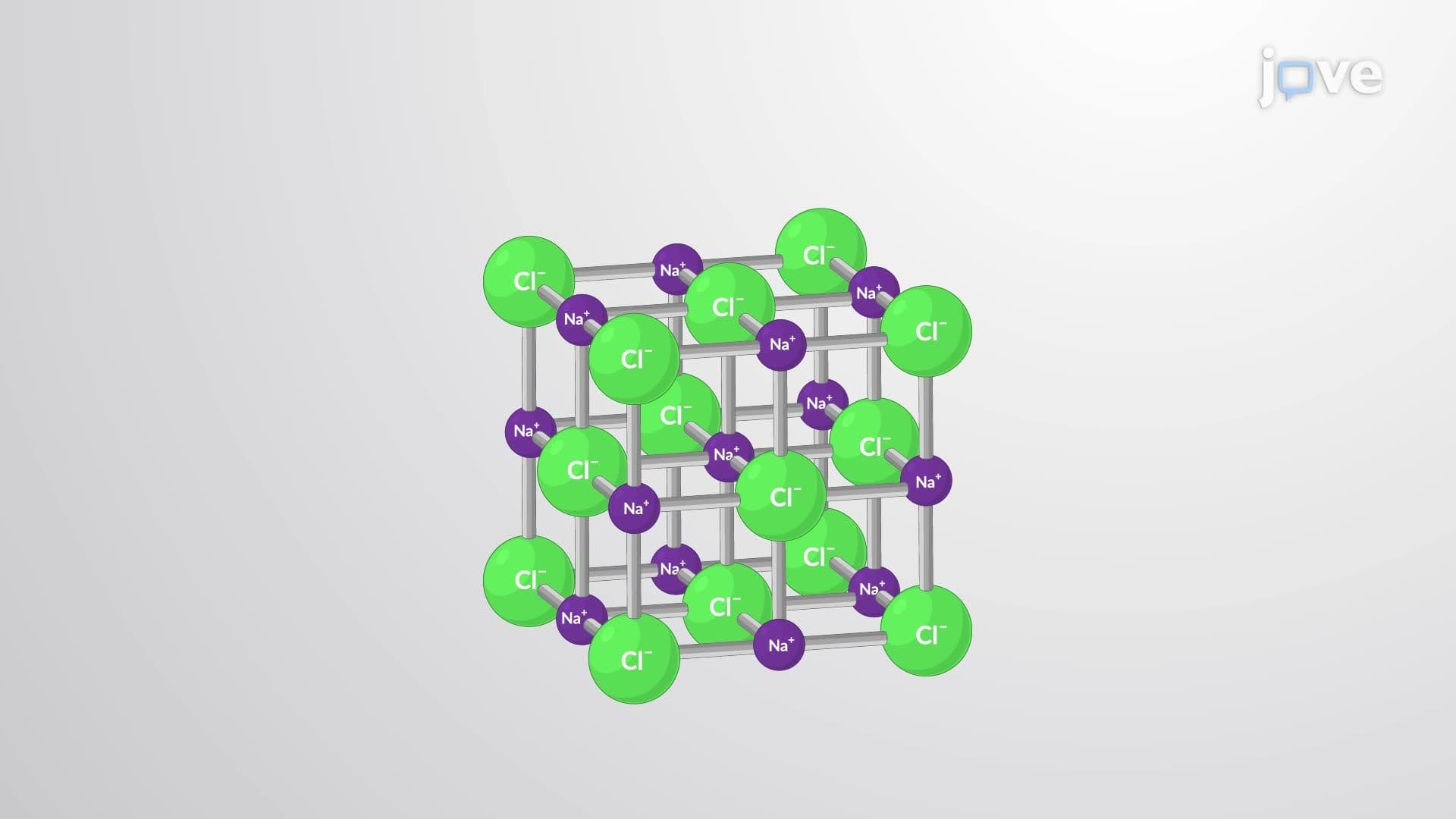
The second and third laws of thermodynamics build on foundational energy concepts to explain *why* and *in which direction* processes occur. This micro-course, supported by JoVE Coach, covers entropy, the Carnot cycle, spontaneity of reactions, absolute entropy, and the behavior of systems approaching absolute zero, essential topics for AP Chemistry, MCAT, and college-level physical chemistry courses.
1. Limitations of the First Law and the Need for the Second Law The first law of thermodynamics accounts for energy conservation but cannot predict whether a process will occur spontaneously. For example, sodium chloride dissolving in water is endothermic, it absorbs energy, yet it still proceeds on its own. This demonstrates that energy change alone is not a reliable predictor of spontaneity. The second law fills this gap by introducing entropy and establishing that all natural processes tend to increase the total entropy of the universe. It also defines the maximum amount of heat convertible into useful work, a concept critical in engineering and industrial thermodynamics.
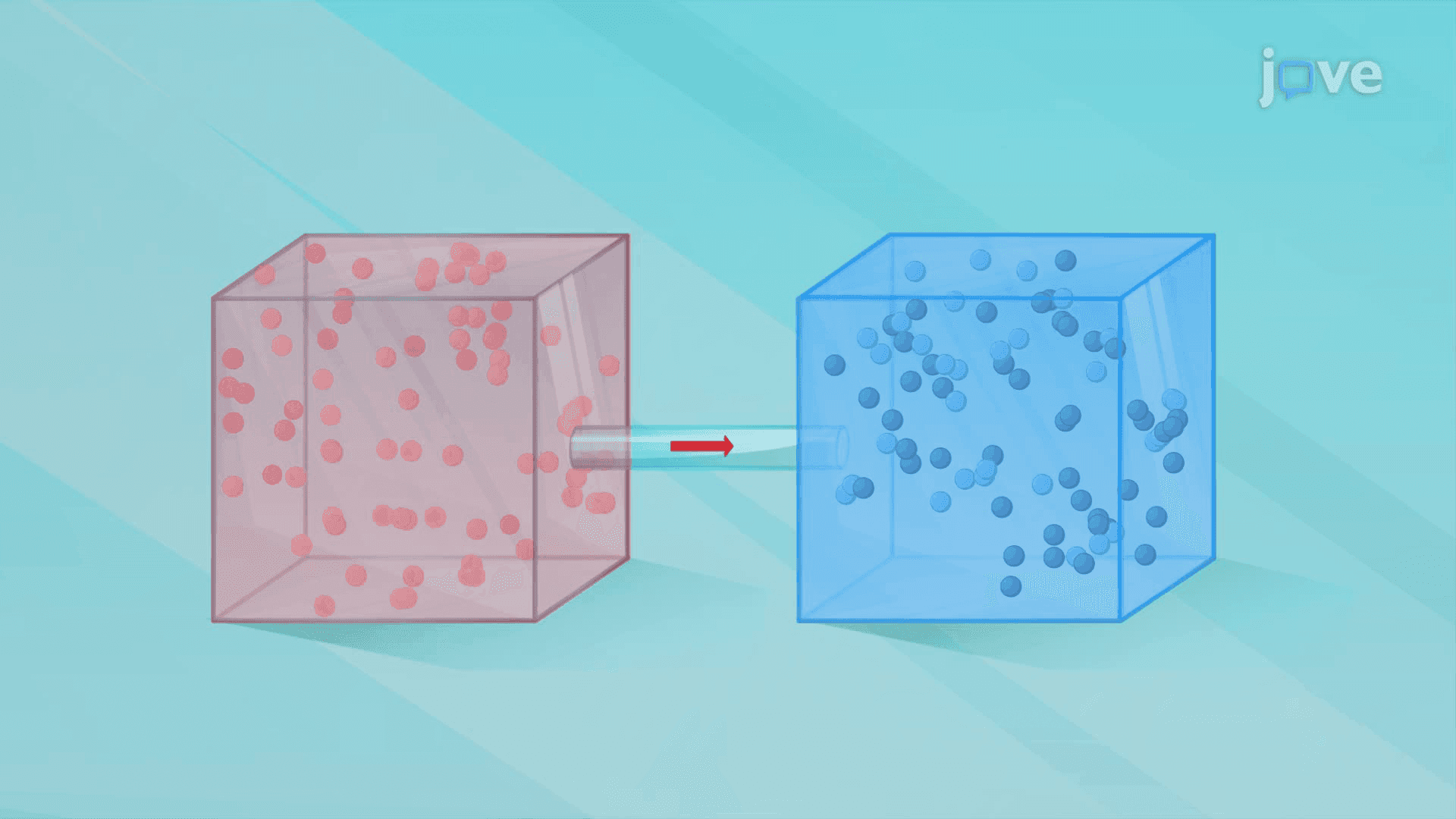
2. Entropy and the Second Law of Thermodynamics Entropy (S) quantifies the degree of disorder or dispersal of energy within a system. For reversible processes, the infinitesimal entropy change equals the heat exchanged divided by the absolute temperature at that moment. For an isothermal reversible process, like a phase change at constant temperature, entropy change equals heat exchanged divided by the fixed absolute temperature. The second law states that in any real, irreversible process, the total entropy of the universe increases. Only ideal reversible processes leave universal entropy unchanged. This asymmetry explains why heat flows naturally from a hot cup of coffee to a cooler room, not the reverse.
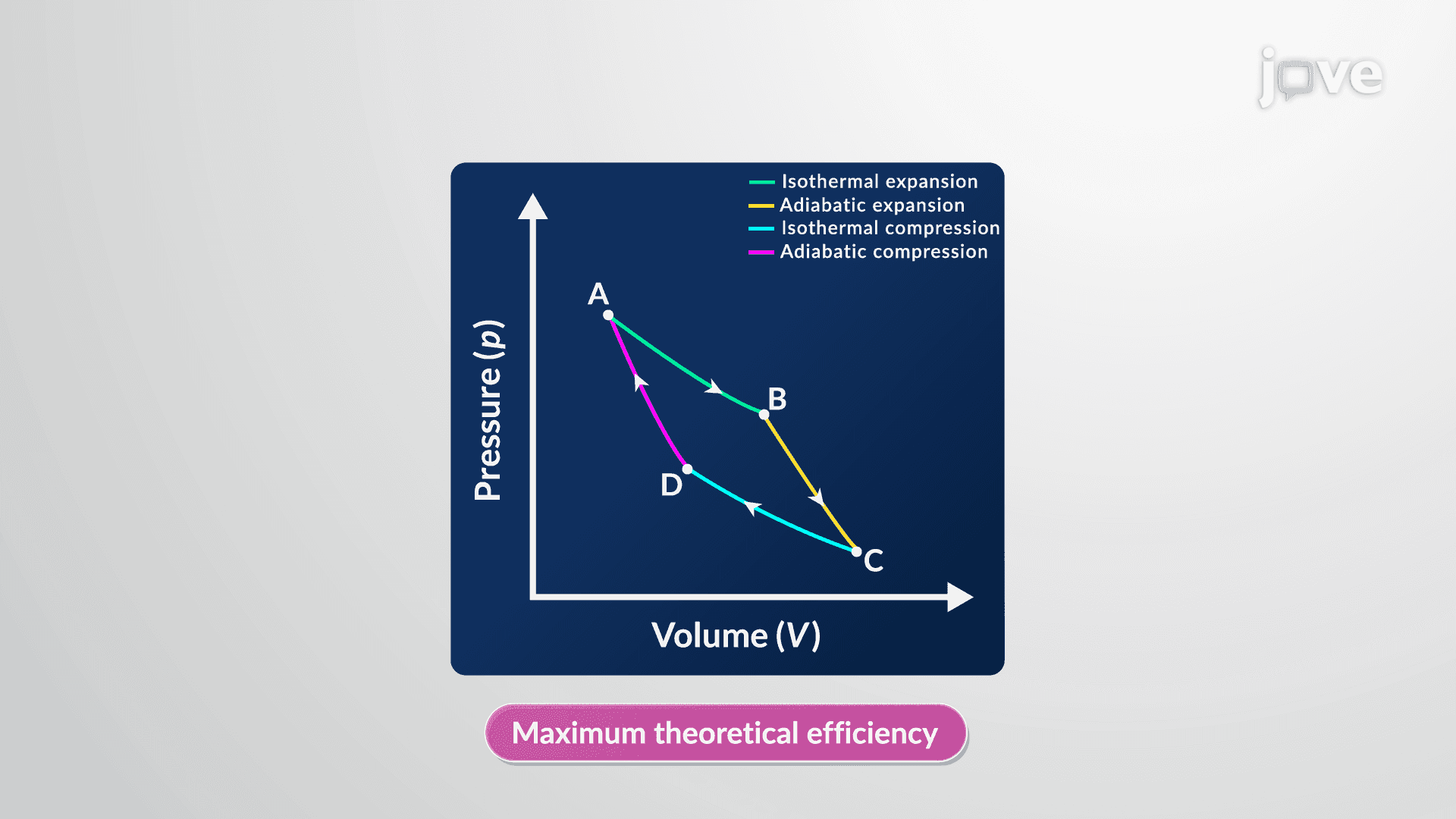
3. The Carnot Cycle and Maximum Efficiency The Carnot cycle, developed by French engineer Sadi Carnot, represents the most efficient theoretical heat engine operating between a hot reservoir (Tₕ) and a cold reservoir (T꜀). The cycle consists of four reversible steps: isothermal expansion, adiabatic expansion, isothermal compression, and adiabatic compression. Because the gas returns to its initial state, net work equals net heat transferred. Efficiency is defined as work output divided by heat absorbed from the hot reservoir, and can be expressed entirely in terms of Tₕ and T꜀. No real engine, including modern steam turbines or internal combustion engines, can exceed this theoretical maximum.
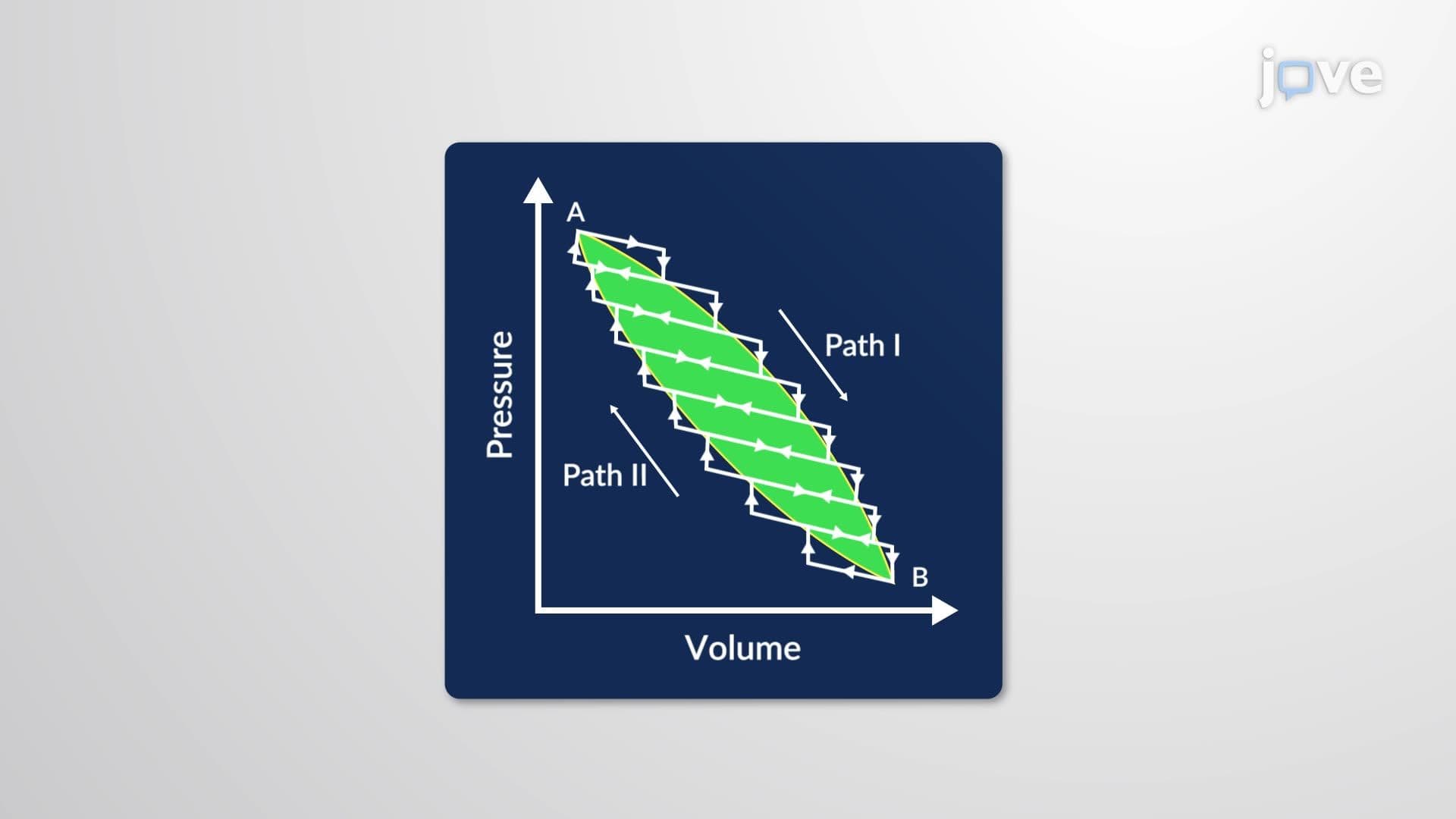
4. Entropy as a State Function A state function depends only on the initial and final states of a system, not on the path taken. Entropy holds this property. By modeling any reversible cyclic process as a series of infinitely small Carnot cycles and evaluating the ratio of heat exchanged to temperature across each step, the total sum around a complete cycle equals zero. When this is applied to two different reversible paths connecting the same two states, both paths yield identical entropy changes. This confirms that entropy, like internal energy, is a true state function, a foundational insight that supports the use of entropy in calculating Gibbs free energy and Helmholtz free energy.
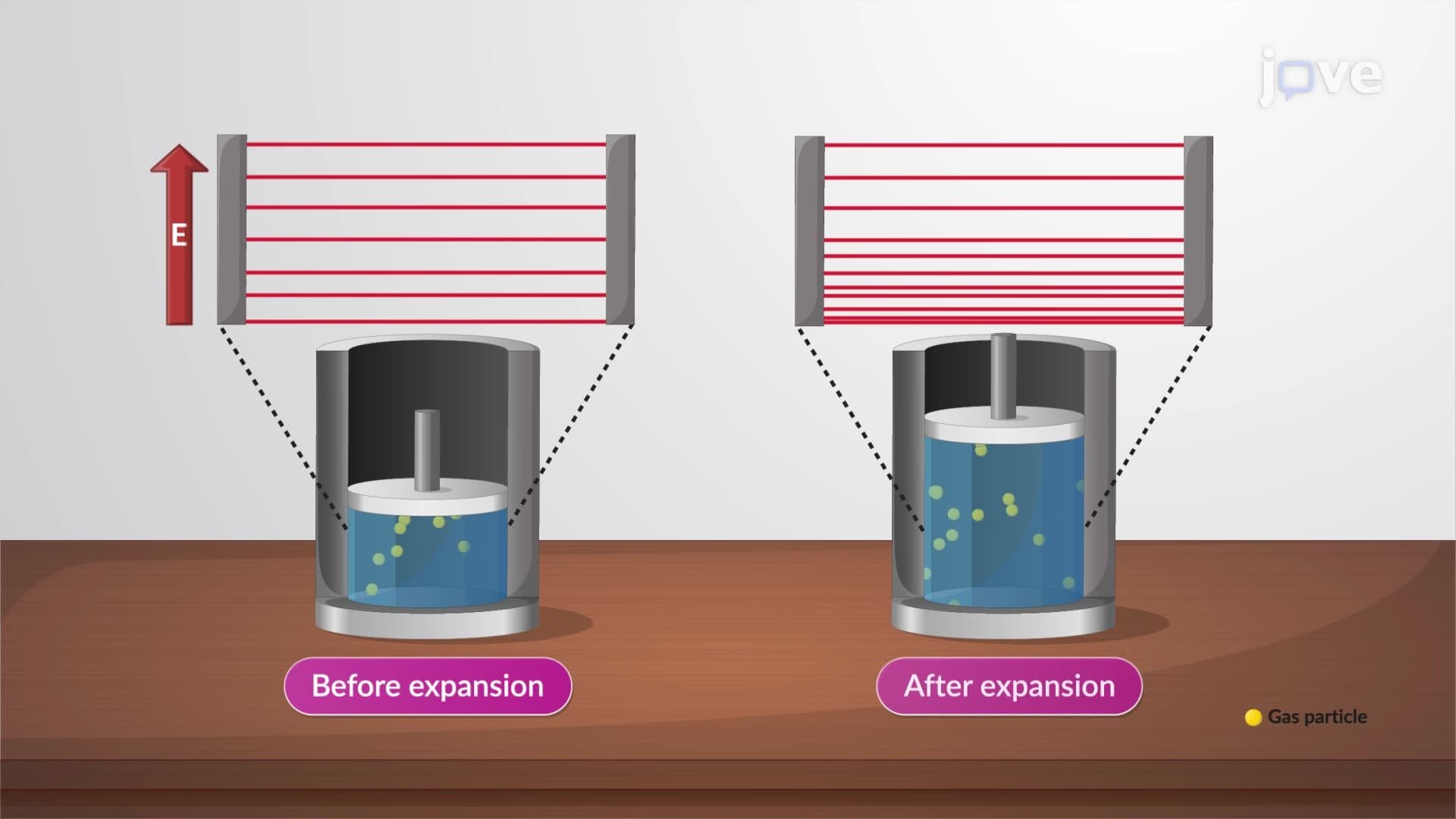
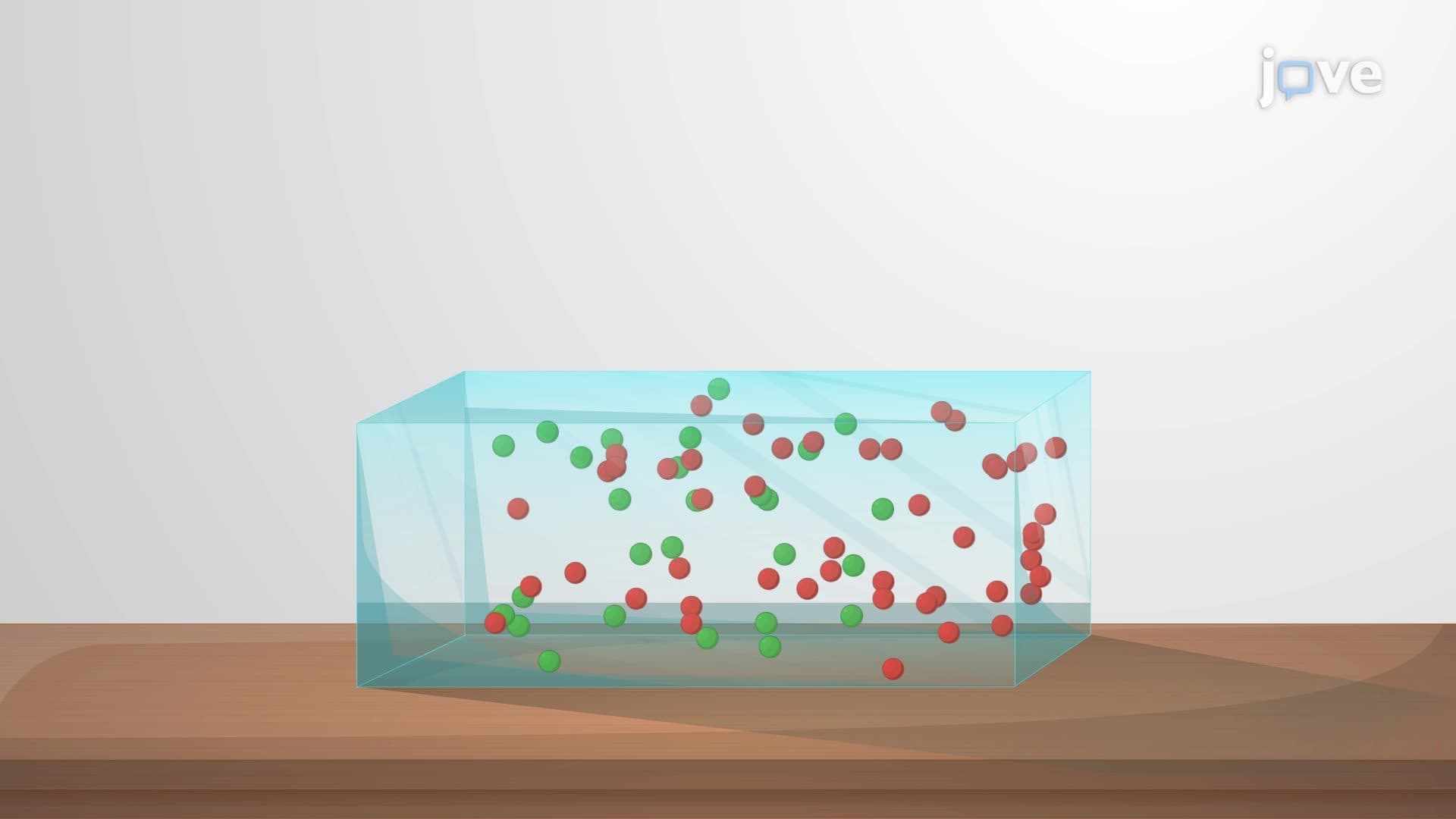
5. Entropy Changes in Specific Processes Entropy changes can be calculated for several common physical and chemical processes. During phase transitions such as melting or boiling, entropy change equals the transition enthalpy divided by the transition temperature. Exothermic transitions (like freezing) decrease entropy, while endothermic ones (like vaporization) increase it. For an ideal gas expanding isothermally, entropy increases logarithmically with the volume ratio. Heating a substance at constant pressure or volume raises its entropy, with the most significant gains occurring at lower temperatures. Finally, mixing ideal gases at the same temperature and pressure spontaneously increases total entropy, with the total depending on the mole fractions of each component, a concept relevant in atmospheric chemistry and industrial gas processing in the US.
6. Absolute Entropies and the Third Law of Thermodynamics Unlike enthalpy or internal energy, entropy has a true absolute value, not just a relative one. This is grounded in the Boltzmann relationship: absolute entropy is proportional to the natural logarithm of the number of possible microstates, the distinct ways particles can be arranged while the system maintains the same macrostate. As a substance cools toward absolute zero, thermal motion ceases and molecular arrangements become increasingly ordered. In a perfect crystal at absolute zero, only one microstate exists, so entropy equals zero. This defines the third law of thermodynamics. In practice, however, molecules like carbon monoxide can "freeze" in random orientations, producing residual entropy slightly above zero even at 0 K.