Loading video…

 6 Concepts
 2.3K views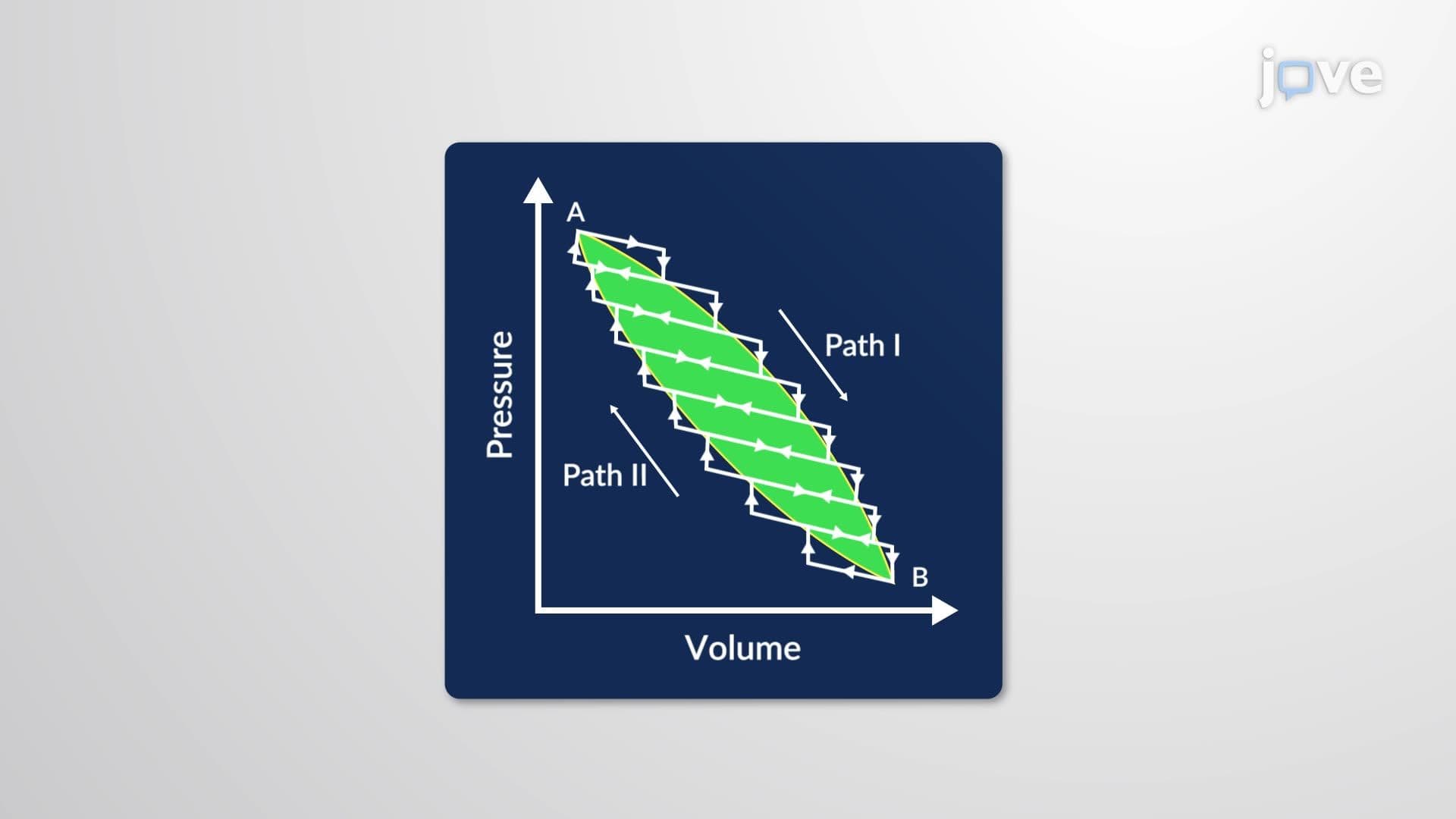

Video Summary: The Entropy as a State Function Explained
Why does entropy behave the same regardless of how a system gets from point A to point B? The entropy as a state function is one of thermodynamics' most elegant concepts, and understanding it unlocks everything from predicting chemical reactions to designing efficient engines like those used in US power plants. By analyzing reversible Carnot cycles, scientists proved that entropy change depends only on initial and final states. Watch the full video on JoVE Coach to master this concept with expert-led visuals and step-by-step explanations.
One of the most powerful ideas in thermodynamics is that certain properties of a system depend only on where you start and where you end, not on how you got there. Entropy is one of those properties. Proving that entropy is a state function required careful mathematical reasoning, and the tool that made it possible was the Carnot cycle.
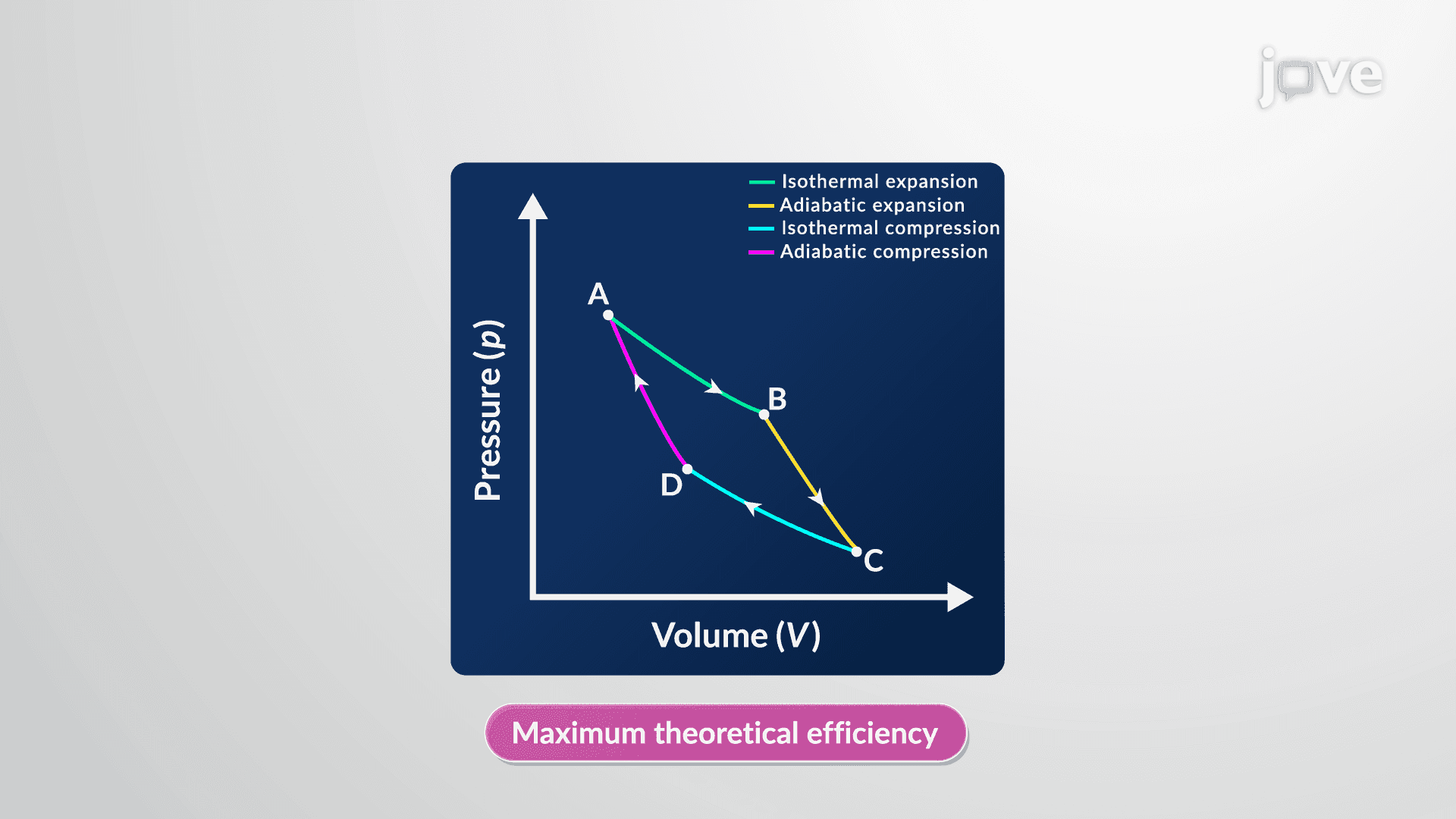
The Carnot cycle is an idealized, reversible thermodynamic cycle consisting of four steps: two isothermal processes (where heat is exchanged at constant temperature) and two adiabatic processes (where no heat is exchanged). French engineer Sadi Carnot developed this framework in the 19th century, and it remains central to thermodynamics education in AP Chemistry, AP Physics, and university-level physical chemistry courses across the US.
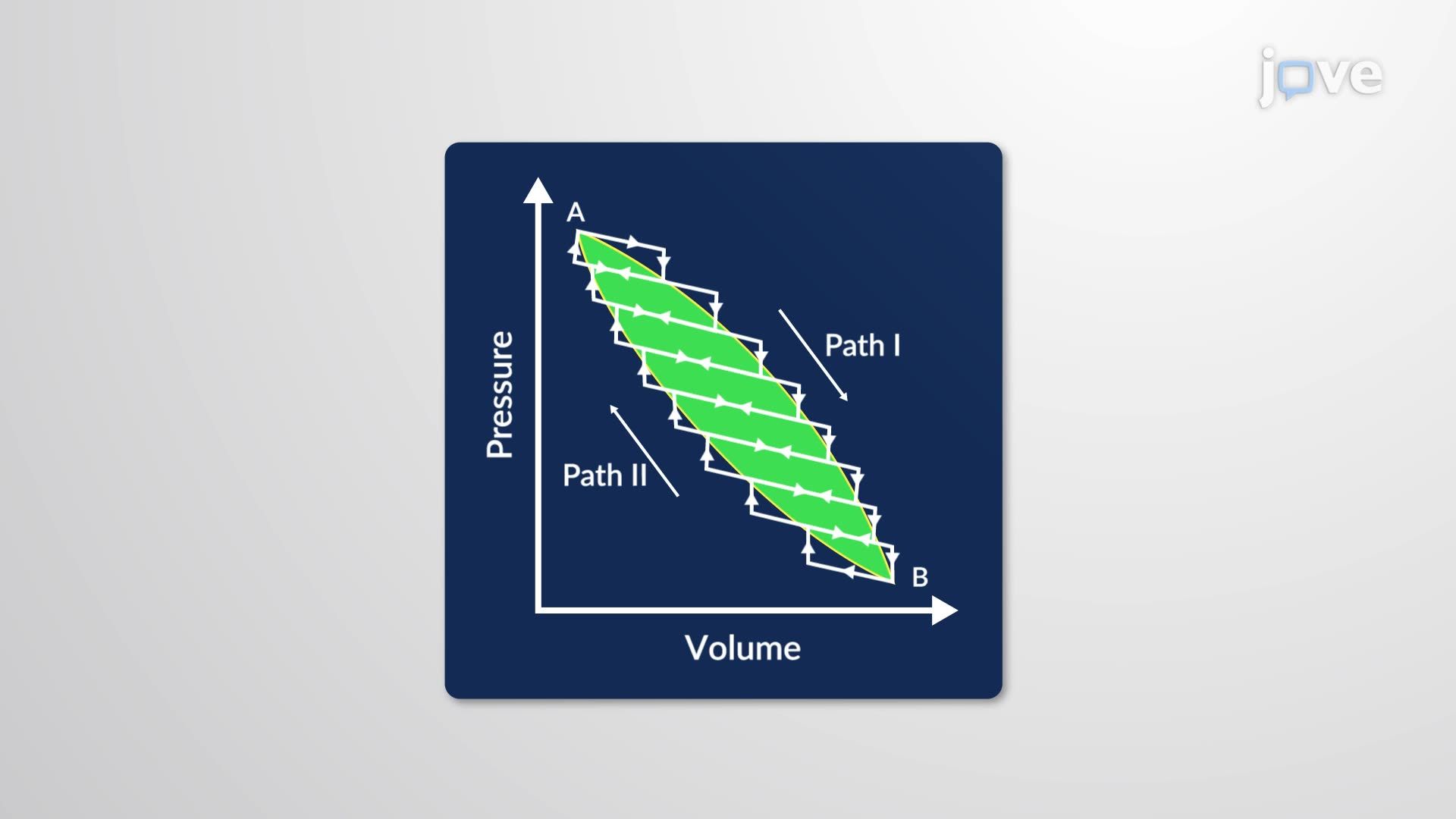
When scientists model an arbitrary reversible cyclic process between two states, call them A and B, they can approximate it using a large number of tiny Carnot cycles. In each mini-cycle, the ratio of heat exchanged (dq) to temperature (T) during the isothermal steps is constant. The adiabatic steps contribute nothing to heat exchange. When you add up all the dq/T terms across the entire cycle, the total is zero. In calculus terms, the cyclic integral of dq/T equals zero for any reversible process.
Here is where the state function argument becomes clear. Suppose the system travels from state A to state B along reversible Path I, and then returns from B to A along reversible Path II. Because the total cyclic integral of dq/T is zero, the integral along Path I plus the integral along Path II must cancel out. This means the integral of dq/T from A to B is the same regardless of which reversible path is taken.
Since entropy change (delta S) is defined as the integral of dq(reversible) divided by T, this result proves that delta S between any two states is a fixed quantity. It does not matter whether the system followed a simple or complex route, the entropy difference is always identical. This is exactly what it means for a quantity to be a state function.
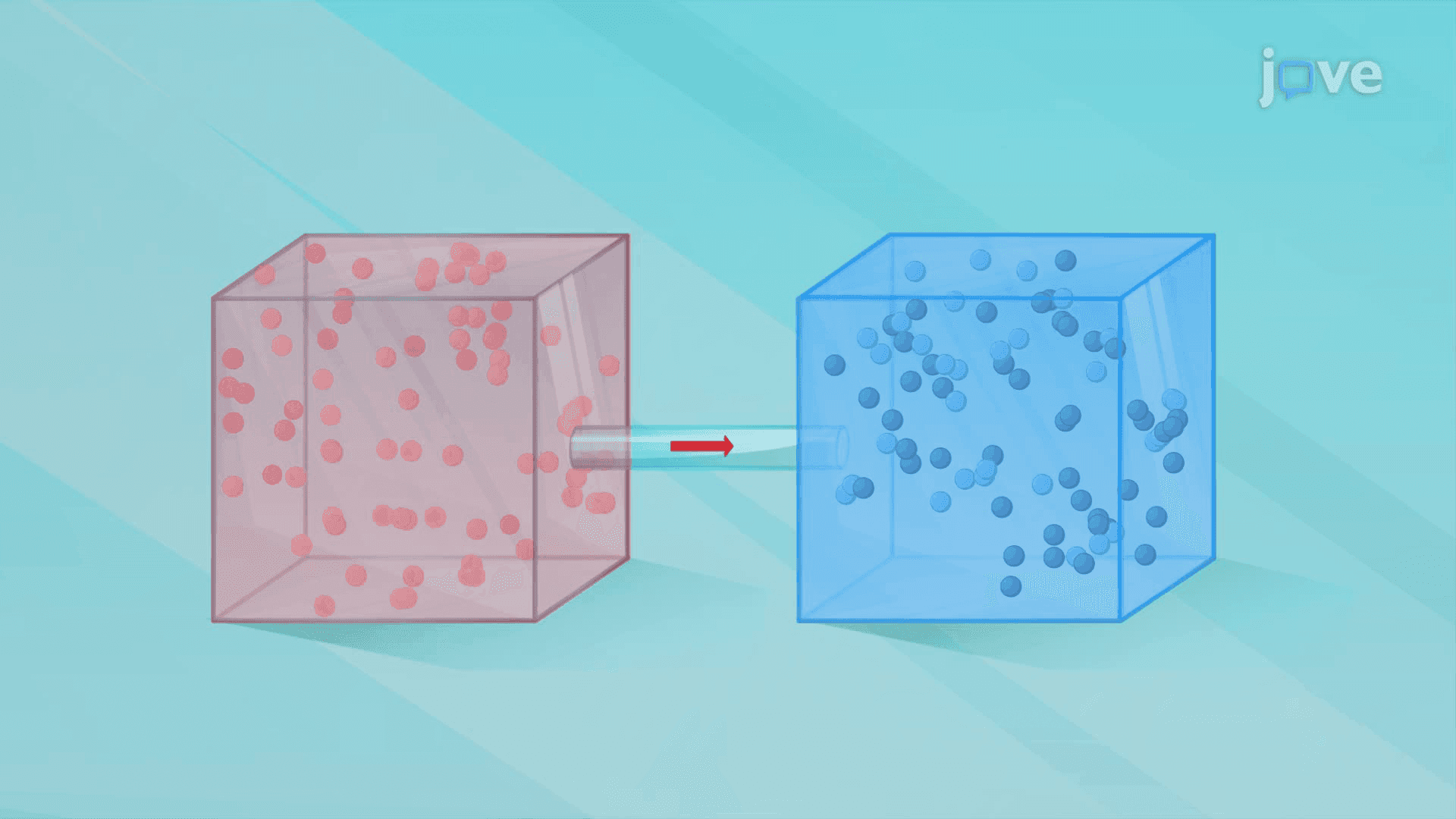
What do the second and third laws state, and how does entropy fit in? The second law of thermodynamics establishes that the total entropy of an isolated system always increases during a spontaneous process, this is the driving force behind reaction spontaneity. For example, when ice melts in a warm room at a US university lab, entropy increases naturally and irreversibly.
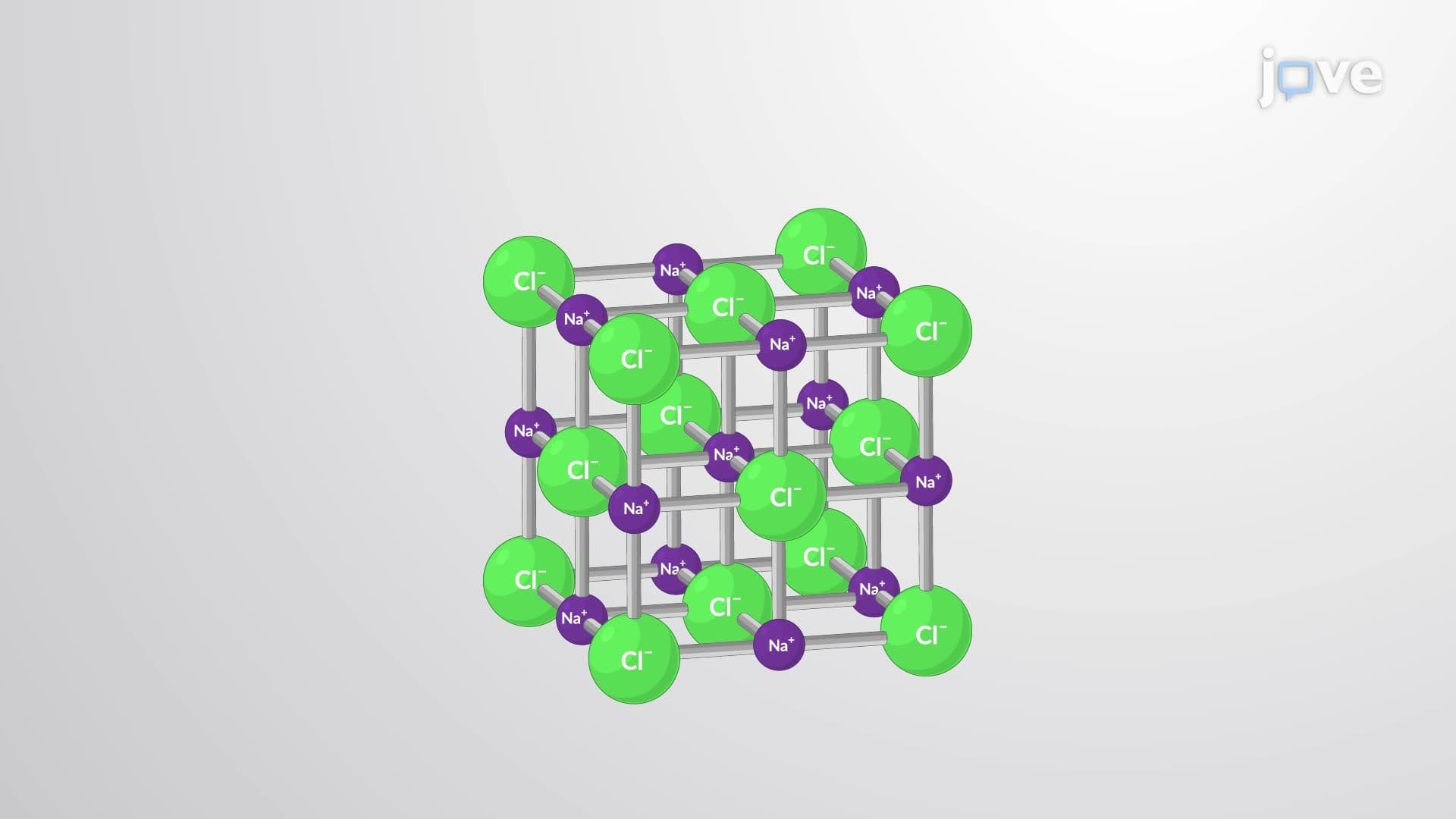
The third law adds another layer: at absolute zero (0 Kelvin), a perfect crystalline substance has an entropy of exactly zero. This gives scientists a reference point, making absolute entropy values measurable and meaningful. Those values, listed in standard thermodynamic tables used in AP Chemistry and college physical chemistry courses, are only possible because entropy is a state function.
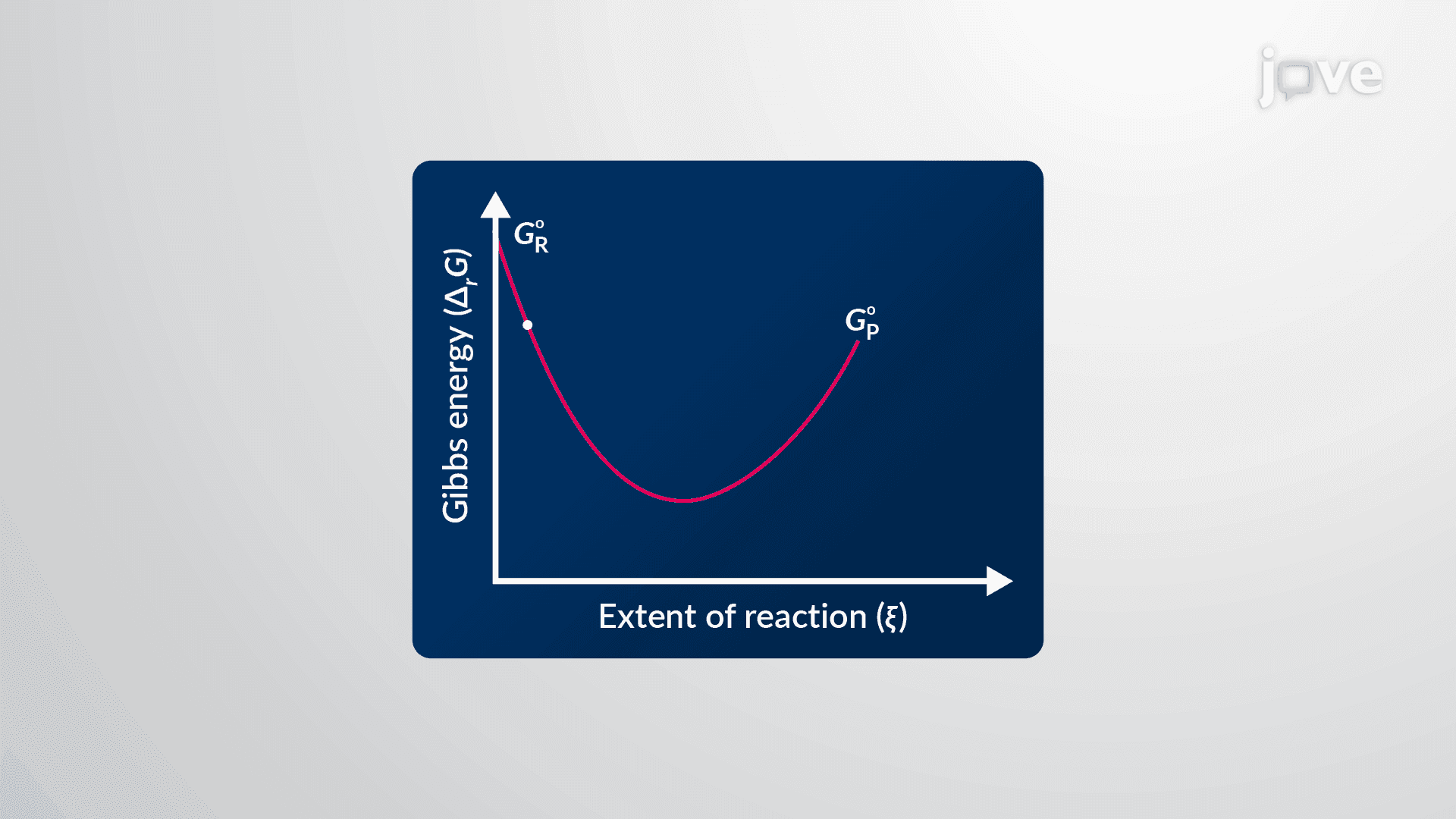
Understanding entropy as a state function directly supports two other major thermodynamic quantities: Gibbs free energy (G) and Helmholtz free energy (A). Both combine entropy with enthalpy or internal energy to predict whether a process is spontaneous under given conditions. In biochemistry courses at US medical schools, Gibbs free energy calculations, which rely on entropy being path-independent, are used to analyze metabolic reactions and drug-receptor binding. Mastering the state function nature of entropy is therefore not just an abstract exercise; it is foundational to chemistry, physics, biology, and engineering.
Related Micro-courses