Loading video…

 6 Concepts
 2.3K views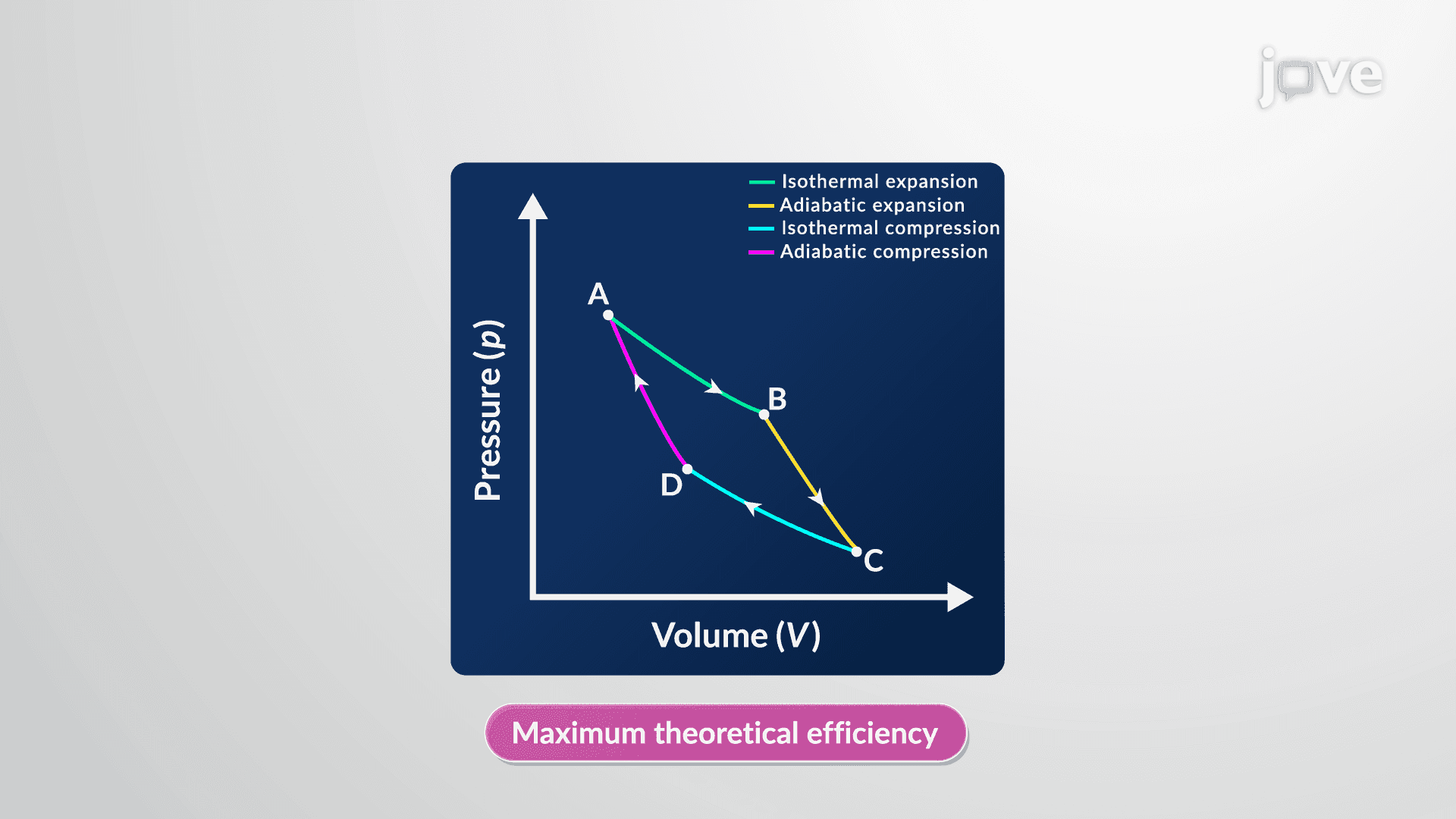

Video Summary: What Is Carnot Cycle and Efficiency
Can any engine ever convert heat into work with perfect efficiency? The answer, rooted in the Carnot cycle and efficiency basics, is a definitive no. The Carnot cycle and efficiency concept reveals the *maximum* theoretical efficiency any heat engine can achieve, governed by the second law of thermodynamics. Think of a steam turbine at a US power plant: even under ideal conditions, it can never be 100% efficient. Watch the full video on JoVE Coach to master this concept with expert-led visuals and step-by-step explanations.
The Carnot cycle and efficiency concept sits at the heart of classical thermodynamics and answers one of engineering's most fundamental questions: *How efficient can a heat engine theoretically be?* French physicist Sadi Carnot answered this in 1824 by designing a hypothetical ideal engine, the Carnot engine, that operates on a perfectly reversible cycle between two thermal reservoirs. Understanding this cycle is essential for AP Chemistry, AP Physics, and college-level thermodynamics courses alike.
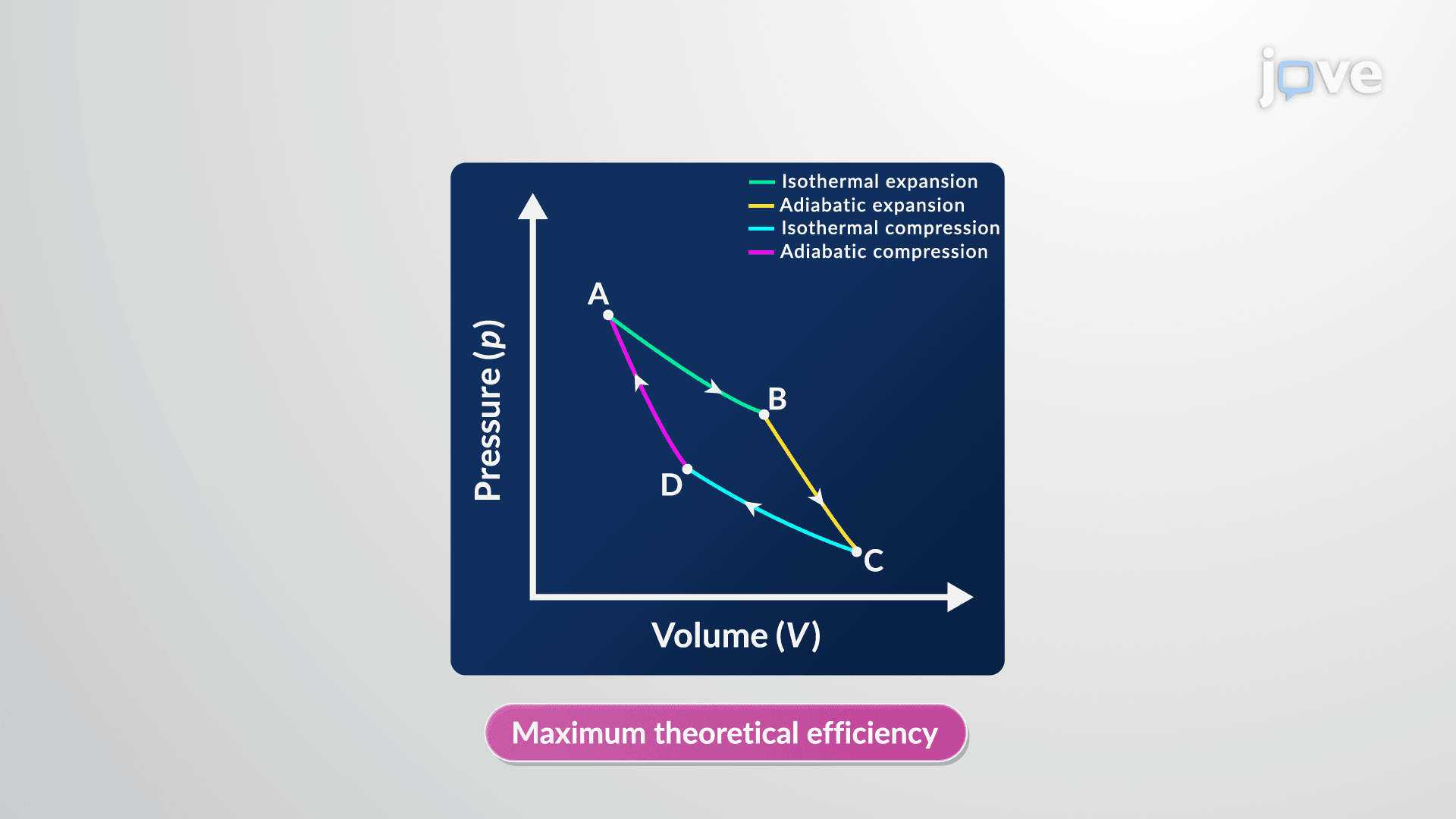
The Carnot cycle consists of four distinct, reversible steps performed on an ideal gas:
1. Isothermal Expansion, The gas absorbs heat (Qh) from a hot reservoir at constant temperature Th, expanding and doing work on the surroundings. 2. Adiabatic Expansion, The gas is thermally isolated and continues expanding. No heat is exchanged, so the gas cools from Th down to Tc as it does additional work. 3. Isothermal Compression, The gas contacts a cold reservoir at temperature Tc. Work is done *on* the gas, and heat (Qc) is released to the cold reservoir at constant temperature. 4. Adiabatic Compression, The gas is again isolated and compressed back to its original state. Temperature rises from Tc back to Th.
Because the gas returns to its exact initial state after one complete cycle, its internal energy change (ΔU) is zero. By the first law of thermodynamics, the net work output equals the net heat transferred: W(net) = Qh − Qc.
Efficiency (η) is defined as the ratio of useful work produced to heat absorbed from the hot reservoir:
η = W(net) / Qh = 1 − (Qc / Qh)
For a Carnot engine, this simplifies elegantly to a temperature-based expression:
η = 1 − (Tc / Th)
where temperatures must be expressed in Kelvin. This formula reveals a powerful truth: efficiency increases as Th rises or Tc falls. A 100% efficient engine would require Tc = 0 K, absolute zero, which the third law of thermodynamics tells us is physically unattainable. This directly answers *what do the second and third laws state?* in practical terms: the second law forbids 100% efficiency; the third law makes absolute zero unreachable, cementing that limit forever.
Consider a coal-fired power plant in the American Midwest operating with steam at 600 K exhausting to a cold reservoir at 300 K. The maximum Carnot efficiency would be: η = 1 − (300/600) = 50%. In reality, due to friction, irreversibility, and entropy changes in real processes, actual plant efficiencies typically range from 33-45%. Engineers designing gas turbines, refrigerators, and internal combustion engines, such as those produced by US manufacturers like General Electric or Cummins, use Carnot efficiency as their theoretical benchmark.
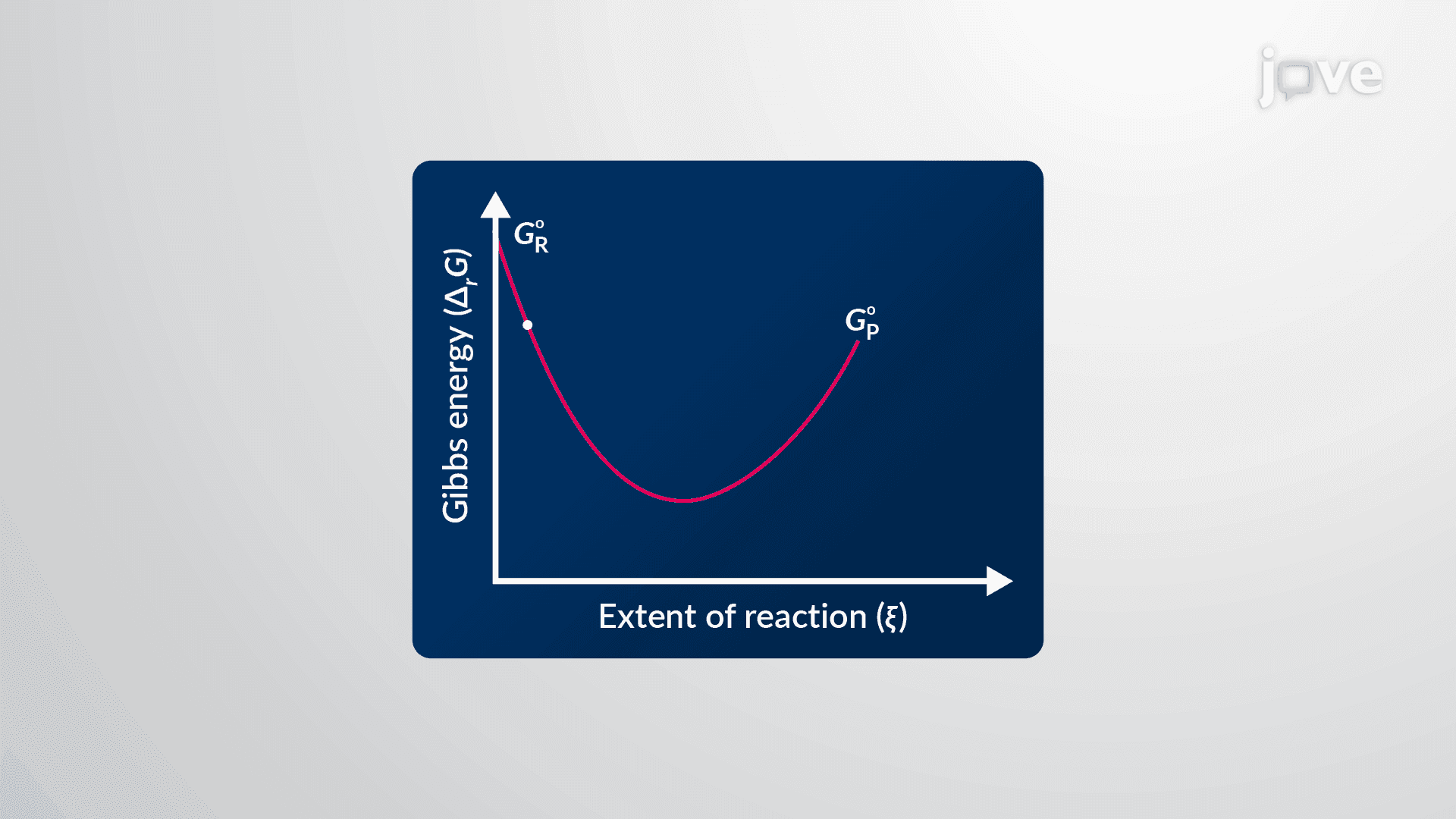
This concept also bridges into Gibbs free energy (ΔG) and Helmholtz free energy (ΔA), which quantify maximum work in systems at constant pressure-temperature and constant volume-temperature conditions, respectively. The Carnot framework establishes *why* free energy functions are bounded, spontaneous processes always produce less work than the theoretical reversible maximum, a consequence of entropy generation explained by how entropy relates to the second law of thermodynamics.
On the AP Chemistry and AP Physics 2 exams, students are expected to calculate Carnot efficiency, interpret PV diagrams of the cycle, and explain why real engines are less efficient than the Carnot ideal. MCAT test-takers encounter these concepts in the Chemical and Physical Foundations section. College students in general chemistry and engineering thermodynamics courses use Carnot efficiency to build toward topics like absolute entropy, entropy changes in reversible vs. irreversible processes, and the spontaneity of reactions via ΔG = ΔH − TΔS.
Related Micro-courses