Loading concepts…


8 Concepts
14 Concepts
6 Concepts
6 Concepts
9 Concepts
8 Concepts
2 Concepts
8 Concepts
8 Concepts
9 Concepts
16 Concepts
6 Concepts
 6 Concepts
 1.1K Views
 Popular topics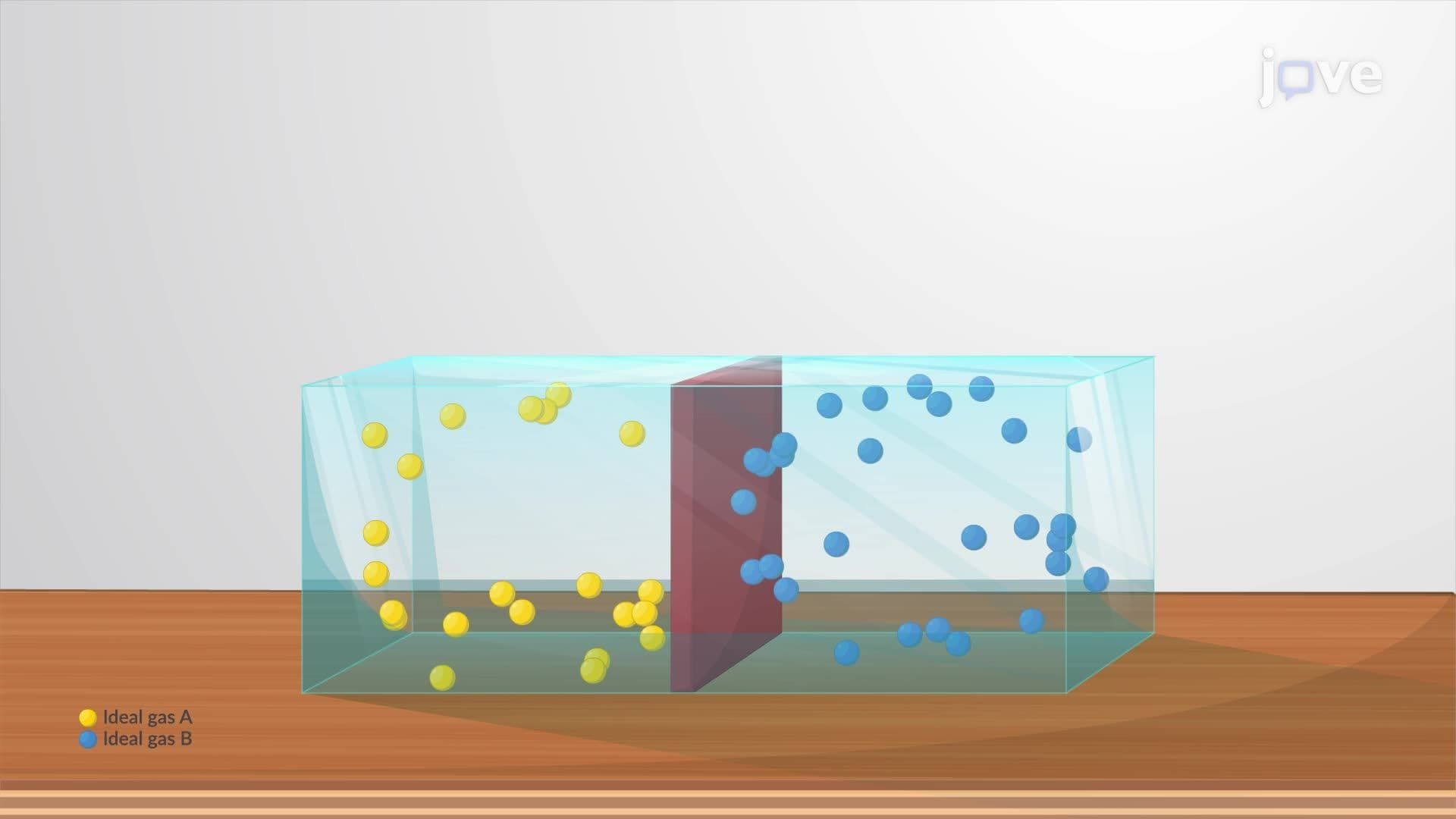
Solutions properties govern everything from carbonated beverages to drug delivery systems in US hospitals. This micro-course examines the properties of solutions through the lens of thermodynamics, covering ideal and non-ideal behavior, gas solubility, surface tension, and viscosity. Guided by JoVE Coach, students connect Gibbs energy, Raoult's Law, Henry's Law, and Poiseuille's equation to real-world chemical systems.
1. Thermodynamics of Mixing When two ideal gases or liquids mix spontaneously at constant temperature and pressure, the Gibbs energy of mixing (ΔG_mix) is negative, confirming spontaneity. The entropy of mixing (ΔS_mix) is always positive because mole fractions are less than one, making the logarithmic terms in the expression negative and the overall entropy change favorable. Because intermolecular interactions between unlike and like molecules are essentially identical in ideal systems, the enthalpy of mixing (ΔH_mix) equals zero. This means spontaneous mixing is driven entirely by entropy, not energy. A classic US classroom analogy is mixing two noble gases, no new bonds form, yet mixing is always spontaneous.
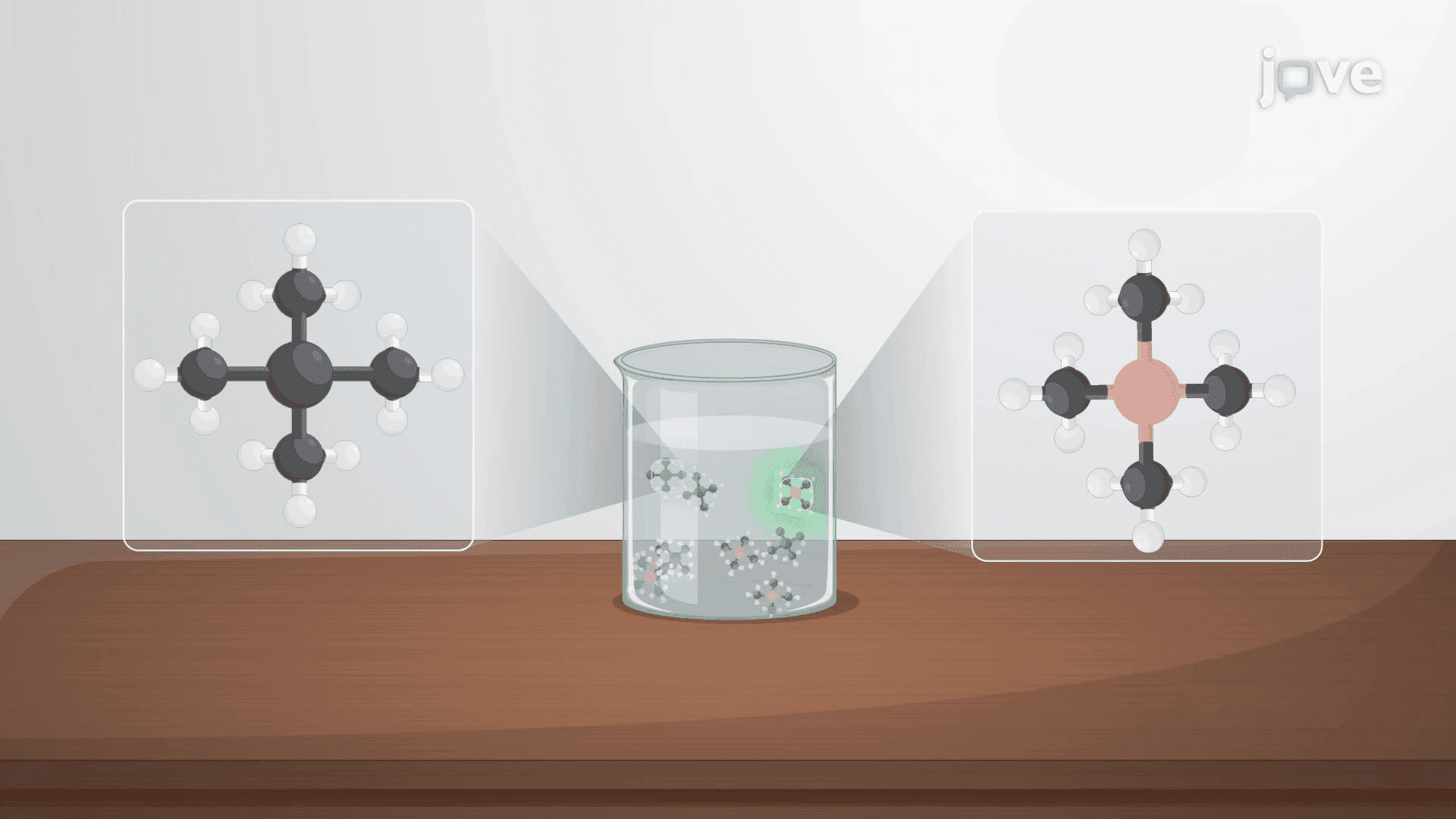
2. Ideal Solutions and Raoult's Law An ideal solution forms when component molecules are nearly identical in size, shape, and intermolecular forces. Real examples include benzene and toluene (differing by one methyl group) and n-heptane and n-octane (differing by one -CH₂- unit). These systems obey Raoult's Law: the partial vapor pressure of each component equals its mole fraction multiplied by its pure-component vapor pressure (p_A = x_A · p*_A). Volume change and enthalpy change upon mixing are both zero. The spontaneity of mixing arises solely from entropy increase, a principle directly tested on the AP Chemistry exam and MCAT.
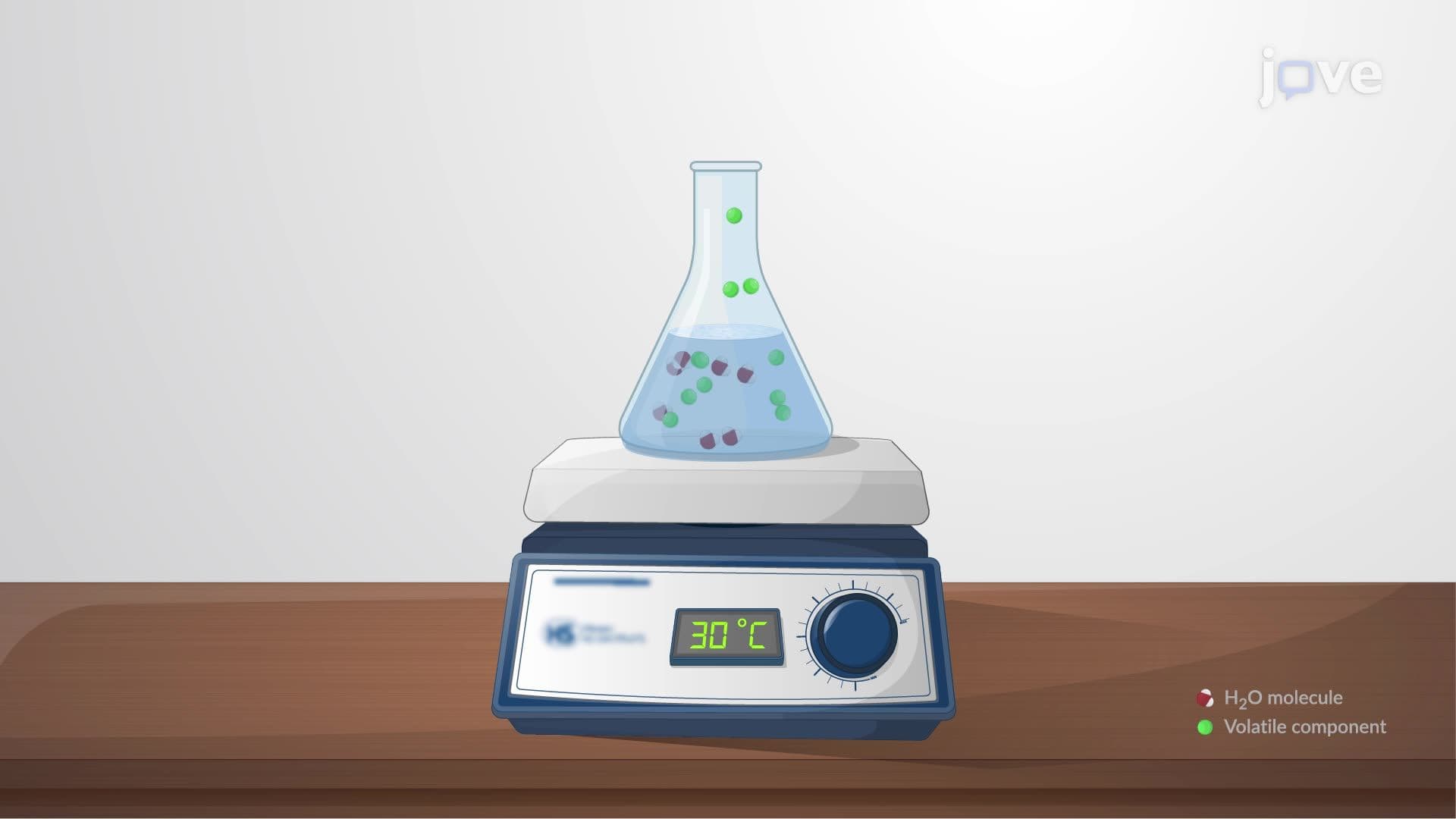
3. Gas Solubility and Henry's Law Gases dissolve in liquids to form liquid-gas solutions, a familiar example is carbon dioxide dissolved in carbonated soft drinks sold across the US. Gas solubility depends on the identity of both gas and solvent: HCl dissolves readily in water to form hydrochloric acid, while oxygen dissolves only sparingly. Henry's Law states that the vapor pressure of a dissolved gas is proportional to its mole fraction at low concentrations, using an experimentally determined Henry's Law constant rather than the pure-component vapor pressure used in Raoult's Law. For most nonpolar gases in water, solubility decreases as temperature rises but sharply increases near the critical temperature of water.
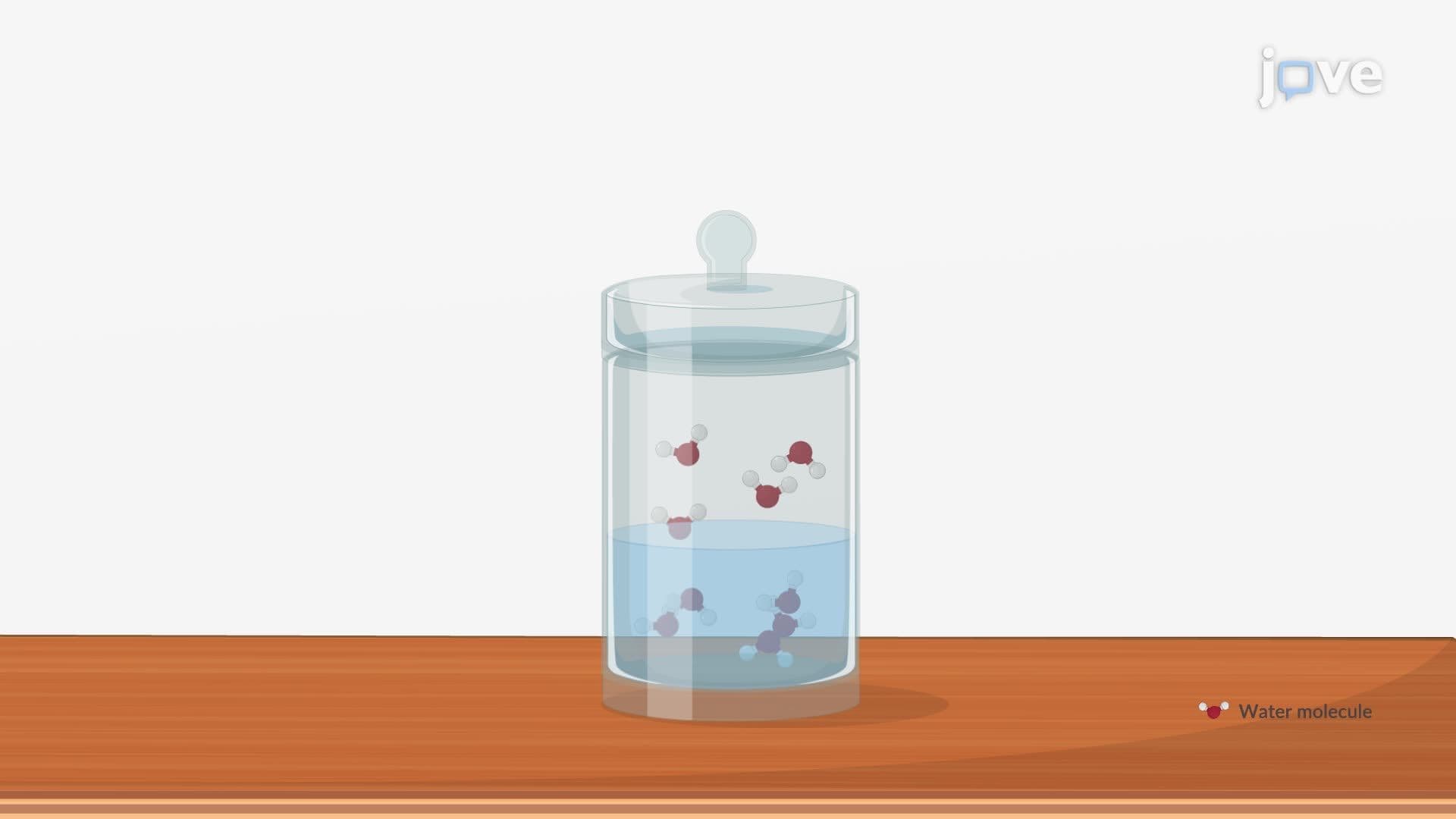
4. Surface Tension and the Kelvin Equation Surface tension arises because molecules at a liquid's surface have fewer neighbors than molecules in the bulk, creating a net inward attractive force. This imbalance gives surface molecules higher energy, called surface energy, and drives the liquid to minimize surface area, explaining why water droplets form spheres. The curved surface of a droplet increases internal pressure, which in turn raises the vapor pressure above the droplet compared to a flat liquid surface. The Kelvin equation quantifies this: as droplet radius decreases, the ratio p/p₀ increases, meaning smaller droplets evaporate more readily. This principle is relevant in US pharmaceutical aerosol and inhaler technology.
5. Viscosity, Newton's Law, and Poiseuille's Equation Viscosity is a fluid's internal resistance to flow, arising from intermolecular attractions between adjacent layers moving at different velocities. Newton's Law of Viscosity states that the applied force needed to maintain flow is proportional to the contact area and velocity gradient, with the proportionality constant being the coefficient of viscosity (η). Liquid viscosity decreases with increasing temperature and increases with pressure. The Reynolds number classifies flow as laminar (high viscosity, viscous forces dominate) or turbulent (low viscosity, inertial forces dominate). Poiseuille's equation calculates volumetric flow rate in laminar conditions using pipe radius, pressure difference, viscosity, and pipe length, foundational for US biomedical and civil engineering applications.