Loading video…

 6 Concepts
 1.1K views

Video Summary: What Is Surface Tension
Why can a water strider walk on water without sinking? The answer lies in surface tension, a fundamental property of liquids that causes their surfaces to behave like a stretched elastic film. Surface tension basics explain how unbalanced molecular forces at a liquid's surface drive it to contract and minimize area, forming spherical droplets. The Kelvin equation links droplet size to vapor pressure, explaining why morning dew on a Michigan cornfield evaporates faster from tiny droplets than large ones. Watch the full video on JoVE Coach to master this concept with expert-led visuals and step-by-step explanations.
Surface tension is the tendency of a liquid's surface to contract and minimize its exposed area, behaving much like a tightly stretched elastic membrane. This property emerges directly from the intermolecular forces, such as hydrogen bonding and van der Waals attractions, that hold liquid molecules together. Understanding surface tension basics is essential for AP Chemistry, college-level General Chemistry, and physical chemistry courses, where it serves as a gateway to understanding vapor pressure, thermodynamics, and colligative properties.
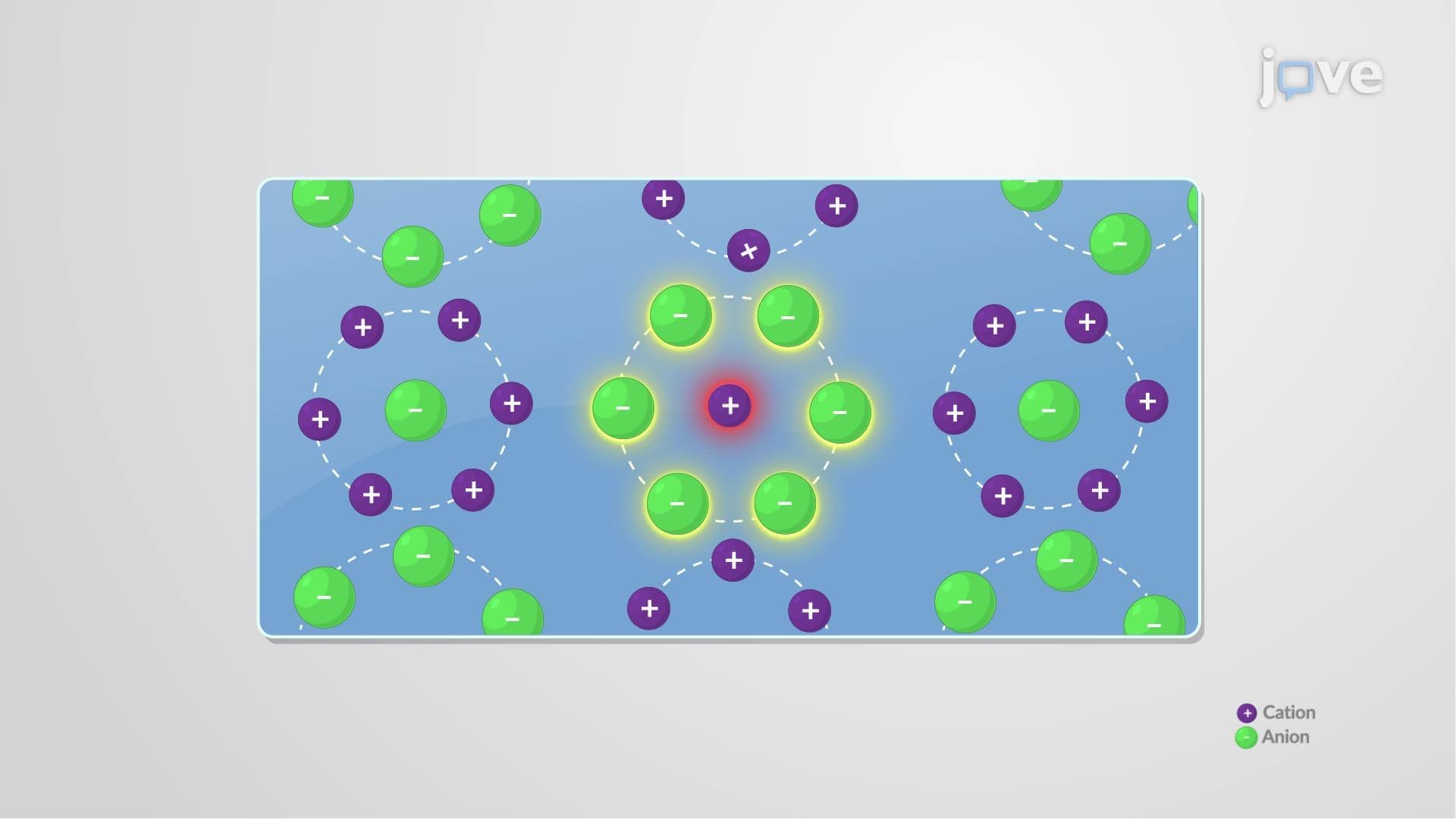
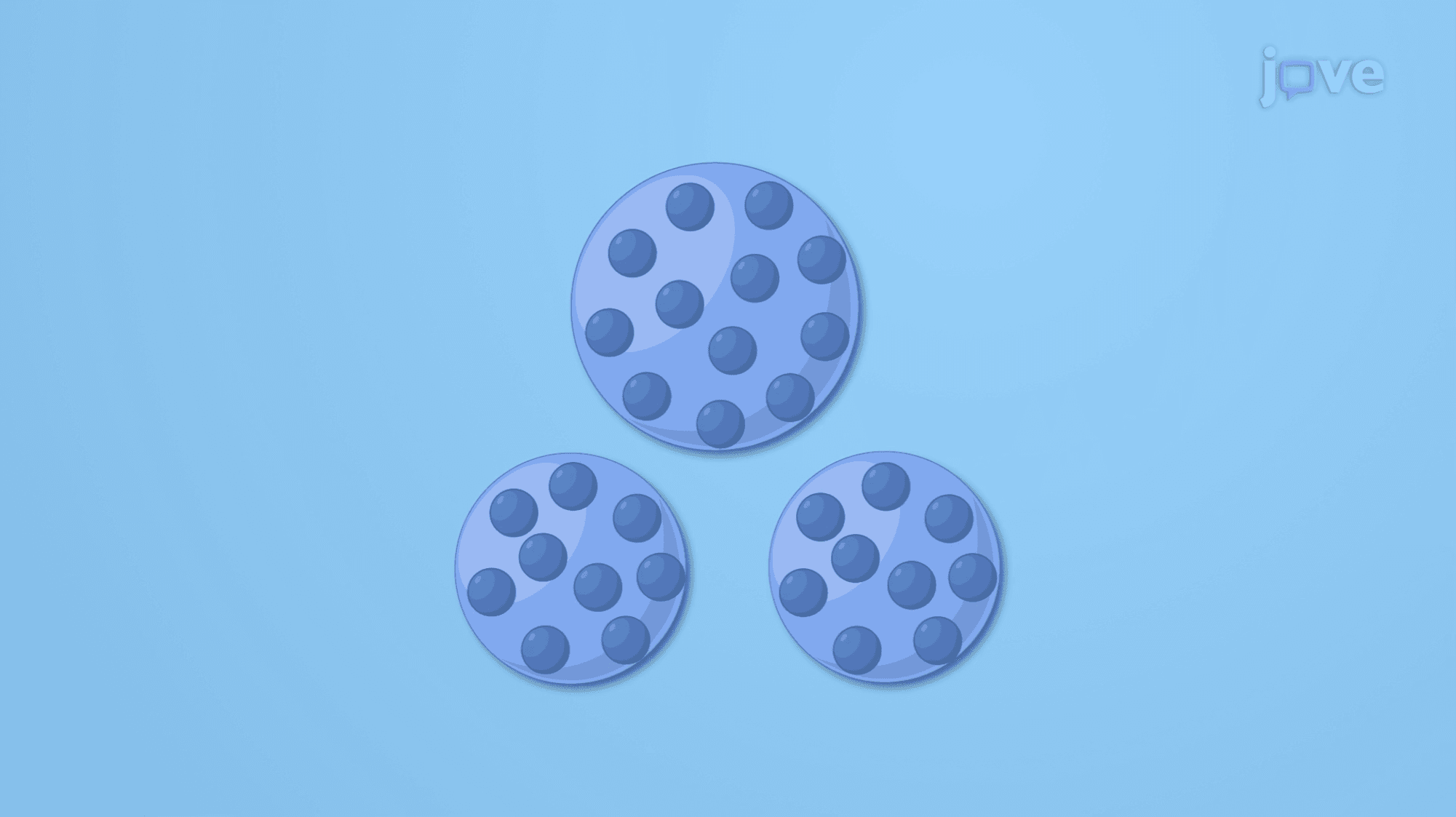
Inside the bulk of a liquid, every molecule is surrounded on all sides by neighboring molecules. These neighbors exert attractive forces in every direction, so the net force on any bulk molecule is essentially zero, it sits in a state of energetic balance. At the surface, however, molecules have neighbors only on their sides and below. This asymmetry produces a net inward pull, directing surface molecules toward the liquid interior. Because surface molecules have fewer stabilizing interactions, they possess greater potential energy, called surface energy, compared to their counterparts in the bulk. Nature tends toward minimum energy states, so the liquid responds by reducing the number of molecules at the surface, effectively shrinking the surface area. This is why free-falling water forms spherical droplets: a sphere has the smallest possible surface area for a given volume.
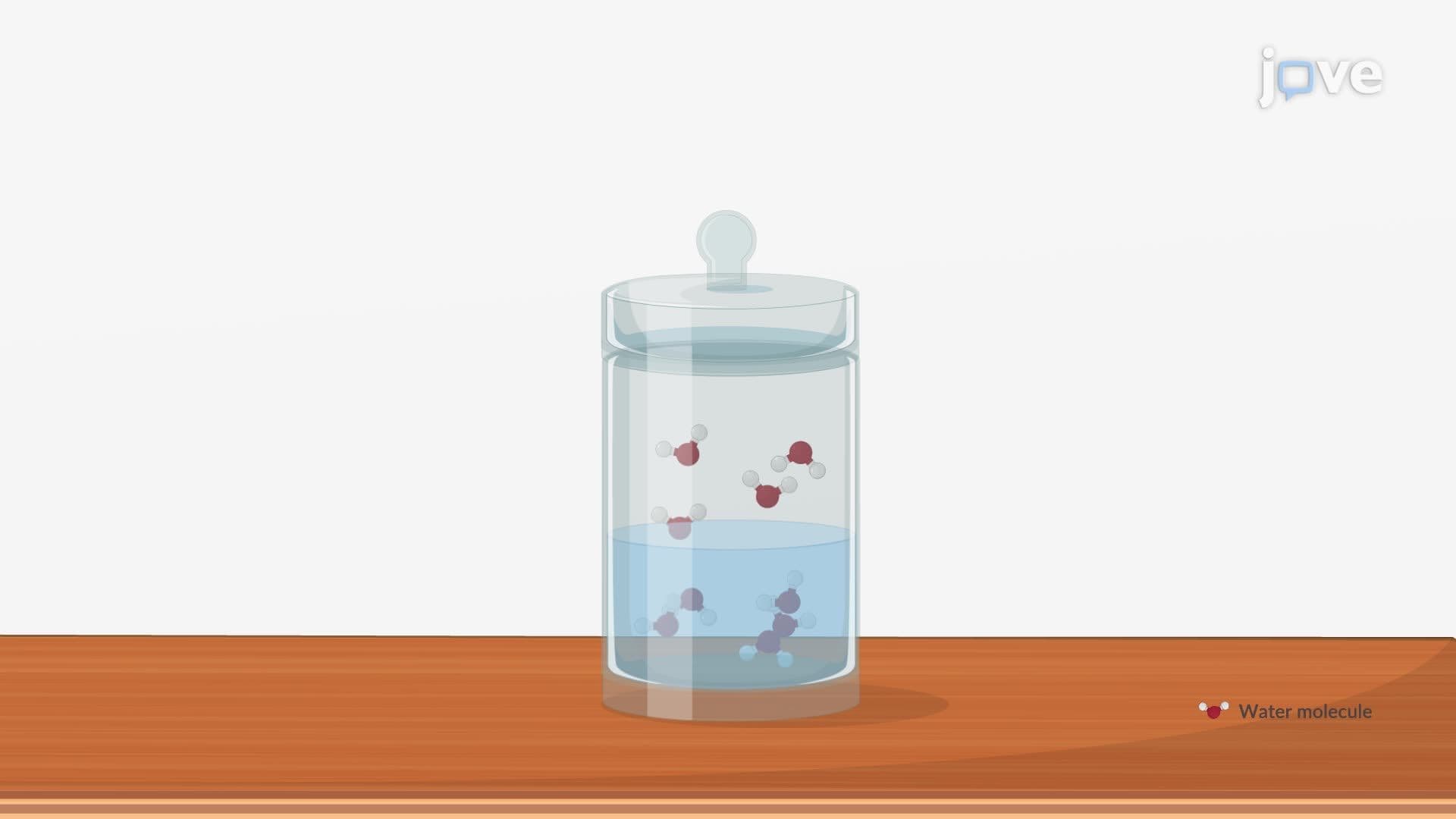
A curved liquid surface is not energetically neutral, it exerts additional inward pressure on the liquid trapped inside. This excess pressure (described in introductory courses by the Young-Laplace equation) means that molecules inside a tiny droplet experience a higher pressure environment than molecules in a flat bulk liquid. That elevated pressure raises the chemical potential of the liquid, making it thermodynamically easier for molecules to escape into the vapor phase. The Kelvin equation quantifies this effect:
ln(p / p₀) = (2γV_m) / (rRT)
where p is the vapor pressure of the droplet, p₀ is the vapor pressure of a flat bulk surface, γ is the surface tension, V(m) is the molar volume, r is the droplet radius, R is the gas constant, and T is temperature. The critical insight: as r decreases, p/p₀ increases. Smaller droplets have measurably higher vapor pressures than larger ones, so they evaporate faster. This principle, sometimes called the Kelvin effect, explains phenomena ranging from cloud droplet growth in atmospheric science to Ostwald ripening in industrial emulsions.
Surface tension and the Kelvin equation connect directly to topics tested on the AP Chemistry exam, college General Chemistry midterms, and the MCAT physical chemistry section. In US atmospheric science, meteorologists use the Kelvin effect to explain why cloud condensation nuclei (tiny aerosol particles) are needed for raindrops to form, pure water droplets below a critical radius would simply re-evaporate. In medicine and biology, pulmonary surfactants in human lungs reduce surface tension in alveolar fluid, preventing the tiny air sacs from collapsing. Premature infants deficient in surfactant develop respiratory distress syndrome (RDS), a condition treated in US neonatal ICUs with synthetic surfactant therapy.
Surface tension also connects conceptually to colligative properties. When solutes dissolve in water, they alter intermolecular interactions at the surface, contributing to vapor pressure lowering, one of the four colligative properties alongside boiling point elevation, freezing point depression, and osmotic pressure. Students preparing for AP Chemistry or college exams should recognize that surface tension, vapor pressure, and solution thermodynamics are deeply interconnected topics, not isolated facts.
Related Micro-courses