Loading subject page…

2,128 views

Video Summary: Two Component Liquid Liquid Systems
Ever wonder why mixing alcohol and water behaves so differently from mixing oil and water? Two-component liquid-liquid systems basics reveal exactly how two volatile liquids share pressure, temperature, and composition in equilibrium. Using pressure-composition and temperature-composition phase diagrams, concepts tested in AP Chemistry and college physical chemistry courses across the US, chemists predict boiling behavior with precision. Watch the full video on JoVE Coach to master this concept with expert-led visuals and step-by-step explanations.
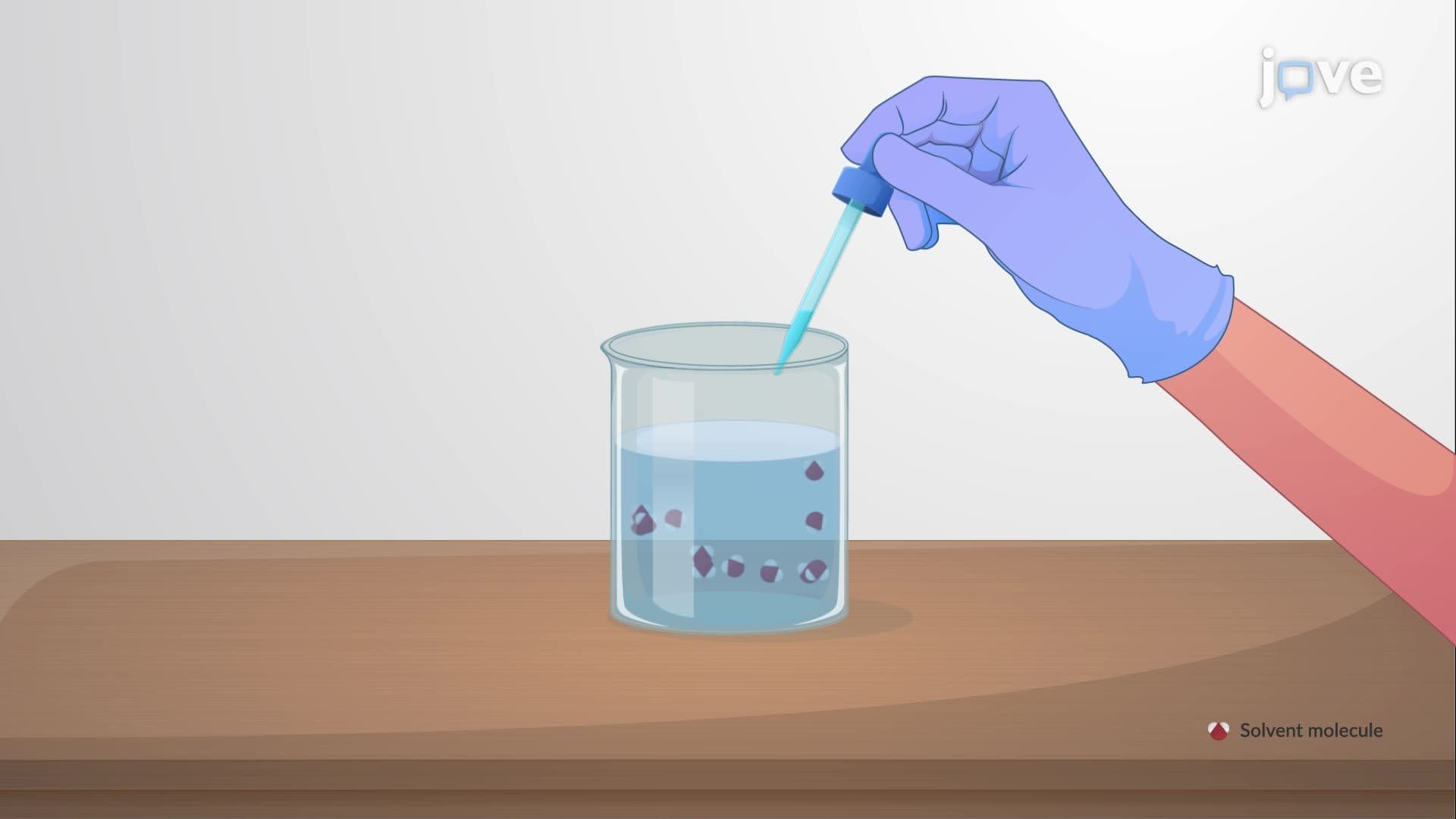
Two-component liquid-liquid systems describe what happens when two volatile, miscible liquids, like ethanol and water, or benzene and toluene, are mixed together. Unlike pure substances, binary mixtures don't have a single boiling point; instead, they boil across a range of temperatures and pressures that depend on composition. This makes phase diagrams essential tools for chemists and engineers who need to predict and control phase behavior in processes like distillation and purification.
A pressure-composition (P-x-y) diagram for an ideal binary solution contains two critical curves. The bubble point line (also called the liquidus) plots total vapor pressure against liquid-phase mole fraction. When you increase pressure on a vapor mixture until the first drop of liquid appears, you've hit the bubble point. The dew point line plots pressure against vapor-phase mole fraction, it marks the pressure at which the last drop of liquid evaporates.
Between these two lines lies the two-phase region, where liquid and vapor coexist. A horizontal tie line drawn across this region connects the liquid composition (on the bubble point line) to the vapor composition (on the dew point line) at the same equilibrium pressure. This graphical tool is foundational in AP Chemistry and college-level physical chemistry courses such as those using Atkins' Physical Chemistry, a standard US university text.
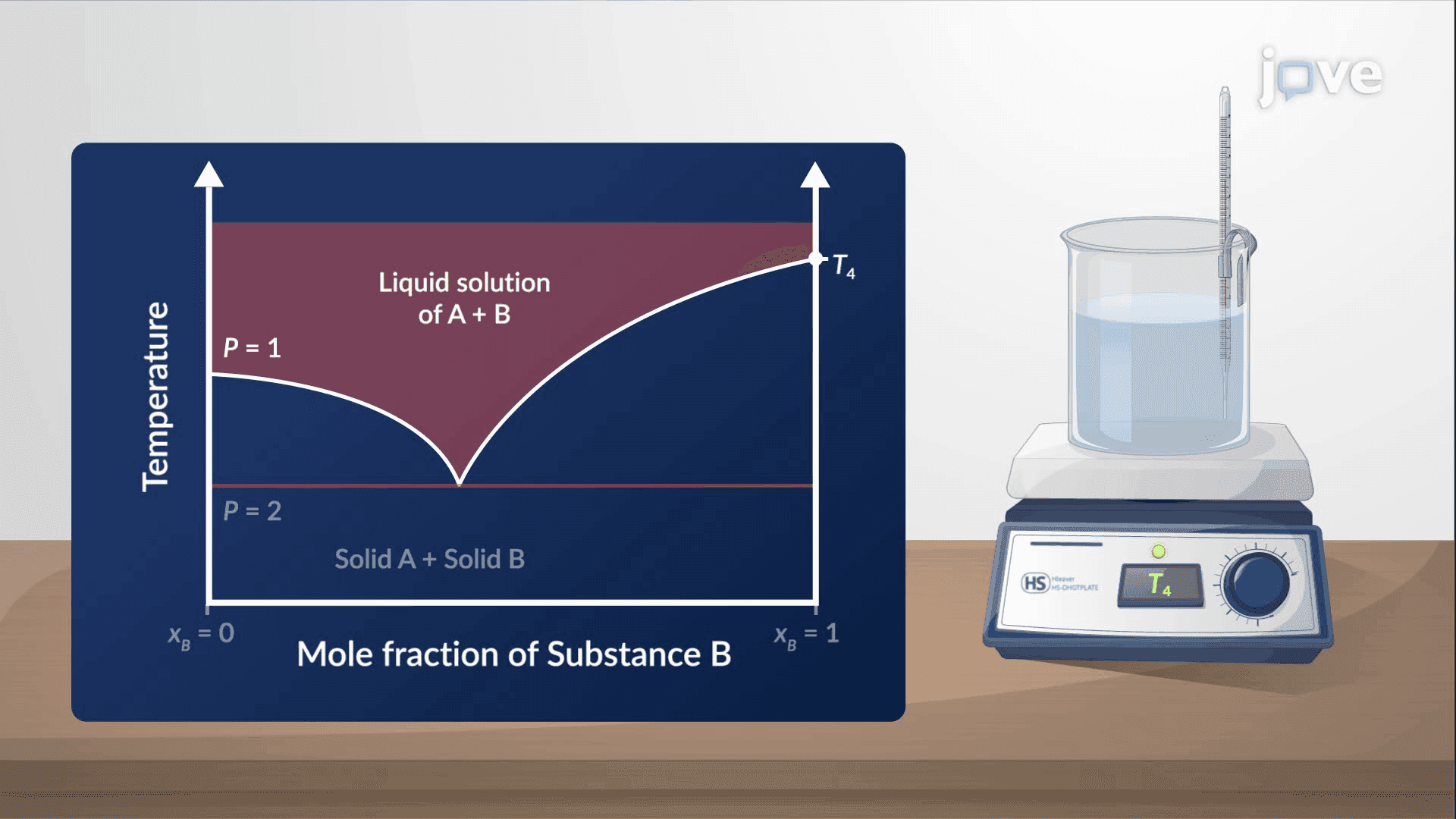
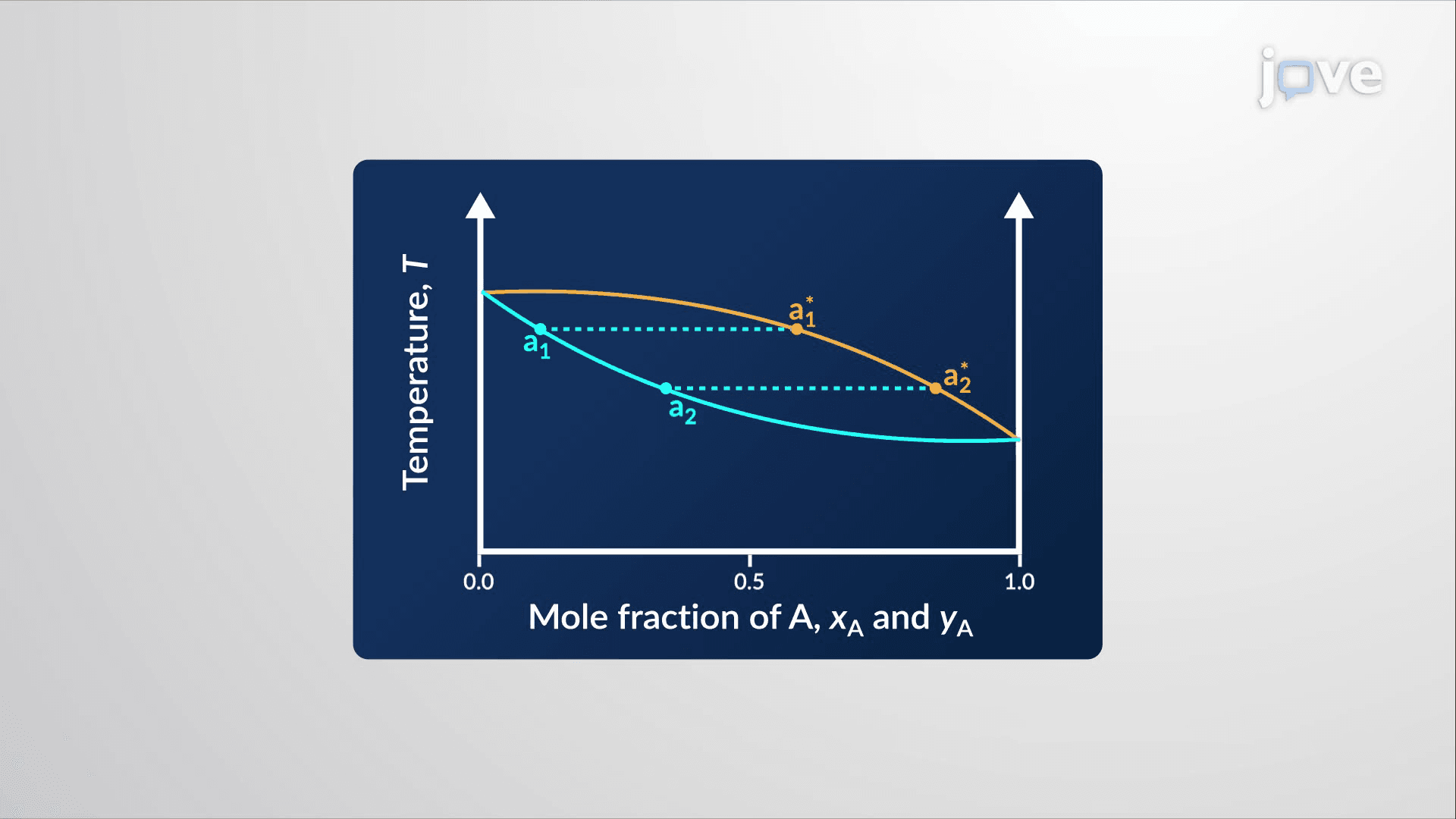
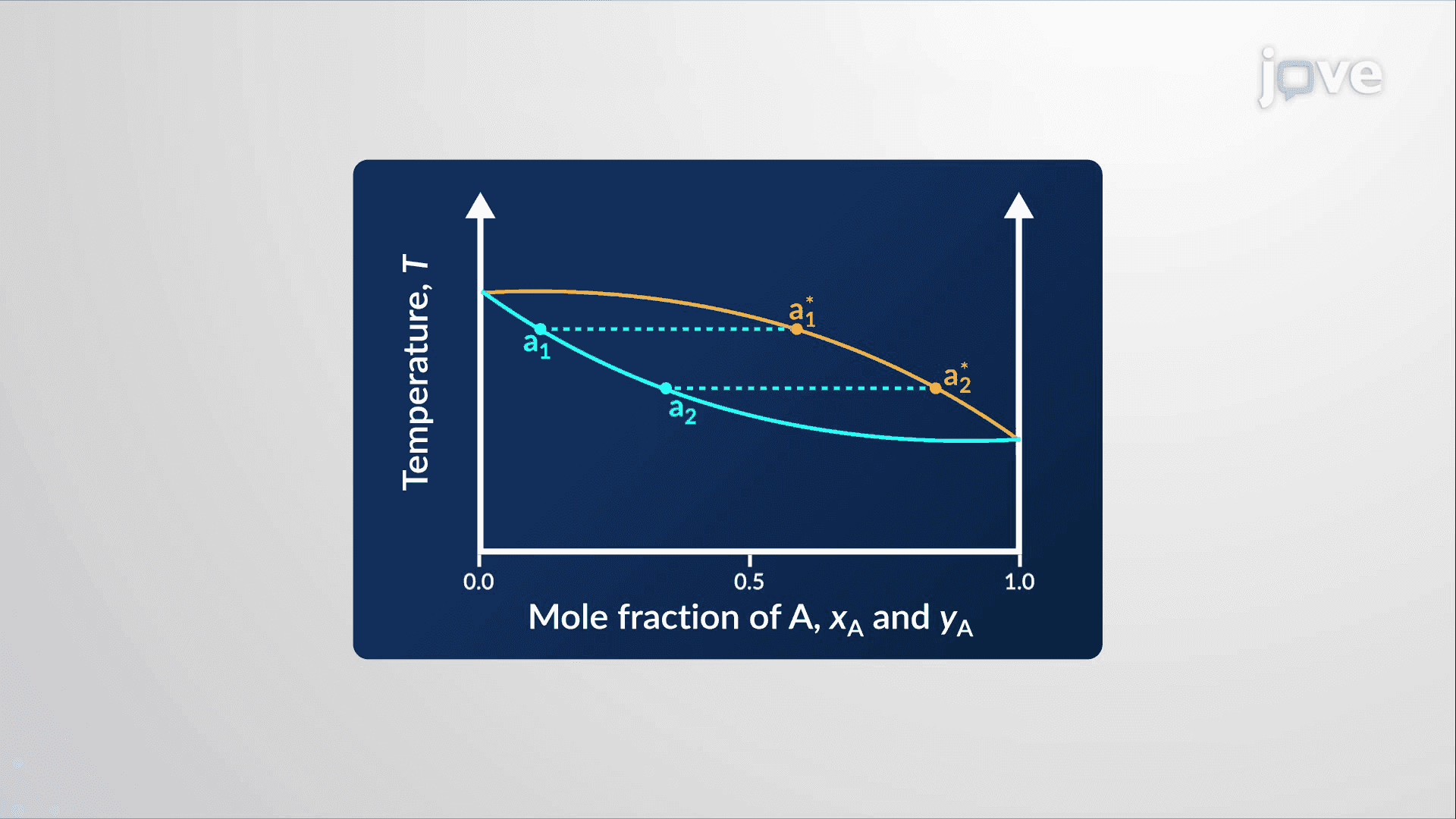
Temperature-composition (T-x-y) diagrams flip the logic of pressure diagrams. Here, the liquid line (liquidus) shows the boiling temperature for each composition, and the vapor line (vaporus) shows the vapor composition in equilibrium at each temperature. Below the liquid line, the system is entirely liquid; above the vapor line, it is entirely vapor. Between the two lies the two-phase envelope.
An isopleth is a vertical line on any phase diagram representing a system of fixed overall composition. As you heat a liquid mixture along its isopleth, it begins boiling when the isopleth crosses the liquid line, that's the bubble point temperature. Heating continues through the two-phase region until the isopleth crosses the vapor line, the dew point temperature, after which the system is fully gaseous. This concept directly supports understanding fractional distillation, where successive vaporization-condensation cycles separate components based on volatility differences.
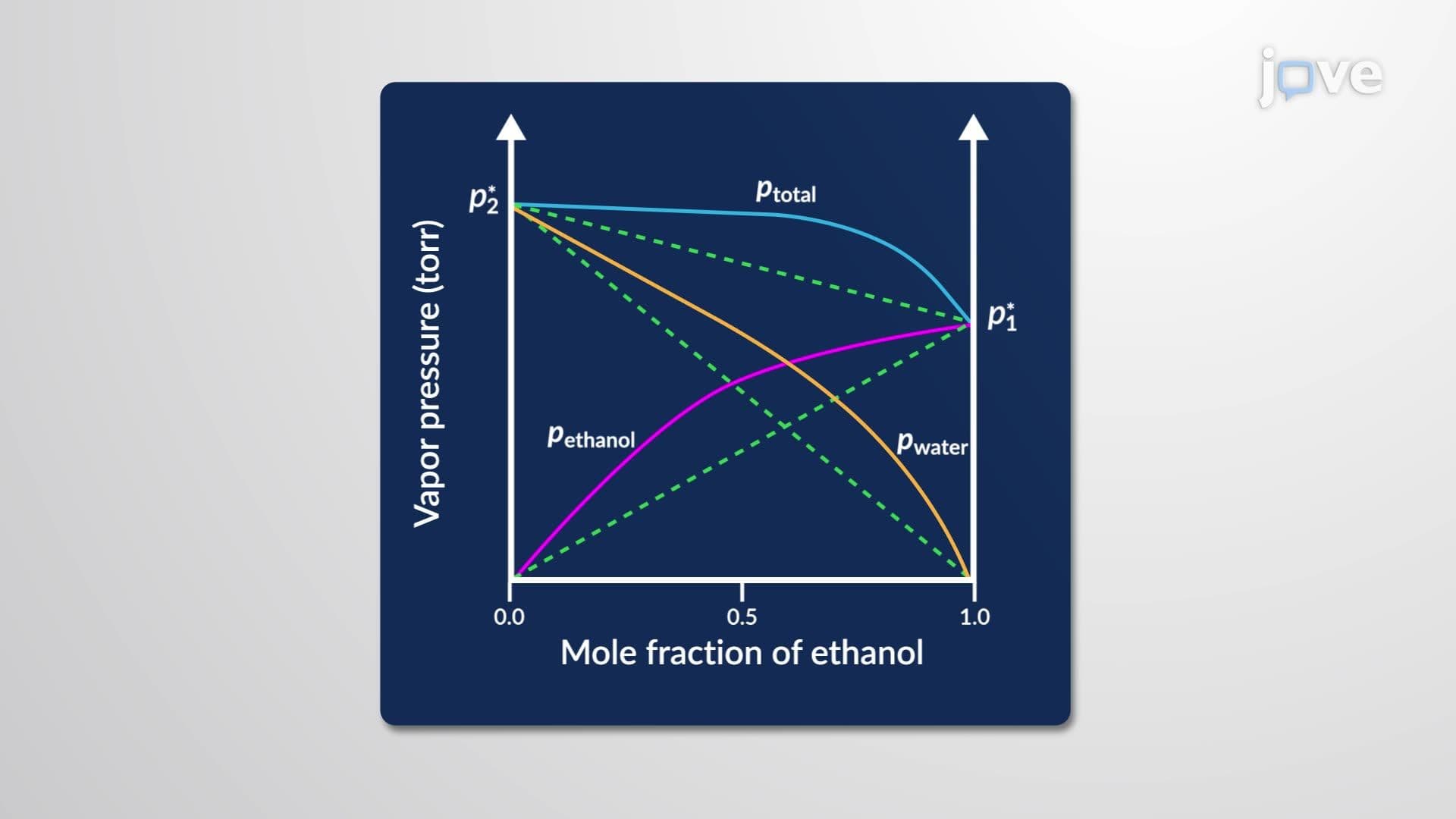
In the US petroleum industry, phase diagrams for binary and multicomponent hydrocarbon mixtures guide the design of distillation columns at refineries from Houston, TX, to Whiting, IN. However, not all binary systems behave ideally. When intermolecular attractions between unlike molecules are stronger or weaker than those between like molecules, the system shows positive or negative deviations from Raoult's Law, producing azeotropes, compositions where liquid and vapor have identical mole fractions. A classic example is the ethanol-water azeotrope at approximately 95.6% ethanol by mass, which is why pure (100%) ethanol cannot be produced by simple distillation alone and requires additional processes like molecular sieves.
The Gibbs phase rule (F = C − P + 2, where F is degrees of freedom, C is components, and P is phases) governs how many variables, temperature, pressure, composition, can be independently varied in a two-component system. For AP Chemistry, MCAT, and college physical chemistry midterms, understanding how to apply the Gibbs phase rule to interpret phase diagrams is a frequently tested skill that ties all these concepts together.
Related Micro-courses