Loading video…

 8 Concepts
 2.1K views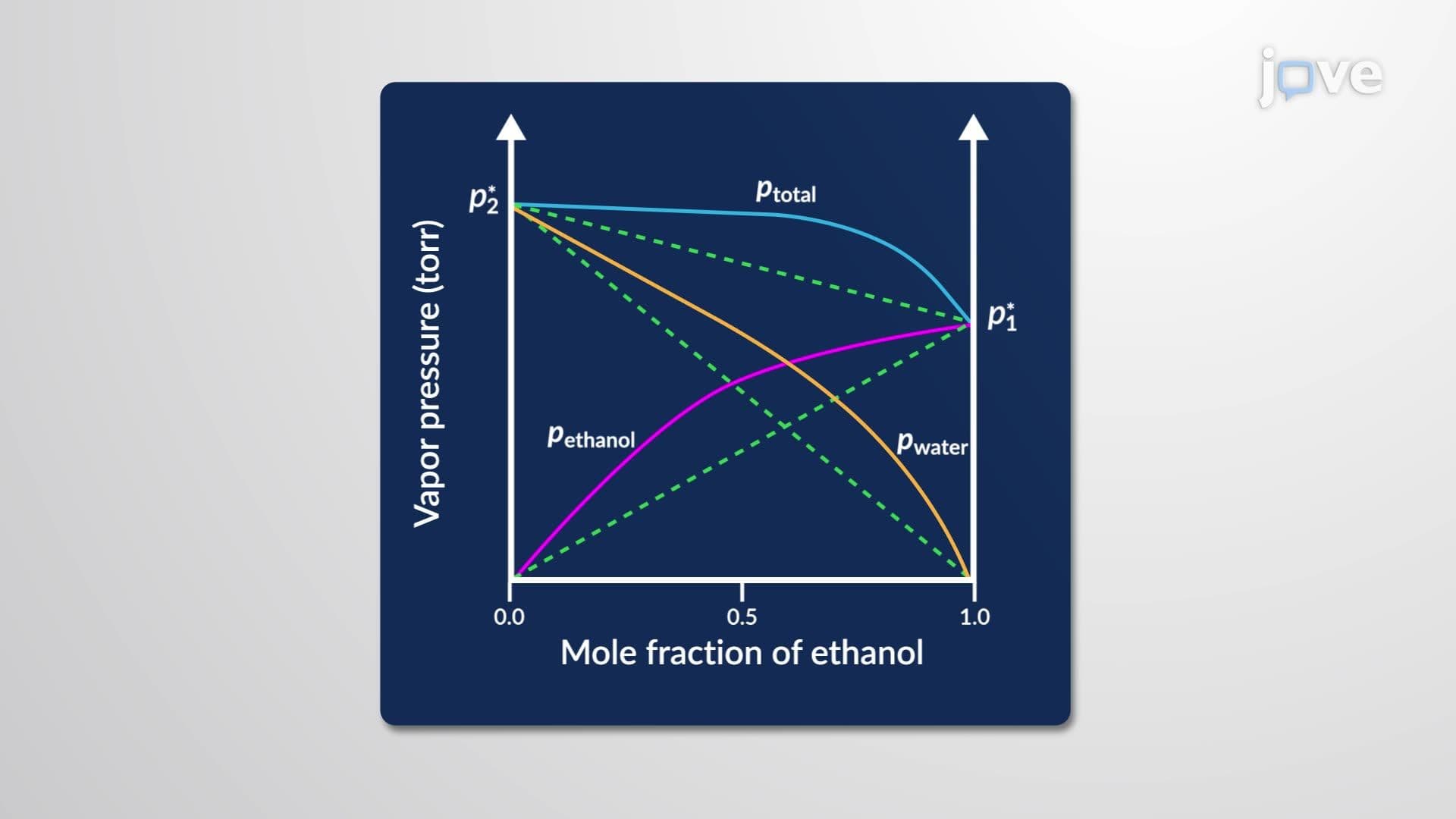

Video Summary: What are Nonideal Two Component Liquid Solutions
Why do some liquid mixtures boil at a single fixed temperature, just like a pure substance? That puzzling behavior is at the heart of nonideal two-component liquid solutions. These mixtures deviate from Raoult's law due to unequal molecular forces, a concept central to chemistry courses across the US. Ethanol-water mixtures, familiar in industrial distillation, are a classic example. Watch the full video on JoVE Coach to master this concept with expert-led visuals and step-by-step explanations.
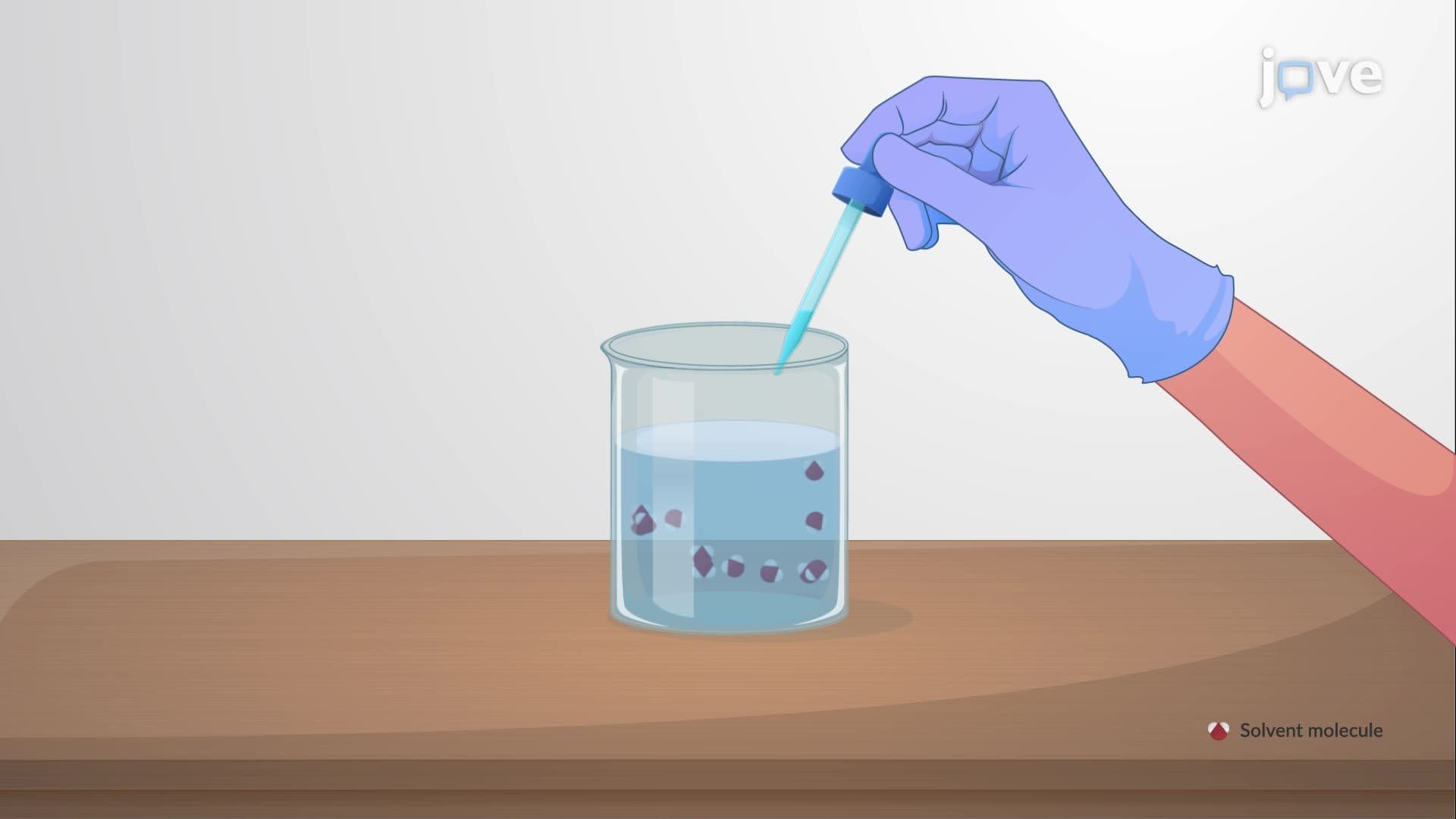
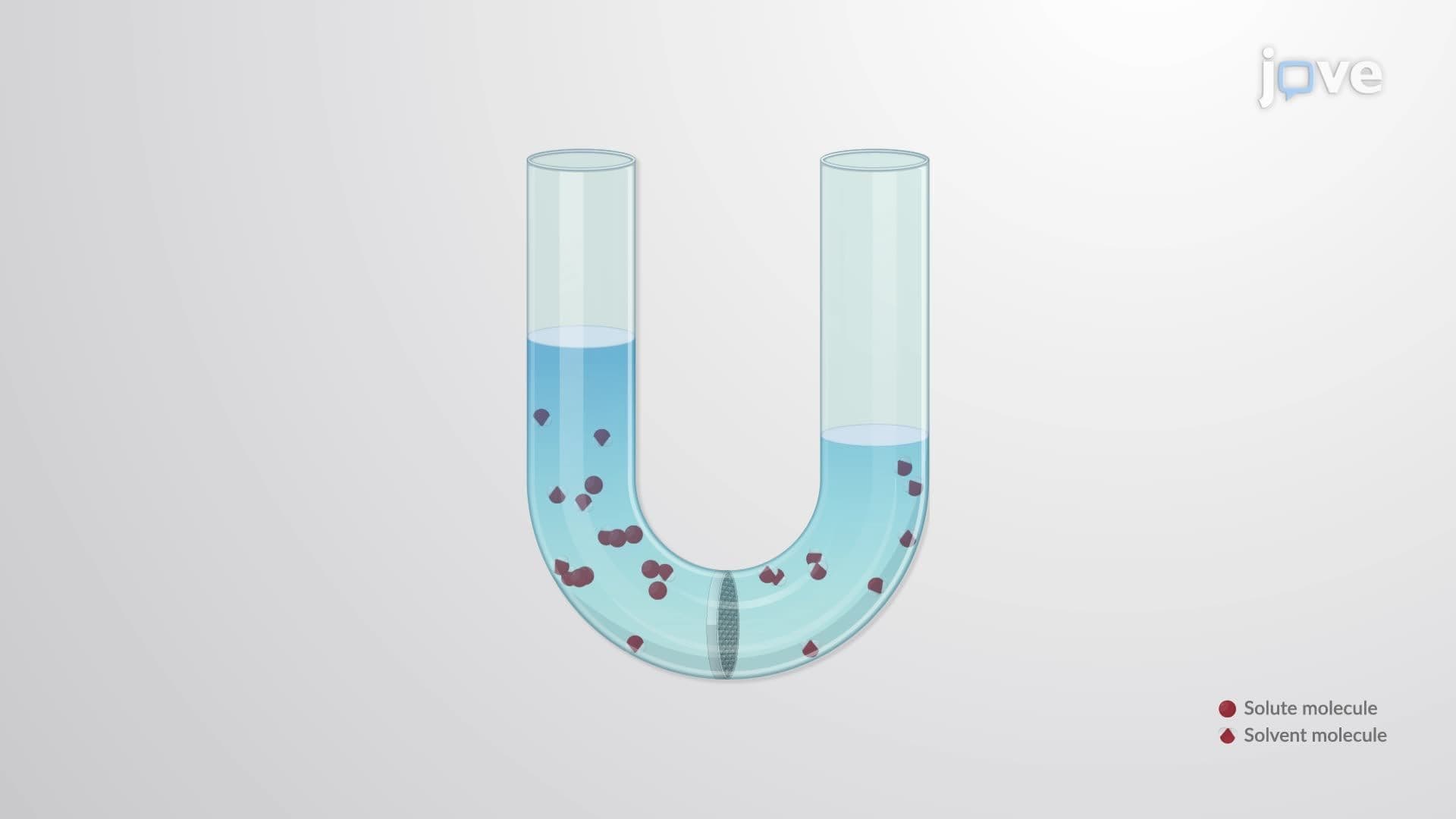
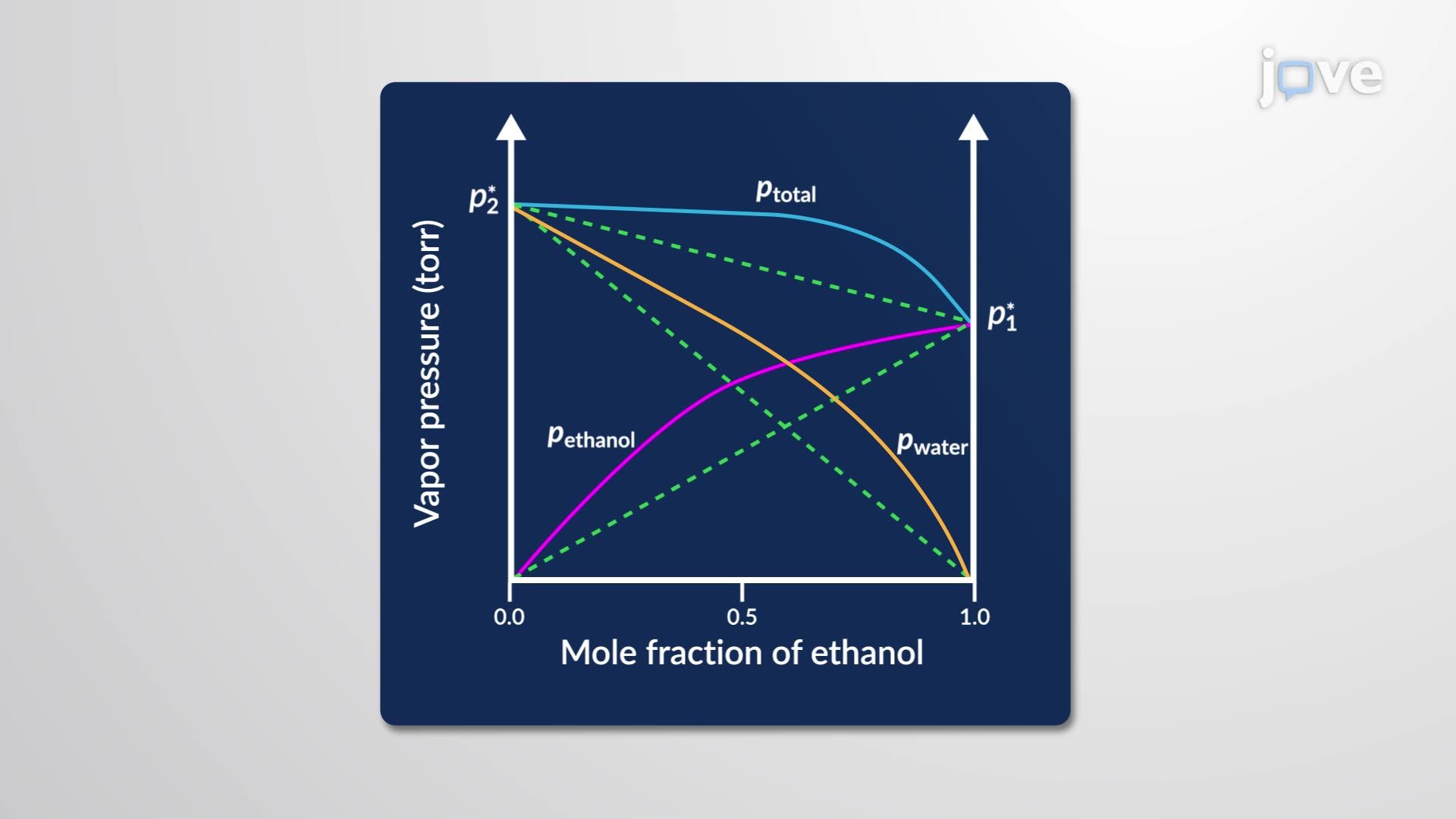
Ideal solutions obey Raoult's law perfectly, each component's vapor pressure is exactly proportional to its mole fraction. But most real-world mixtures don't play by those rules. Nonideal two-component liquid solutions deviate from Raoult's law because the intermolecular forces between unlike molecules (solute-solvent) differ significantly from those between like molecules (solvent-solvent or solute-solute). Understanding this deviation is fundamental in AP Chemistry, college-level physical chemistry, and even MCAT preparation.
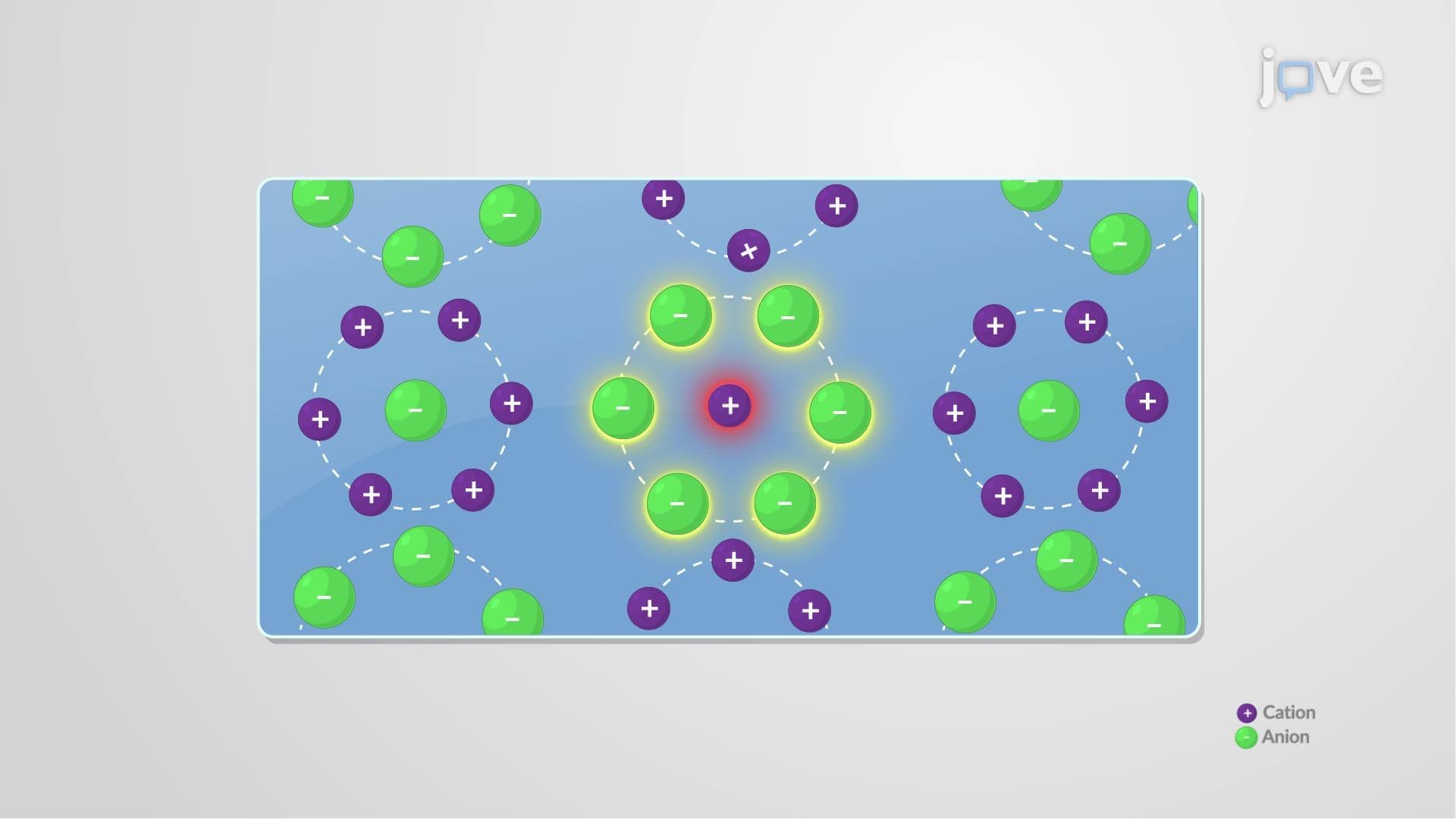
When solute-solvent interactions are weaker than solvent-solvent or solute-solute interactions, molecules escape into the vapor phase more easily. This raises the total vapor pressure above the Raoult's law prediction, a positive deviation. Ethanol and water are a textbook US example: the hydrogen bonding network is disrupted when the two are mixed, making it easier for molecules to vaporize.
Conversely, when solute-solvent interactions are stronger than those in the pure components, molecules are held in the liquid phase more tightly, lowering the vapor pressure below the Raoult's law prediction, a negative deviation. Acetone and chloroform illustrate this well: a hydrogen bond forms between the two molecules that doesn't exist in either pure liquid, reducing each component's tendency to evaporate.
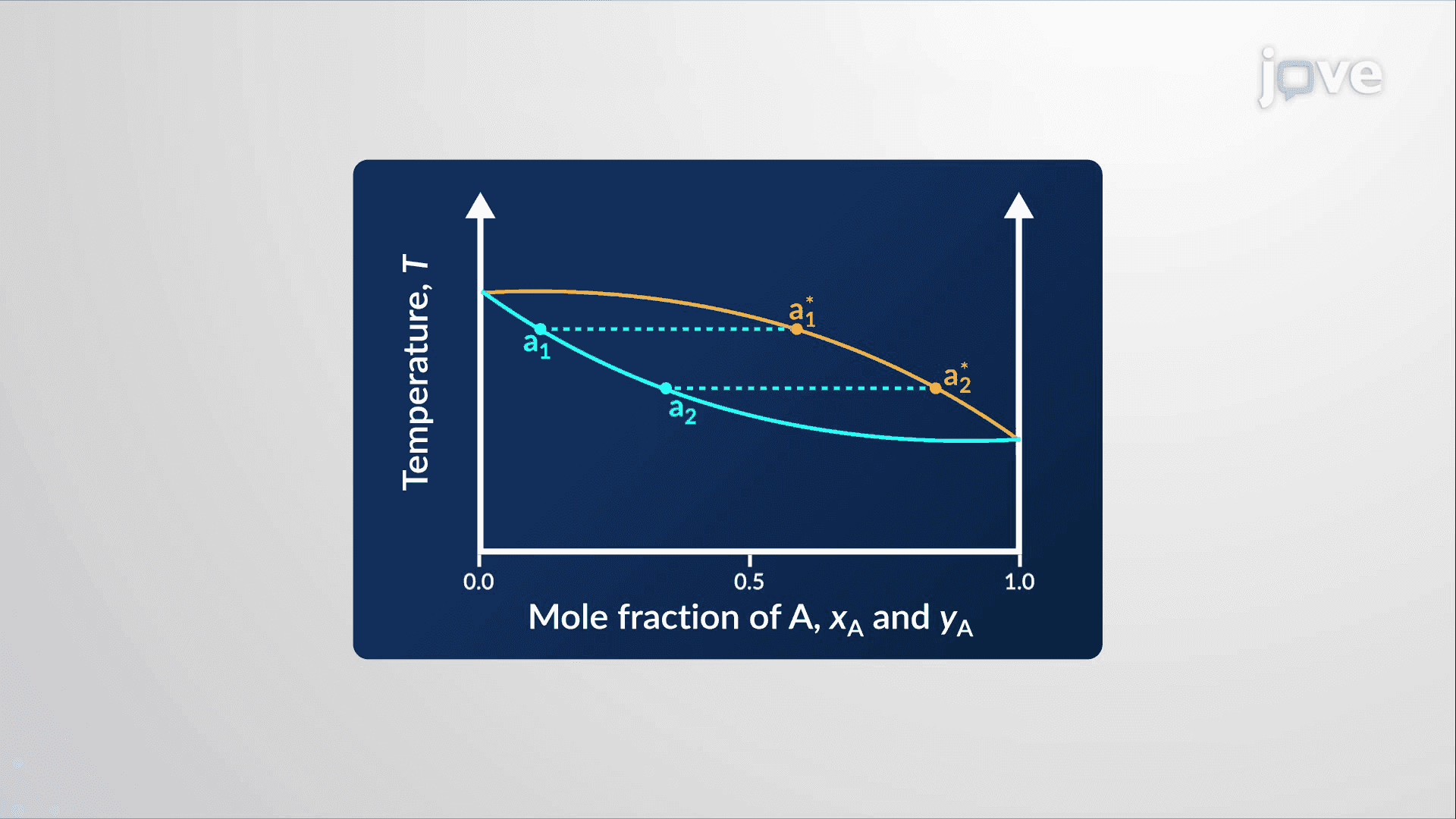
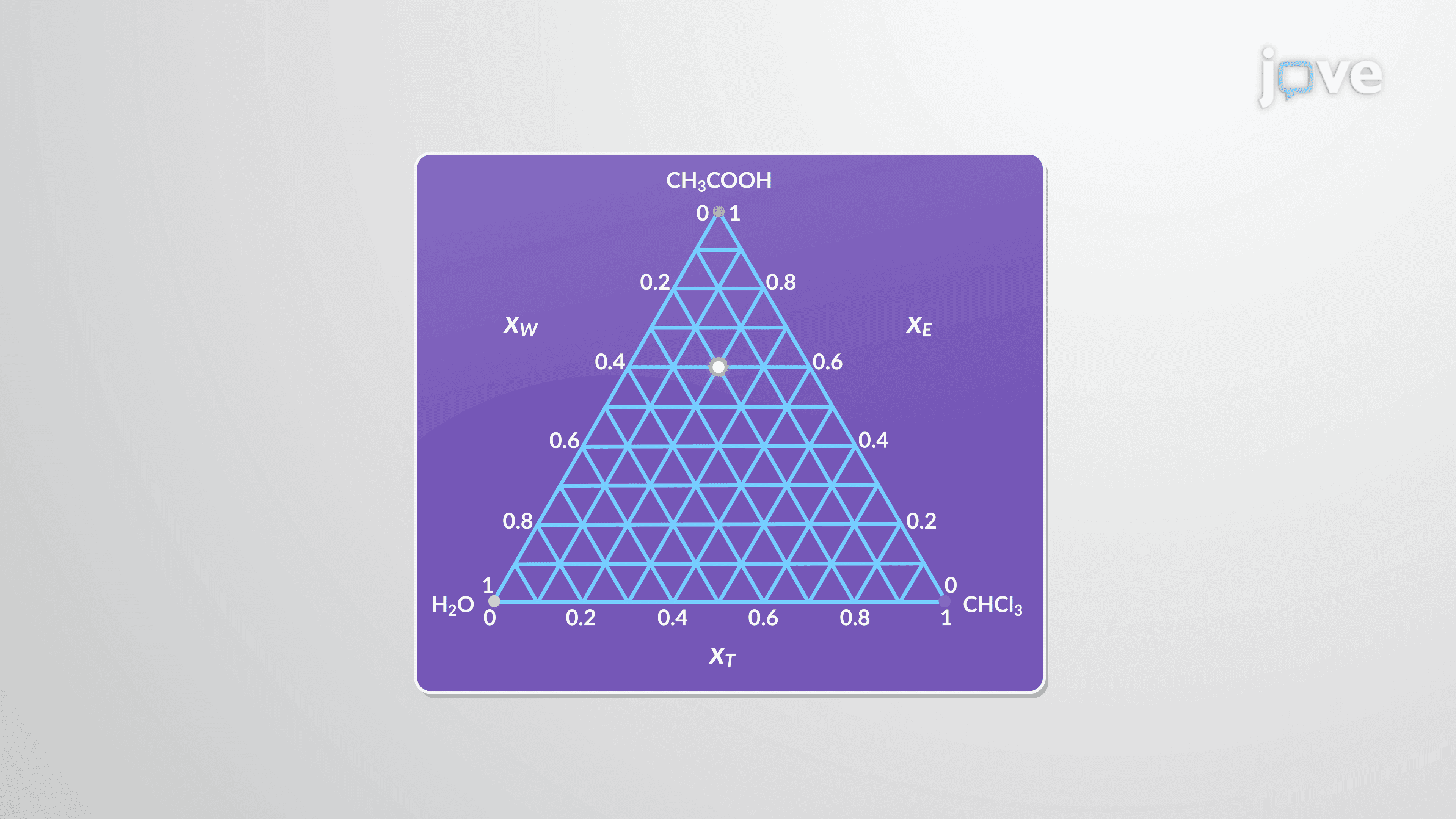
The temperature-composition phase diagram for a nonideal binary mixture looks notably different from that of an ideal solution. The bubble point line (liquid boundary) and the dew point line (vapor boundary) no longer remain cleanly separated across all compositions. Instead, they intersect at one specific composition, the azeotropic point.
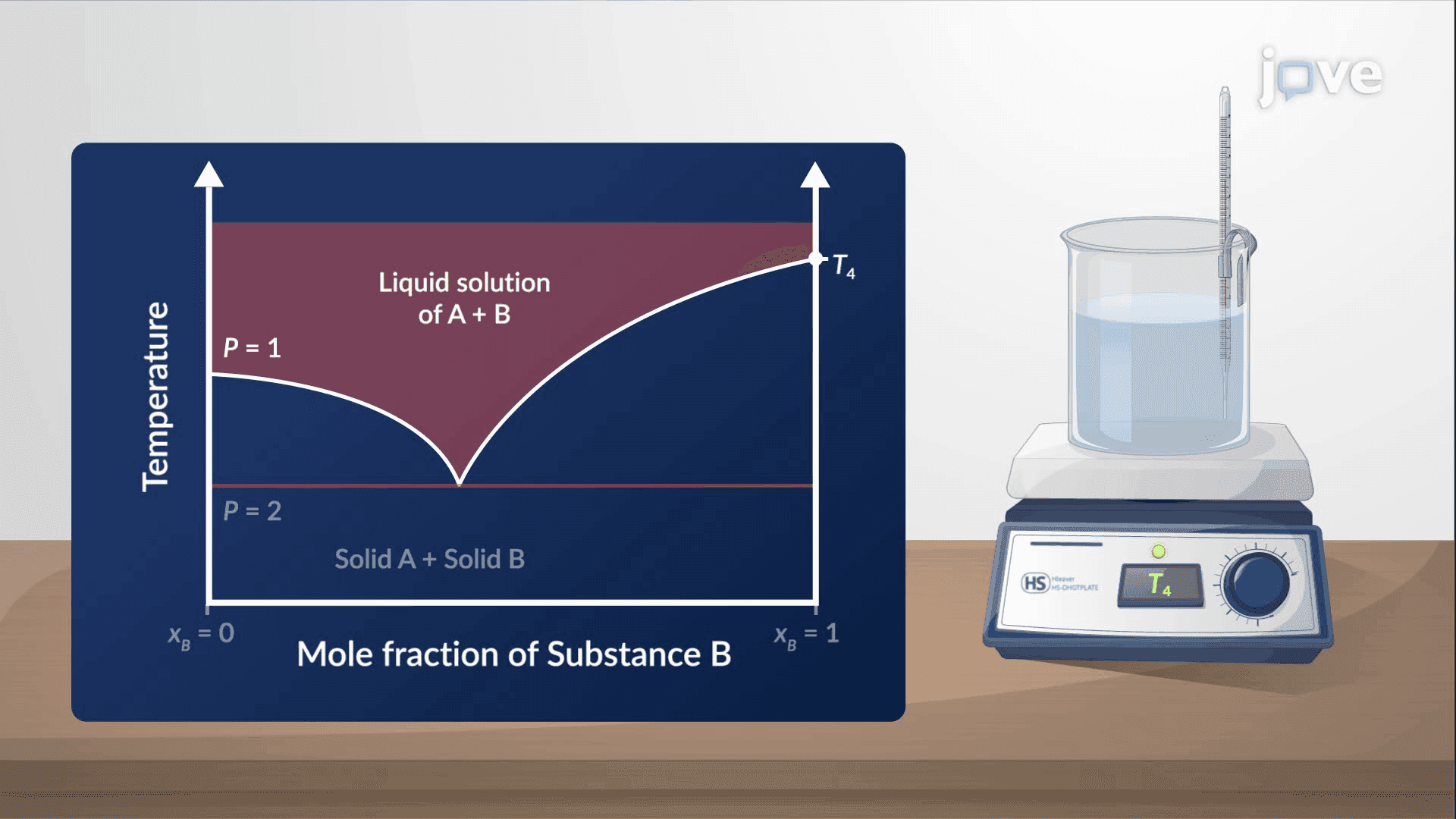
At this composition, the liquid and vapor phases in equilibrium contain identical mole fractions of each component. Because there's no change in composition between phases, the mixture boils at a single, constant temperature, earning it the name constant boiling solution. The Gibbs phase rule helps explain why: at the azeotrope in a two-component system, the degrees of freedom drop to one (only pressure or temperature can vary independently), mimicking a one-component pure substance.
Azeotropes represent a fundamental limit of fractional distillation. Because the vapor and liquid have the same composition at the azeotropic point, continued boiling cannot change the mixture's composition, distillation "gets stuck." This is why absolute (100%) ethanol cannot be produced through distillation alone in US industrial settings; additional techniques like molecular sieves or azeotropic distillation with a third component (called an entrainer) are required.
This concept appears regularly in AP Chemistry free-response questions, college physical chemistry midterms, and MCAT passages involving separation techniques and phase behavior. Mastering it means being able to read phase diagrams, predict which type of azeotrope a solution will form, and explain why certain mixtures resist complete separation.
Related Micro-courses