Loading video…

 8 Concepts
 2.1K views

Video Summary: Freezing Point Depression and Boiling Point Elevation Explained
Why does adding salt to icy roads actually melt the ice, even in freezing temperatures? That's freezing point depression and boiling point elevation in action. These colligative properties explain how dissolved solutes shift a solvent's phase transition temperatures, and they show up everywhere from US road safety to pasta water. Watch the full video on JoVE Coach to master this concept with expert-led visuals and step-by-step explanations.
When you dissolve something in a liquid, you're not just mixing chemicals, you're fundamentally altering the thermodynamic behavior of that liquid. Freezing point depression and boiling point elevation are two of the most important consequences of this change, and understanding them requires looking beyond simple observations into the language of chemical potential.
Chemical potential (µ) is a measure of how much the free energy of a system changes when a particle is added or removed. In a pure solvent at equilibrium, the chemical potential of the liquid equals that of the solid at the freezing point, this is the intersection point on a µ-versus-temperature graph. Similarly, the liquid and vapor phases share equal chemical potentials at the boiling point.
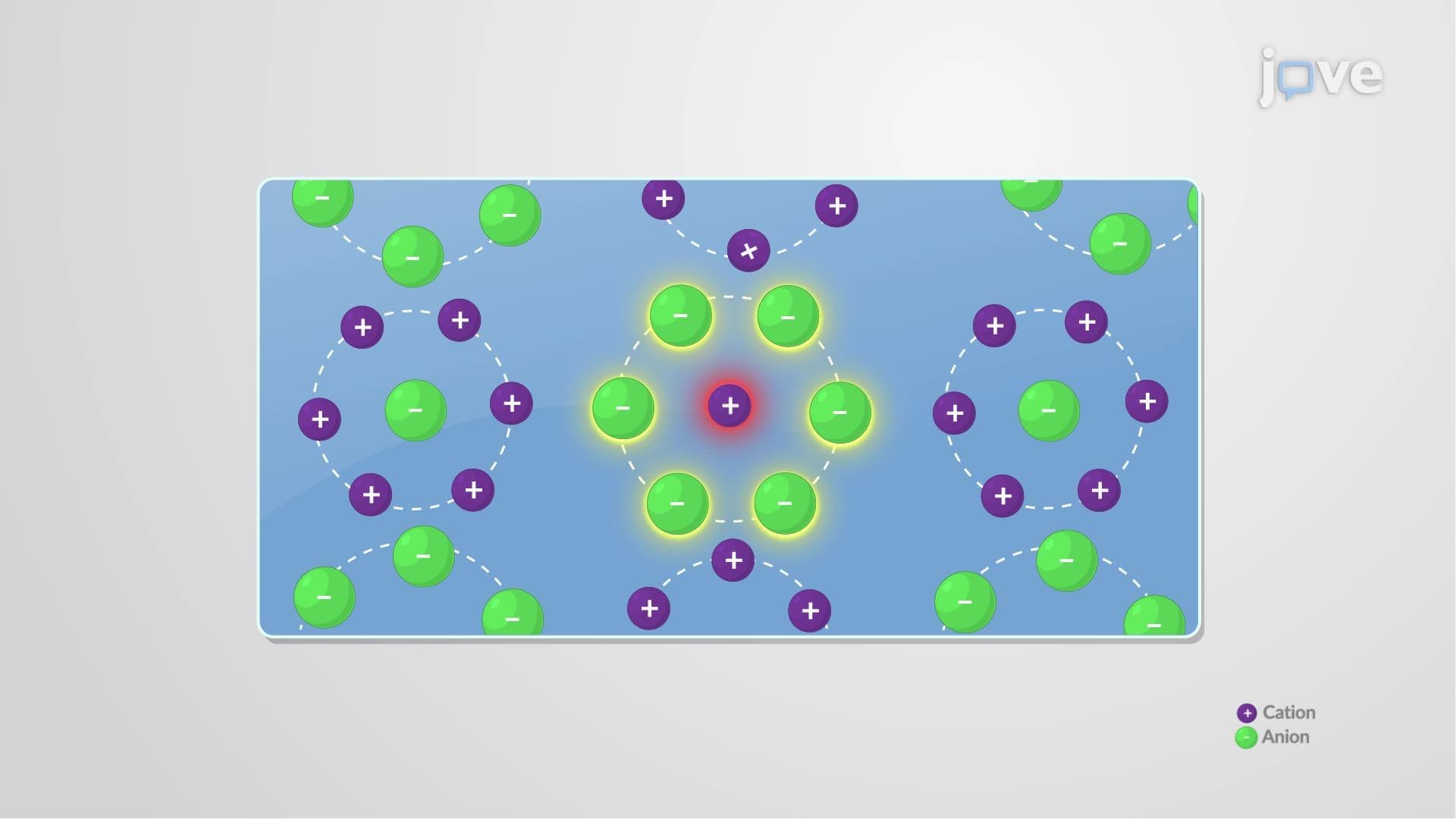
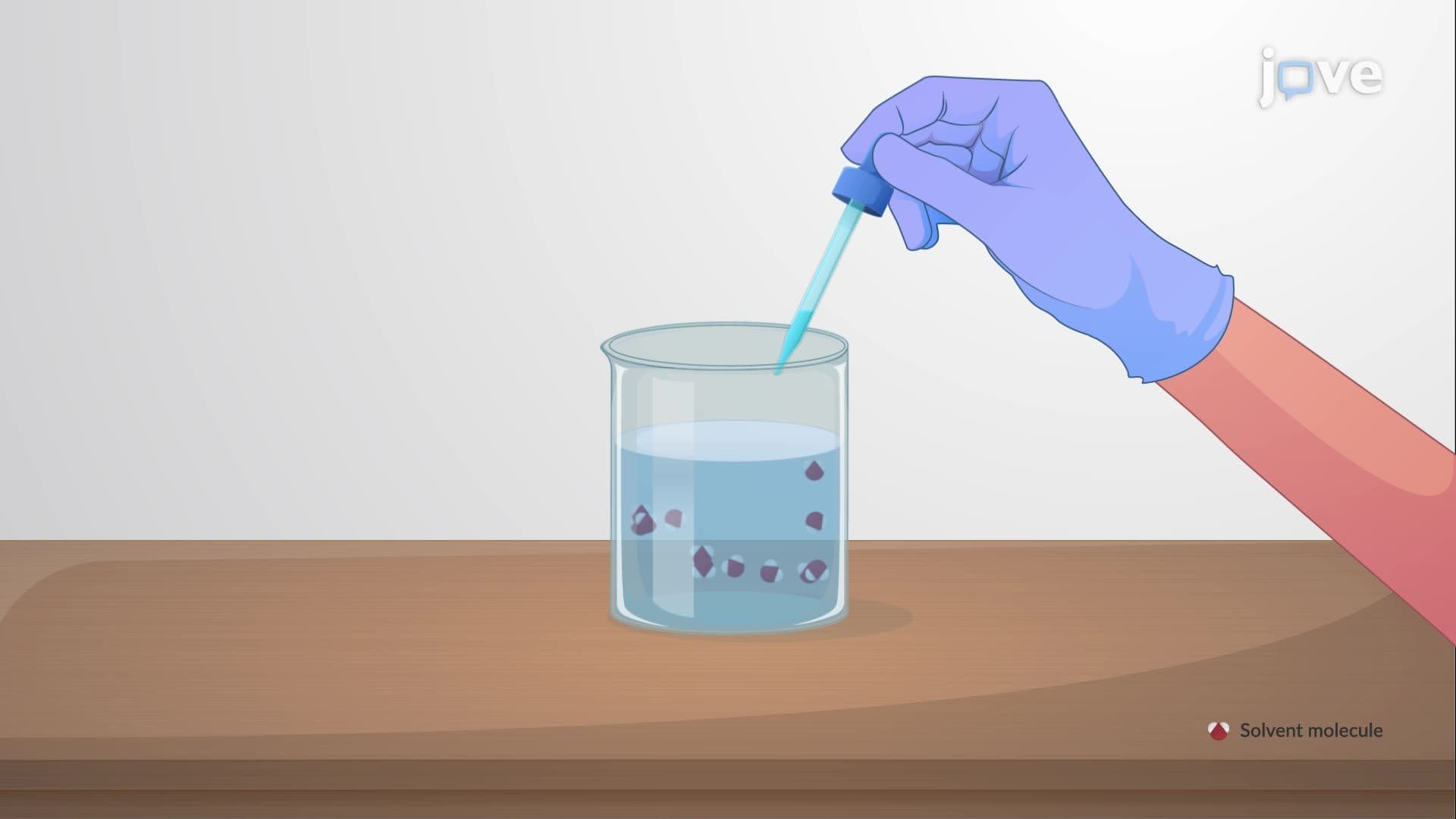
When a non-volatile solute is dissolved, it lowers the chemical potential of the liquid phase. This is a direct consequence of increased entropy, the solute particles create more disorder in the liquid, making it thermodynamically more stable. Critically, the solid and gas phases are not significantly affected because the solute remains confined to the liquid.
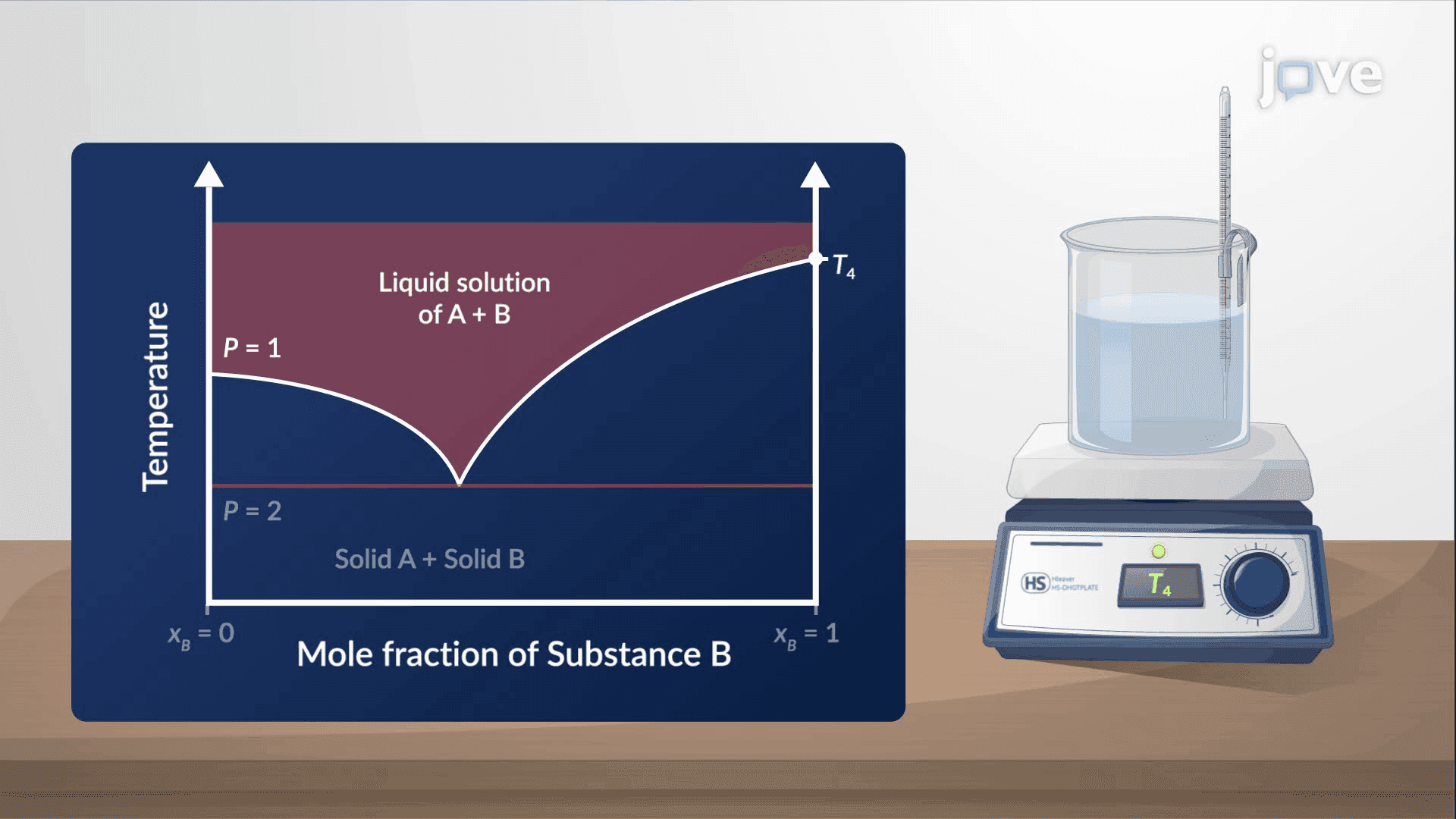
Because the liquid's chemical potential drops while the solid's stays the same, the two curves now intersect at a *lower* temperature than before. This means the solvent must be cooled further before it solidifies, the freezing point has been depressed.
The formula is: delta Tf = Kf × m
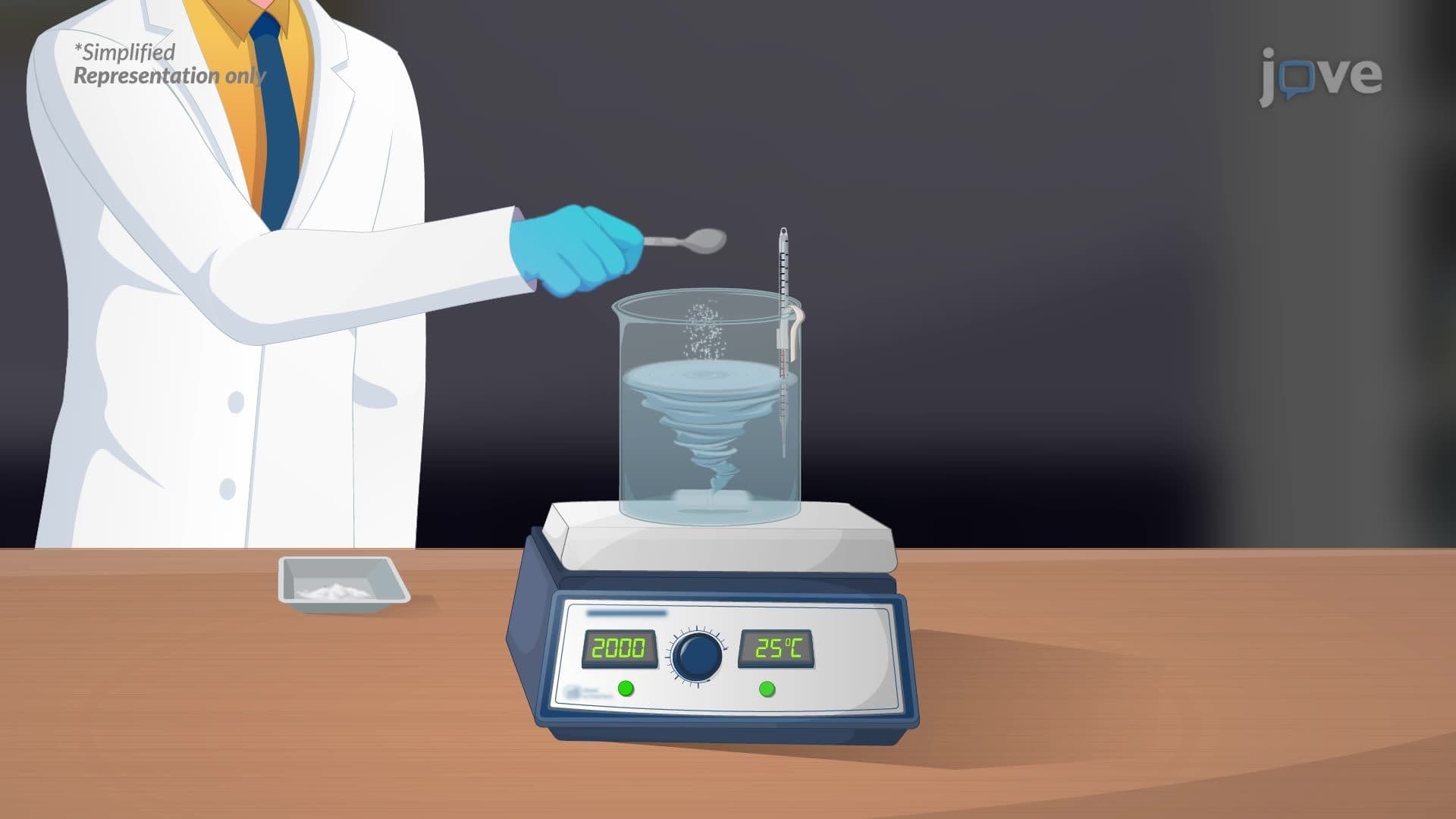
Here, Kf is the cryoscopic constant (unique to each solvent; for water it is 1.86 °C·kg/mol), and m is the molality of the solution. In the US, this principle is applied on a massive scale every winter, state highway departments spread sodium chloride or calcium chloride on roads because these salts dissolve in surface moisture and depress water's freezing point, preventing ice formation even when temperatures dip below 32°F.
Automobile antifreeze (ethylene glycol mixed with water) is another classic US example. It protects engine coolant from freezing in Minnesota winters and from boiling in Arizona summers, a two-for-one application of both colligative properties.
By the same logic, the lowered chemical potential of the liquid means that more thermal energy is required for the liquid to match the chemical potential of the vapor. The liquid-vapor intersection point shifts to a *higher* temperature, the boiling point rises.
The formula is: delta Tb = Kb × m
For water, Kb = 0.512 °C·kg/mol. While adding a pinch of salt to pasta water does technically raise the boiling point, the effect is negligibly small at culinary concentrations. The real reason chefs salt water is flavor, but the chemistry is still real and measurable in the lab.
Freezing point depression and boiling point elevation are heavily tested on the AP Chemistry exam, college general chemistry midterms, and the MCAT. Students are expected to both conceptually explain *why* these changes occur (using chemical potential arguments) and quantitatively calculate *how much* the temperature shifts using the formulas above. A common exam mistake is forgetting to account for the van't Hoff factor (i) for ionic solutes, for example, NaCl dissociates into two ions, so the effective molality is doubled. Mastering this distinction separates strong exam performers from the rest.
Related Micro-courses