Loading video…

 9 Concepts
 730 views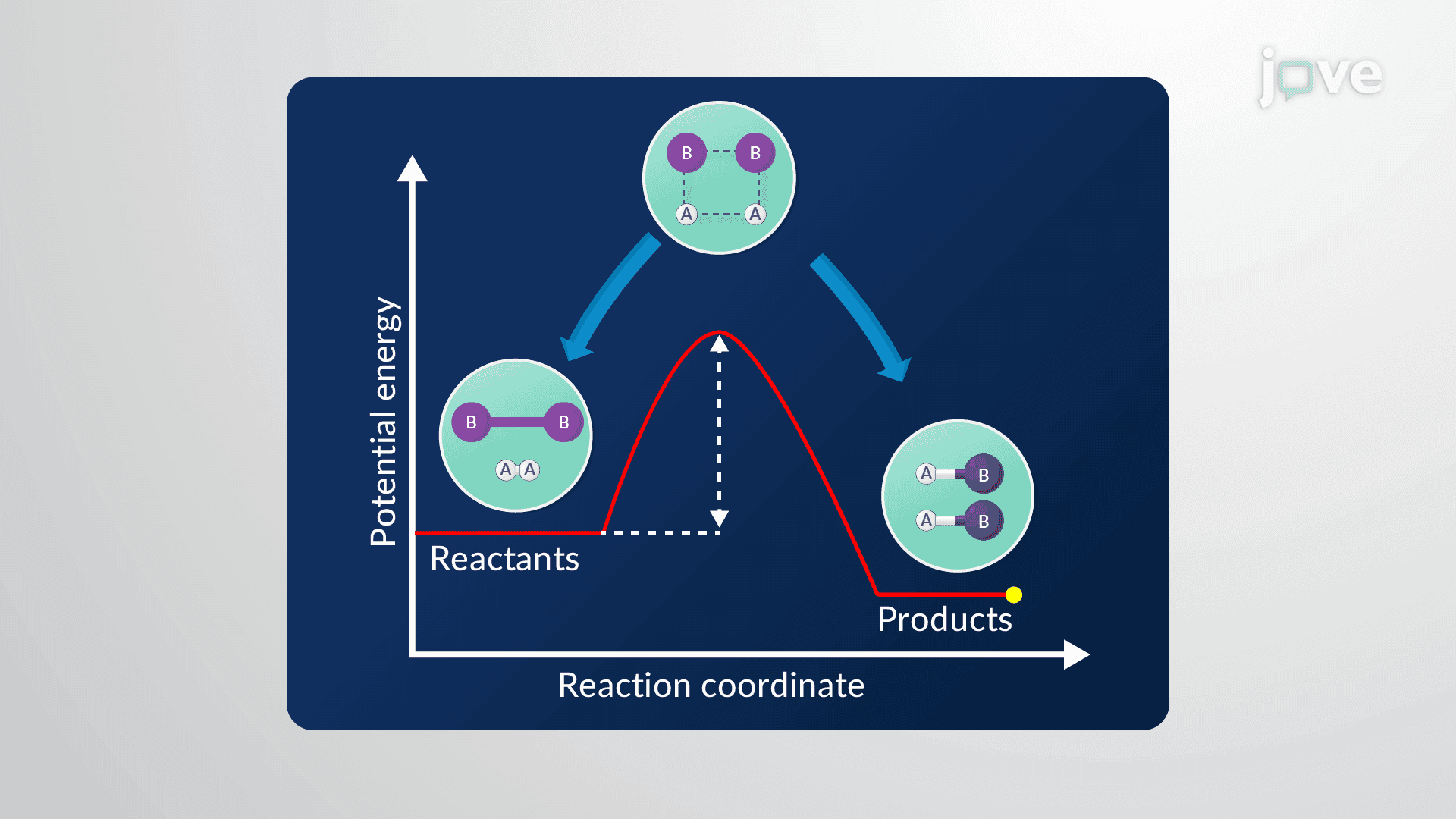

Video Summary: What Is Transition State Theory
Why do some chemical reactions happen in milliseconds while others take years? Transition state theory, also called activated-complex theory, answers this by explaining how reactants must climb an energy barrier before becoming products. Used to understand everything from ammonia synthesis in industrial fertilizer production to drug reactions in the human body, this framework is foundational in modern chemistry. Watch the full video on JoVE Coach to master this concept with expert-led visuals and step-by-step explanations.
Transition state theory (TST), also known as activated-complex theory, is one of the most powerful frameworks in physical chemistry for explaining *why* and *how fast* chemical reactions occur. Developed in the 1930s by Henry Eyring and others, TST goes beyond simply measuring reaction rates. It explains the molecular-level story behind them. Whether you are studying AP Chemistry, preparing for the MCAT, or taking a college-level physical chemistry course, understanding TST gives you a critical edge in interpreting reaction mechanisms and energy diagrams.
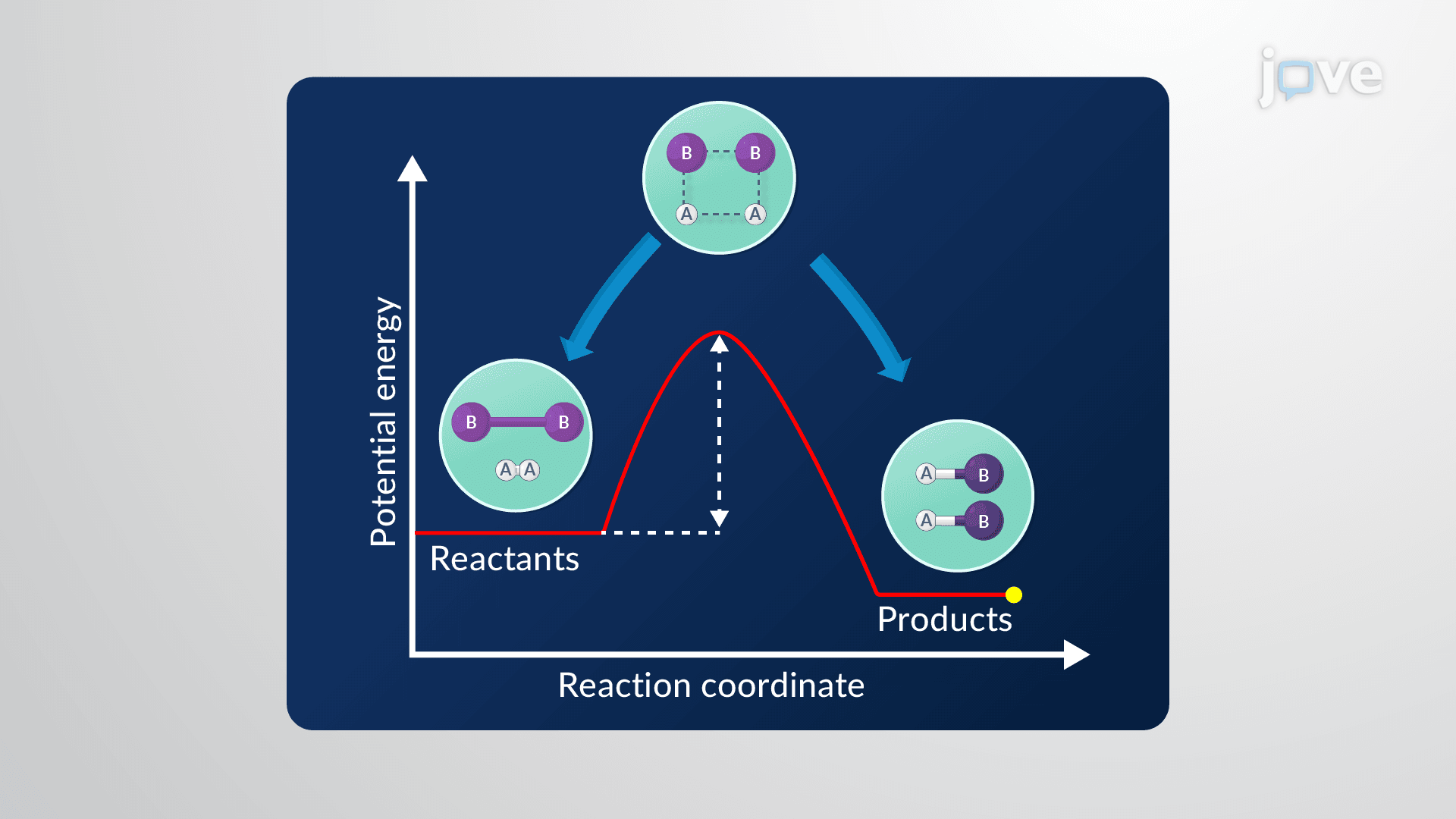
At the heart of transition state theory is the concept of a potential energy barrier. When two reactant molecules approach each other, their combined potential energy does not drop immediately to form products. Instead, it rises, sometimes sharply, reaching a maximum point on the reaction energy profile. This peak represents the minimum energy the system must possess for the reaction to proceed. That required energy is the activation energy (Ea). Think of it like pushing a boulder over a hill: the boulder (the reacting molecules) must reach the top before it can roll down the other side into products.
These two terms are closely related but not identical, a common point of confusion on college exams and AP Chemistry quizzes. The transition state refers specifically to the single highest-energy configuration at the very top of the energy barrier. It is a fleeting, unstable arrangement of atoms that exists for an incredibly short time (on the order of femtoseconds). The activated complex, by contrast, refers to the collection of molecular species in the region *near* the transition state, essentially the cluster of atoms in the process of breaking old bonds and forming new ones. From the transition state, the system can either fall back into reactants or continue forward to form products.
For bimolecular reactions, transition state theory gives us the Eyring equation, which mathematically links the rate constant (k) to several fundamental quantities:
k = (transmission coefficient × Boltzmann's constant × Temperature / Planck's constant) × K‡
Here, K‡ is the equilibrium constant for forming the transition state from the reactants. Because K‡ is related to the Gibbs free energy of activation (ΔG‡), the Eyring equation can also be expressed in terms of ΔG‡, ΔH‡ (enthalpy of activation), and ΔS‡ (entropy of activation). This is particularly useful in biochemistry, for example, pharmaceutical researchers at US drug companies use TST principles to understand how enzyme inhibitors interact with transition-state analogs, a key strategy in designing drugs like the HIV protease inhibitors developed in the 1990s.
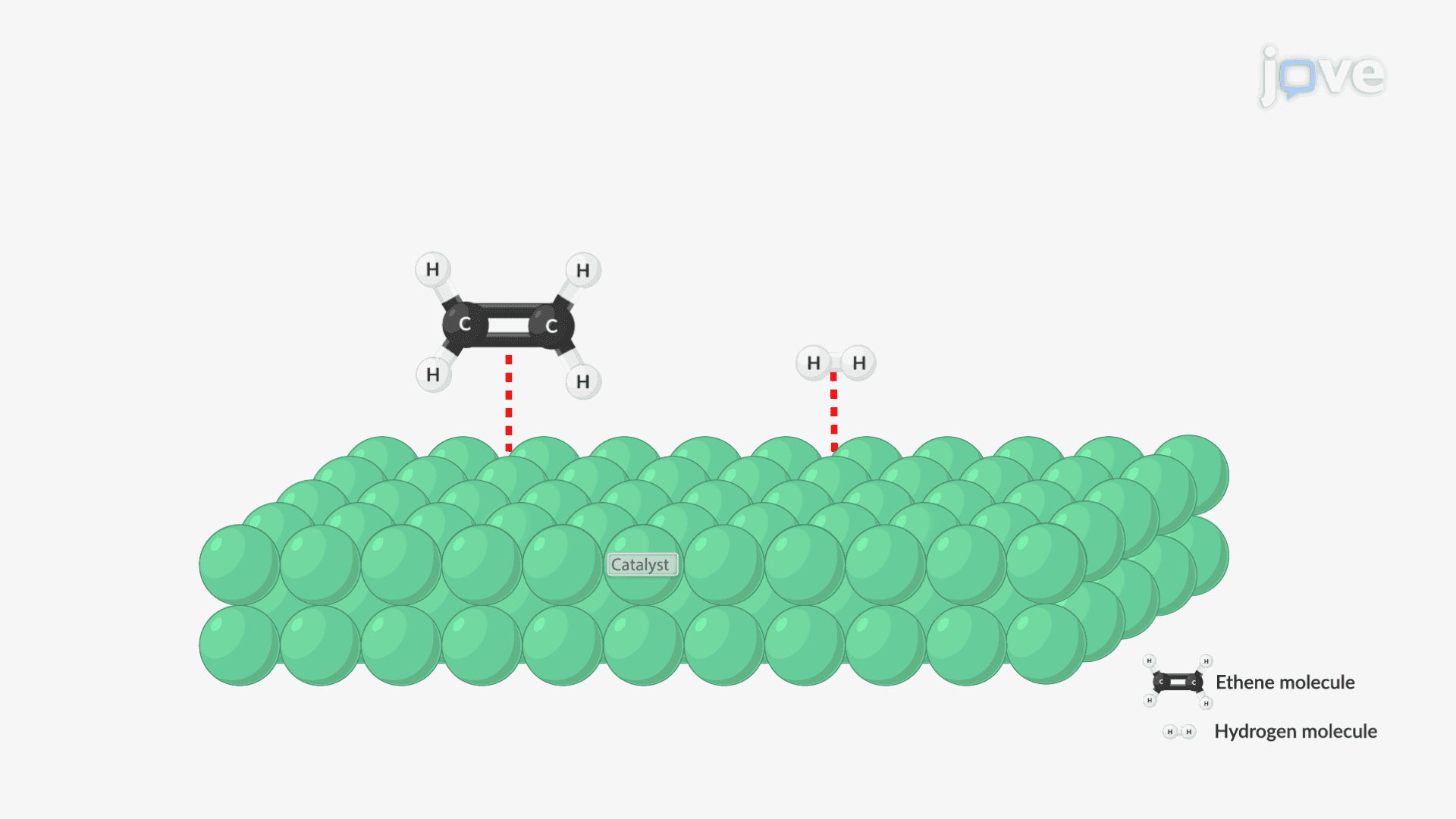
On the AP Chemistry exam and in college general chemistry courses, TST concepts appear in questions about reaction coordinate diagrams, activation energy, and the effect of catalysts. Catalysts, both homogeneous and heterogeneous, work by providing an alternative reaction pathway with a *lower* transition state energy, effectively lowering ΔG‡ without being consumed. This principle is also central to enzyme catalysis in biochemistry, a heavily tested topic on the MCAT. Understanding the relationship between the transition state, the Eyring equation, and the Arrhenius equation helps students connect kinetic data to molecular-level explanations, a skill that distinguishes strong performers on standardized exams and college midterms alike.
Related Micro-courses