Loading video…

 16 Concepts
 3.1K views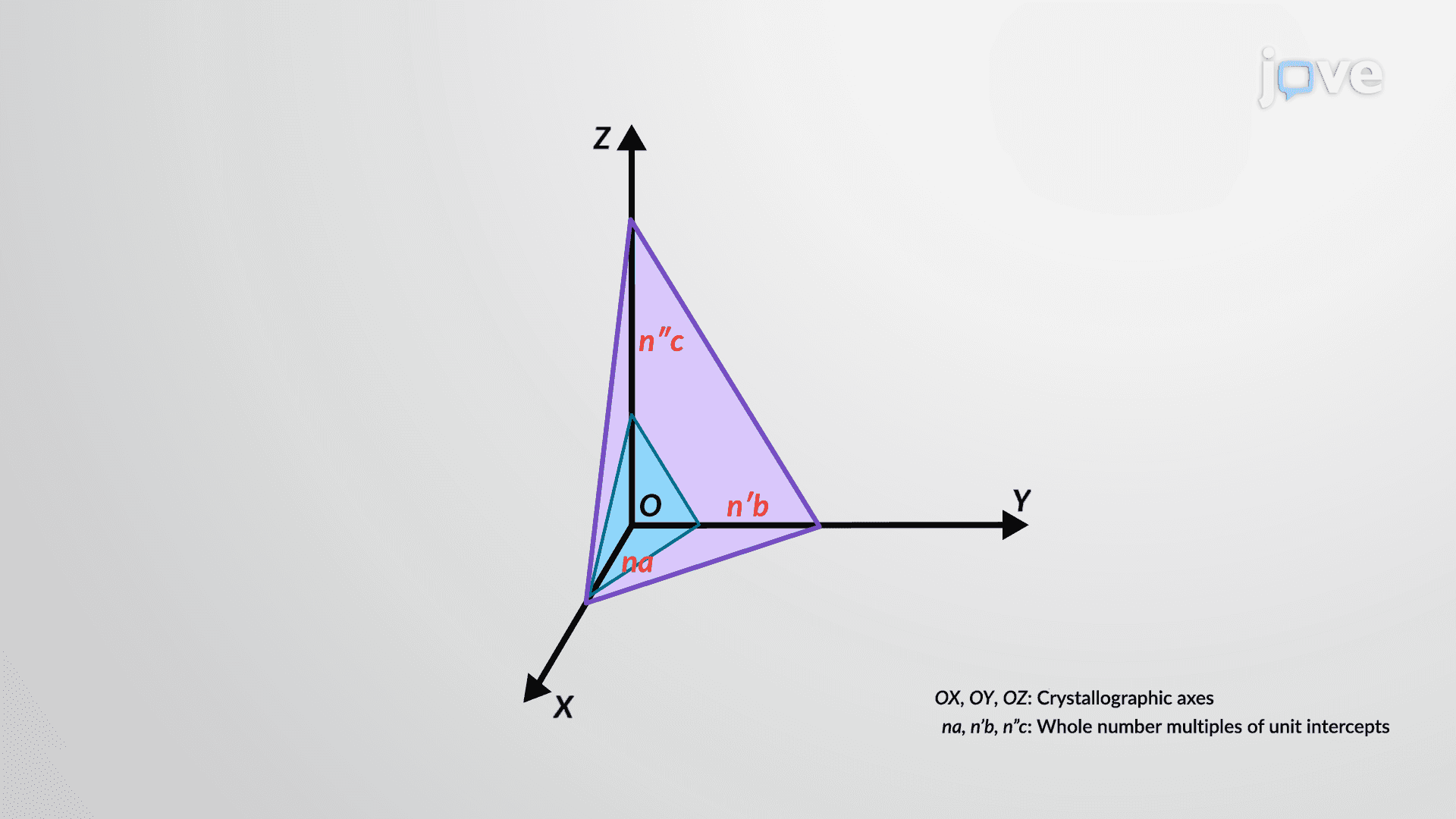

Video Summary: What Is Law of Rational Indices
Why do snowflakes always form six-sided shapes, never five or seven? The answer lies in crystallography, and the law of rational indices is one of its foundational rules. This principle explains how crystal faces intersect geometric reference axes at simple whole-number multiples of fixed unit distances. NASA researchers apply this concept when analyzing mineral samples from Mars. Watch the full video on JoVE Coach to master this concept with expert-led visuals and step-by-step explanations.
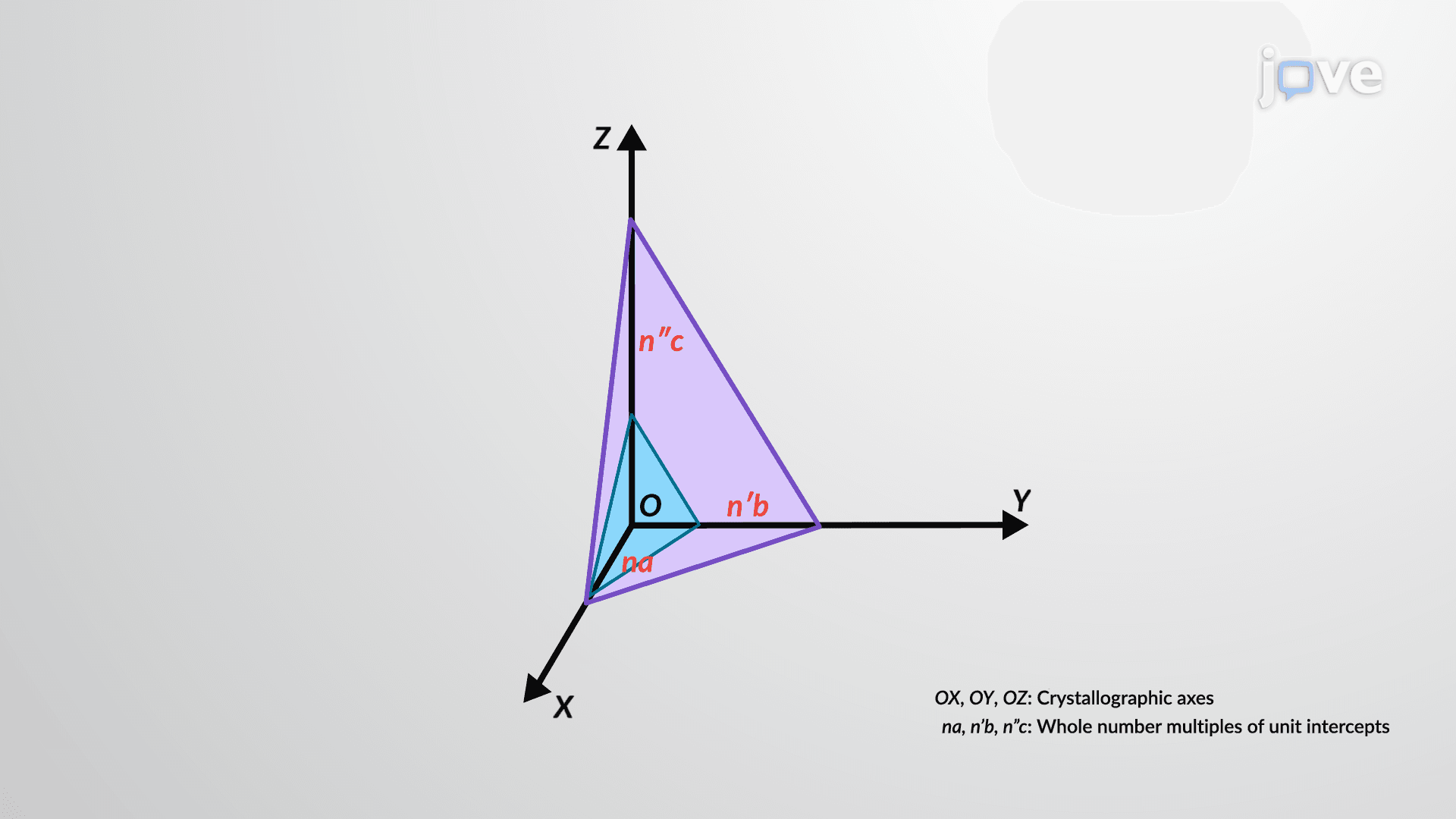
The Law of Rational Indices, also called Haüy's Law, states that whenever a crystal face intersects the crystallographic axes, it does so at distances that are simple whole-number multiples of defined unit intercepts along each axis. In other words, if the unit intercepts along three axes are labeled *a*, *b*, and *c*, then any real crystal face will cut those axes at distances like *a*, *2b*, *3c* or *2a*, *b*, *∞c* (meaning the face runs parallel to that axis), never at irrational values like *1.37a* or *√2 b*. This deceptively simple observation turns out to be one of the most powerful organizing principles in solid-state chemistry and materials science.
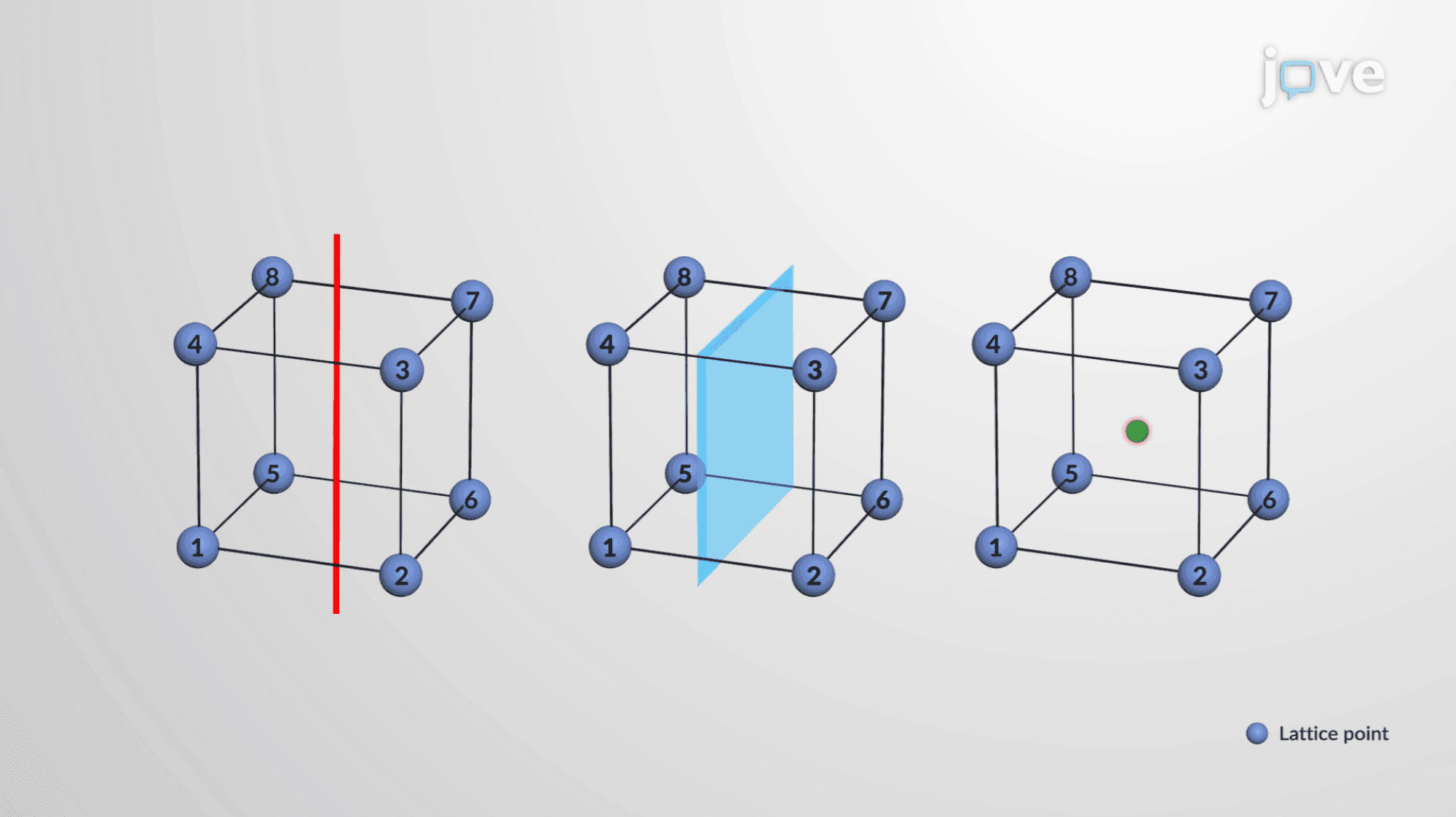
To visualize this law, picture three reference lines, OX, OY, and OZ, meeting at a single origin point inside a crystal. These are the crystallographic axes, and they may or may not be perpendicular to each other depending on the crystal system. A reference plane, sometimes called the parametral plane, intersects all three axes at the unit distances *a*, *b*, and *c*. These unit intercepts act like a ruler calibrated to the crystal's own internal geometry. Every other crystal face must intersect the axes at whole-number multiples of these same values, this is the constraint the Law of Rational Indices enforces.
The Law of Rational Indices is the direct conceptual ancestor of Miller indices, the notation system universally used today to describe crystal planes. Miller indices (written as *h*, *k*, *l*) are calculated by taking the reciprocals of the whole-number intercepts and clearing fractions. For example, a plane cutting axes at *a*, *2b*, *3c* yields reciprocals of 1, 1/2, 1/3, scaled to the Miller indices (6, 3, 2). In X-ray crystallography, which is how scientists at institutions like MIT's Materials Research Laboratory or the Argonne National Laboratory in Illinois determine crystal structures, Miller indices identify which planes are responsible for specific diffraction peaks in a diffractogram. Without the rational intercept rule, this entire system would collapse.
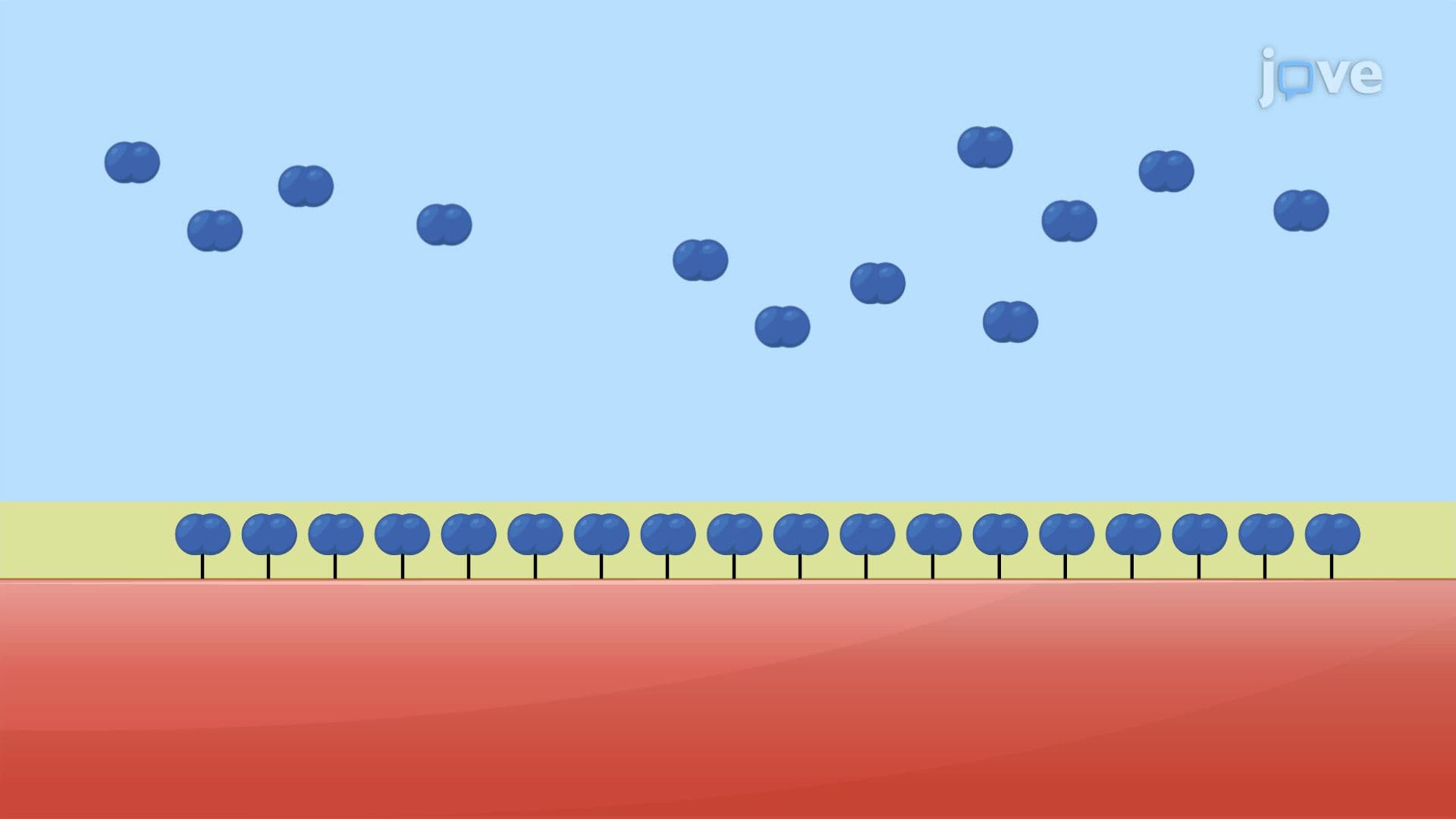
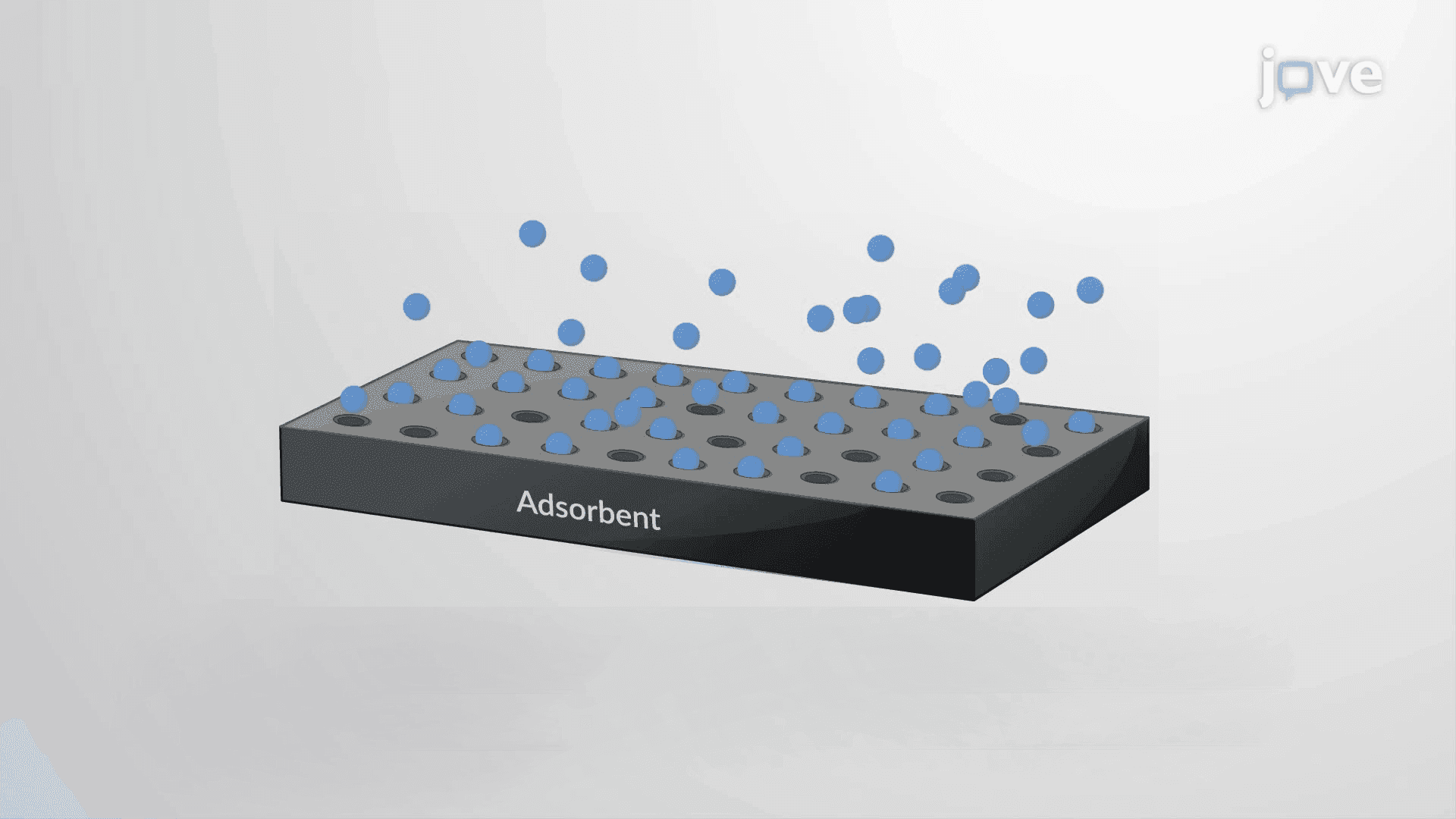
Understanding crystal planes isn't just an academic exercise. The properties of solid surfaces, including surface energy, reactivity, and defect density, vary dramatically depending on which crystal face is exposed. In heterogeneous catalysis, a field central to the US chemical and petroleum refining industries, catalyst performance can depend on whether a platinum or palladium surface exposes a (111) plane versus a (100) plane. Adsorption isotherms measured in industrial labs reflect how gas or liquid molecules bind to specific crystal faces. Surface defects, such as steps and kinks, also occur at predictable locations governed by the rational geometry the Law of Rational Indices describes.
For students in AP Chemistry or introductory college-level inorganic or physical chemistry courses, the Law of Rational Indices typically appears in units covering solid-state structure, unit cells, and Bravais lattices. Questions may ask you to identify intercepts, convert them to Miller indices, or explain why crystal faces follow rational rather than irrational ratios. On the MCAT, a deep understanding of crystal structure supports questions about materials and bonding in the biological sciences section. Mastering this concept early builds the geometric intuition needed to tackle topics like X-ray crystallography, electron diffraction, and semiconductor physics in upper-division coursework.
Related Micro-courses