Loading video…

 16 Concepts
 3.1K views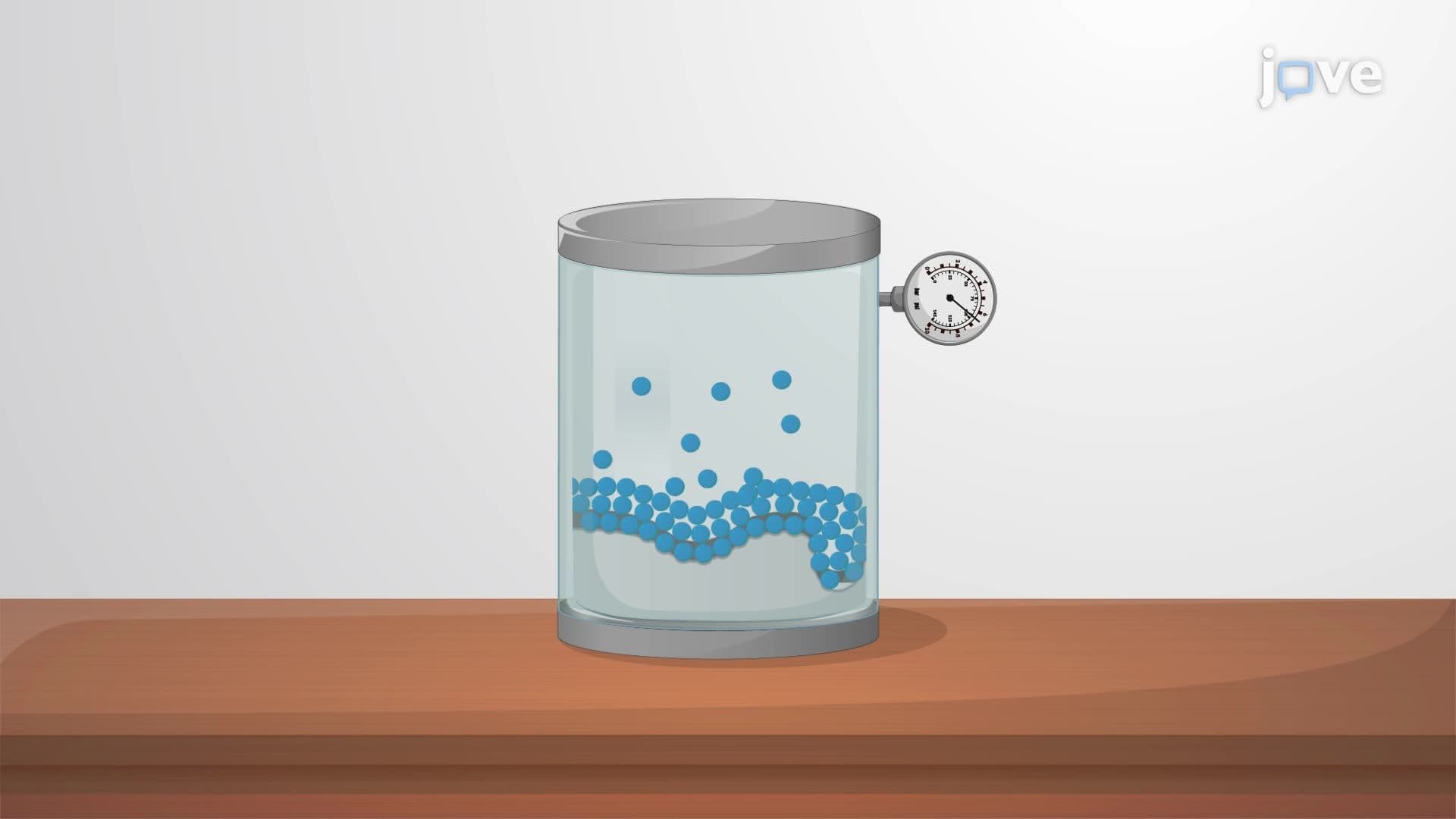

Video Summary: What Is Adsorption Isotherms Ii
Did you know that the same science used to measure the surface area of industrial catalysts at US chemical plants also explains how activated carbon filters purify drinking water? Adsorption Isotherms II explores the Brunauer-Emmett-Teller (BET) theory, which models how gas molecules stack in multiple layers on solid surfaces. Unlike single-layer models, BET accounts for real-world complexity. Watch the full video on JoVE Coach to master this concept with expert-led visuals and step-by-step explanations.
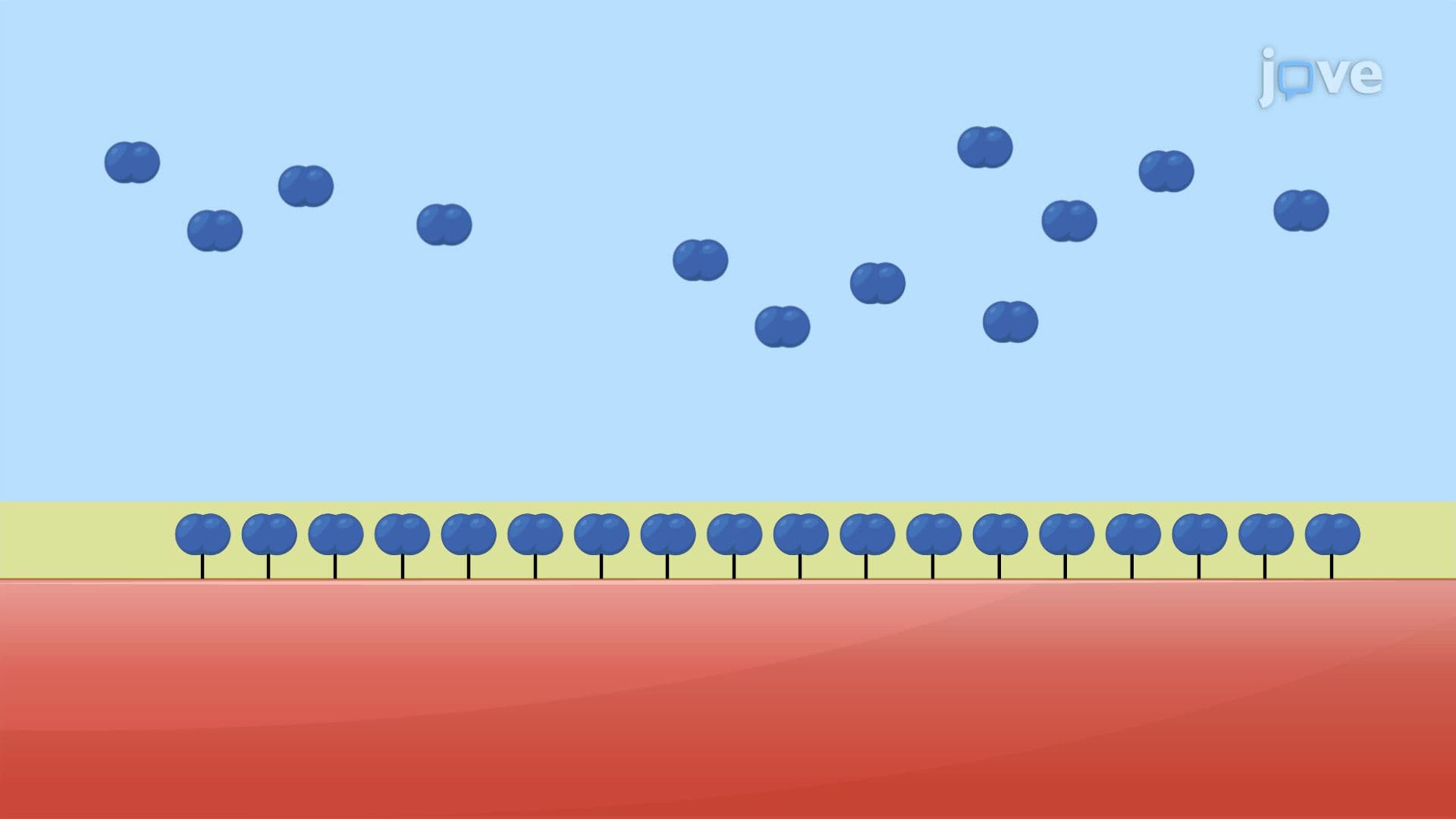
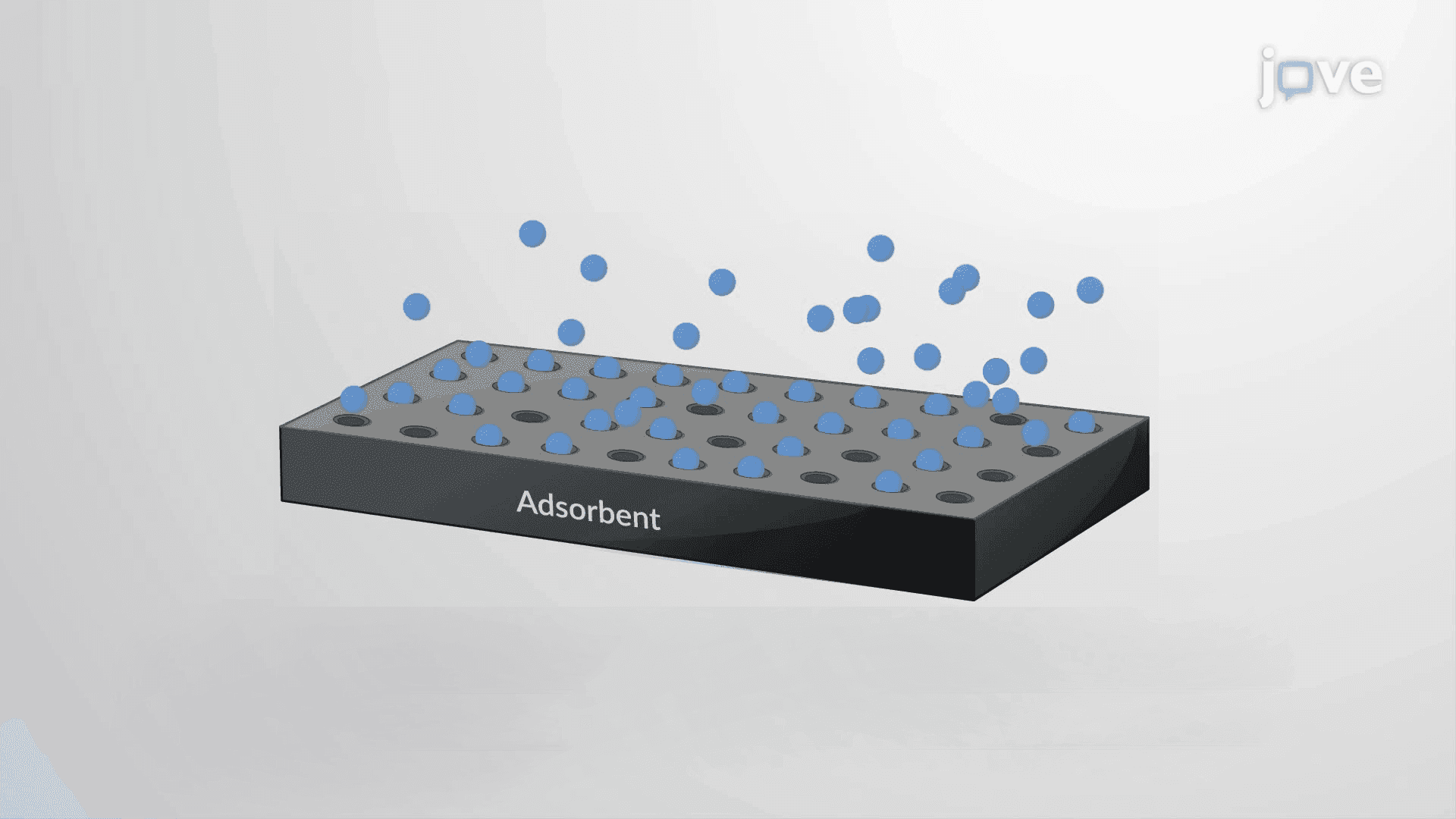
Adsorption Isotherms II introduces one of the most widely used frameworks in surface science: the Brunauer-Emmett-Teller (BET) theory. While the earlier Langmuir model assumes that gas molecules form only a single layer on a solid surface, real-world surfaces, like those found in industrial catalysts, pharmaceutical powders, and porous materials, behave far more complexly. BET theory was developed in 1938 by Stephen Brunauer, Paul Emmett, and Edward Teller and remains the gold standard for measuring specific surface areas in materials science labs across the United States today.
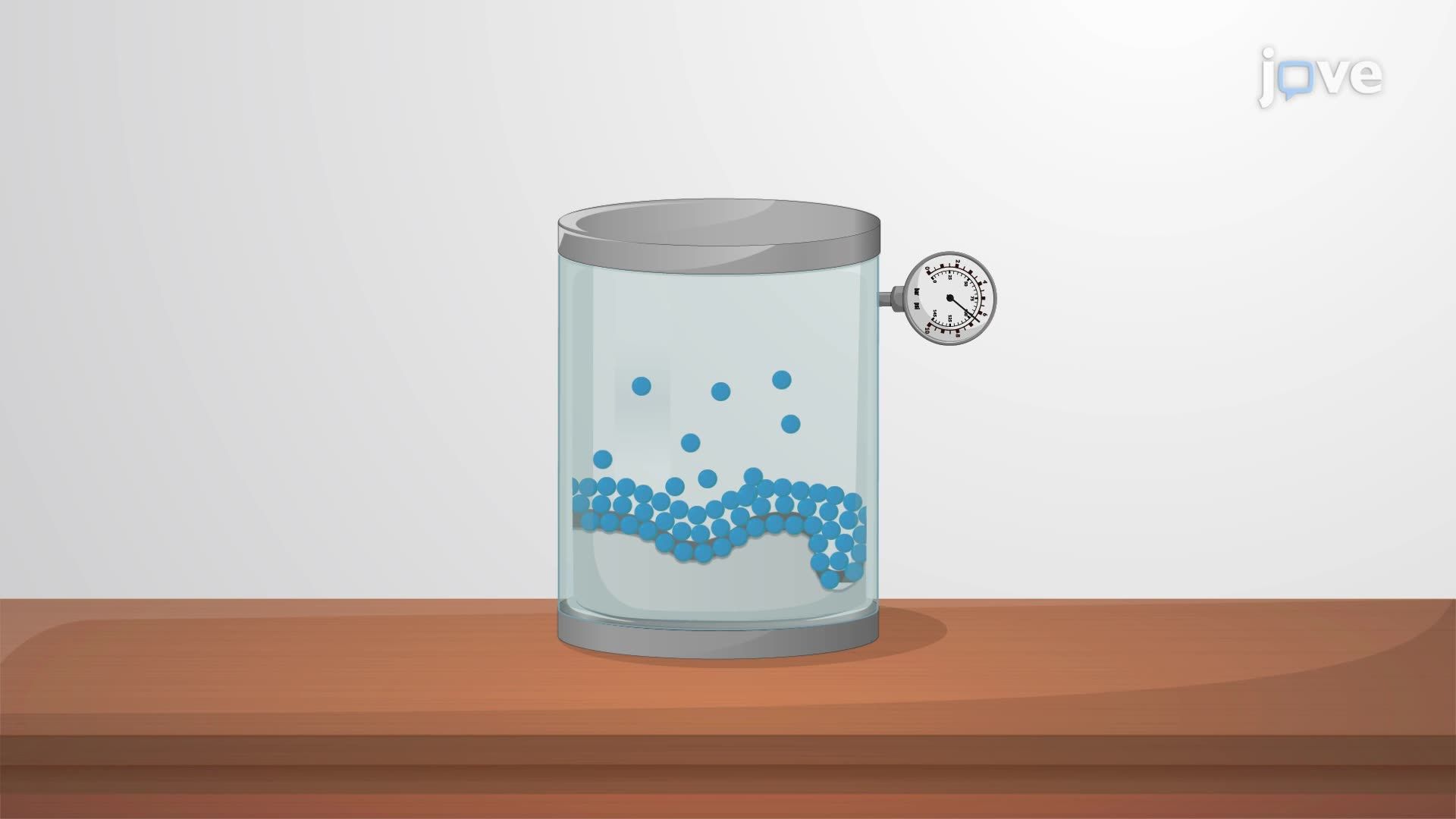
BET theory is built on several foundational assumptions that distinguish it from simpler models. First, adsorption occurs on a homogeneous solid surface with localized, non-interacting sites. Second, multiple layers of gas molecules can form on the surface, each new layer builds only after the previous one has fully covered the surface beneath it. Third, the adsorption energy of the first layer is constant and specific to the gas-solid interaction. For all subsequent layers, the energy equals the latent heat of liquefaction, the energy released when a gas condenses into a liquid. This is a critical distinction: the first layer is chemically or physically distinct, while upper layers behave essentially like a condensed liquid film.
The BET equation mathematically relates the volume of gas adsorbed to the partial pressure of the gas relative to its saturation pressure. When plotted correctly, with a specific transformation of the pressure and volume data, the BET plot produces a straight line. From this line, two key values are extracted: the monolayer adsorption volume (Vm) and the BET constant (c), which reflects the strength of the gas-surface interaction for the first layer. Using Vm, chemists can calculate the number of molecules needed to form a single complete monolayer, and from that, determine the surface area per unit mass of the solid, a measurement called the specific surface area.
This technique is routinely used in US research universities and industrial laboratories. For example, pharmaceutical companies like those based in New Jersey's "Medicine Cabinet of the World" corridor use BET surface area analysis to characterize drug powders and ensure consistent dissolution rates in medications.
No model is perfect. The BET equation is highly accurate only within a pressure range up to about one-third of the saturation pressure (P/P₀ ≤ 0.35). At higher pressures, deviations appear because the assumptions, particularly about uniform layer formation and non-interacting sites, begin to break down. Capillary condensation in pores and surface heterogeneity contribute to these deviations. Understanding these limitations is essential for interpreting experimental data correctly, a skill tested in college-level physical chemistry and materials science courses.
BET theory doesn't exist in isolation. It connects directly to solid-state chemistry concepts like surface defects, crystal structure, and the properties of solid surfaces. It also ties into heterogeneous catalysis, where the surface area of a catalyst directly determines its efficiency. In US college curricula, particularly in AP Chemistry, general chemistry, and physical chemistry courses, adsorption concepts appear in units on intermolecular forces, gas behavior, and thermodynamics. Mastering BET theory gives students a powerful bridge between abstract thermodynamic principles and tangible, applied materials science.
Related Micro-courses