Loading video…


 16 Concepts
 3.1K views

Video Summary: What Is Determination of Crystal Structures
Did you know the atomic blueprints of life-saving drugs are decoded using X-rays? The determination of crystal structures is the scientific process of mapping how atoms are arranged inside a solid, and it starts with a beam of light you can't even see. Used in everything from NASA materials research to pharmaceutical labs across the US, this concept is at the heart of modern chemistry. Watch the full video on JoVE Coach to master this concept with expert-led visuals and step-by-step explanations.
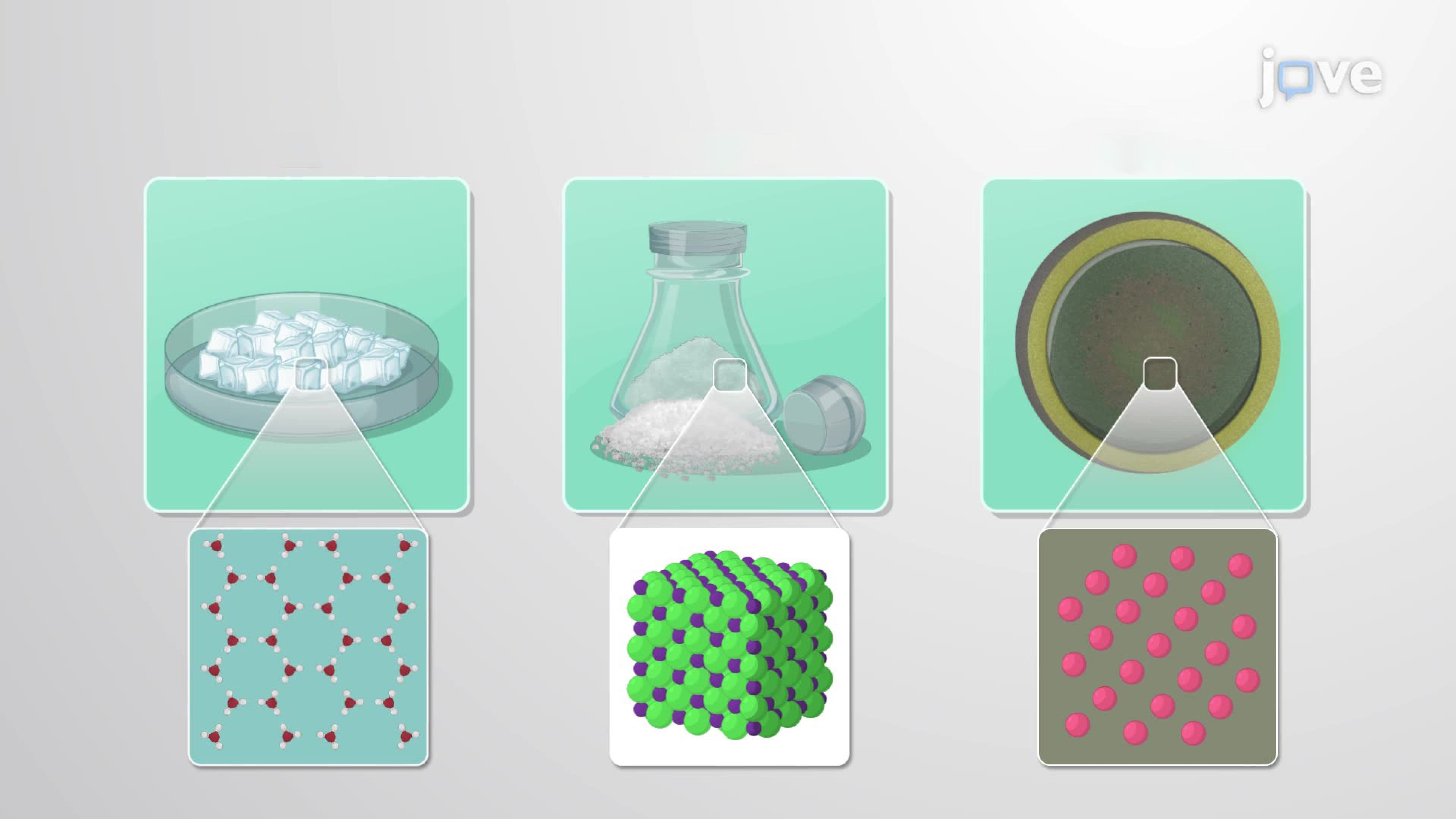
The determination of crystal structures is the process scientists use to figure out exactly where atoms sit inside a crystalline solid. Because atoms are far too small to image directly, researchers rely on indirect methods, most notably X-ray crystallography, to reveal the three-dimensional arrangement of atoms within a material. This field has been central to some of the most transformative discoveries in science, including the double-helix structure of DNA and the atomic geometry of penicillin.
In the early 20th century, German physicist Max von Laue reasoned that if crystals have a repeating, periodic atomic arrangement, they should behave like a diffraction grating for radiation with a wavelength comparable to the spacing between atoms. X-rays fit perfectly, their wavelengths (~100 picometers) are on the same order of magnitude as the distances between atoms in a crystal lattice. When an X-ray beam strikes a crystal, it interacts with electrons surrounding each atom and scatters in all directions. This scattering, measured by an X-ray diffractometer, carries encoded information about the crystal's internal structure.
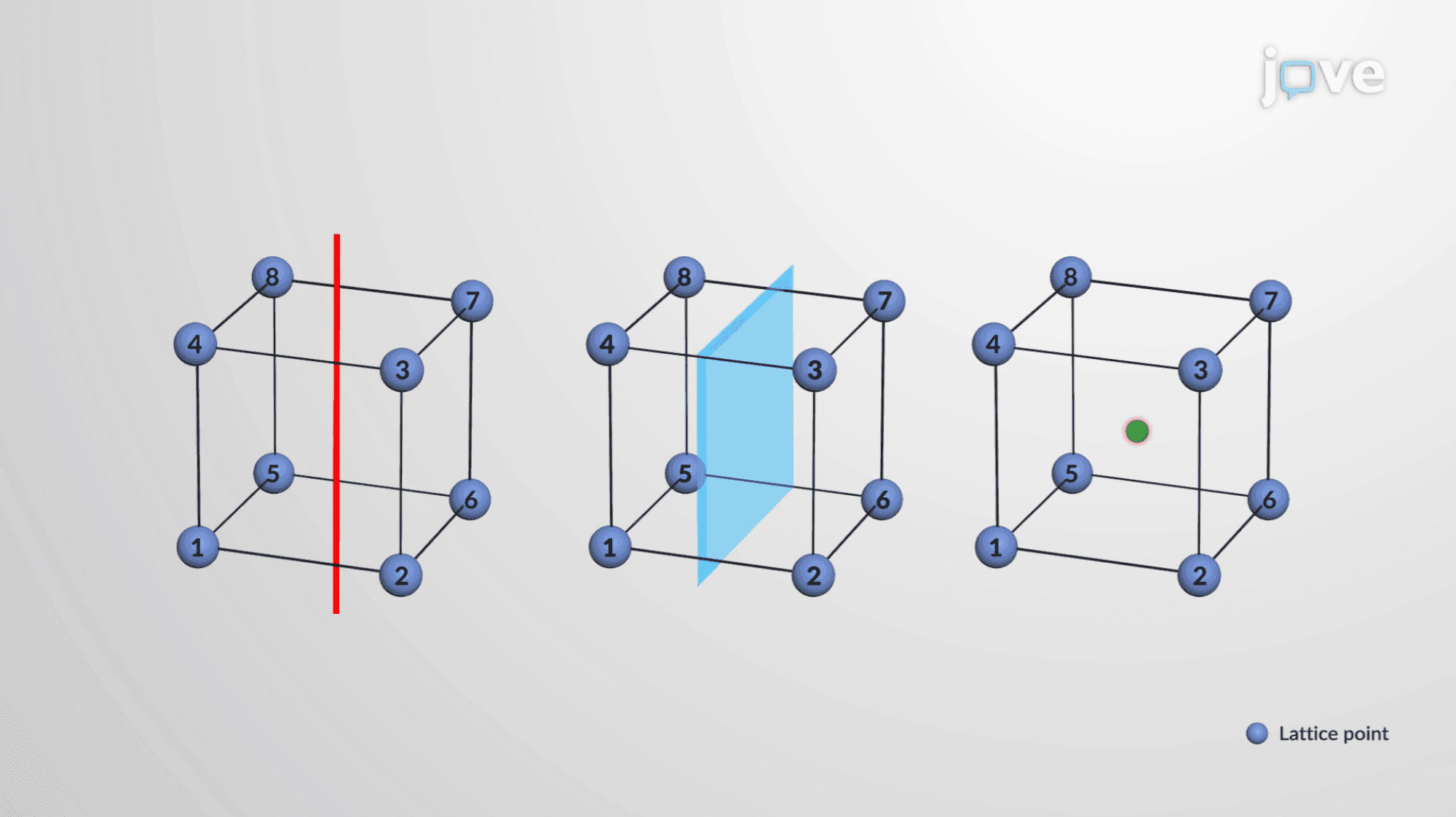
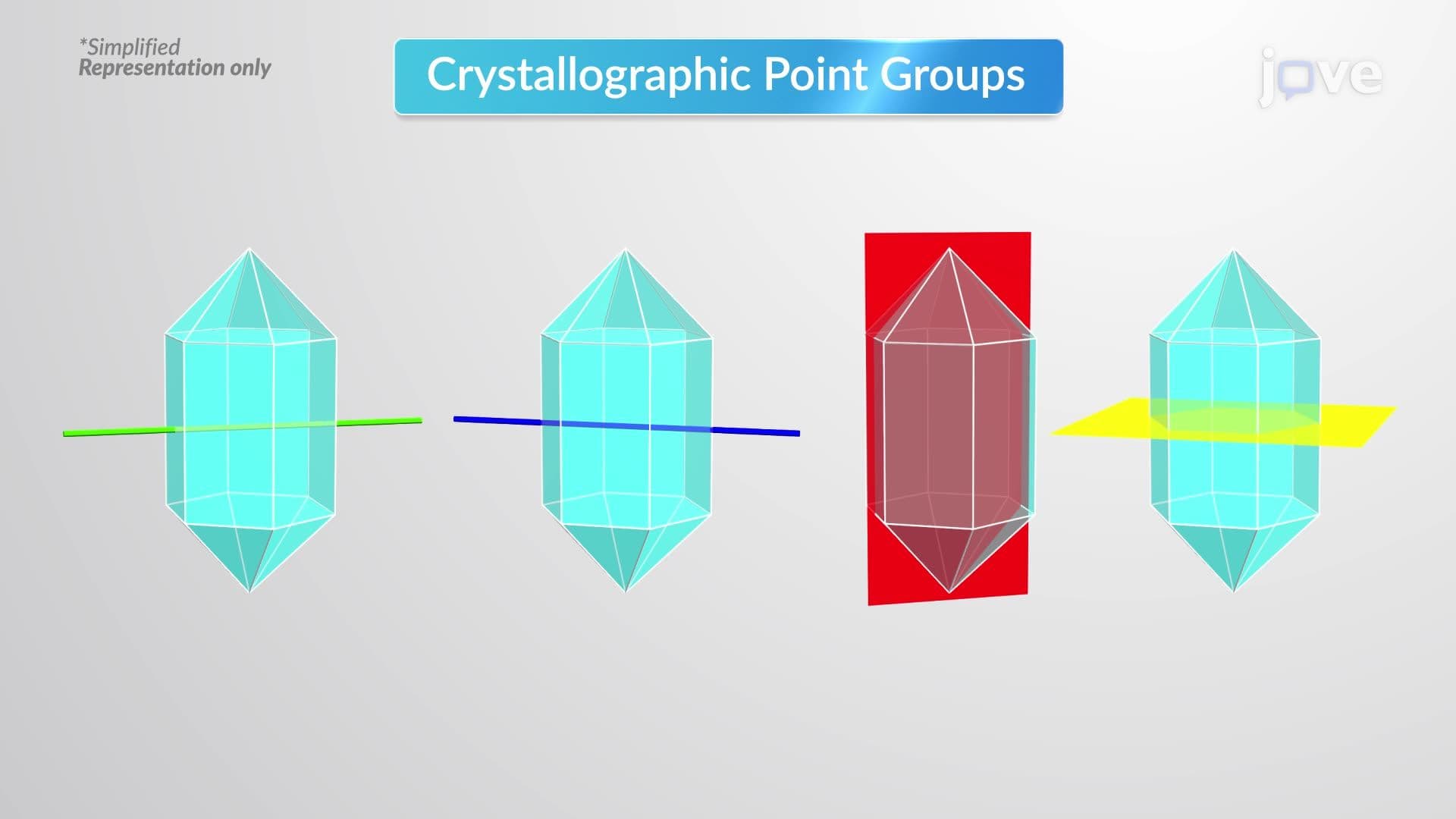
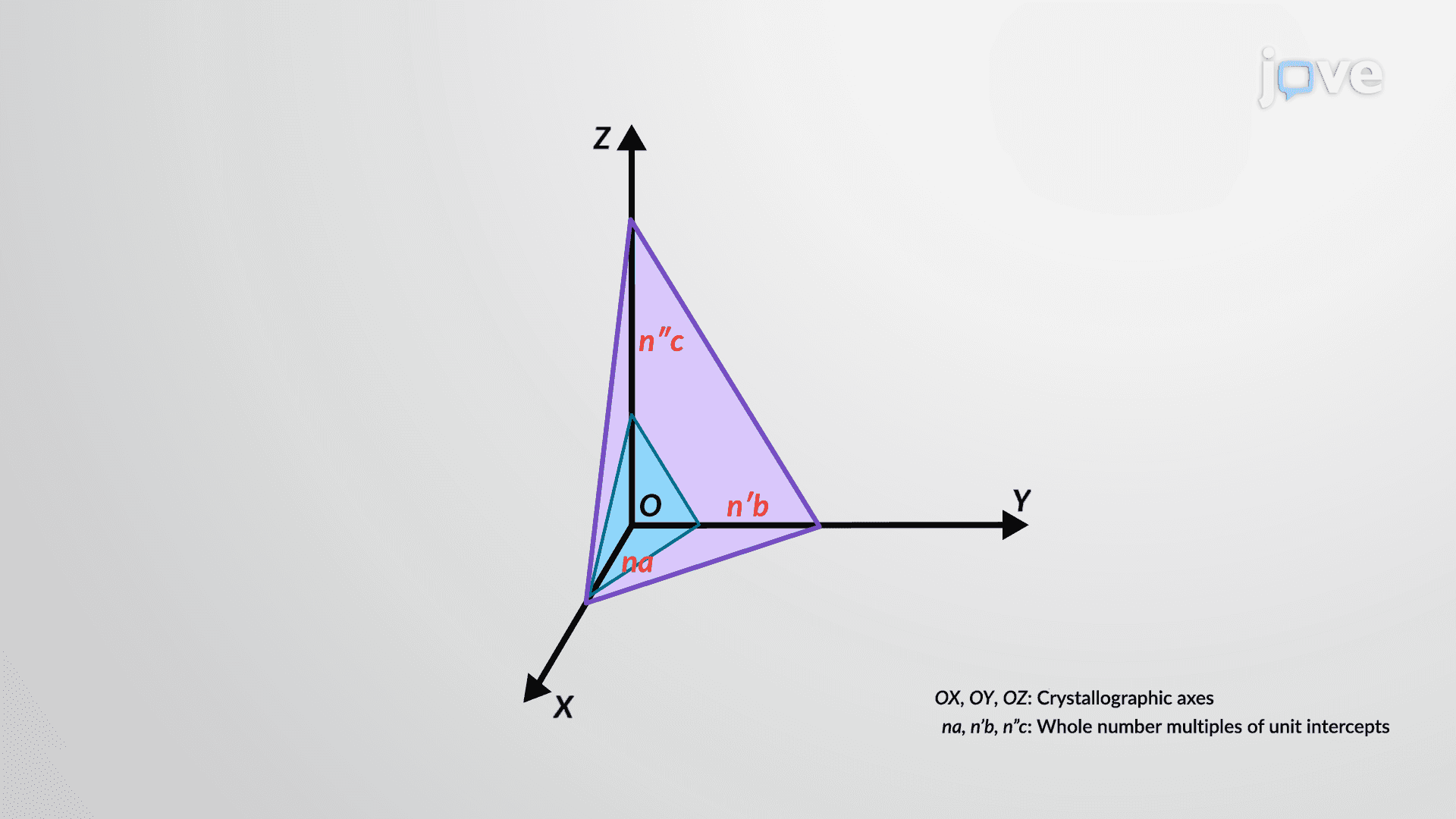
Building on Laue's work, British physicists William Henry Bragg and his son Lawrence Bragg formalized the relationship between diffraction and crystal geometry. They modeled a crystal as a stack of parallel lattice planes separated by a spacing distance *d*. When two X-ray waves strike adjacent planes at an angle θ, one wave reflects from the upper plane and the other penetrates deeper before reflecting from the lower plane. That second wave travels an extra path length of 2d sinθ.
This equation, Bragg's Law, is one of the most important relationships in solid-state chemistry. Each value of n (1, 2, 3…) represents a different diffraction order, producing distinct peaks that are fingerprints of the crystal's geometry.
To fully understand how crystal structures are determined, it helps to know a few supporting ideas:
On the AP Chemistry exam, students are expected to understand how atomic structure influences the properties of solids, and Bragg's Law frequently appears in free-response questions involving calculations. In college-level physical chemistry and materials science courses across universities like MIT, Caltech, and state institutions nationwide, X-ray crystallography is a foundational lab technique.
In practice, the US pharmaceutical industry relies on crystal structure determination every time a new drug candidate is synthesized, knowing a molecule's 3D shape is critical for understanding how it will bind to a biological target. The US Department of Energy's national labs, like Argonne and Brookhaven, operate synchrotron X-ray facilities specifically for this purpose.
Related Micro-courses