Loading video…


 16 Concepts
 3.1K views

Video Summary: What Is Crystal Density
Did you know the density of a diamond crystal can be calculated just by knowing how atoms stack inside it? Crystal density describes how tightly matter is packed within a repeating unit cell, the fundamental building block of any crystalline solid. US chemistry labs from MIT to community colleges use this concept to analyze materials. Watch the full video on JoVE Coach to master this concept with expert-led visuals and step-by-step explanations.
Crystal density is the mass per unit volume of a crystalline material, calculated at the scale of its smallest repeating structural unit, the unit cell. Unlike bulk density, which can vary with porosity or particle size, crystal density is an intrinsic property that reflects how atoms or ions are geometrically arranged in three-dimensional space. Understanding it bridges abstract atomic theory with measurable physical properties, making it a cornerstone concept in AP Chemistry, college general chemistry, and materials science courses across the US.
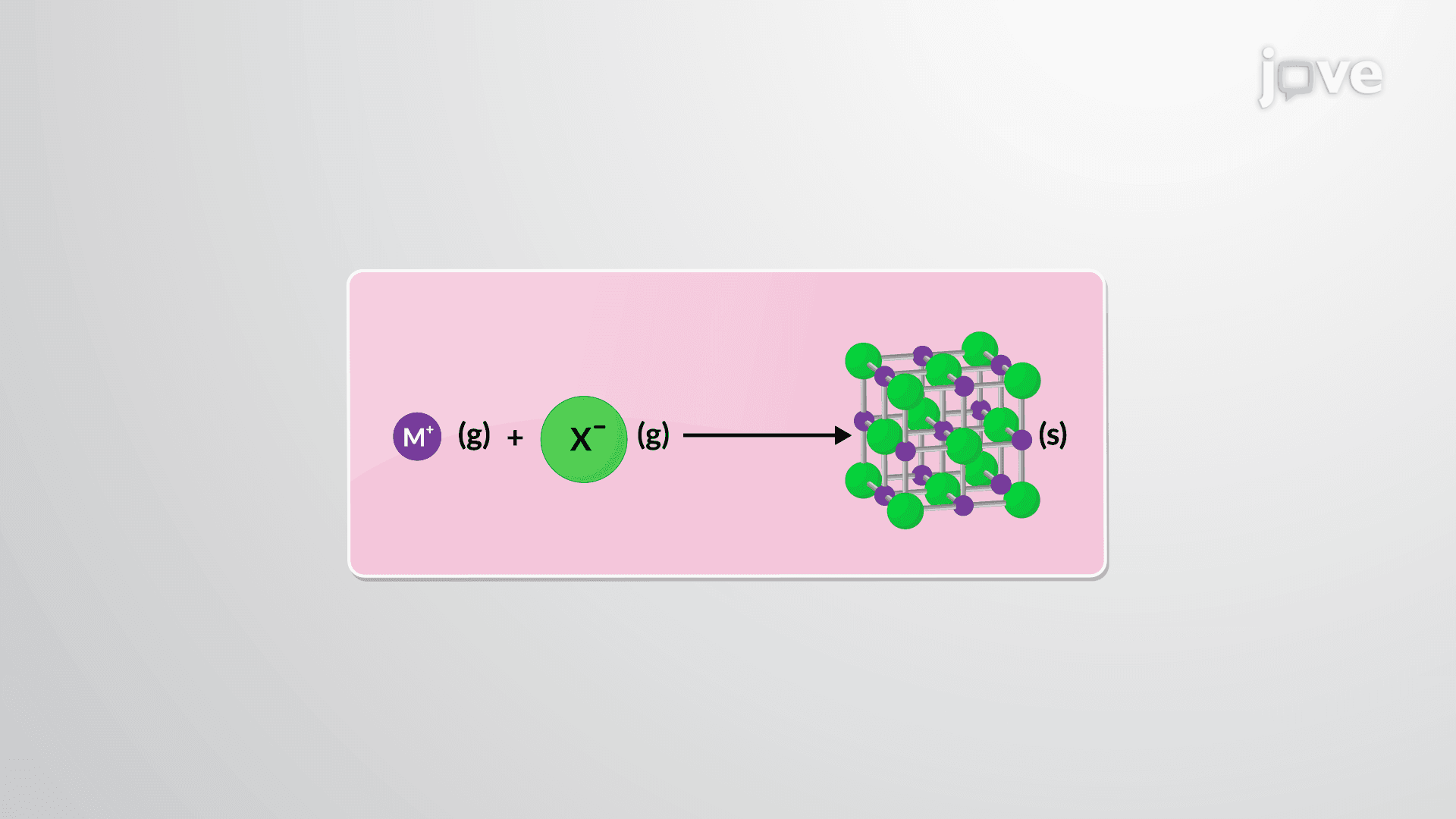
Every crystal is built from a repeating pattern called a crystal lattice, and the unit cell is its smallest repeating unit. Its geometry is defined by three edge lengths, a, b, and c, and three angles, α (alpha), β (beta), and γ (gamma). These parameters define the seven crystal systems recognized in crystallography, from simple cubic to triclinic. The 14 Bravais lattices, a classification system students encounter in college-level chemistry and physics, describe all possible three-dimensional arrangements. The lattice type directly determines Z, the number of atoms or formula units inside one unit cell. For a primitive (simple cubic) cell, Z = 1; for a body-centered cubic (BCC) cell, Z = 2; and for a face-centered cubic (FCC) cell, Z = 4.
The crystal density formula combines mass and volume at the unit cell level:
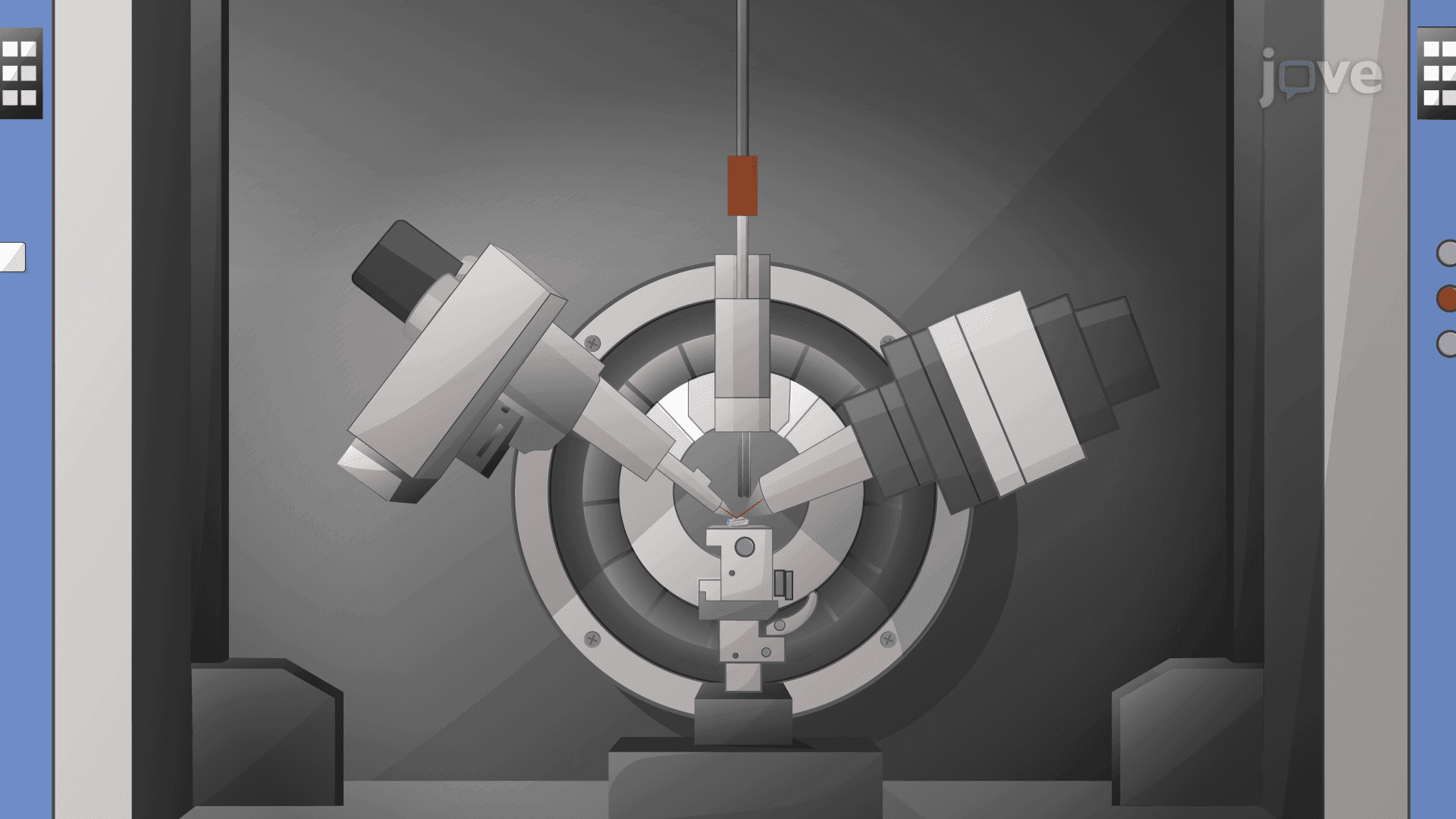
When edge lengths are expressed in centimeters (cm) and molar mass in grams per mole, density comes out in grams per cubic centimeter (g/cm³), the standard unit used in US chemistry textbooks and lab reports. This formula is not merely theoretical; it is used in X-ray crystallography to verify atomic structures, where researchers at institutions like Argonne National Laboratory use diffraction data to determine unit cell dimensions and confirm material identity.
Crystal density has practical significance across several US industries. In semiconductor manufacturing, the crystal density of silicon (approximately 2.33 g/cm³ for its diamond cubic FCC-derived structure) is critical for quality control in chip fabrication. Pharmaceutical companies apply crystal density principles to understand polymorphic forms of drug compounds, different crystal structures of the same molecule can have different densities and, therefore, different solubility and bioavailability profiles. Materials engineers use crystal density to screen candidates for lightweight structural alloys, aerospace ceramics, and battery electrode materials.
In academic settings, crystal density problems are a staple of AP Chemistry Unit 2 (Atomic Structure and Properties) and college general chemistry courses. On the MCAT, solid-state chemistry concepts appear in physical sciences passages that test quantitative reasoning, dimensional analysis, and conceptual understanding of matter, all skills sharpened by mastering crystal density calculations.
Related Micro-courses