Loading video…


 19 Concepts
 348.6K views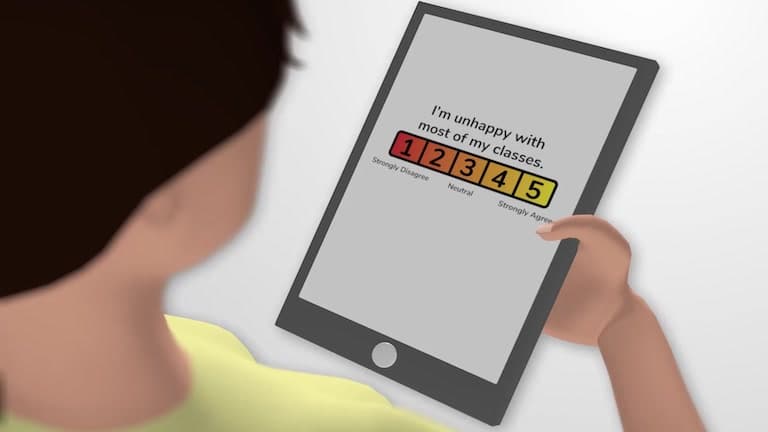

Video Summary: What are Surveys
Did you know that over 90% of Fortune 500 companies use surveys to make critical business decisions? Surveys are systematic data collection tools that researchers use to gather information from participants through structured questions. For instance, when Netflix asks users to rate shows on a 1-5 scale, they're using survey methodology to improve their recommendation algorithms. Understanding What are Surveys is fundamental for anyone studying psychology, market research, or social sciences. Watch the full video on JoVE Coach to master this concept with expert-led visuals and step-by-step explanations.
Surveys represent one of the most versatile and widely-used research methods in psychology, sociology, and market research. Unlike observational studies or experiments, surveys directly ask participants to provide information about their attitudes, behaviors, experiences, or opinions. This self-report methodology makes surveys particularly valuable when researchers need to access internal states-thoughts, feelings, and perceptions-that cannot be directly observed.
The power of surveys lies in their efficiency and scalability. A single survey can collect data from thousands of participants simultaneously, making them cost-effective for large-scale studies. Major organizations like the U.S. Census Bureau, Gallup, and Pew Research Center rely heavily on survey methodology to track societal trends and inform policy decisions.
Modern survey research employs three primary administration methods, each with distinct advantages. Paper-and-pencil surveys remain popular in educational settings, such as course evaluations at universities like Harvard or Stanford. These provide tangible responses and work well with older demographics who may be less comfortable with technology.
Electronic surveys, delivered through platforms like Qualtrics or SurveyMonkey, have revolutionized data collection. They enable real-time data processing, automated skip logic, and multimedia integration. Major corporations like Apple and Google use electronic surveys to gather customer feedback on new products before launch.
Verbal surveys, including telephone interviews and face-to-face interactions, allow for clarification and follow-up questions. The U.S. Census Bureau employs thousands of enumerators who conduct verbal surveys for the American Community Survey, ensuring comprehensive population coverage.
The distinction between convenience sampling and random sampling fundamentally affects survey validity. Convenience sampling, while practical, introduces systematic bias. For example, if a UCLA psychology professor surveys only students in his advanced statistics course, the results cannot represent all UCLA students-the sample skews toward mathematically-inclined, upper-division students.
Random sampling addresses this limitation by giving every member of the target population an equal chance of selection. When the Pew Research Center conducts political polls, they use sophisticated random sampling techniques to ensure their 1,000-person sample accurately reflects the 250+ million eligible U.S. voters.
Understanding sampling is crucial for AP Psychology students and those preparing for the MCAT, as both exams frequently test knowledge of research methodology and statistical validity.
Survey research appears across multiple domains that students encounter. In clinical psychology, standardized surveys like the Beck Depression Inventory help diagnose mental health conditions. Marketing students learn how companies use Net Promoter Score surveys to measure customer loyalty. Pre-med students studying for the MCAT must understand how patient-reported outcome measures (surveys) contribute to evidence-based medicine.
However, surveys face inherent limitations through social desirability bias-participants may provide answers they believe are socially acceptable rather than truthful responses. This particularly affects sensitive topics like substance use or academic dishonesty. Additionally, response bias can skew results when certain demographic groups are more likely to participate than others.
Despite these limitations, surveys remain indispensable for capturing population diversity and tracking changes over time, making them essential tools for students entering research-focused careers.
Related Micro-courses