Loading video…


 19 Concepts
 348.6K views

Video Summary: What Is Regression Toward the Mean
Why does a star baseball player who hits .400 one season often perform closer to .300 the next? Regression toward the mean explains this puzzling phenomenon that catches fans and analysts off-guard. This statistical concept reveals why extreme measurements-like a patient's unusually high blood pressure reading at a doctor's visit-tend to move closer to average upon retesting. Watch the full video on JoVE Coach to master this concept with expert-led visuals and step-by-step explanations.
Regression toward the mean represents one of statistics' most counterintuitive yet fundamental principles. When any measurement produces an extreme value-whether exceptionally high or low-subsequent measurements typically yield results closer to the population average. This isn't due to some mystical force, but rather basic statistical probability working behind the scenes.
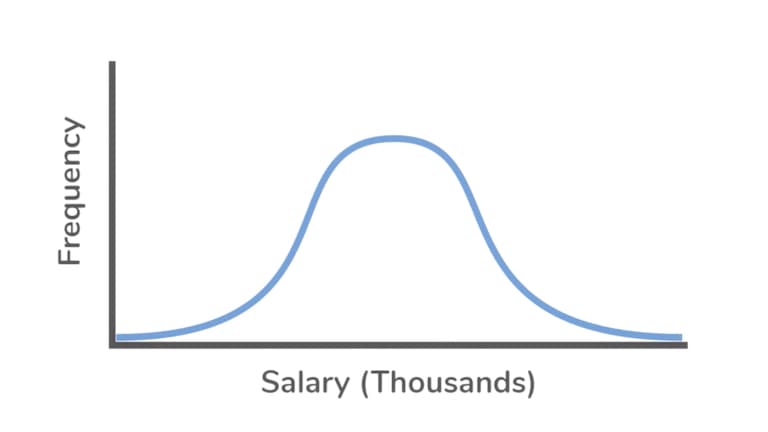
The concept emerges from normal distribution properties. In any bell-shaped curve, extreme values occupy the statistical "tails"-regions with naturally low probability. Since these extreme positions are inherently rare, random variation makes it statistically unlikely for consecutive measurements to land in the same extreme zone. Students preparing for AP Statistics or college-level biostatistics courses encounter this principle when analyzing repeated measurements and understanding measurement error.
Medical professionals regularly witness regression toward the mean in clinical practice. Consider hypertension screening: patients with initial readings of 160/100 mmHg often show lower values during follow-up visits, even without medication. The Framingham Heart Study, a landmark US cardiovascular research project, documented this pattern extensively. Similarly, students scoring extremely high on the PSAT often see slightly lower (though still strong) SAT scores-not due to decreased ability, but natural statistical variation.
This principle critically impacts clinical trial design and medical decision-making. The FDA requires researchers to account for regression toward the mean when evaluating new treatments, ensuring that apparent improvements aren't simply statistical artifacts.
Perhaps most importantly, regression toward the mean helps distinguish between genuine intervention effects and natural statistical variation. Athletic coaches who bench star players after exceptional performances may unknowingly demonstrate this concept-the player's next game performance would likely be more moderate regardless of playing time.
For students taking the MCAT or preparing for college research courses, recognizing this pattern prevents overinterpretation of single data points. Understanding when extreme values represent true outliers versus natural variation becomes crucial for careers in healthcare, psychology, and data analysis.
Related Micro-courses