Loading video…


 24 Concepts
 53.1K views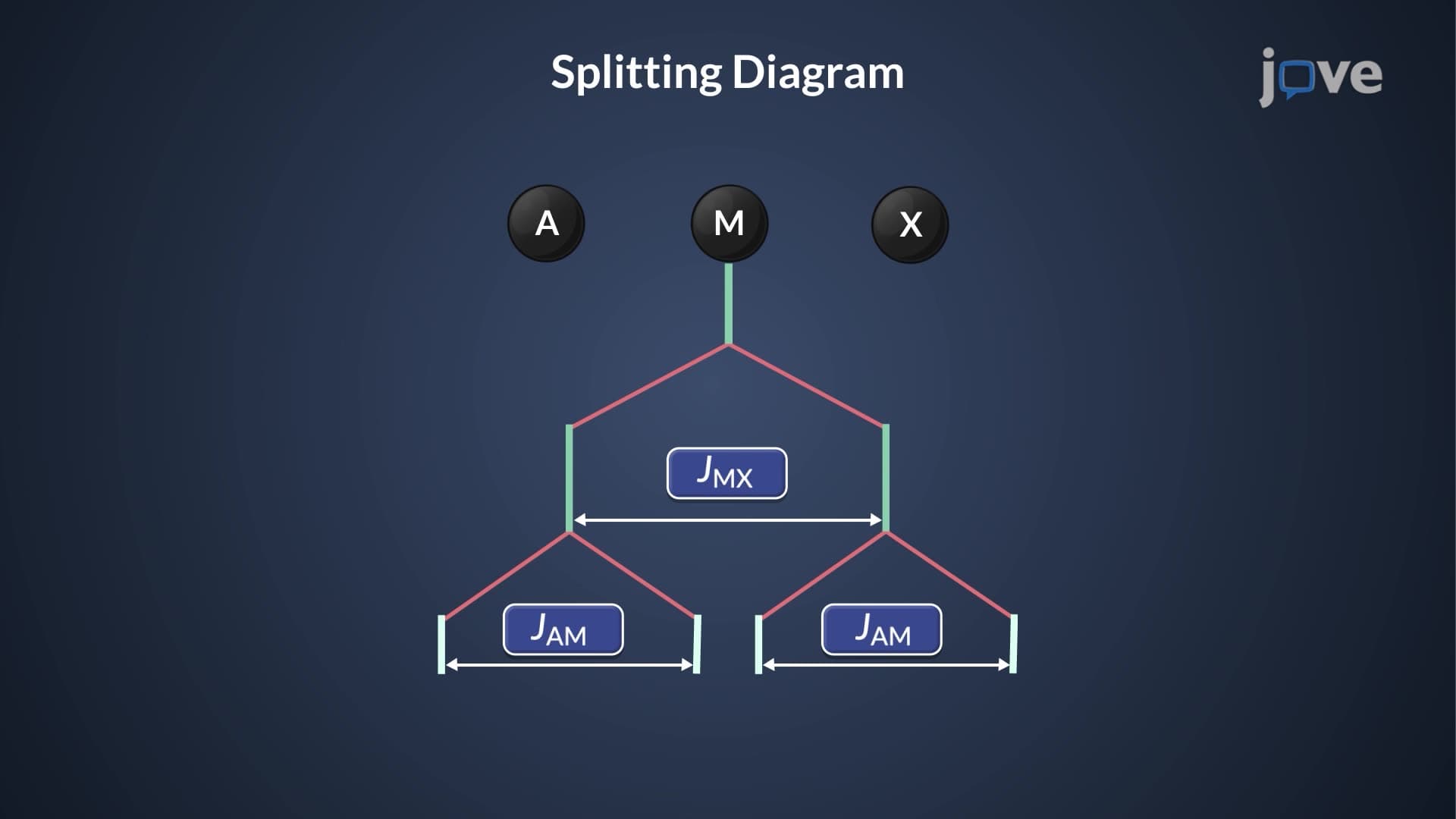

Video Summary: What Is H Nmr Complex Splitting
Ever wondered why some NMR signals look like intricate fingerprints rather than simple patterns? H NMR complex splitting occurs when a proton couples simultaneously to multiple nonequivalent neighboring protons, creating sophisticated multiplet patterns that can reveal detailed molecular structures. For instance, analyzing propyl bromide used in pharmaceutical synthesis shows how coupling between methyl, methylene, and other protons generates complex splitting patterns with overlapping peaks. Watch the full video on JoVE Coach to master this concept with expert-led visuals and step-by-step explanations.
What is H NMR complex splitting? This phenomenon occurs when a single proton experiences simultaneous coupling to multiple nonequivalent neighboring protons, creating intricate multiplet patterns that extend beyond simple doublets, triplets, or quartets. Unlike first-order coupling where protons interact with magnetically equivalent neighbors, complex splitting involves multiple distinct coupling pathways that can interfere constructively or destructively.
Complex splitting patterns in H NMR arise from the vector addition of multiple J-coupling interactions. Consider a pharmaceutical intermediate where a methine proton sits adjacent to both a methyl group and a methylene group. This proton experiences two distinct coupling constants: one to the methyl protons (J₁) and another to the methylene protons (J₂). The resulting signal becomes a superposition of these interactions, creating what spectroscopists call a "doublet of doublets" or higher-order multiplets.
The classic example of propyl bromide (CH₃CH₂CH₂Br) demonstrates this beautifully. The central methylene protons couple to both the terminal methyl group (three equivalent protons) and the adjacent methylene group (two protons). Theoretical splitting diagrams predict a quartet of triplets with twelve distinct lines, but the actual spectrum depends critically on the relative magnitudes of the coupling constants.
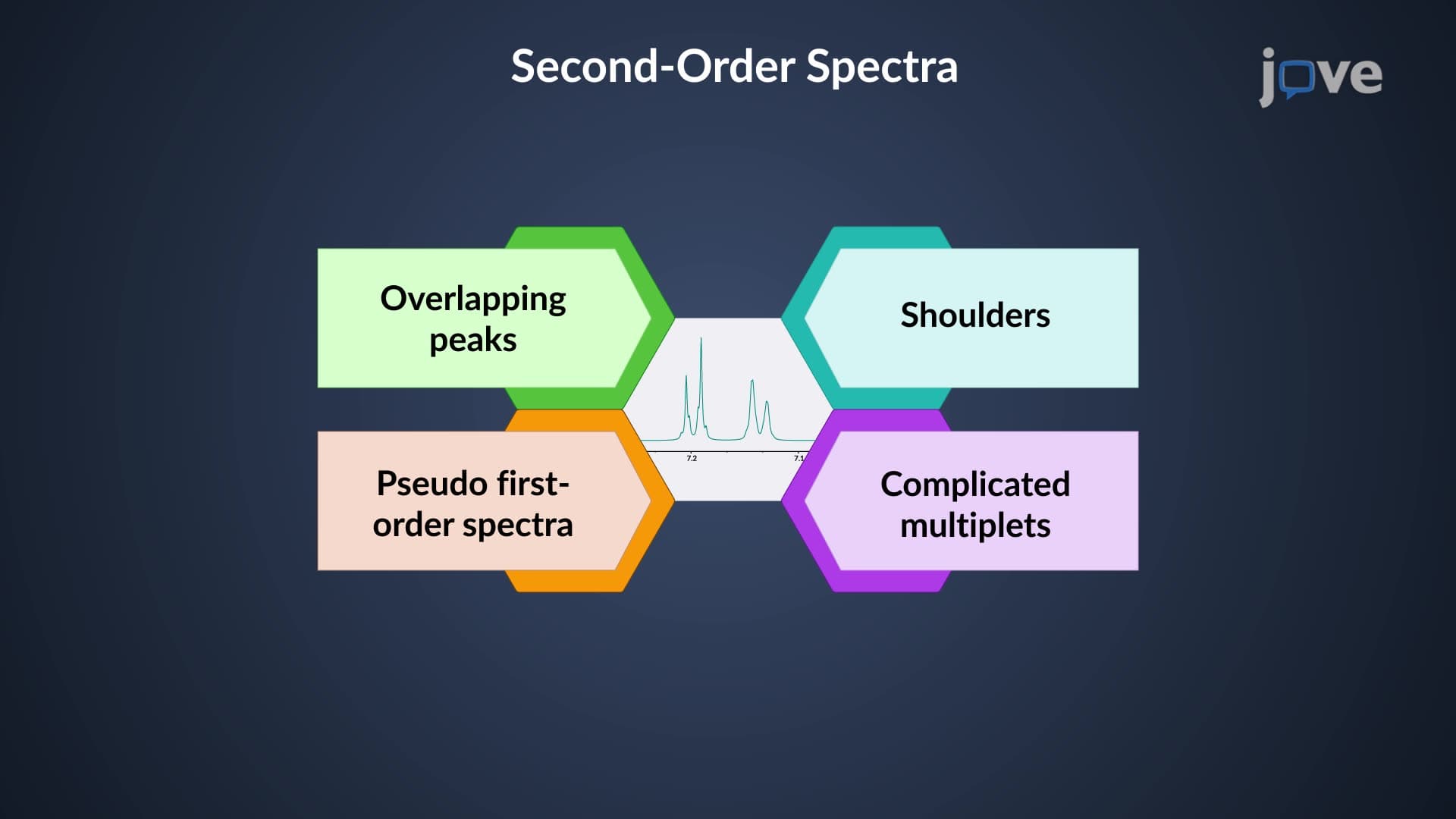
The appearance of complex splitting patterns depends fundamentally on the ratio between different J-coupling constants. When J(AM) ≠ J(MX), where A, M, and X represent different proton environments, all predicted peaks remain visible and distinct. However, when coupling constants become similar in magnitude, peak overlap occurs through a phenomenon called "virtual coupling."
In propyl bromide, when J(AM) ≈ 2×J(MX), some predicted peaks overlap exactly, causing their intensities to add constructively. This reduces the apparent twelve-line pattern to nine visible peaks. Most dramatically, when J(AM) ≈ J(MX), the system exhibits maximum overlap, showing only six observable peaks instead of the theoretically predicted twelve.
Complex splitting analysis proves essential for structure elucidation in organic chemistry laboratories across US universities. Students in advanced organic chemistry courses at institutions like MIT, Stanford, and UC Berkeley regularly encounter these patterns when characterizing synthetic intermediates. For MCAT preparation, understanding complex splitting helps students interpret pharmaceutical molecules and metabolites.
In industrial settings, pharmaceutical companies like Pfizer and Merck rely on complex splitting pattern analysis to confirm drug intermediate structures and detect impurities. The FDA requires detailed NMR characterization for new drug applications, making this knowledge crucial for medicinal chemists and analytical scientists throughout the US pharmaceutical industry.
Related Micro-courses