Loading subject page…


1,347,749 views

Video Summary: What Is Probability Laws
Did you know that genetic counselors use probability laws to predict a couple's risk of having a child with inherited disorders like sickle cell anemia? Probability laws, specifically the sum and product rules, help calculate these genetic risks by combining individual probabilities. For instance, when assessing biotinidase deficiency risk, counselors apply these mathematical principles to determine that certain couples have approximately a 0.14% chance of having an affected child. Watch the full video on JoVE Coach to master this concept with expert-led visuals and step-by-step explanations.
What is probability laws encompasses two fundamental mathematical principles that govern how we calculate the likelihood of events: the sum rule and the product rule. These laws provide the framework for quantitative analysis in genetics, statistics, and numerous scientific applications. The sum rule applies when calculating the probability of alternative outcomes (either Event A OR Event B), while the product rule determines the probability of simultaneous events (both Event A AND Event B).
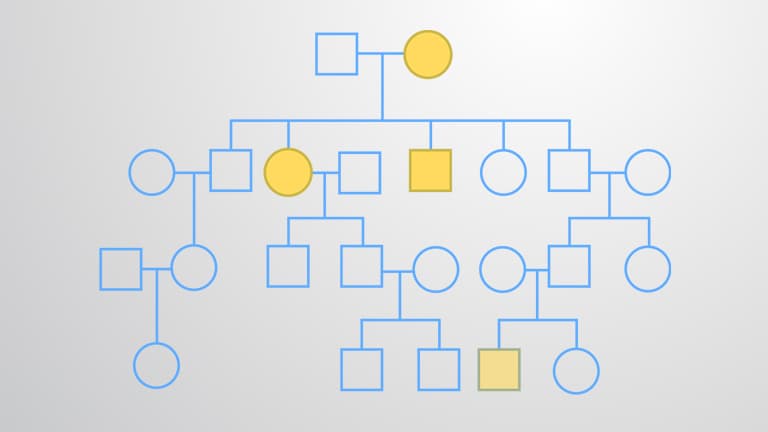
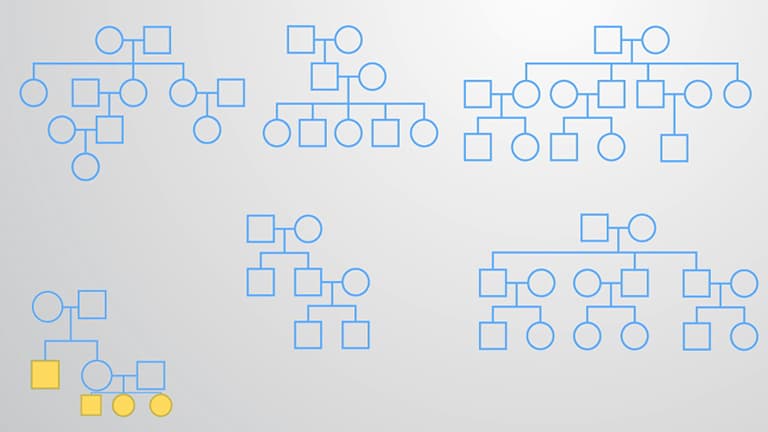
The sum rule states that when events are mutually exclusive alternatives, their individual probabilities are added together. In genetic contexts, this applies when determining carrier status. Consider a woman whose brother has biotinidase deficiency but whose parents are unaffected. Using pedigree analysis, she could be a carrier through maternal inheritance (probability = 1/3) or paternal inheritance (probability = 1/3). Since these represent alternative scenarios, the sum rule gives us: P(carrier) = 1/3 + 1/3 = 2/3. This principle appears frequently on AP Biology exams and college genetics courses, where students must identify mutually exclusive genetic outcomes.
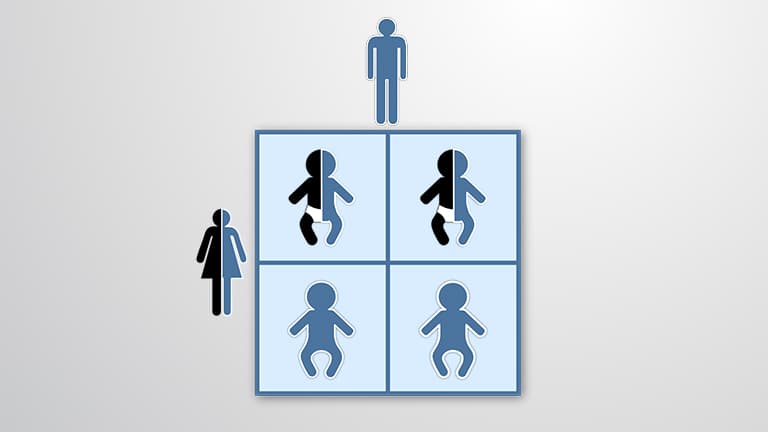
The product rule multiplies probabilities of independent events that must all occur. For genetic disorders, this calculates the risk when both parents must be carriers AND must pass disease alleles to their offspring. Using our biotinidase deficiency example: the mother's carrier probability (2/3) × the father's carrier probability (1/120) × the probability both pass disease alleles (1/4) = approximately 0.14%. This calculation method is essential for MCAT preparation and appears in genetic counseling scenarios on nursing exams like NCLEX and HESI A2.
Healthcare professionals regularly apply probability laws in genetic counseling, pharmacogenomics, and diagnostic testing. The CDC uses these principles to assess disease outbreak patterns, while pharmaceutical companies apply them in clinical trial design. Medical schools emphasize these concepts because they're fundamental to evidence-based medicine and patient risk assessment. Students preparing for the USMLE encounter probability law questions in both basic science and clinical contexts, making mastery essential for medical career success.
Related Micro-courses