Loading subject page…


1,347,749 views


Video Summary: What Is Test Cross
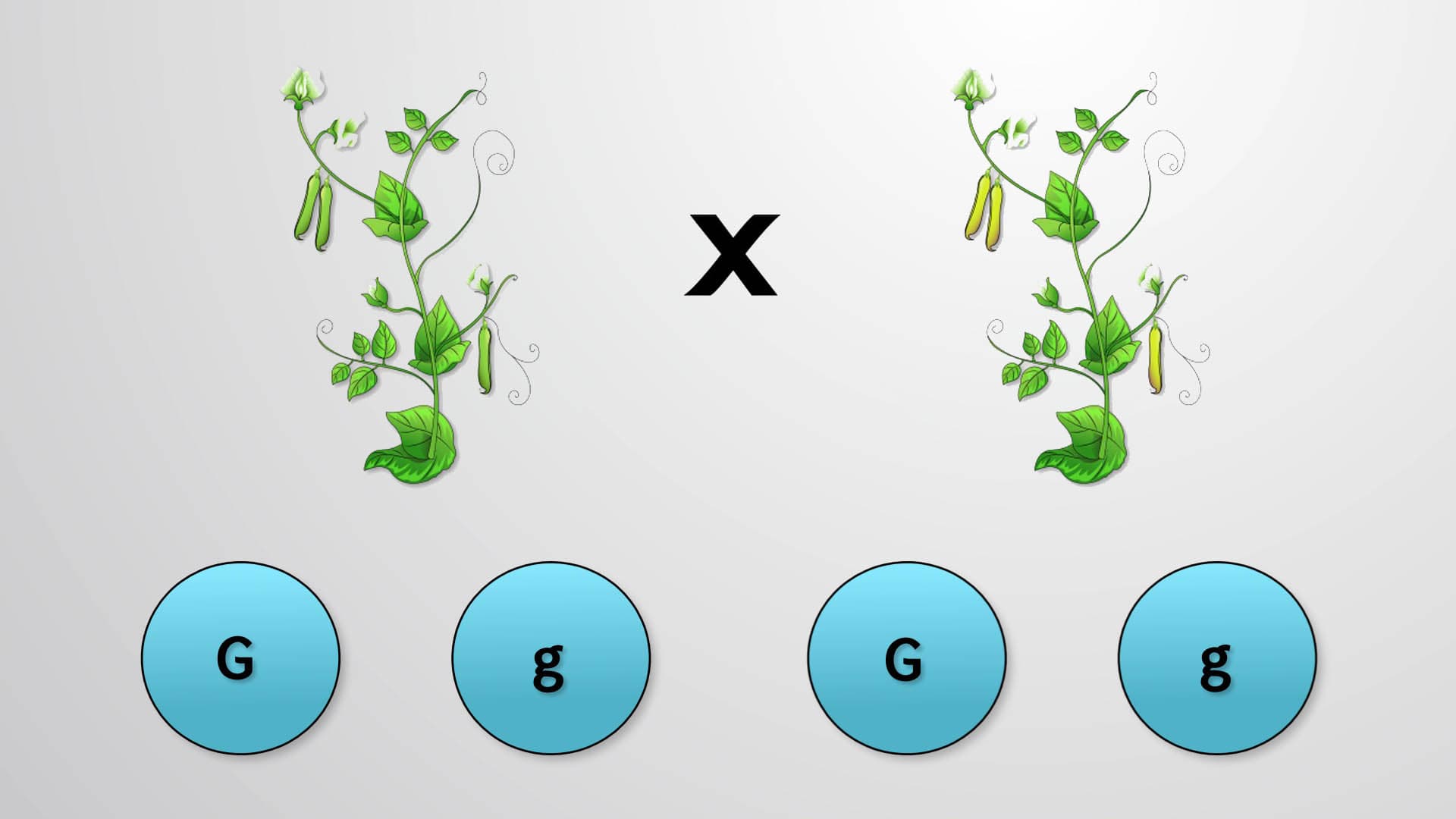
Ever wondered how geneticists determine if that purple-flowered plant in your garden has one or two dominant genes? A test cross is the detective work of genetics, revealing hidden genotypes by crossing unknown organisms with known recessive partners. Agricultural researchers at universities like UC Davis use this technique to identify superior breeding stock in crops like corn and soybeans before large-scale cultivation. Watch the full video on JoVE Coach to master this concept with expert-led visuals and step-by-step explanations.
A test cross serves as genetics' most reliable method for unveiling an organism's true genotype when phenotype alone provides insufficient information. This fundamental technique addresses a core challenge in Mendelian genetics: distinguishing between homozygous dominant (AA) and heterozygous (Aa) individuals that display identical dominant phenotypes.
The test cross operates on a simple yet powerful principle. By crossing an organism of unknown genotype with a homozygous recessive individual (aa), geneticists create a controlled experiment where offspring ratios reveal the mystery parent's genetic makeup. The recessive parent acts as a "genetic revealer" because it can only contribute recessive alleles, making the unknown parent's contribution clearly visible in the offspring.
When the unknown parent is homozygous dominant (AA), all offspring receive one dominant allele (from the unknown parent) and one recessive allele (from the known parent), resulting in 100% heterozygous offspring displaying the dominant phenotype. Conversely, when the unknown parent is heterozygous (Aa), offspring split 50:50 between dominant and recessive phenotypes, revealing the heterozygous nature through this characteristic 1:1 ratio.
Test crosses prove invaluable in American agriculture, where companies like Pioneer Hi-Bred and Monsanto use this technique to identify superior breeding lines. Plant breeders at institutions like Iowa State University employ test crosses to determine whether high-yielding corn varieties carry homozygous or heterozygous traits for disease resistance.
Students encounter test cross problems frequently on AP Biology exams, college genetics courses, and MCAT preparation. These problems typically present scenarios requiring genotype determination from phenotypic ratios, making mastery of this concept essential for academic success. The technique also appears in pre-med coursework at universities nationwide, forming foundational knowledge for future medical genetics applications.
Success with test cross concepts requires understanding Punnett square construction and ratio interpretation. Students should practice identifying the 1:1 phenotypic ratio as the key indicator of heterozygous unknown parents, while remembering that uniform dominant phenotypes indicate homozygous dominant parents. This pattern recognition proves crucial for exam success and practical problem-solving in genetics coursework.
Related Micro-courses