Loading video…


 14 Concepts
 641.5K views

Video Summary: Strong Acid and Base Solutions Explained
Ever wonder why battery acid can dissolve metal while household ammonia can't? Strong acid and base solutions behave predictably because they dissociate completely in water, unlike their weak counterparts. When hydrochloric acid (found in stomach acid) dissolves completely, every molecule breaks apart to release hydrogen ions, making pH calculations straightforward using simple logarithmic relationships. Watch the full video on JoVE Coach to master this concept with expert-led visuals and step-by-step explanations.
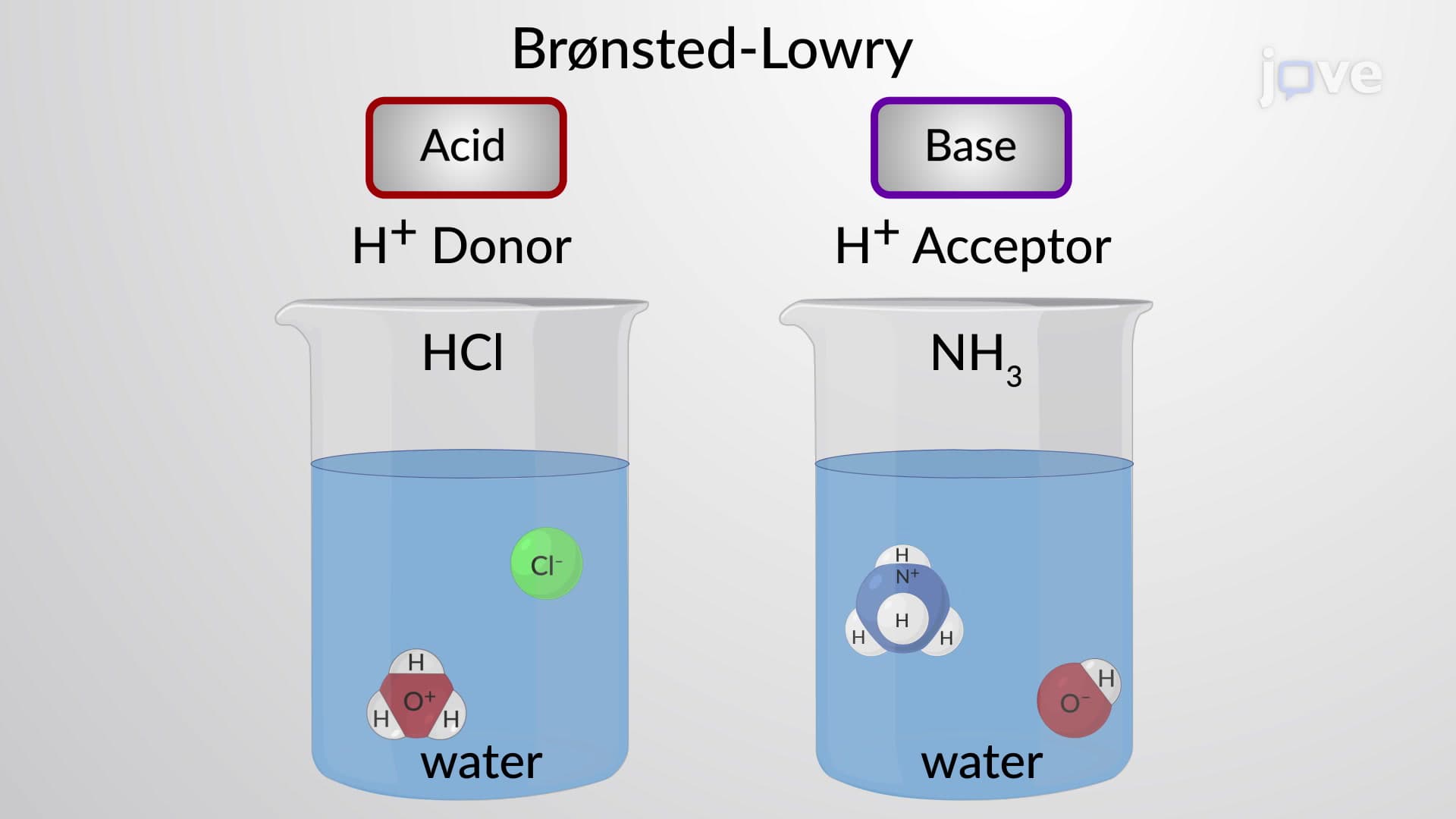
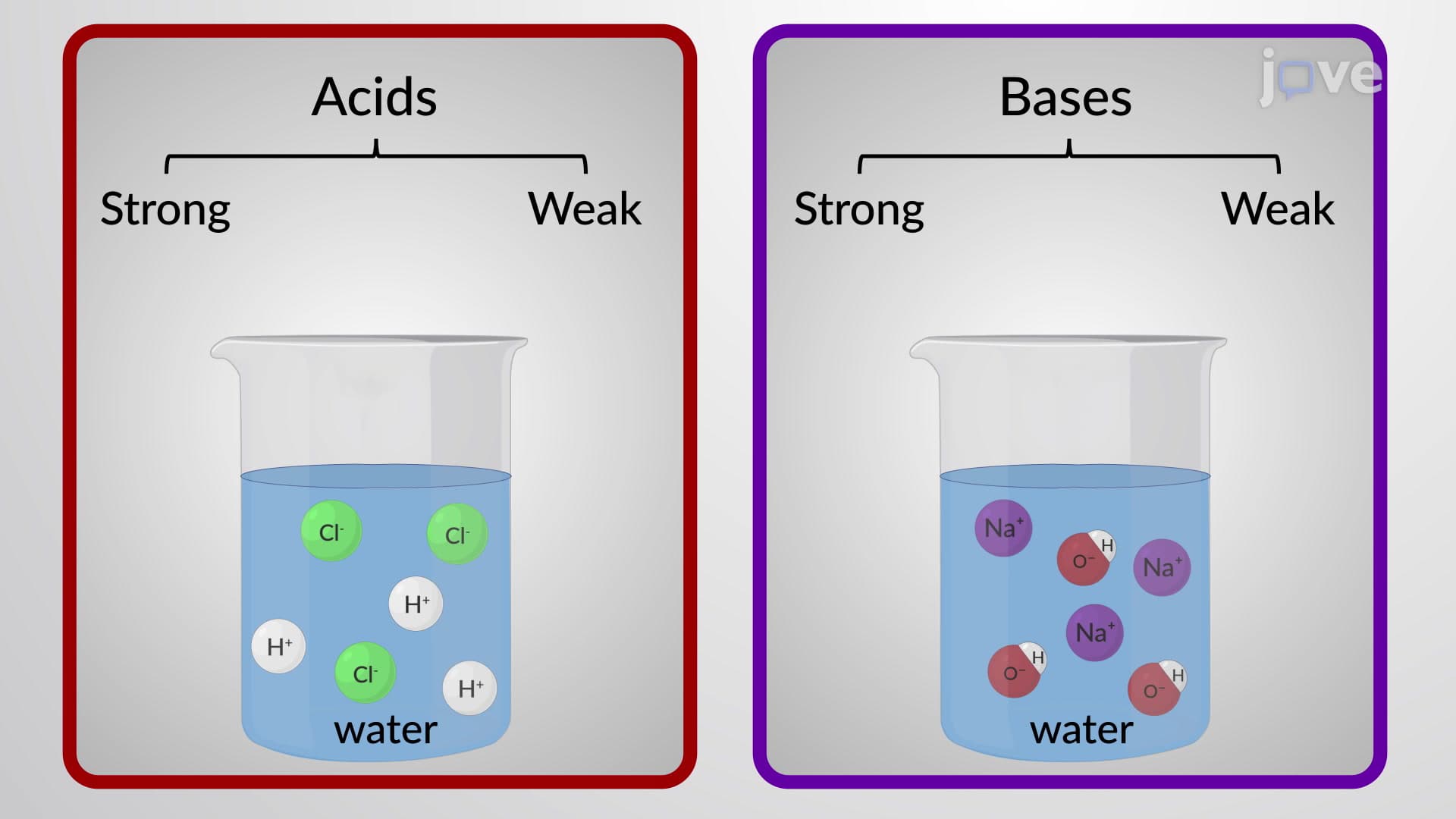
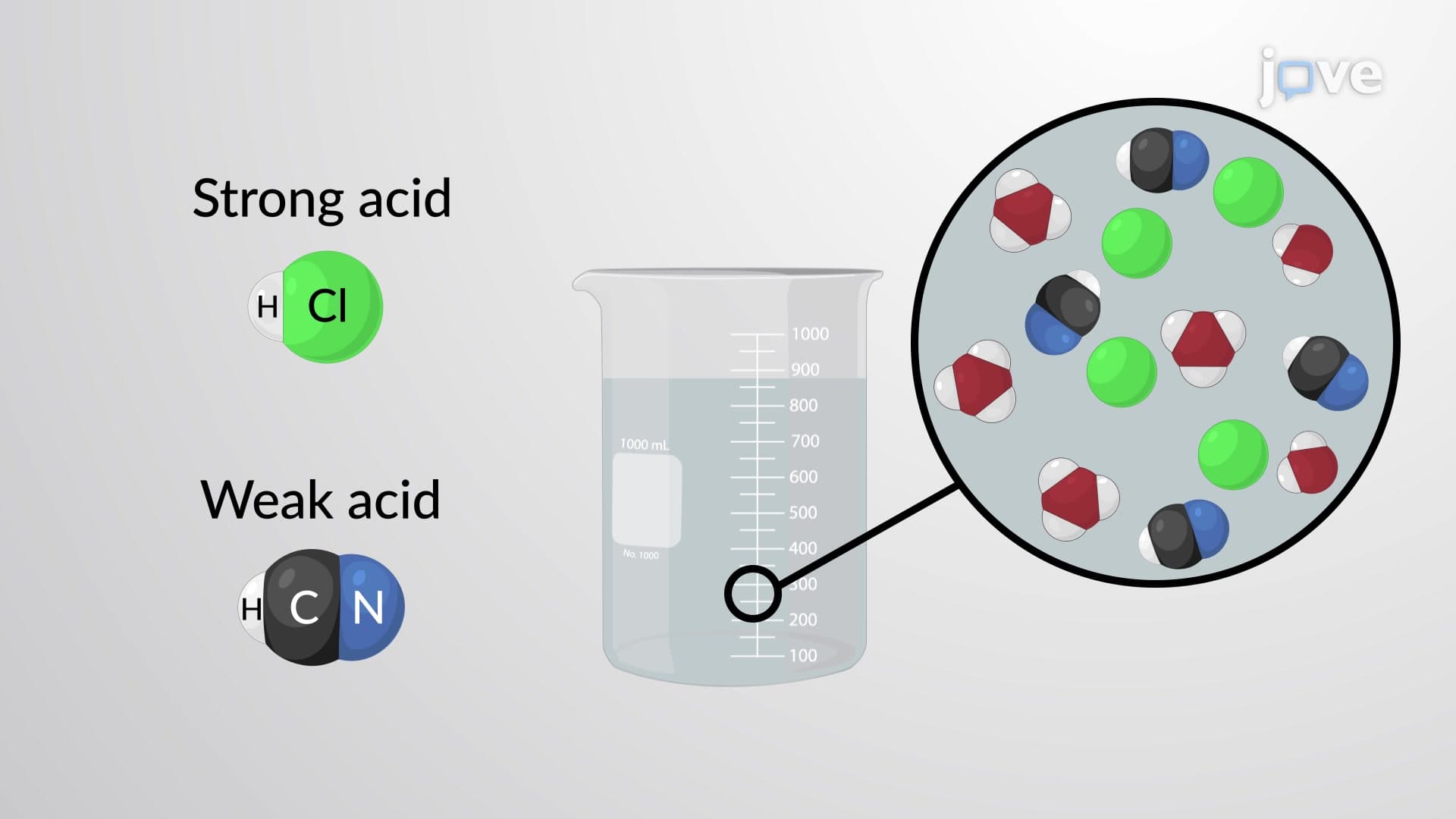
Strong acid and base solutions represent a cornerstone concept in chemistry, distinguished by their complete ionization behavior in aqueous solutions. Unlike weak acids and bases that establish equilibrium between molecular and ionic forms, strong acids and bases undergo virtually 100% dissociation, making their behavior highly predictable and mathematically straightforward.
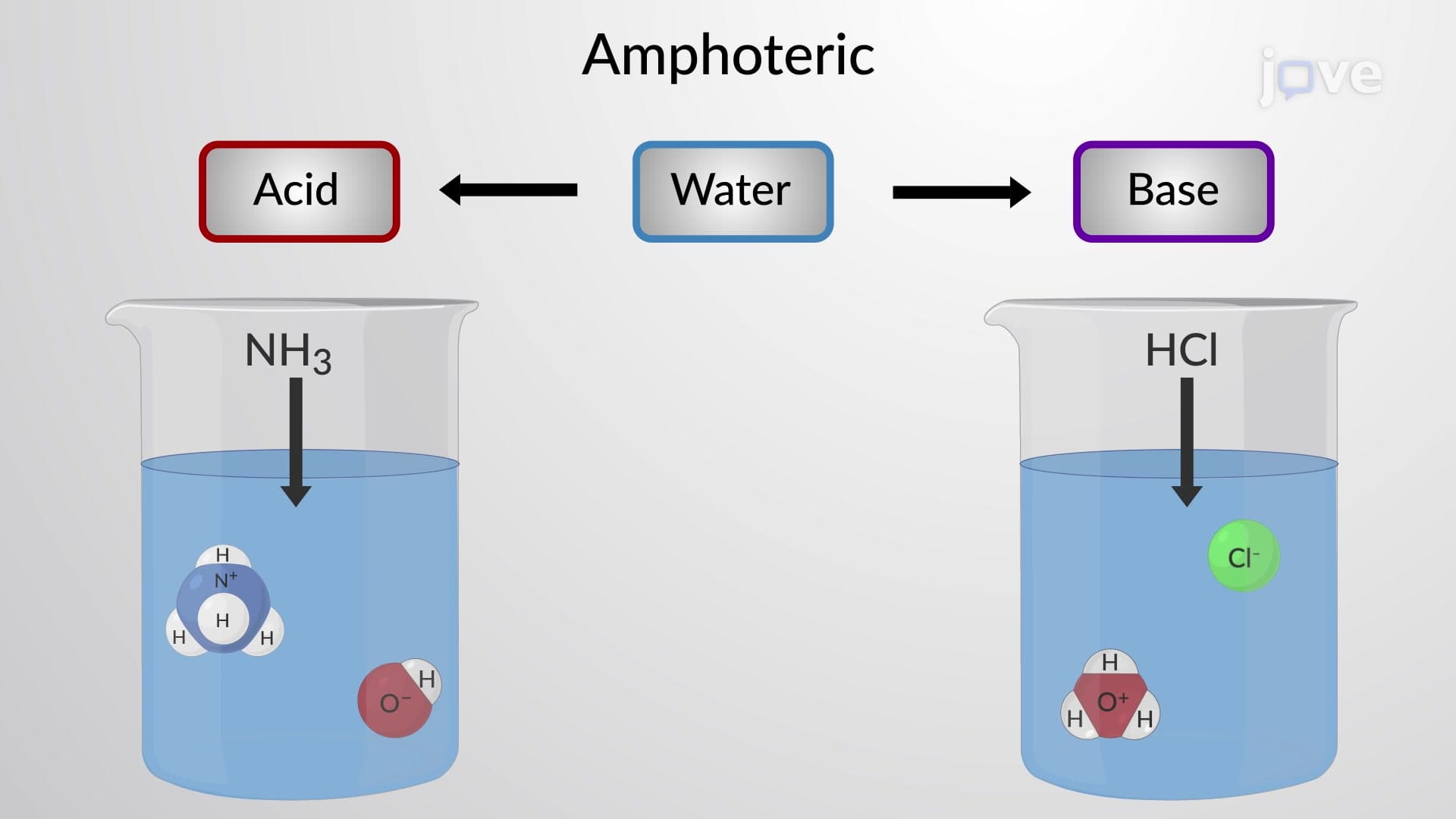
The most common strong acids include hydrochloric acid (HCl), nitric acid (HNO₃), sulfuric acid (H₂SO₄), and perchloric acid (HClO₄). These acids completely release protons (H⁺) in water, which immediately combine with water molecules to form hydronium ions (H₃O⁺). This complete dissociation means that a 0.1 M HCl solution produces exactly 0.1 M hydronium ions, making pH calculations remarkably direct.
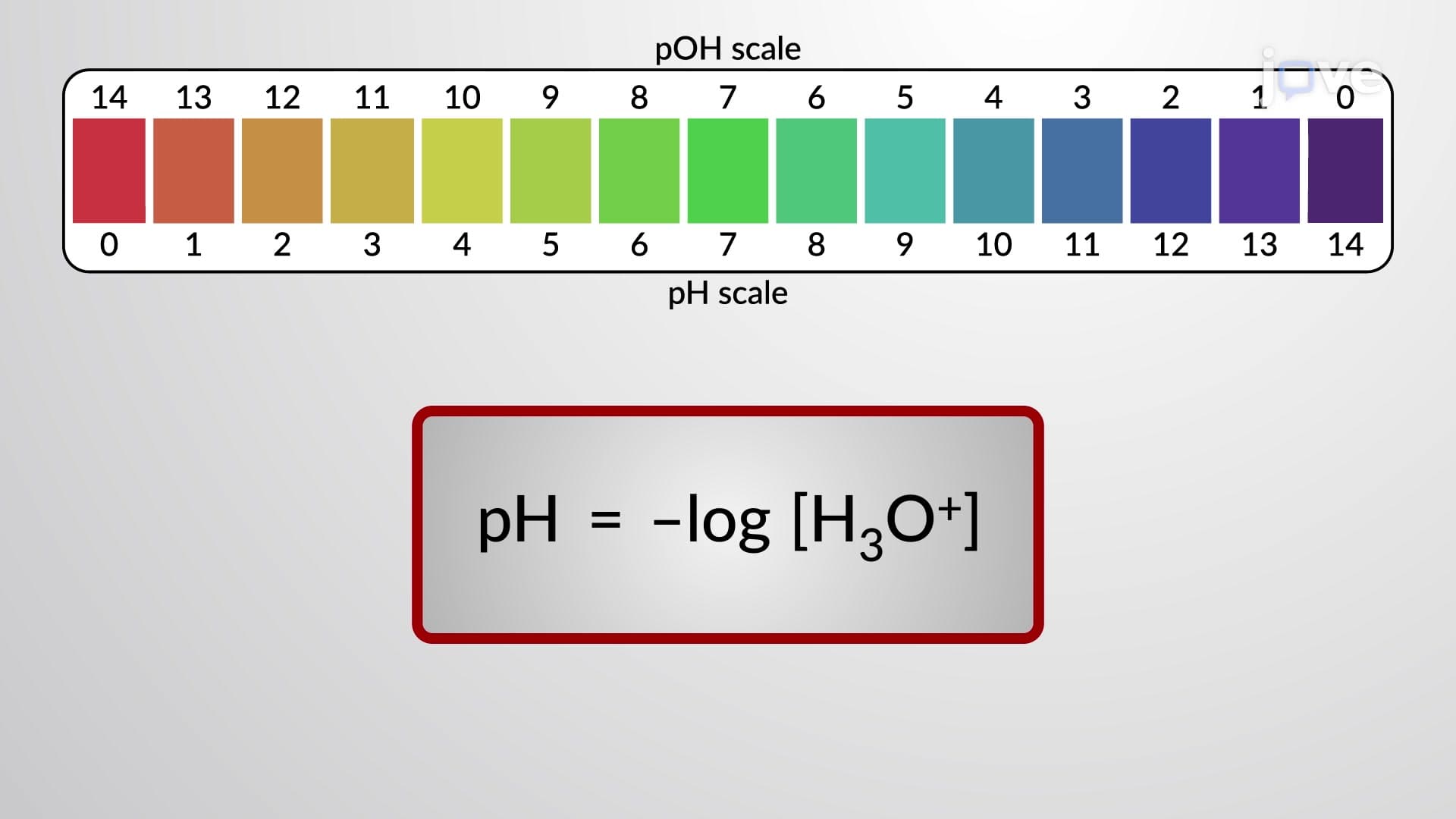
For strong acid solutions, pH determination becomes a simple application of logarithmic mathematics. Since [H₃O⁺] equals the initial acid concentration, pH = -log[H₃O⁺] provides immediate results. A 0.01 M nitric acid solution yields pH = -log(0.01) = 2.0. This predictability makes strong acids essential for AP Chemistry titration problems and standardization procedures used in analytical laboratories across American universities.
Students preparing for the MCAT will encounter these calculations frequently, as medical applications require precise pH control. For instance, gastric acid (primarily HCl) maintains stomach pH around 1.5-3.5, demonstrating strong acid behavior in biological systems.
Strong bases follow similar complete dissociation principles but with important structural distinctions. Group 1 metal hydroxides like sodium hydroxide (NaOH) and potassium hydroxide (KOH) dissociate in a 1:1 ratio, producing one hydroxide ion per base molecule. However, Group 2 metal hydroxides such as calcium hydroxide Ca(OH)₂ and barium hydroxide Ba(OH)₂ yield two hydroxide ions per formula unit, doubling the hydroxide concentration relative to the base concentration.
Ionic metal oxides present another category of strong bases. Sodium oxide (Na₂O) and calcium oxide (CaO) react with water to generate hydroxide ions through oxide ion hydrolysis: O²⁻ + H₂O → 2OH⁻. This reaction explains why lime (calcium oxide) serves as an effective soil pH modifier in American agriculture.
The fundamental relationship pH + pOH = 14 at 25°C provides the bridge between acidic and basic solution calculations. When solving college-level chemistry problems, students can calculate pOH from hydroxide ion concentration using pOH = -log[OH⁻], then determine pH through subtraction from 14. This mathematical framework appears consistently on standardized exams and provides the foundation for more complex acid-base equilibrium problems encountered in advanced courses.
Related Micro-courses