Loading video…


 10 Concepts
 3K views

Video Summary: Time Domain Interpretation of Pd Control Explained
Ever wonder why Tesla's Autopilot smoothly adjusts steering without wild oscillations? The frequency domain interpretation of pd control reveals how engineers predict and prevent system overshoot before it happens. This anticipatory control mechanism, exemplified in NASA's Mars rover navigation systems, uses error signal slopes to maintain stability. The Time Domain Interpretation of Pd Control Explained demonstrates how PD controllers act like predictive brakes in dynamic systems. Watch the full video on JoVE Coach to master this concept with expert-led visuals and step-by-step explanations.
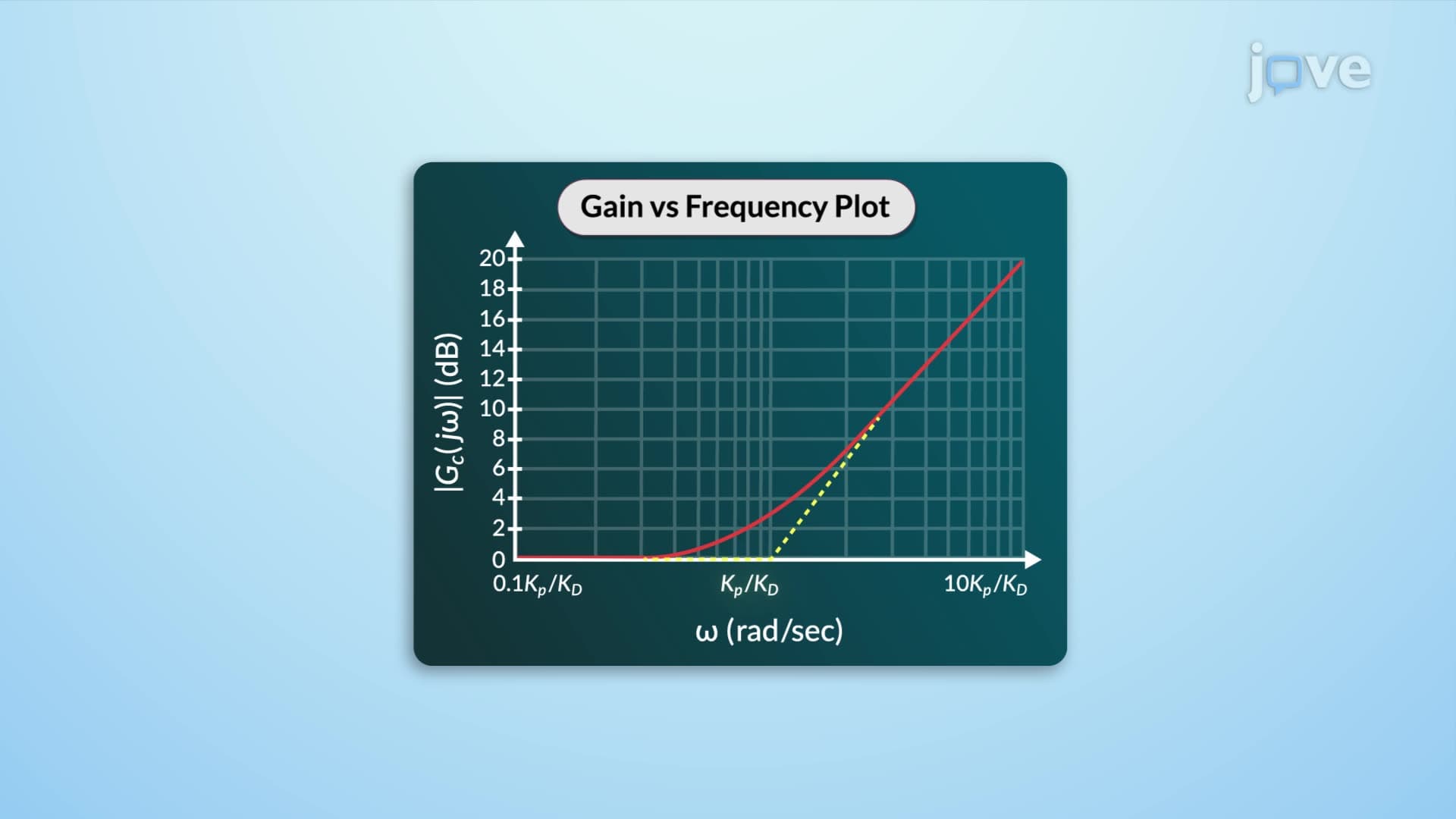
The frequency domain interpretation of pd control reveals a fundamental principle in control engineering: prediction prevents problems. Unlike simple proportional control that only responds to current error magnitude, PD (Proportional-Derivative) control examines both the error's present value and its rate of change, creating an anticipatory control mechanism that prevents system instability before it occurs.
The derivative component in PD control acts like an intelligent shock absorber. When an error signal begins rising rapidly-indicating potential overshoot-the derivative term generates an opposing force proportional to that rate of change. This creates natural damping that slows system response as it approaches the setpoint, similar to how anti-lock braking systems in Ford vehicles prevent wheel lockup by monitoring deceleration rates.
For students preparing for AP Physics or college-level control systems courses, understanding this frequency domain interpretation of pd control tutorial becomes crucial. The derivative term mathematically represents the slope of the error signal: De(t)/dt. When this slope is large and positive, the system anticipates overshoot and applies corrective action immediately.
Boeing's autopilot systems exemplify practical PD control implementation. During aircraft altitude adjustments, proportional control alone would cause dangerous oscillations around the target altitude. The derivative component predicts when the aircraft approaches the desired height and gradually reduces control surface deflections, ensuring smooth, stable flight paths.
In manufacturing, General Motors uses PD control in robotic assembly lines where precision positioning is critical. The frequency domain interpretation of pd control concept helps engineers tune these systems for optimal performance without oscillatory behavior that could damage components or reduce assembly quality.
Students encountering this topic in college engineering courses or preparing for the FE (Fundamentals of Engineering) exam should focus on how frequency domain interpretation of pd control works as a stability enhancement tool. The concept frequently appears in control systems problems where students must analyze system response characteristics and recommend controller modifications.
Understanding frequency domain interpretation of pd control overview helps students recognize that derivative action provides zero steady-state contribution but significantly improves transient response. This distinction becomes important in exam scenarios where students must evaluate different control strategies' effectiveness.
Related Micro-courses