Loading video…


 11 Concepts
 21.5K views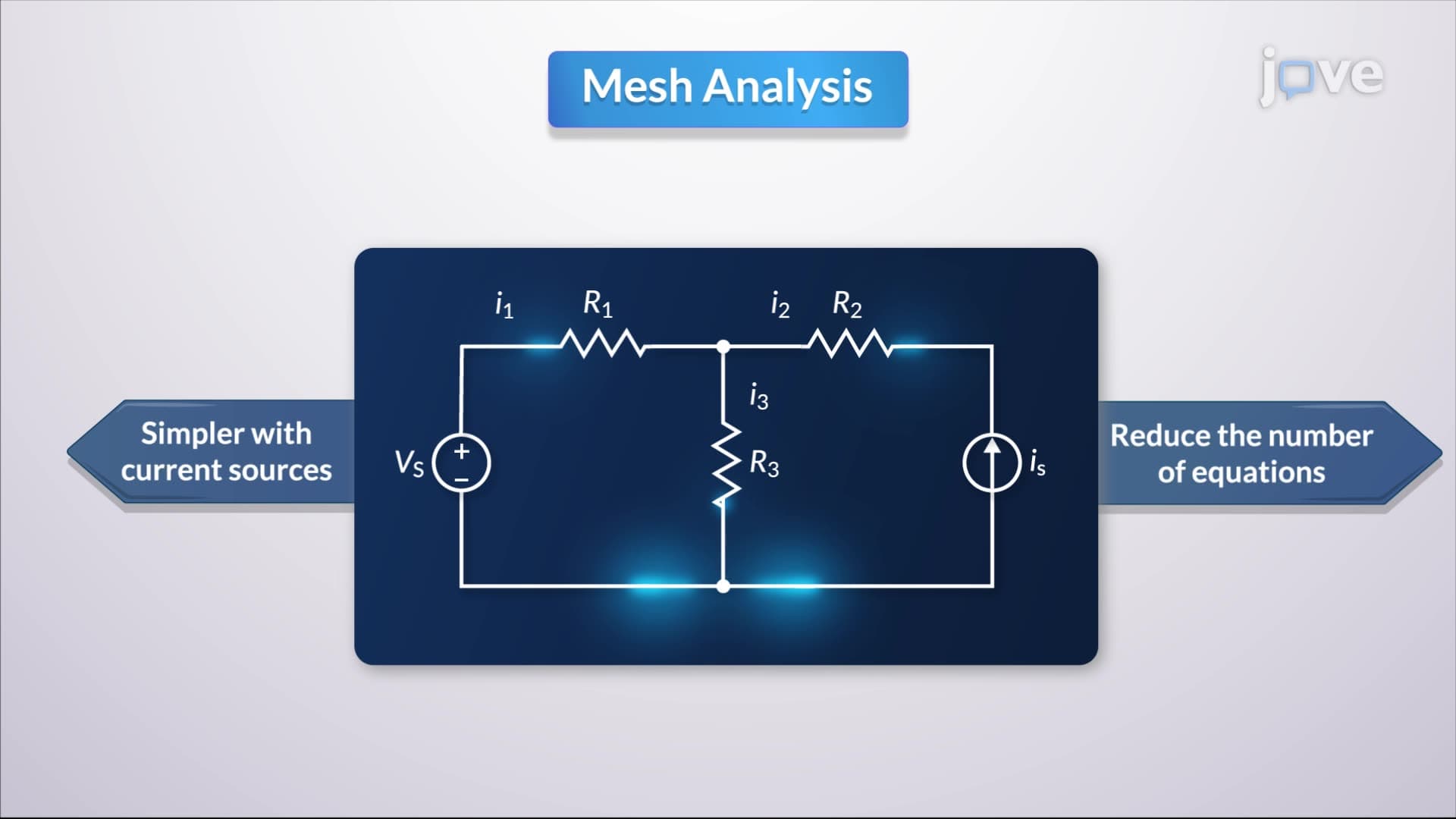

Video Summary: Mesh Analysis with Independent and Dependent Current Sources
Ever wondered how Tesla's engineers design the complex electrical systems in their Model S? Source transformation techniques, including mesh analysis with independent and dependent current sources, make it possible to simplify intricate circuits found in everything from smartphone chargers to electric vehicle batteries. This powerful method reduces the number of equations needed to solve multi-loop circuits by strategically handling current sources through supermesh creation and systematic application of Kirchhoff's laws. Watch the full video on JoVE Coach to master this concept with expert-led visuals and step-by-step explanations.
Mesh analysis with independent and dependent current sources represents a cornerstone technique in electrical engineering that dramatically simplifies circuit analysis. Unlike traditional mesh analysis that treats every loop independently, this method strategically handles current sources to reduce computational complexity-a skill essential for success in AP Physics C, college-level circuit analysis courses, and professional electrical engineering practice.
When a current source exists within only one mesh of a multi-loop circuit, the analysis becomes remarkably straightforward. Consider a practical example: analyzing the charging circuit in a laptop power adapter where a controlled current source regulates battery charging current. The mesh containing the current source requires no equation since the current is already known. Engineers simply apply Kirchhoff's voltage law (KVL) to the remaining meshes, treating the current source mesh as a boundary condition. This approach reduces a potentially complex two-mesh problem to a single equation, making it ideal for quick calculations during the MCAT physics section or engineering midterm exams.
The supermesh method becomes invaluable when current sources span between multiple meshes-commonly seen in power distribution systems like those used in hospital electrical networks or manufacturing facilities. Instead of analyzing each mesh separately, engineers create a "supermesh" by combining the affected meshes and excluding the current source branch entirely. This technique mirrors how electrical grid operators analyze power flow between interconnected regional networks across states like California and Texas.
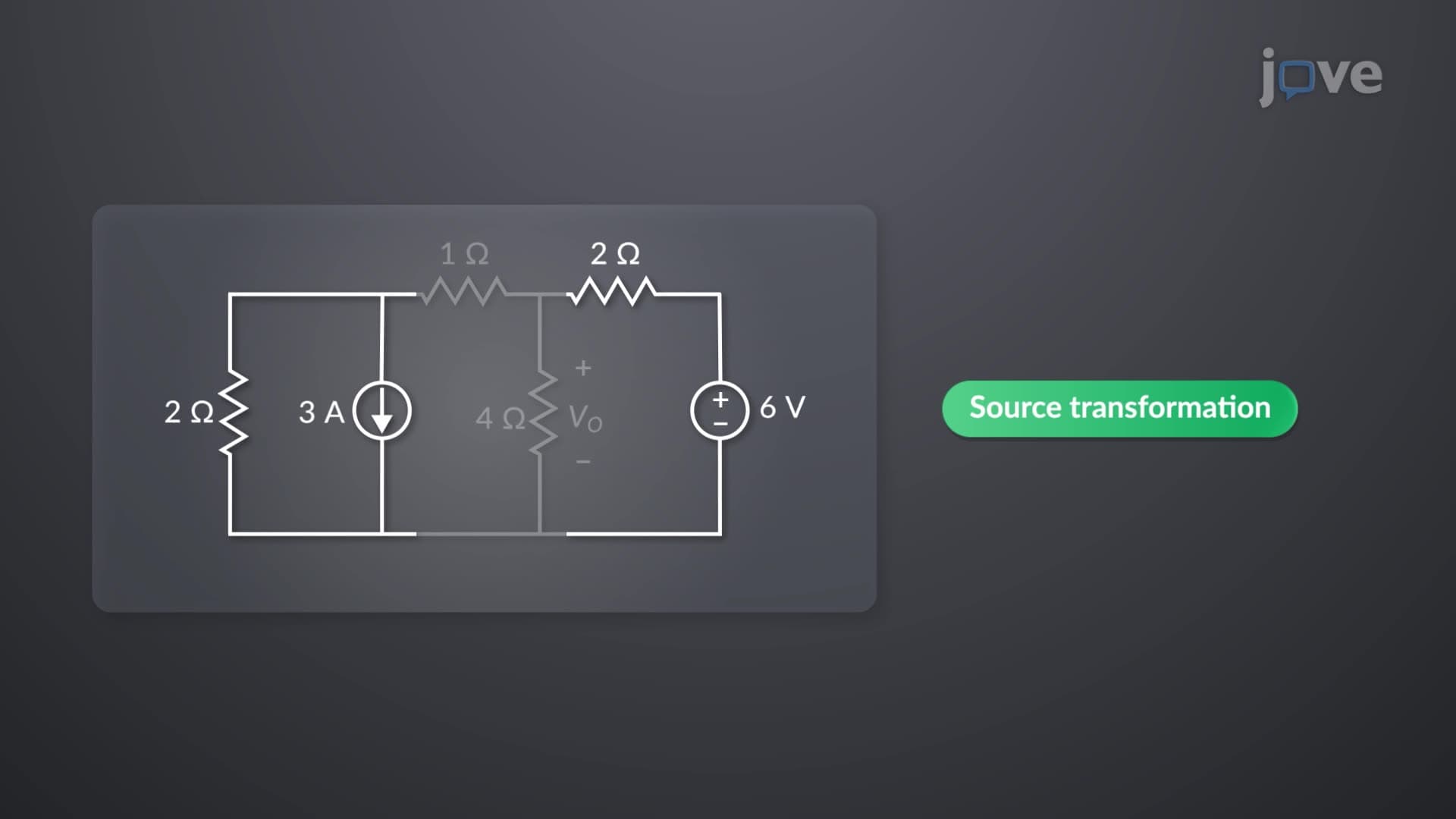
Source transformation concepts appear frequently on standardized tests, particularly the AP Physics C exam and college circuit analysis courses. Students should master the systematic approach: first identify current source locations, then determine whether single-mesh or supermesh analysis applies, apply KVL to appropriate loops, use KCL at critical nodes, and solve the resulting system of equations. This methodology proves essential for careers in electrical engineering, biomedical device design, and renewable energy system development-fields experiencing rapid growth across US technology hubs from Silicon Valley to Research Triangle Park in North Carolina.
Related Micro-courses