Loading video…


 11 Concepts
 21.5K views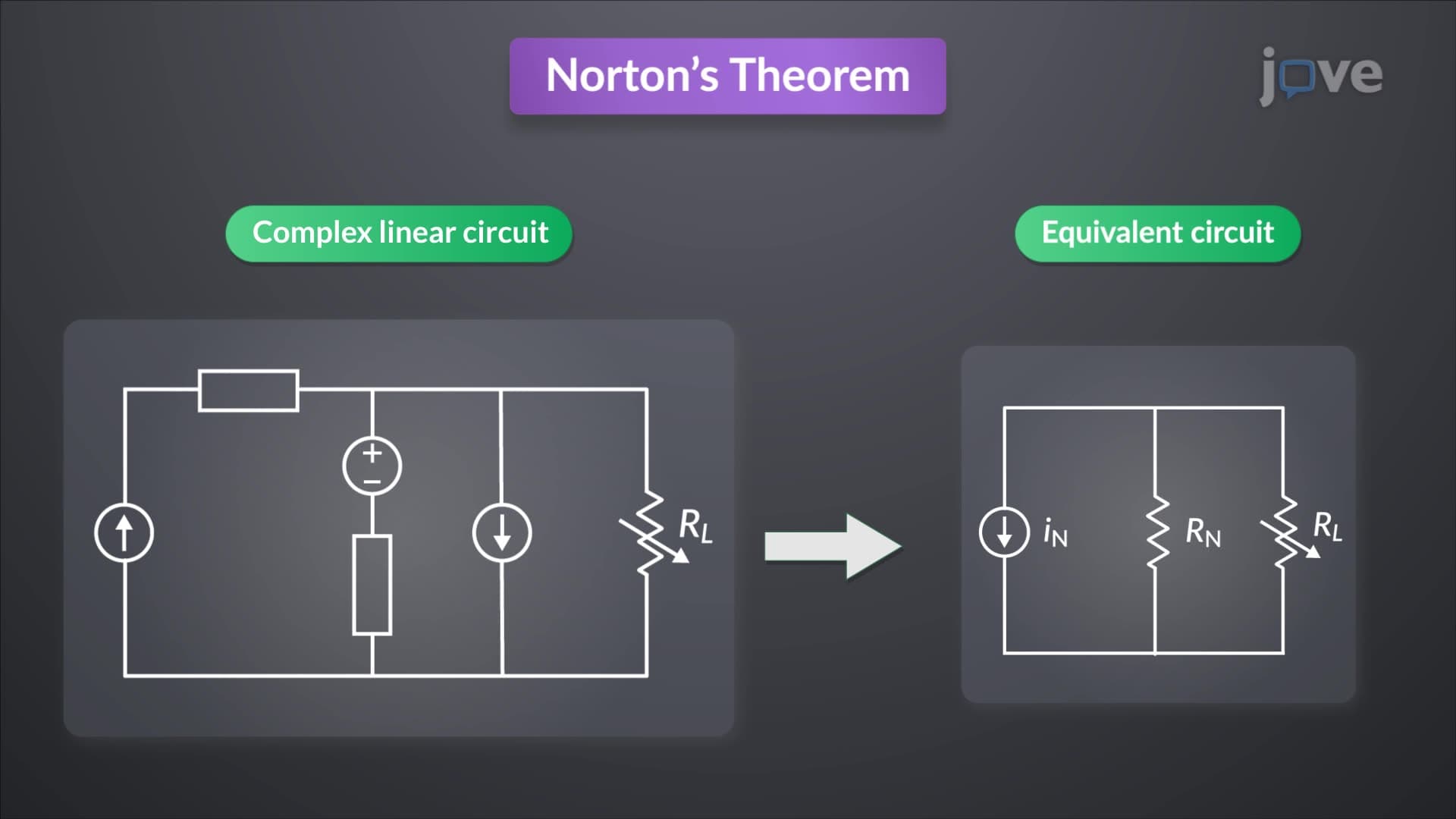

Video Summary: What Is Nortons Theorem
Ever wondered how engineers simplify complex electrical circuits in power grids across the United States? The maximum power transfer principle becomes much clearer when you understand What is Norton's Theorem-a powerful technique that replaces any complex two-terminal circuit with just a current source and parallel resistor. Consider how electrical engineers at Tesla or General Electric use this method to optimize battery charging systems in electric vehicles. Watch the full video on JoVE Coach to master this concept with expert-led visuals and step-by-step explanations.
Norton's theorem stands as one of the most powerful tools in electrical engineering, transforming complex circuit analysis into manageable calculations. This fundamental principle states that any linear two-terminal circuit can be replaced by an equivalent circuit containing only a current source in parallel with a resistor. The maximum power transfer concept becomes significantly more accessible when engineers apply Norton's theorem to optimize electrical systems.
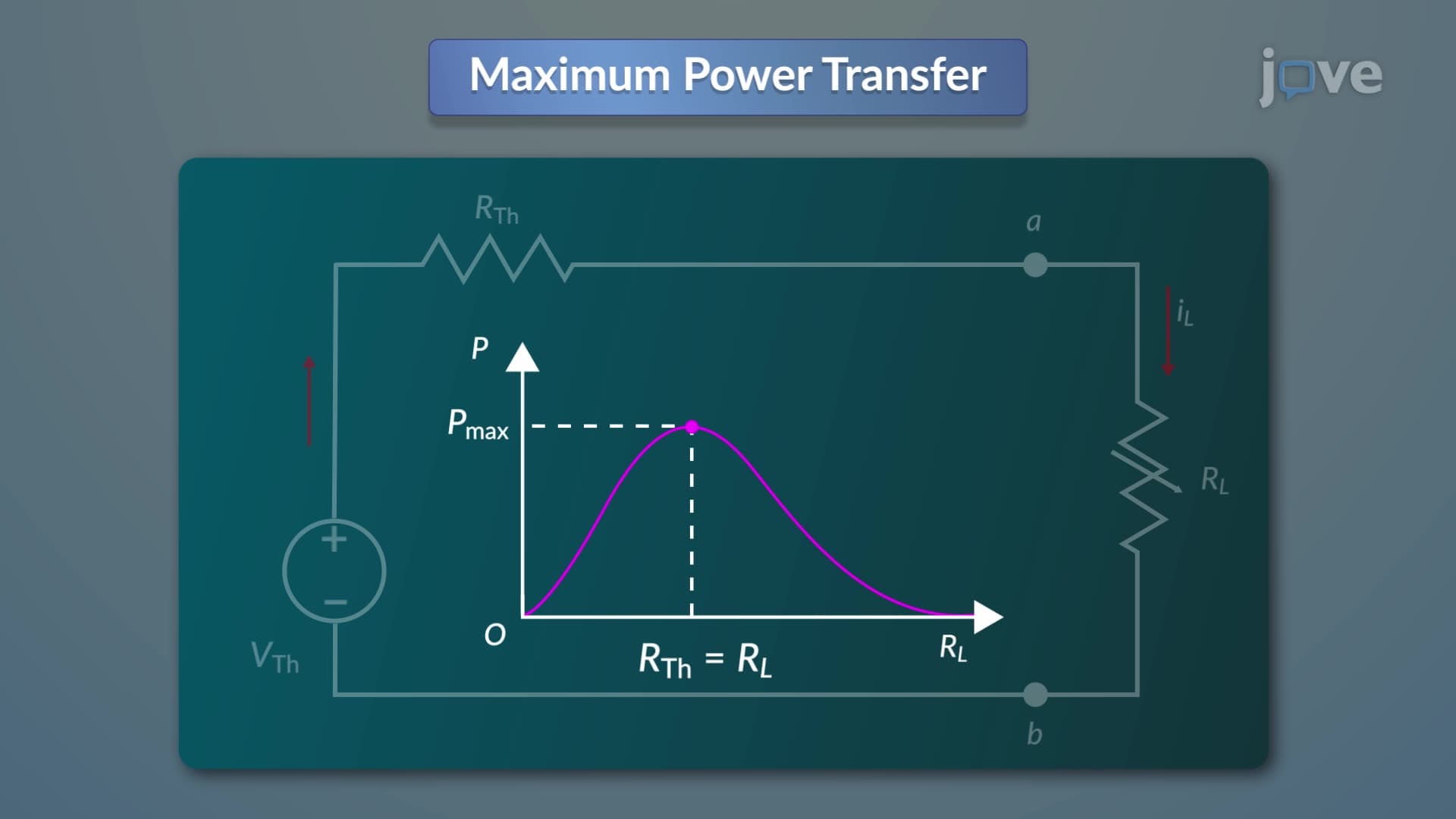
The Norton equivalent consists of two critical elements: Norton current (In) and Norton resistance (Rn). Norton current represents the short-circuit current that would flow between the terminals when directly connected. Norton resistance equals the equivalent resistance seen from the terminals when all independent sources are deactivated. This maximum power transfer definition becomes practical when designing circuits where load impedance must match source impedance for optimal energy delivery.
The Norton analysis process follows a systematic approach. First, remove the load resistor from the circuit terminals. Next, calculate Norton resistance by replacing voltage sources with short circuits and current sources with open circuits, then finding the equivalent resistance between terminals. To determine Norton current, restore all sources and calculate the short-circuit current between the marked terminals. This methodical approach helps students understand what is maximum power transfer in detail by seeing how source and load characteristics interact.
Norton's theorem appears frequently in AP Physics C examinations and college-level electrical engineering courses. Students at institutions like MIT and Stanford regularly encounter Norton equivalent problems in circuits courses. Practical applications include analyzing power distribution systems, designing audio amplifiers, and optimizing solar panel installations across American electrical infrastructure. Understanding the maximum power transfer overview through Norton's lens helps students tackle complex problems involving battery circuits, transmission lines, and electronic device design.
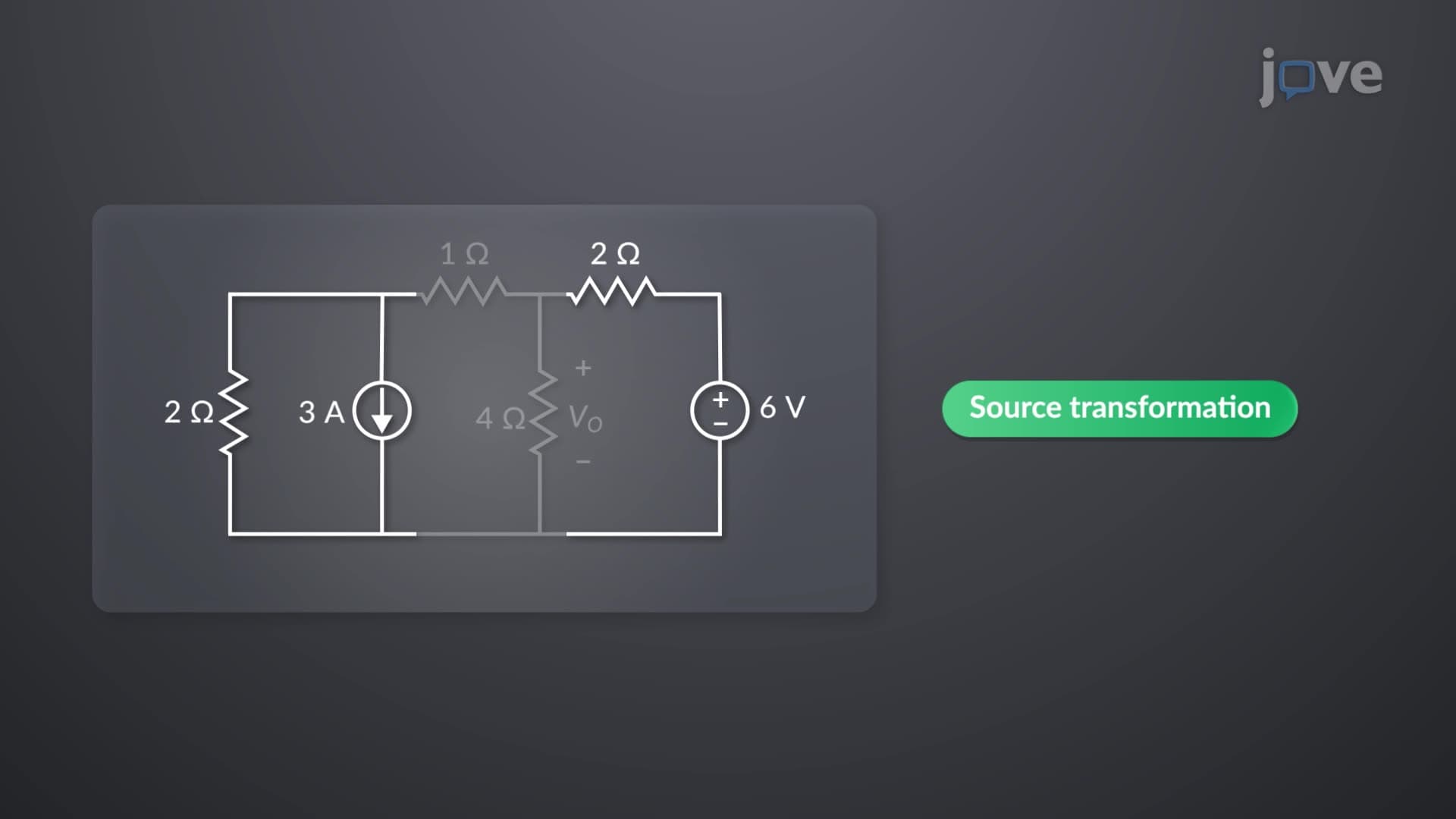
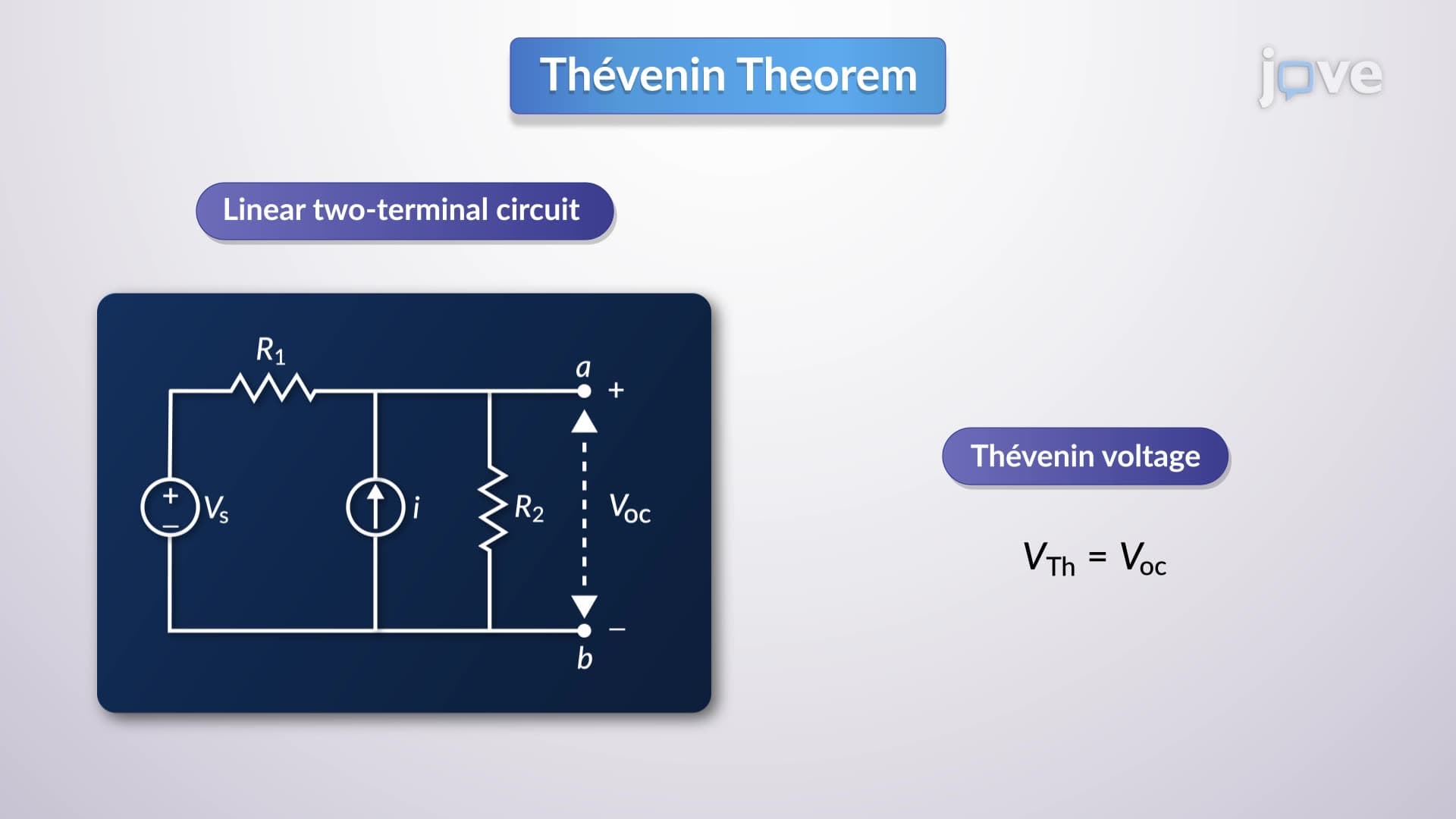
The relationship between Norton's and Thevenin's theorems demonstrates circuit analysis versatility. Source transformation allows conversion between these equivalent forms, providing multiple solution paths for the same problem. This flexibility proves invaluable when students encounter challenging circuit configurations in standardized tests or engineering coursework, making the maximum power transfer concept more intuitive and applicable.
Related Micro-courses