Loading subject page…

723 views

Video Summary: What are Piecewise De Ned Functions
Ever wonder why Netflix charges different rates for different subscription tiers, or how shipping costs suddenly jump at certain weight limits? Piecewise defined functions explain these real-world scenarios where a single function follows different rules across different input ranges. The US Postal Service uses piecewise defined functions for shipping rates-one price formula applies to packages under 1 pound, while completely different pricing kicks in for heavier packages. Understanding what are piecewise defined functions helps students tackle everything from absolute value problems to step functions in mathematics. Watch the full video on JoVE Coach to master this concept with expert-led visuals and step-by-step explanations.
Piecewise defined functions represent one of mathematics' most practical concepts, allowing a single function to behave differently across various input intervals. Unlike standard functions that follow one rule throughout their entire domain, piecewise functions switch between multiple expressions based on specific conditions or ranges. This flexibility makes them invaluable for modeling real-world scenarios where different rules apply under different circumstances.
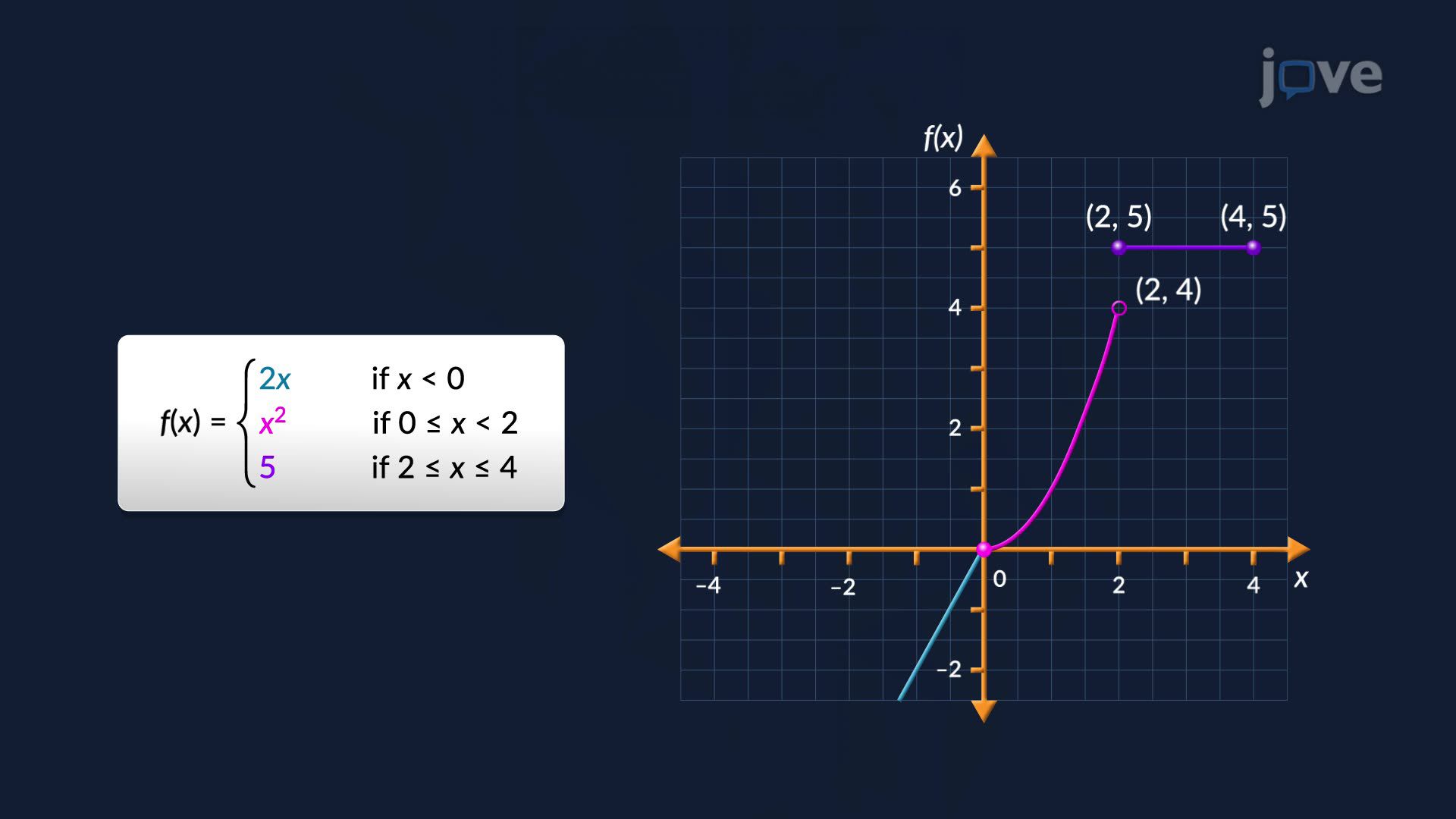
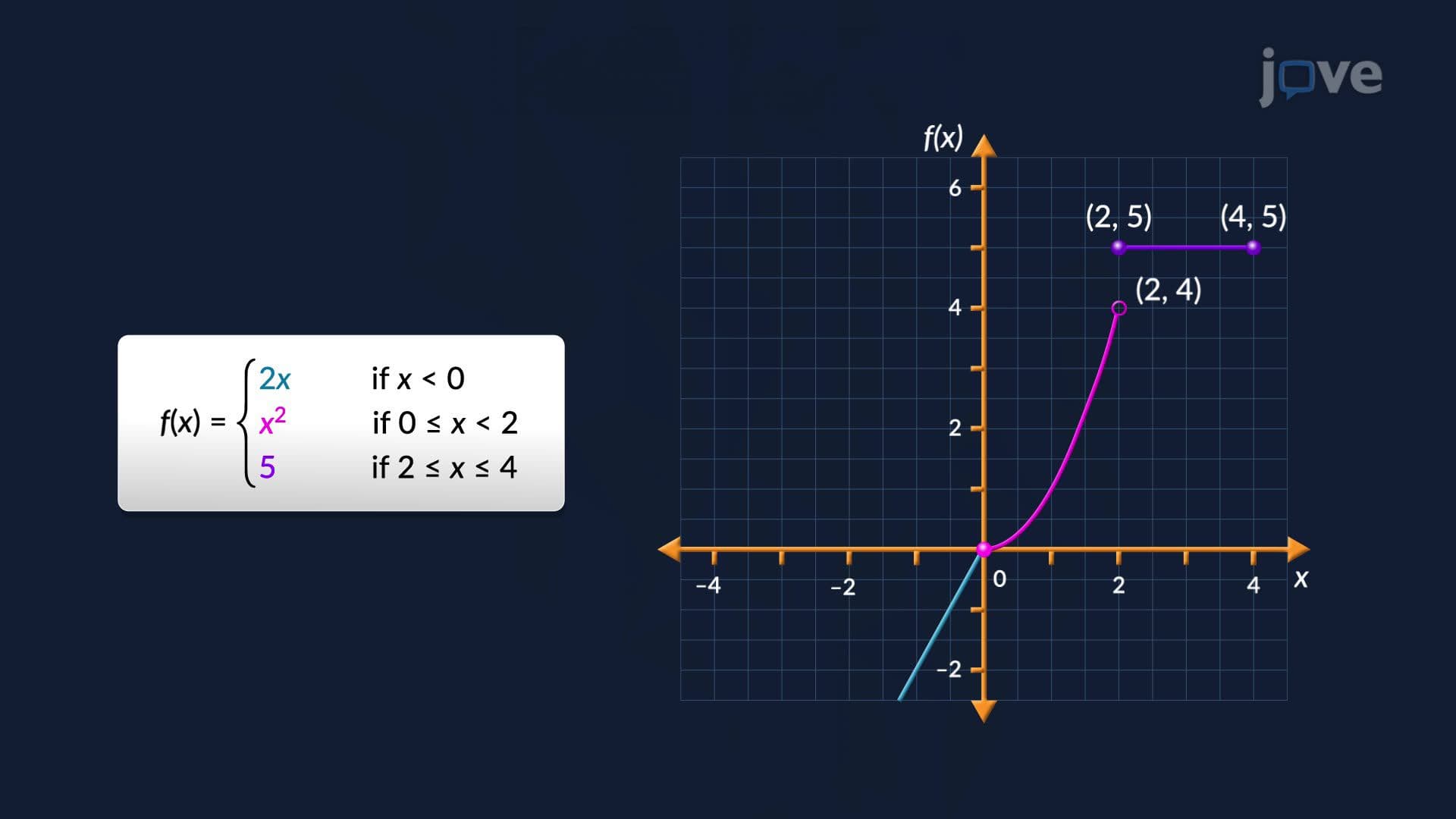
The foundation of piecewise defined functions lies in their domain partitioning. Each piece of the function corresponds to a specific interval, with clearly defined boundaries that determine which expression applies. These boundaries often involve inequalities like x < 2, 2 ≤ x < 5, or x ≥ 5, creating a complete coverage of the function's domain without gaps or overlaps.
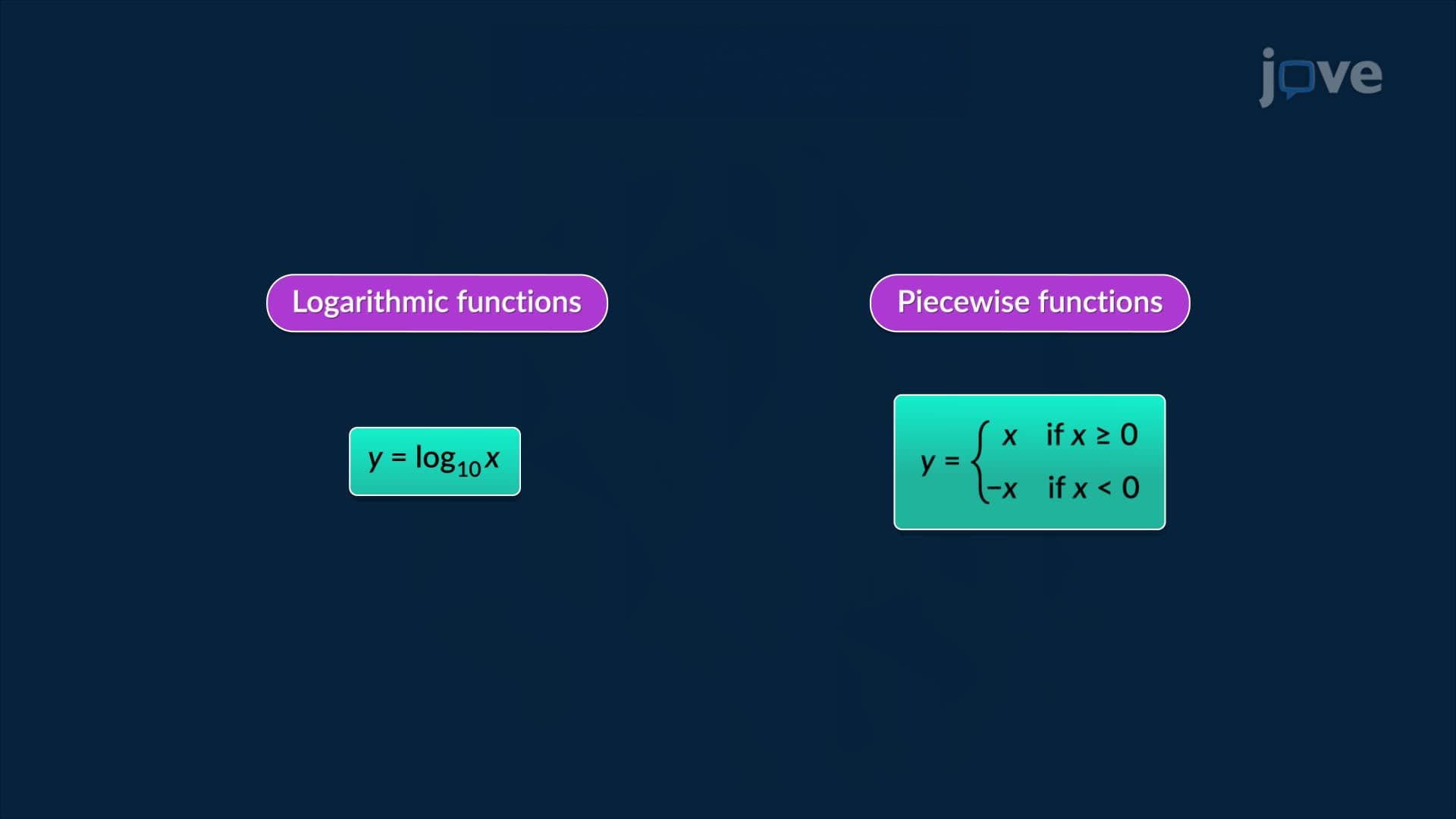
Mathematical notation typically presents piecewise functions using curly brackets, with each piece listed alongside its corresponding domain restriction. For example, a simple piecewise function might use f(x) = x² for x < 0 and f(x) = 2x + 1 for x ≥ 0. The key lies in understanding that only one piece applies for any given input value.
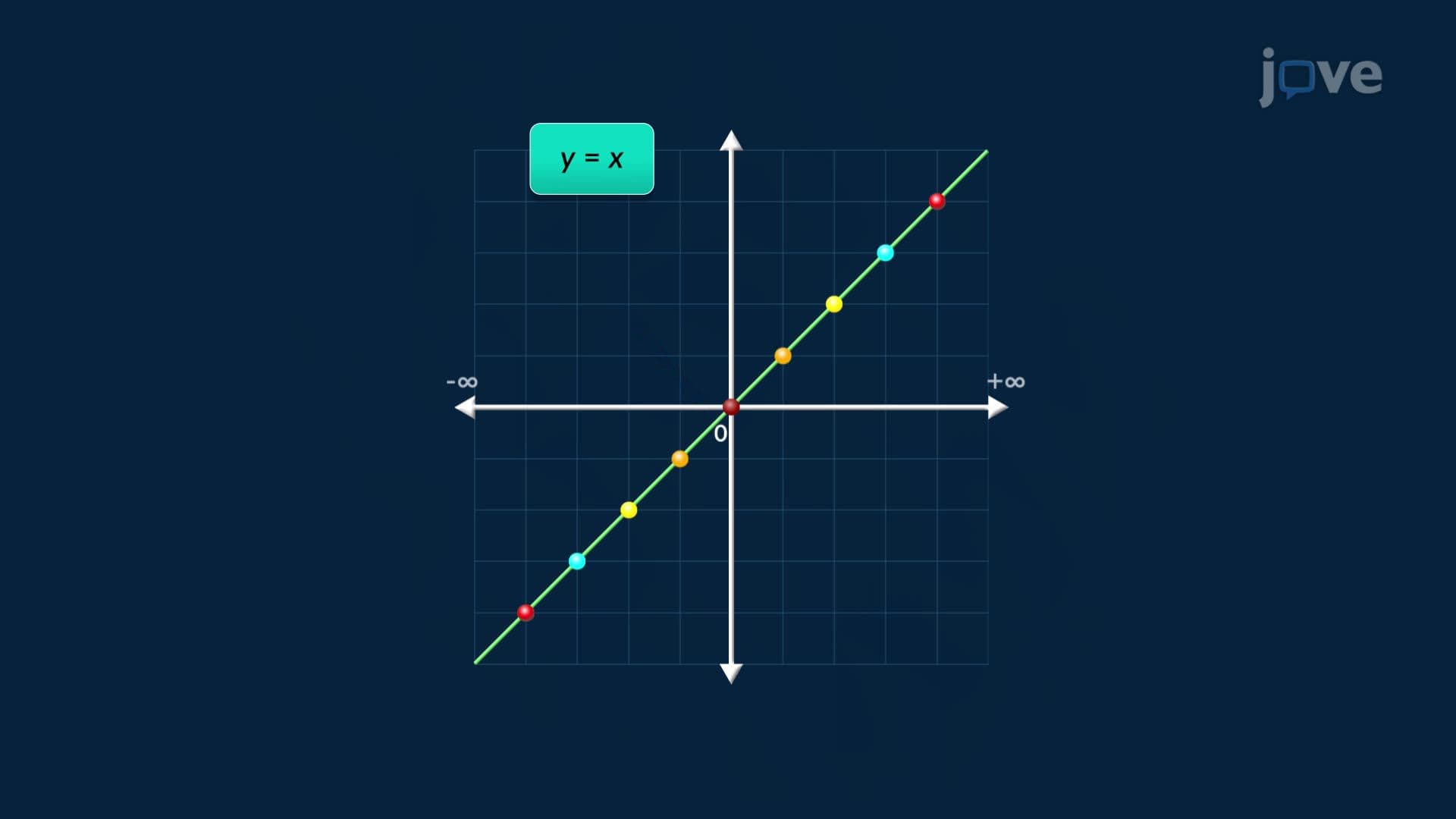
Types of piecewise defined functions span numerous categories, each serving specific mathematical and practical purposes. The absolute value function represents perhaps the most familiar example, switching between f(x) = x for non-negative inputs and f(x) = -x for negative inputs. This creates the characteristic V-shaped graph that students encounter throughout algebra and calculus courses.
Step functions constitute another crucial category, maintaining constant values over intervals before jumping to new levels. The greatest integer function (floor function) exemplifies this behavior, particularly relevant for computer science applications and discrete mathematics. Meanwhile, hybrid functions combine different function types-perhaps linear pieces connected to quadratic or exponential segments.
Students encounter piecewise defined functions across multiple academic assessments, from AP Calculus exams to SAT Math sections. These functions frequently appear in limit problems, continuity questions, and integration challenges on AP Calculus AB and BC exams. College algebra courses extensively cover piecewise functions as preparation for advanced mathematical concepts.
The College Board emphasizes piecewise function analysis, particularly regarding continuity and differentiability at boundary points. Students must demonstrate proficiency in evaluating one-sided limits, determining where functions are continuous, and identifying points of non-differentiability. These skills prove essential for success in calculus-based physics courses and engineering mathematics.
Understanding piecewise defined functions overview concepts also supports performance in standardized tests like the GRE Mathematics Subject Test and various state mathematics assessments. The practical nature of these functions makes them excellent vehicles for word problems and real-world application questions that test mathematical modeling skills.
Related Micro-courses