Loading subject page…


53,059 views

Video Summary: Electronic Effects on Chemical Shift in Aromatic and Antiaromatic Compounds
Ever wonder why benzene protons appear so far downfield in NMR spectra compared to typical alkyl protons? The aromatic ring current NMR shift phenomenon creates fascinating magnetic field effects that make benzene protons resonate around 7-8 ppm instead of the usual 1-3 ppm range. This electronic effects on chemical shift in aromatic and antiaromatic compounds concept explains how circulating pi electrons generate ring currents that dramatically alter NMR signals, with applications from pharmaceutical analysis at companies like Pfizer to academic research at MIT. Watch the full video on JoVE Coach to master this concept with expert-led visuals and step-by-step explanations.
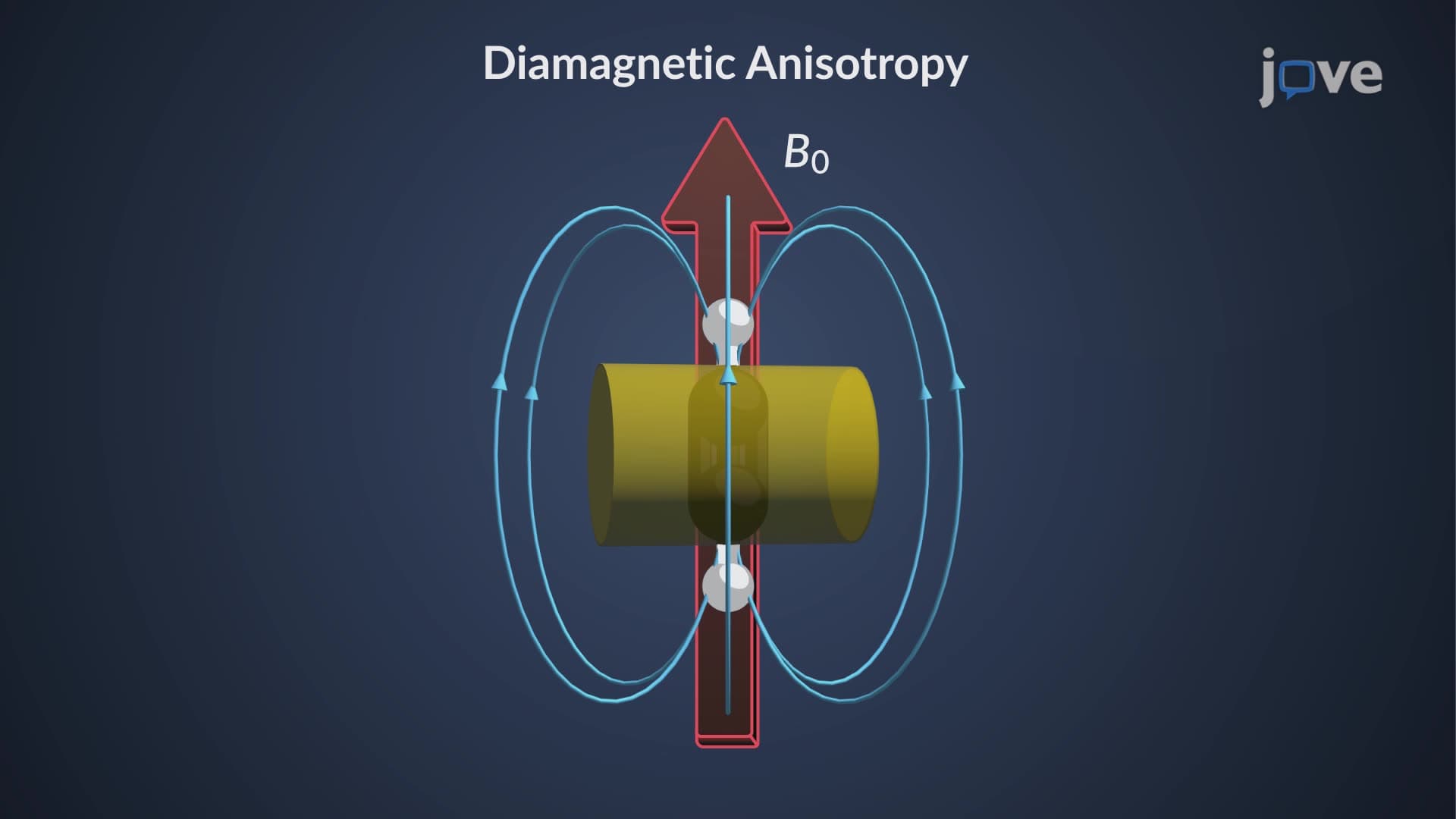
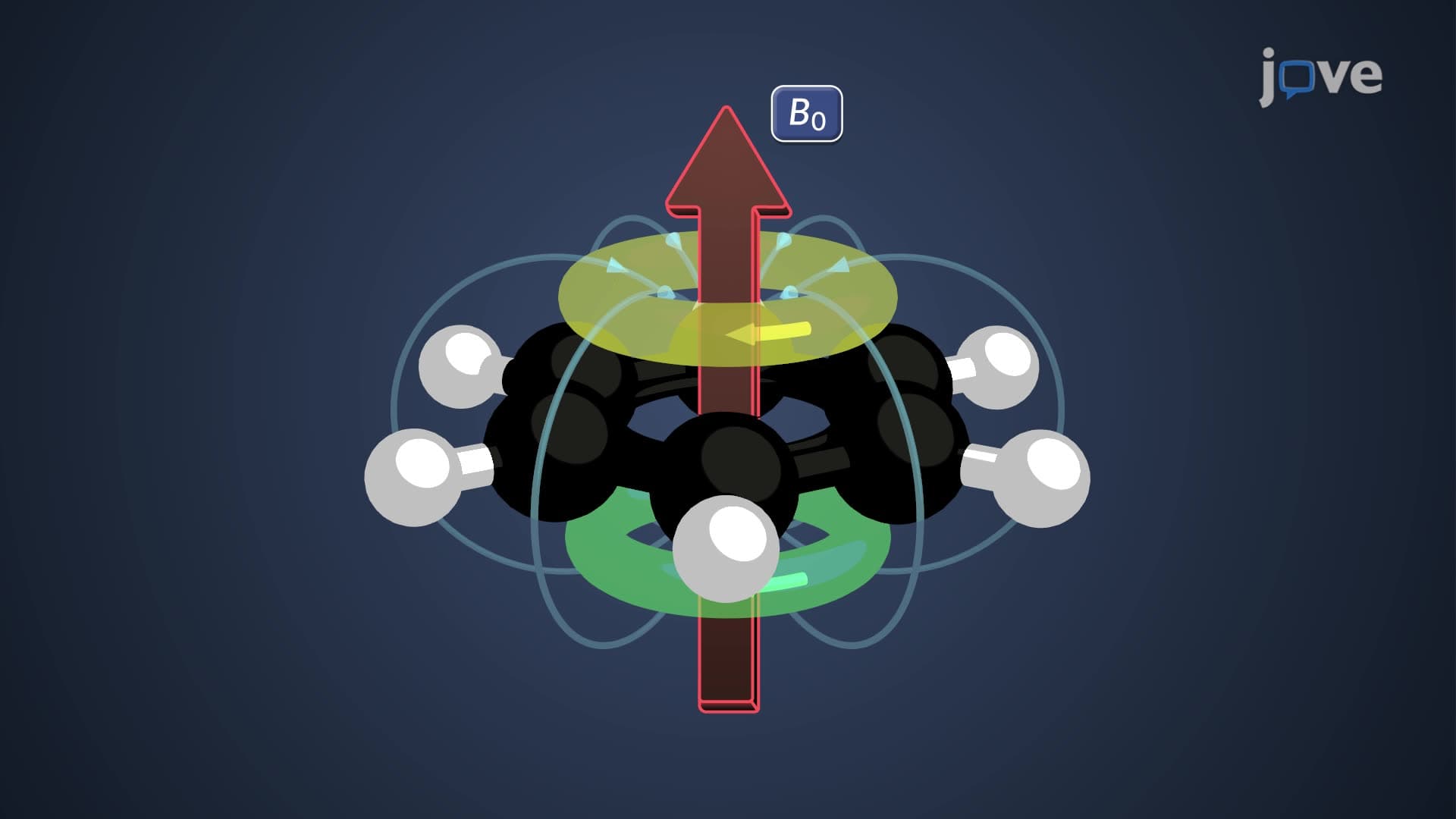
The electronic effects on chemical shift in aromatic and antiaromatic compounds represent one of the most distinctive phenomena in NMR spectroscopy. When aromatic compounds containing (4n+2) pi electrons are placed in a magnetic field, these delocalized electrons begin circulating around the ring perimeter. This circulation generates what chemists call a diamagnetic or diatropic ring current, creating a secondary magnetic field that profoundly affects nearby proton signals.
In benzene, the six pi electrons circulate clockwise when viewed from above, generating a magnetic field that opposes the external NMR field inside the ring while reinforcing it outside the ring. This field reinforcement outside the benzene ring causes exterior protons to experience a stronger effective magnetic field, resulting in significant deshielding. Consequently, benzene protons appear at approximately 7.3 ppm rather than the 1-3 ppm range typical for sp3 hybridized protons. This aromatic ring current NMR shift serves as a diagnostic tool for confirming aromatic character in unknown compounds.
Antiaromatic compounds with 4n pi electrons exhibit the opposite behavior. The ring current flows in the reverse direction (paratropic), creating a magnetic field that shields exterior protons and deshields interior protons. In [16]annulene, an antiaromatic system, exterior protons appear upfield (more shielded) compared to typical aromatic protons, while any interior protons would appear significantly downfield. This reversal provides clear evidence for antiaromatic character and demonstrates how aromaticity affects NMR chemical shift patterns.
Large annulenes showcase dramatic ring current effects. In [18]annulene, exterior protons resonate at 9.3 ppm due to extreme deshielding, while interior protons appear at approximately -3.0 ppm (upfield from TMS). These extreme chemical shifts result from the powerful ring current generated by the 18 pi electrons. Such data proves invaluable for pharmaceutical companies analyzing complex aromatic drug molecules and helps organic chemistry students on the MCAT distinguish between aromatic and antiaromatic systems. Understanding these patterns also aids college students in advanced organic chemistry courses at institutions like Stanford and UC Berkeley when predicting NMR spectra of polycyclic aromatic compounds.
Related Micro-courses