Loading subject page…


53,059 views

Video Summary: Understanding Chemical Shift Internal References and Solvent Effects in Nmr
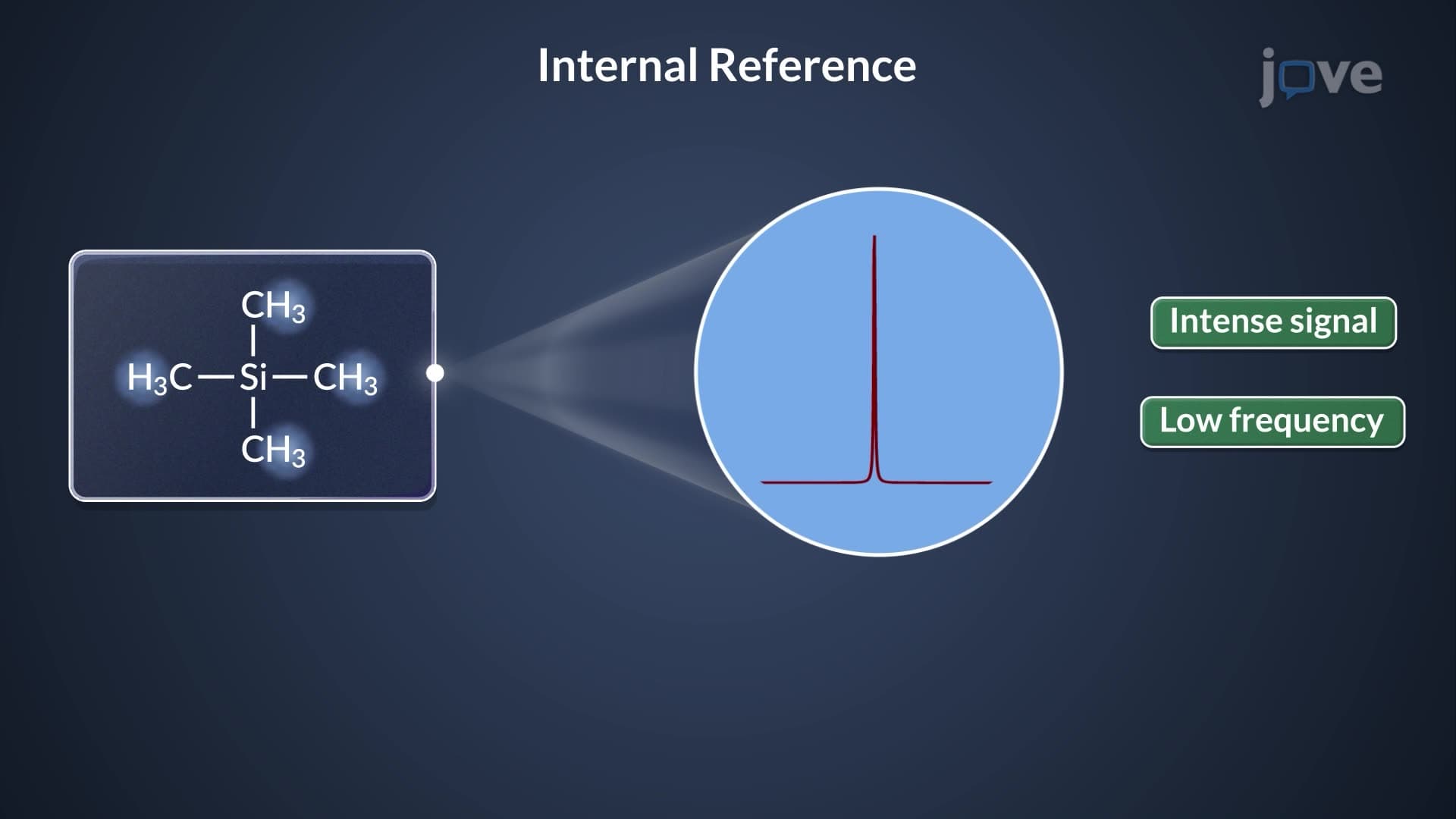
Ever wonder how scientists at Pfizer or Merck precisely identify unknown compounds in drug development? NMR chemical shift references make this possible by providing a standardized measurement system that eliminates instrument variations. Tetramethylsilane (TMS) serves as the gold standard internal reference, while deuterated solvents create additional reference points that ensure reproducible results across different laboratories. Understanding chemical shift, internal references, and solvent effects in NMR becomes essential for accurate spectral interpretation. Watch the full video on JoVE Coach to master this concept with expert-led visuals and step-by-step explanations.
NMR spectroscopy faces a fundamental challenge: absolute frequency measurements vary between instruments due to magnetic field differences. This variation makes it impossible to compare spectra collected on different spectrometers or even the same instrument at different times. The solution lies in relative measurements using carefully chosen reference compounds.
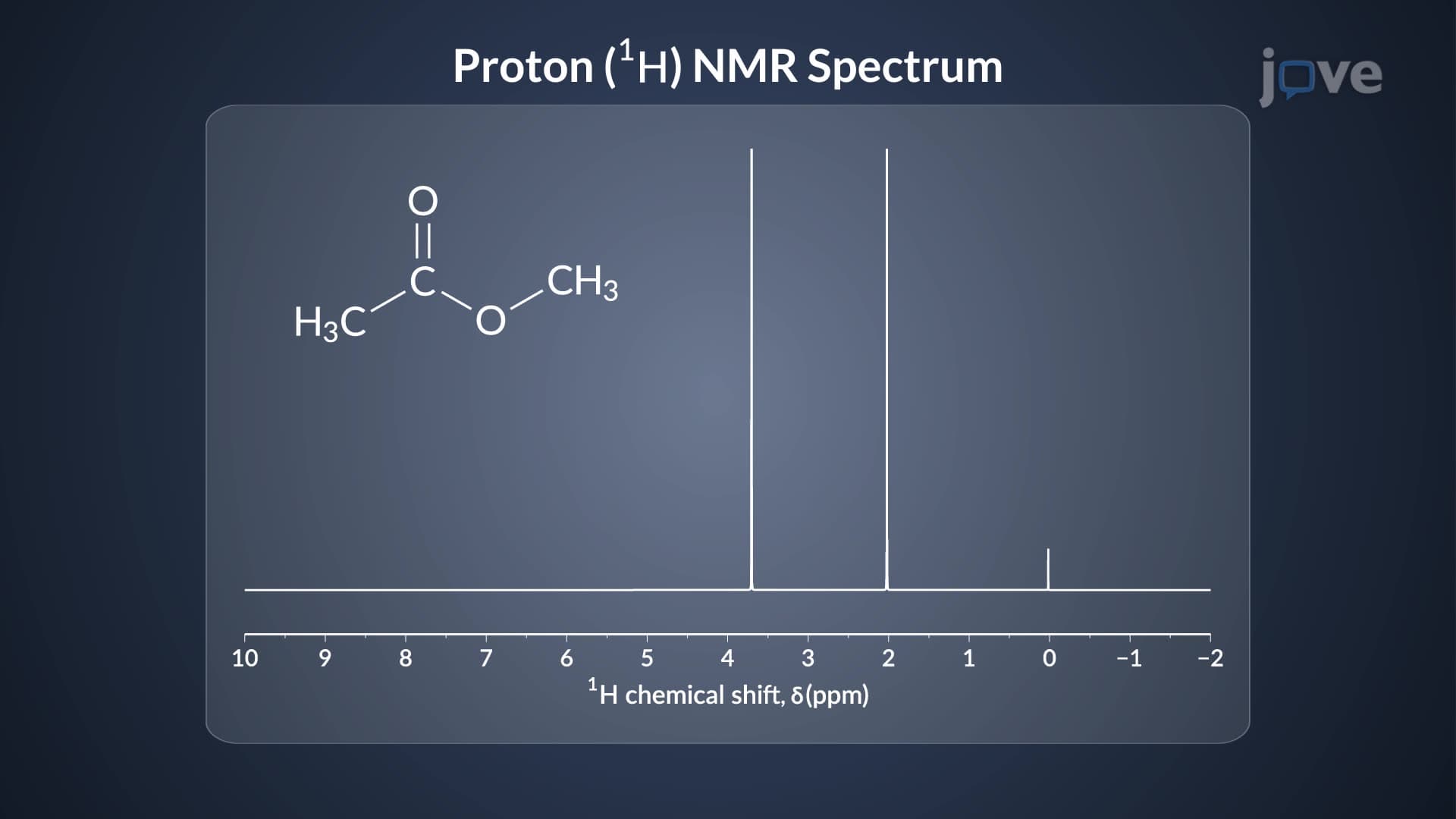
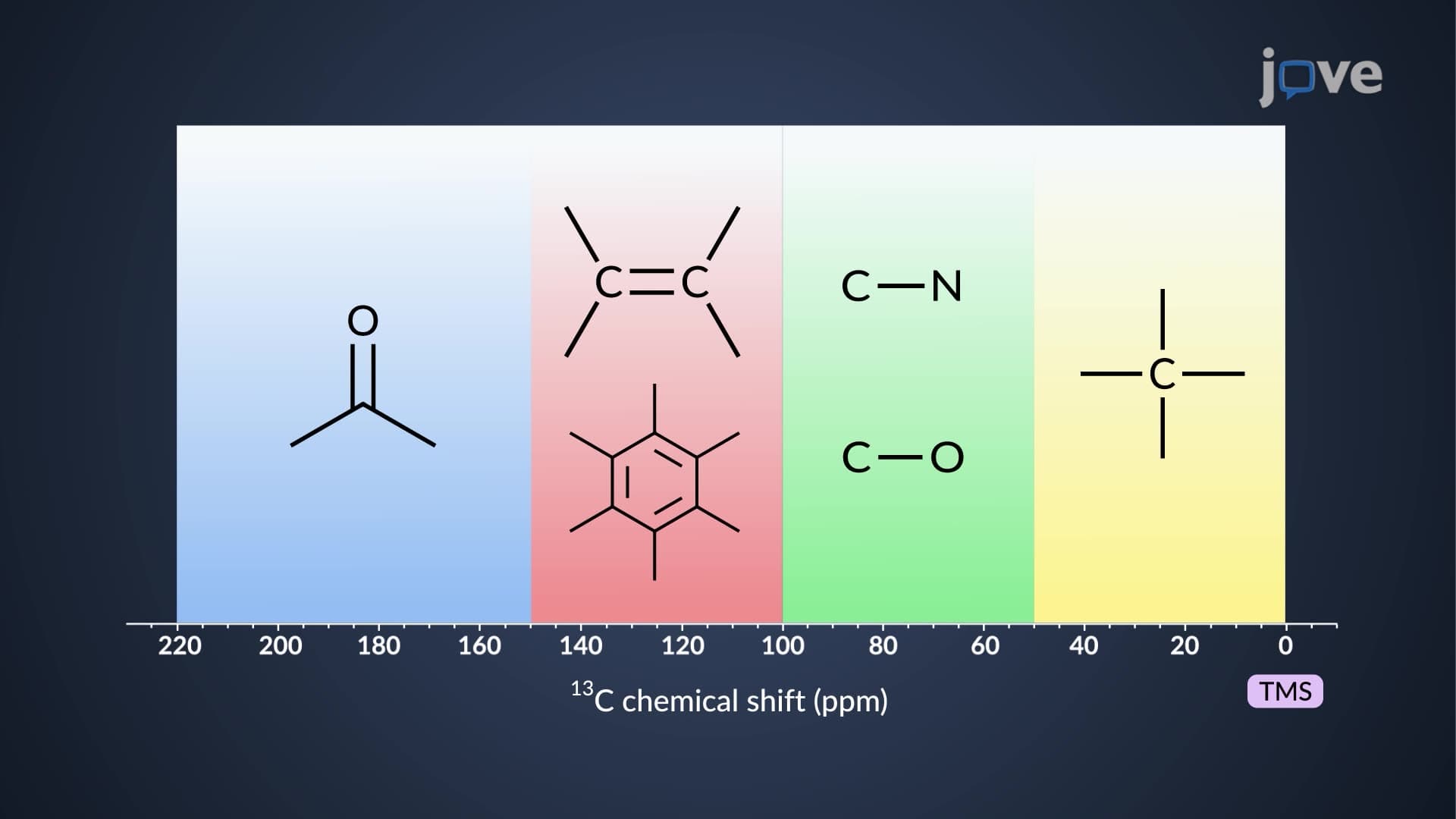
Tetramethylsilane (TMS) revolutionized NMR spectroscopy by providing an ideal internal reference compound. Its twelve equivalent methyl protons generate an intense, sharp signal that appears upfield from most organic compounds. The silicon atom's electropositive nature heavily shields the surrounding protons, creating a distinctive chemical environment rarely found in typical organic molecules.
TMS meets all criteria for an excellent reference: chemical inertness prevents reactions with samples, high solubility in organic solvents ensures uniform distribution, and easy removal through evaporation simplifies sample recovery. In pharmaceutical companies like Johnson & Johnson, researchers routinely use TMS-referenced spectra to confirm drug purity and identify impurities during development processes.
Deuterated solvents serve dual purposes in NMR experiments. Primary solvents like CDCl3 or D2O eliminate interfering proton signals while maintaining sample solubility. However, even highly deuterated solvents contain residual protons that create predictable, well-characterized signals useful as secondary references.
The deuterium nuclei themselves enable field-frequency locking, a critical technique for maintaining spectral stability. Modern NMR instruments continuously monitor the deuterium signal frequency and automatically adjust the magnetic field to compensate for drift, ensuring consistent chemical shift measurements throughout long experiments.
When samples react with potential internal references, external reference systems provide alternatives. A sealed capillary tube containing the reference compound sits within the NMR tube, isolated from the sample but experiencing the same magnetic field. This approach, while less convenient, prevents chemical interactions that could compromise both sample integrity and reference accuracy.
Students preparing for the MCAT or advanced organic chemistry courses should recognize how solvent effects influence chemical shift patterns. Water-soluble samples analyzed in D2O show different shift patterns compared to organic solvents, reflecting the hydrogen-bonding environment's impact on nuclear shielding. Understanding these solvent-dependent effects proves essential for accurate spectral interpretation in both academic and industrial settings.
Related Micro-courses