Loading subject page…


1,347,746 views


Video Summary: What Is Monohybrid Crosses
Ever wonder how scientists predicted that crossing purple and white flowers would produce all purple offspring? Monohybrid crosses reveal the hidden genetic patterns that determine traits like flower color, blood type, or even the ability to taste certain compounds. These fundamental breeding experiments, pioneered by Gregor Mendel using pea plants, demonstrate how single traits pass from parents to offspring following predictable ratios. Watch the full video on JoVE Coach to master this concept with expert-led visuals and step-by-step explanations.
Monohybrid crosses represent the simplest form of genetic analysis, focusing on the inheritance of a single trait between two parent organisms. These crosses form the cornerstone of classical genetics, providing the mathematical framework that governs how characteristics pass from one generation to the next. Unlike complex inheritance patterns involving multiple genes, monohybrid crosses isolate one specific trait, making them ideal for understanding basic genetic principles.
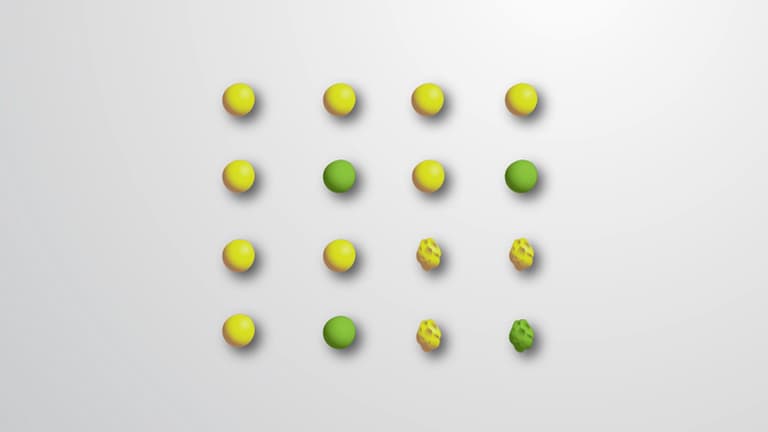
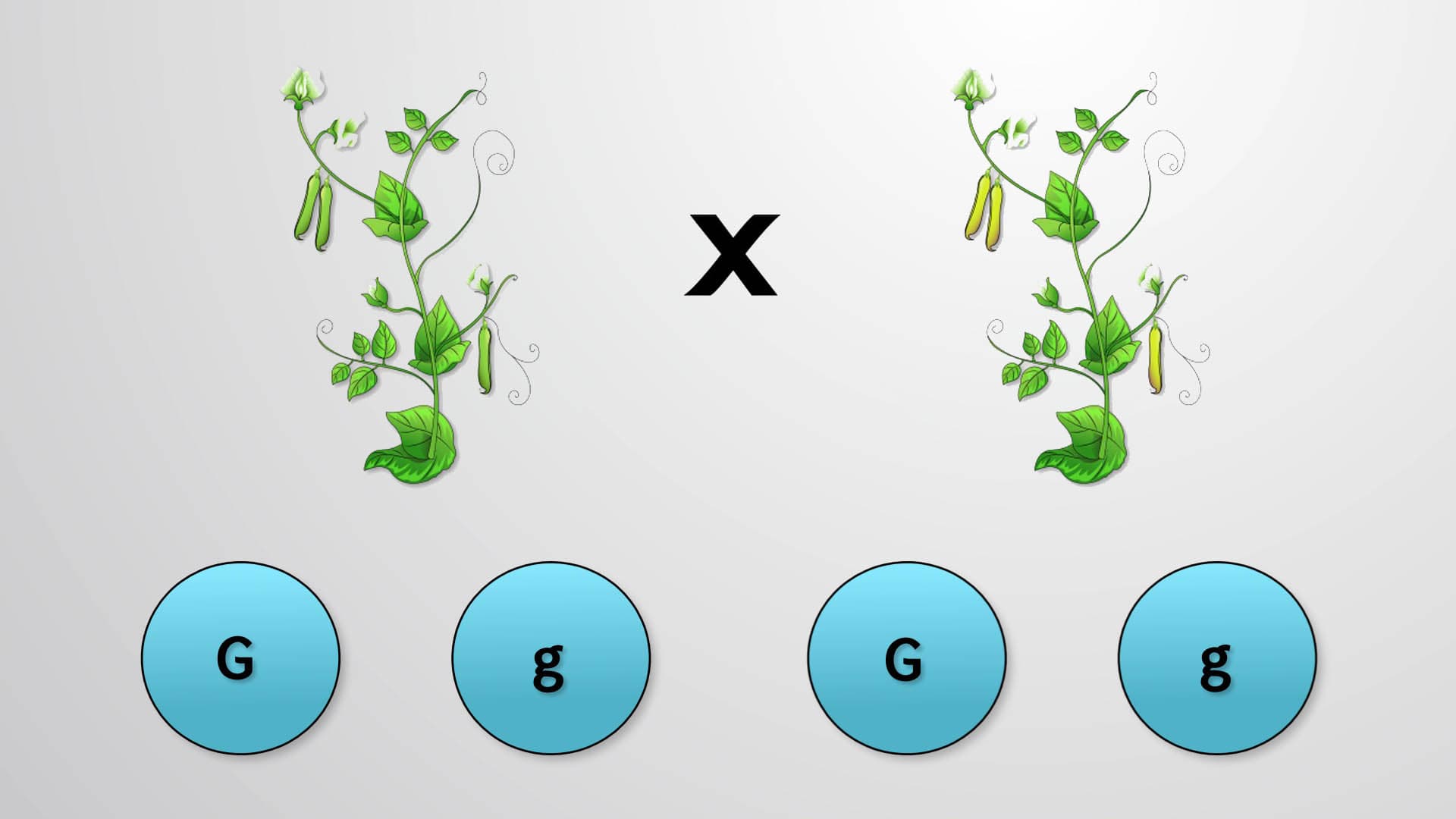
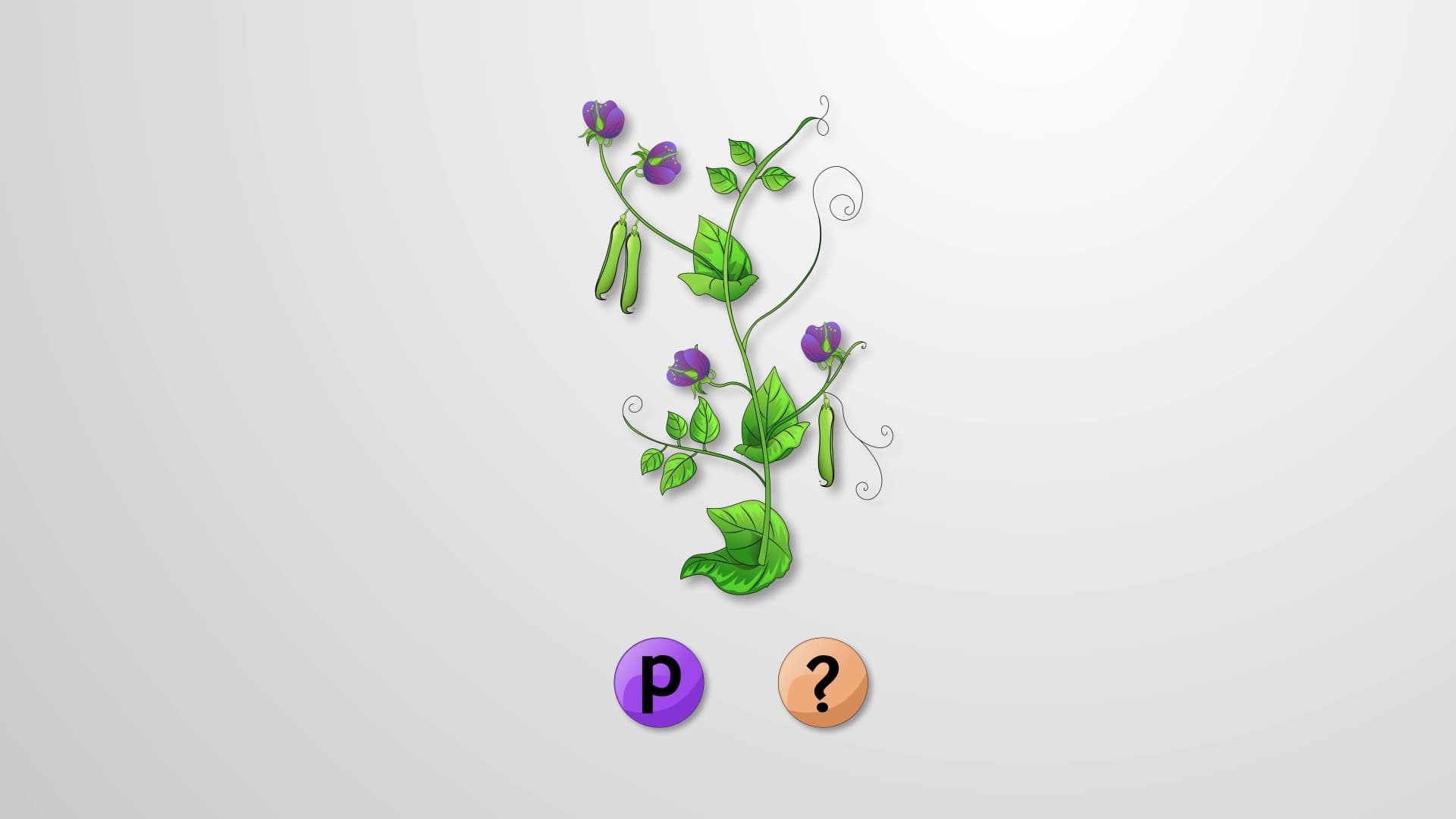
Gregor Mendel's groundbreaking work with pea plants established the scientific method for studying inheritance. In a typical monohybrid cross, the parental (P) generation consists of two organisms that are homozygous for contrasting forms of the same trait. For instance, when studying pod color, one parent carries two dominant alleles (GG) for green pods, while the other carries two recessive alleles (gg) for yellow pods. This careful selection ensures that any variation in offspring directly results from the genetic contribution of each parent.
The first filial (F1) generation demonstrates Mendel's Principle of Uniformity, where all offspring display identical phenotypes despite carrying different genotypes. In the pod color example, every F1 plant produces green pods, even though their genotype is heterozygous (Gg). This uniformity reveals which allele is dominant-the trait expressed in heterozygotes. Students preparing for AP Biology or college genetics courses must understand that dominance doesn't mean "stronger" or "better," but simply refers to which allele is expressed when both are present.
When F1 individuals self-fertilize or cross with each other, the F2 generation reveals the hidden recessive trait through a predictable 3:1 phenotypic ratio. This ratio-three individuals showing the dominant trait for every one showing the recessive trait-serves as compelling evidence for particulate inheritance. The mathematical precision of this ratio appears consistently across different traits and species, from flower color in snapdragons to coat color in laboratory mice used in university research.
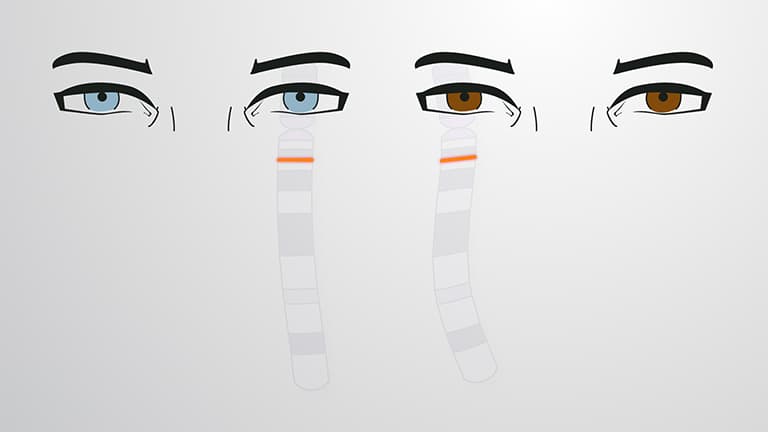
Understanding monohybrid crosses proves essential for students tackling genetics problems on standardized tests like the MCAT or in college biology courses. These concepts also apply directly to human genetics, helping explain why certain traits like brown eyes typically dominate over blue eyes in family inheritance patterns.
Related Micro-courses