Loading subject page…

- Biology
- Classical and Modern Genetics
- Pedigree Analysis
Micro-course: Classical and Modern Genetics
1,347,746 views
Learn key concepts and earn your certificate.







Pedigree Analysis

00:00
01:35
Video Summary: What Is Pedigree Analysis
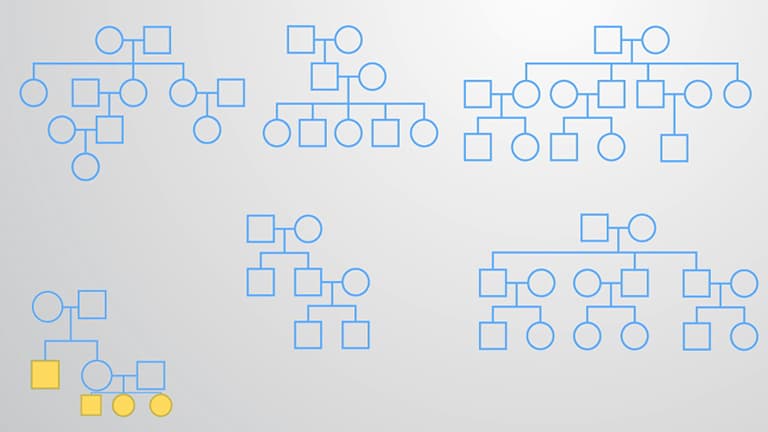
Did you know that genetic counselors at major US medical centers like Mayo Clinic use family tree charts to predict a couple's risk of passing inherited diseases to their children? Pedigree analysis is the systematic study of inheritance patterns through generations using standardized family tree diagrams. Scientists use specific symbols-squares for males, circles for females, and shaded shapes for affected individuals-to track conditions like biotinidase deficiency through families. Watch the full video on JoVE Coach to master this concept with expert-led visuals and step-by-step explanations.
- Understand what is pedigree analysis and how geneticists use standardized symbols to represent family relationships and inheritance patterns
- Identify the standard pedigree symbols: squares for males, circles for females, horizontal lines for mating, and shaded shapes for affected individuals
- Analyze inheritance patterns to distinguish between autosomal recessive, autosomal dominant, and sex-linked genetic disorders
- Recognize key characteristics of autosomal recessive inheritance: equal male-female affected rates, unaffected parents with affected children, and skipped generations
- Apply pedigree analysis principles to determine genetic risks for real families seeking genetic counseling
- Evaluate family history data to predict the likelihood of genetic disorders appearing in future generations
- Compare different inheritance patterns by examining multi-generational family trees and affected individual distributions
- Explore how pedigree analysis guides medical decision-making in genetic counseling and reproductive planning
Understanding What is Pedigree Analysis
Pedigree analysis represents one of genetics' most practical tools, enabling scientists and medical professionals to trace inherited traits through family lineages. This systematic approach transforms complex family medical histories into clear visual representations that reveal underlying genetic patterns. At institutions like Johns Hopkins and Stanford Medical School, genetic counselors rely on pedigree analysis daily to help families understand their genetic risks.
Standard Pedigree Symbols and Construction
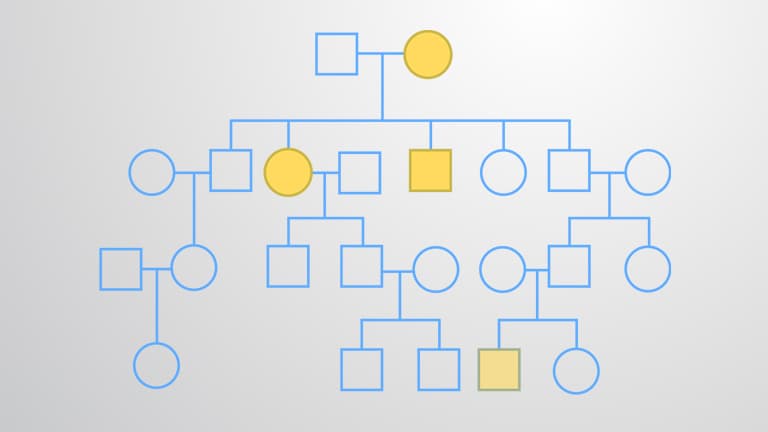
Pedigree charts follow universal conventions established by medical genetics organizations. Males appear as squares, females as circles, and mating relationships connect through horizontal lines. Vertical lines indicate offspring, with each generation occupying its own horizontal row. When individuals express a genetic condition, their symbols become shaded or filled in completely. This standardization ensures that geneticists worldwide can interpret any pedigree chart accurately.
Identifying Inheritance Patterns Through Analysis
The true power of pedigree analysis emerges when examining inheritance patterns across generations. Autosomal recessive disorders like biotinidase deficiency show distinctive characteristics: affected individuals appear in roughly equal numbers among males and females, unaffected parents can have affected children, and the condition often skips generations. In contrast, autosomal dominant disorders affect every generation, while X-linked recessive conditions predominantly affect males and pass from affected mothers to sons.
Clinical Applications and Genetic Counseling
Modern genetic counseling relies heavily on pedigree analysis to assess reproductive risks. At genetic counseling centers across the US, specialists use three-generation pedigrees to calculate recurrence risks for conditions ranging from cystic fibrosis to Huntington's disease. For students preparing for the MCAT or AP Biology exams, understanding these patterns proves essential for solving genetics problems and interpreting clinical scenarios.
Pedigree analysis also guides medical management decisions. When families show patterns suggesting hereditary cancer syndromes like BRCA-associated breast cancer, pedigree analysis helps determine which family members should receive genetic testing and enhanced screening protocols.
Frequently Asked Questions
Pedigree analysis is the study of how genetic traits pass through families using standardized family tree diagrams. Scientists use specific symbols to track diseases or traits across generations, helping determine inheritance patterns and predict genetic risks for future children.
MCAT and AP Biology exams frequently include pedigree interpretation questions requiring students to identify inheritance patterns, calculate genetic risks, and determine genotypes of family members. Students must recognize autosomal recessive, dominant, and sex-linked patterns to succeed on these standardized tests.
Start by identifying affected individuals and counting male versus female cases, then examine whether the trait skips generations or appears in every generation. Look for patterns like unaffected parents having affected children (suggesting recessive inheritance) or affected parents having unaffected children (suggesting dominant inheritance).
Genetic counselors at Children's Hospital of Philadelphia use pedigree analysis to assess families with histories of muscular dystrophy, determining which family members carry the gene and helping parents understand their children's risks before pregnancy planning.
Pedigree analysis builds on basic genetics concepts like dominant and recessive alleles, making it accessible to students who understand Mendelian inheritance. The visual nature of pedigree charts actually helps many students grasp inheritance patterns more easily than abstract genetic calculations.
Practice with diverse pedigree examples representing different inheritance patterns, focusing on identifying key characteristics of each pattern type. Create flashcards linking pattern features (like "skips generations + equal male/female affected") to inheritance types (autosomal recessive).
Pedigree analysis foundations support learning about population genetics, genetic counseling principles, and molecular genetics applications. Students often encounter pedigree analysis again in college genetics courses, genetic counseling programs, and medical school curricula.
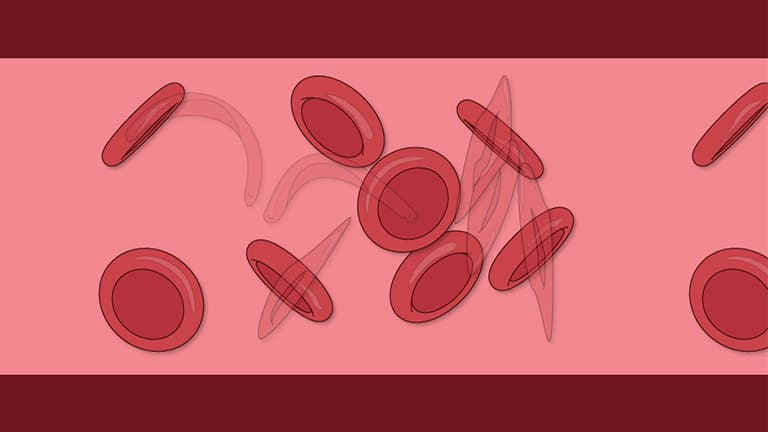
Common examples include cystic fibrosis and sickle cell anemia (autosomal recessive), Huntington's disease (autosomal dominant), and color blindness or hemophilia (X-linked recessive). These disorders represent clear inheritance patterns that help students learn pattern recognition skills.
Related Micro-courses