Loading subject page…

- Biology
- Sensory Systems
- Somatosensation
Micro-course: Sensory Systems
628,008 views
Learn key concepts and earn your certificate.

Somatosensation

00:00
01:33
Video Summary: What Is Somatosensation
Ever wonder why a gentle tap on your shoulder feels different from a firm handshake? Somatosensation, your body's remarkable touch sensing system, uses specialized receptors in your skin to distinguish between light touches, sustained pressure, and vibrations. When a physical therapist in Texas assesses a patient's sensory function after a stroke, they're testing the same somatosensation pathways that help you navigate daily life. Watch the full video on JoVE Coach to master this concept with expert-led visuals and step-by-step explanations.
- Understand what is somatosensation and how it enables your body to process touch, pressure, and vibration stimuli
- Identify the four main mechanoreceptors (Meissner's corpuscles, Merkel discs, Ruffini endings, Pacinian corpuscles) and their specific functions
- Analyze the neural pathway from skin receptors through the spinal cord to the somatosensory cortex
- Compare slow-adapting versus fast-adapting mechanoreceptors and their roles in different types of touch sensation
- Evaluate why fingers have larger cortical representation than the back in the somatosensory homunculus
- Apply knowledge of decussation to explain why left-body sensations are processed in the right brain hemisphere
- Recognize how dermatomes organize sensory information from specific body regions
- Explore the clinical significance of somatosensory testing in neurological assessments
Understanding Somatosensation: Your Body's Touch Detection System
Somatosensation represents one of your body's most sophisticated sensory systems, enabling you to perceive touch, pressure, vibration, and texture through specialized receptors embedded in your skin. This complex process begins the moment a stimulus contacts your body and culminates in conscious perception within your brain's somatosensory cortex.
The Four Mechanoreceptors: Specialized Touch Detectors
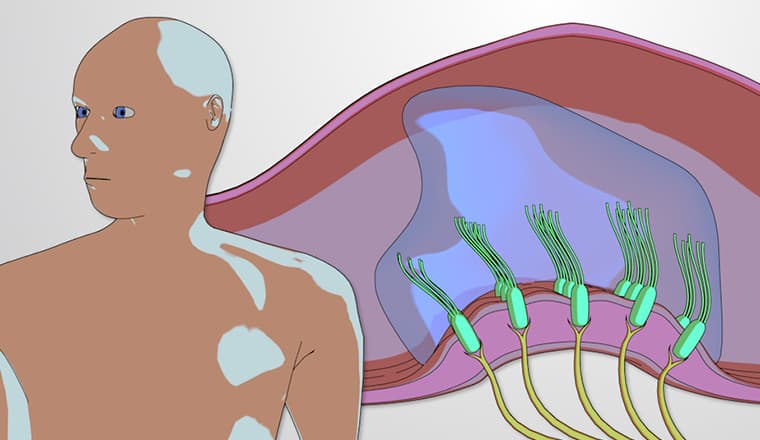
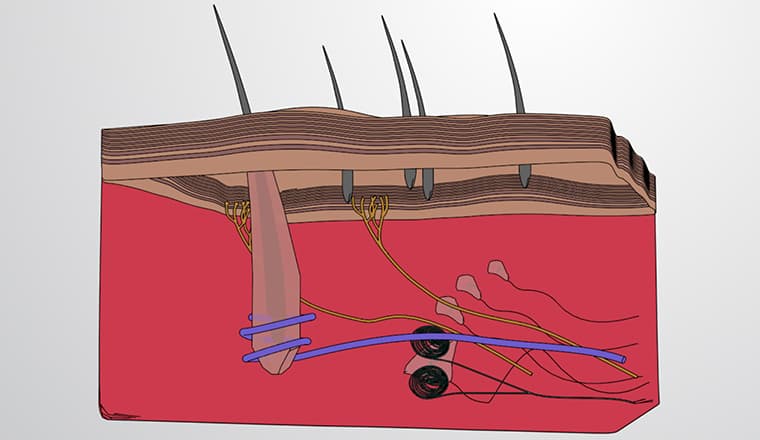
Your skin contains four distinct types of mechanoreceptors, each optimized for specific stimuli. Meissner's corpuscles respond to light touch and low-frequency vibrations, think of feeling a feather brush against your arm. These fast-adapting receptors are concentrated in your fingertips and lips, areas requiring fine discriminatory touch.
Merkel discs detect sustained pressure and fine textures, adapting slowly to maintain continuous sensation. When you hold a pencil during an SAT exam, Merkel discs help you maintain appropriate grip pressure throughout the test.
Ruffini endings respond to skin stretch and joint position, providing crucial information about limb position and movement. These slow-adapting receptors contribute to proprioception, your awareness of body position in space.
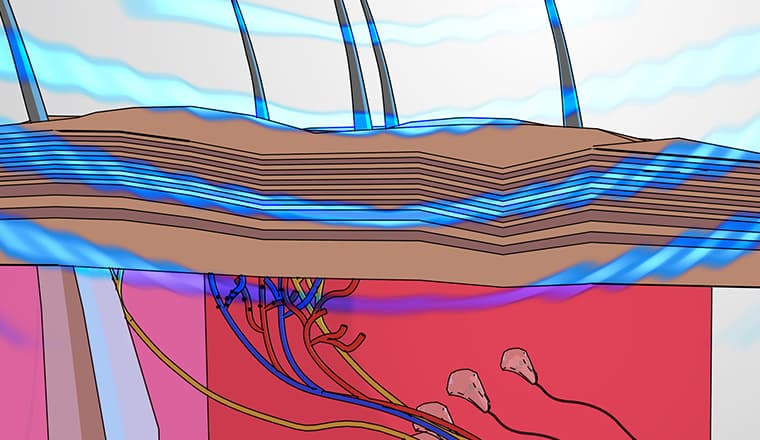
Pacinian corpuscles detect deep pressure and high-frequency vibrations. Located deeper in your skin and around joints, they respond when you feel your phone vibrating in your pocket.
The Neural Highway: From Skin to Brain
Once mechanoreceptors detect stimuli, they convert mechanical energy into electrical signals through transduction. These signals travel along sensory neurons toward your spinal cord, specifically entering through the dorsal root ganglion. Here's where organization becomes crucial: sensory fibers from each body region, called a dermatome, group together in specific dorsal roots.
The pathway continues to your brainstem's medulla, where a critical event occurs, decussation. Your sensory information crosses to the opposite side of your nervous system, explaining why stroke patients with right-brain damage often experience left-side sensory deficits.
The Somatosensory Cortex: Your Body's Neural Map
Your brain's somatosensory cortex contains a distorted map of your body called the homunculus. This map isn't proportional to actual body size, instead, it reflects sensory importance. Your fingers occupy disproportionately large cortical areas because they contain dense concentrations of mechanoreceptors with small receptive fields, enabling precise discrimination between similar textures.
For MCAT preparation, remember that receptive field size inversely correlates with discrimination ability. Your fingertips' small receptive fields allow you to distinguish between different coin denominations by touch, while your back's larger receptive fields provide general pressure awareness but limited fine discrimination.
This concept frequently appears on AP Biology exams, particularly in questions about sensory system organization and neural pathway mapping. Understanding somatosensation also proves essential for pre-health students, as healthcare professionals regularly assess somatosensory function to diagnose neurological conditions.
Frequently Asked Questions
Somatosensation is your body's touch sensing system that detects mechanical stimuli through specialized skin receptors called mechanoreceptors. These receptors convert physical touch into electrical signals that travel through your spinal cord to your brain's somatosensory cortex, where touch sensations are consciously perceived and interpreted.
Focus on understanding the four main types: Meissner's corpuscles (light touch), Merkel discs (sustained pressure), Ruffini endings (stretch/position), and Pacinian corpuscles (vibration). MCAT questions often test your ability to match specific stimuli with the appropriate mechanoreceptor type and adaptation speed.
AP Biology frequently tests somatosensory pathway organization, including mechanoreceptor types, decussation in the medulla, and cortical mapping concepts. Expect questions about why certain body parts have larger brain representation and how receptive field size affects sensory discrimination ability.
Physical therapists and doctors routinely test somatosensory function using tools like tuning forks (vibration), cotton swabs (light touch), and pinpricks (sharp sensation) to assess nerve damage after injuries or strokes. These tests help locate specific areas of sensory dysfunction and track recovery progress.
Not at all! While the terminology might seem complex initially, somatosensation concepts build logically from simple touch detection to brain processing. Start with understanding the four mechanoreceptor types, then follow the pathway from skin to brain, most students find the systematic organization quite manageable.
Create associations with real experiences: Meissner's = "light touch like a feather," Merkel's = "sustained pressure like holding a book," Ruffini = "stretching skin when you move," Pacinian = "deep vibration like a phone buzzing." Practice with flashcards linking each receptor to its specific stimulus type and adaptation speed.
Somatosensation provides an excellent foundation for studying other sensory systems, neural plasticity, and clinical neurology. The concepts of receptive fields, decussation, and cortical mapping apply broadly across sensory neuroscience, making this knowledge valuable for advanced coursework in neuroscience and medical studies.
Fingers contain extremely high densities of mechanoreceptors with very small receptive fields, requiring extensive brain processing power for fine discrimination tasks. This disproportionate cortical representation reflects functional importance rather than physical size, your fingers need precise touch sensitivity for complex manipulative tasks like writing or surgical procedures.
Related Micro-courses
11 Concepts
6 Concepts
8 Concepts