Loading video…


 12 Concepts
 628K views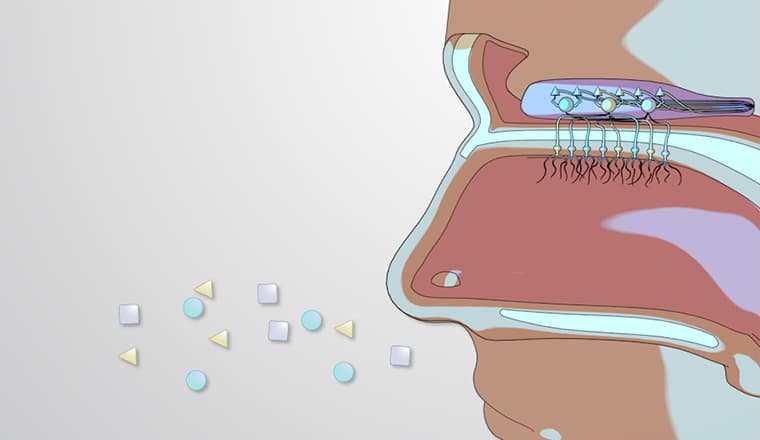

Video Summary: What Is Olfaction
Ever wonder why the smell of fresh-baked cookies instantly transports you back to your grandmother's kitchen? Olfaction, our sense of smell, is one of our most powerful and primitive senses, capable of detecting over one trillion different odors. From helping perfumers at companies like Calvin Klein create signature fragrances to enabling sommelier students to identify wine varietals, olfaction plays a crucial role in daily life and specialized careers. Watch the full video on JoVE Coach to master this concept with expert-led visuals and step-by-step explanations.
Olfaction represents one of our most sophisticated sensory systems, functioning as a chemical detector that interprets airborne molecular information. Unlike vision or hearing, which process physical stimuli like light waves or sound vibrations, olfaction directly analyzes chemical compounds floating in our environment. This fundamental difference makes smell uniquely powerful in triggering memories and emotions, explaining why the scent of a particular cologne can instantly remind you of a specific person or place.
The olfactory system's sensitivity is remarkable-humans can detect some odorants at concentrations as low as parts per trillion. This sensitivity has practical applications in careers ranging from wine sommelier certification programs at the Culinary Institute of America to quality control specialists at food processing plants like General Mills, where detecting off-odors prevents contaminated products from reaching consumers.
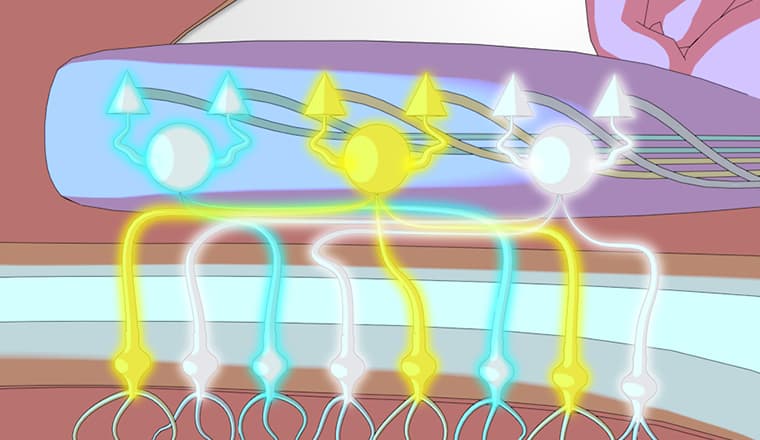
The olfactory epithelium, located in the uppermost region of our nasal cavities, contains approximately 6 million olfactory receptor neurons in humans. Each neuron expresses only one type of olfactory receptor from a family of about 350 different receptor genes-the largest gene family in the human genome. This specialization creates the foundation for our ability to distinguish between countless different odors through a process called combinatorial coding.
When studying for AP Biology or college-level neuroscience courses, understanding this "one neuron, one receptor type" rule is crucial for exam success. Students often encounter questions about how this organization differs from other sensory systems, where individual neurons might respond to multiple stimulus types.
The olfactory bulb serves as the first central processing station for smell information, containing approximately 25,000 mitral and tufted cells that receive input from olfactory receptor neurons. These cells organize incoming signals in structures called glomeruli-roughly 2,000 spherical regions where neurons expressing the same receptor type converge. This convergence amplifies weak signals and creates a spatial map of odor information.
For pre-med students preparing for the MCAT, understanding olfactory bulb organization is essential since questions frequently test knowledge of how sensory information gets processed and integrated. The olfactory system's unique direct connection to cortical areas, bypassing the thalamus initially, distinguishes it from other sensory modalities and often appears in comparative neuroscience questions.
Olfactory dysfunction affects millions of Americans, with conditions like anosmia (complete loss of smell) and hyposmia (reduced smell sensitivity) impacting quality of life and safety. The COVID-19 pandemic highlighted olfaction's importance when many patients experienced temporary or permanent smell loss. Healthcare professionals use standardized tests like the University of Pennsylvania Smell Identification Test (UPSIT) to diagnose and monitor olfactory disorders.
Related Micro-courses