Loading subject page…

- Biology
- Sensory Systems
- The Vestibular System
Micro-course: Sensory Systems
628,007 views
Learn key concepts and earn your certificate.

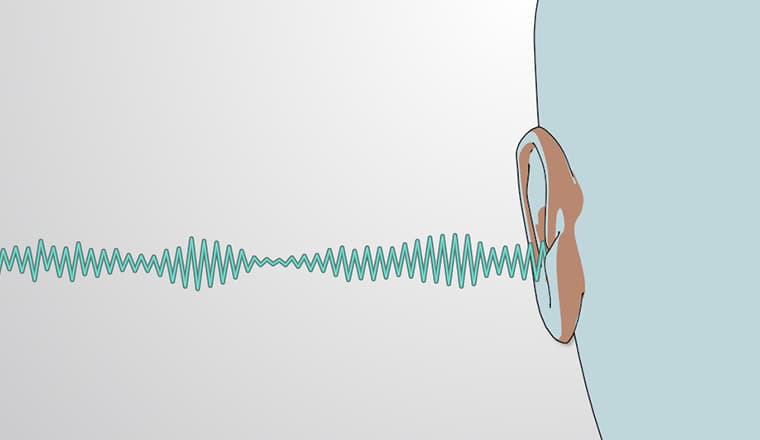
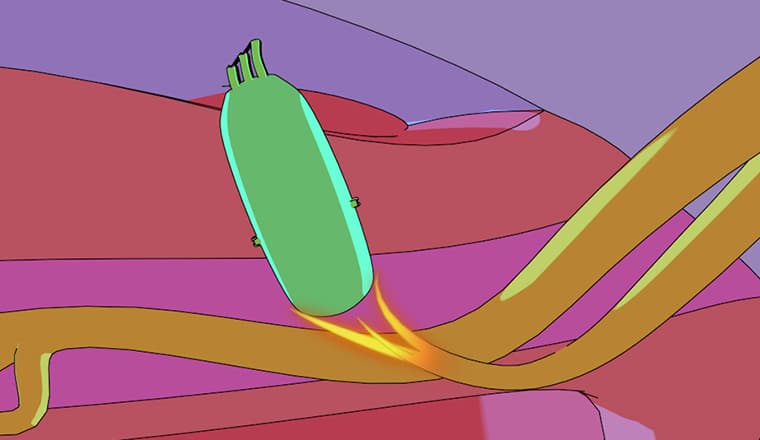
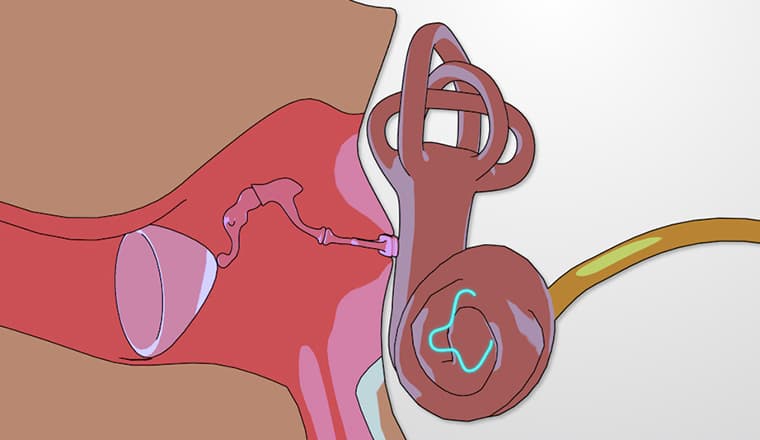
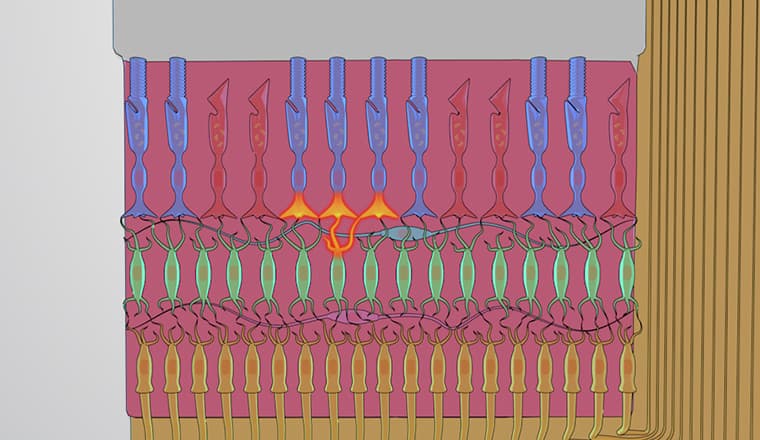
The Vestibular System

00:00
01:29
Video Summary: What Is the Vestibular System
Ever wonder how astronauts maintain their orientation in zero gravity, or why you feel dizzy after spinning around? The vestibular system serves as your body's internal GPS, continuously detecting head position and movement to maintain balance and spatial awareness. Located deep within your inner ear, this sophisticated sensory system helps NASA astronauts adapt to microgravity environments and enables everyday activities like walking up stairs in the dark. Watch the full video on JoVE Coach to master this concept with expert-led visuals and step-by-step explanations.
- Understand the fundamental structure and function of the vestibular system as your body's balance and spatial orientation center
- Identify the five key components: three semicircular canals and two otolith organs within the inner ear's labyrinth
- Analyze how otolith organs detect linear acceleration and head tilt through otoconia crystal movement
- Compare the mechanisms of semicircular canals (rotational movement detection) versus otolith organs (linear movement detection)
- Recognize how vestibular hair cells transduce mechanical stimuli into neural signals through stereocilia displacement
- Evaluate the neural pathways from the vestibular nerve to the brainstem, cerebellum, and cerebral cortex
- Apply knowledge of vestibular dysfunction to understand conditions like vertigo, motion sickness, and balance disorders
- Explore the integration of vestibular information with visual and proprioceptive systems for comprehensive spatial awareness
Understanding the Vestibular System Architecture
The vestibular system represents one of medicine's most elegant examples of biological engineering, transforming mechanical head movements into precise neural information. This sensory system operates through five distinct organs housed within the temporal bone's bony labyrinth: three semicircular canals (anterior, posterior, and horizontal) and two otolith organs (utricle and saccule). Each component specializes in detecting specific types of movement, creating a comprehensive three-dimensional map of head position and motion.
Otolith Organs: Linear Movement Detection
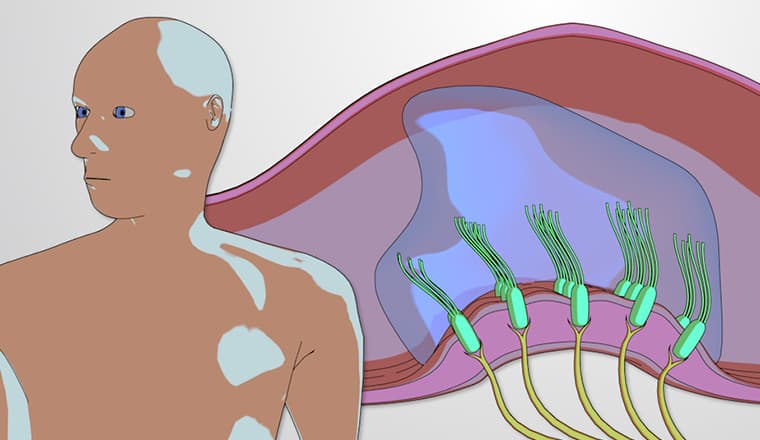
The otolith organs excel at detecting linear acceleration and gravitational forces. Within each organ, specialized vestibular hair cells anchor beneath a gelatinous otolithic membrane embedded with calcium carbonate crystals called otoconia. When you tilt your head forward during a physical therapy assessment or accelerate in an elevator, these dense crystals shift due to gravity and inertia, bending the underlying stereocilia. This mechanical deformation triggers neurotransmitter release, generating action potentials that inform your brain about linear movement direction and magnitude.
Semicircular Canals: Rotational Movement Sensors
The three semicircular canals detect rotational movements through a different mechanism. Each canal contains a cupula-a gelatinous structure that completely blocks the canal's ampulla. During head rotation, such as when a gymnast performs a pirouette, endolymph fluid displacement pushes against the cupula, deflecting embedded hair cell stereocilia. This system demonstrates exceptional sensitivity, detecting rotations as small as 0.1 degrees per second.
Neural Processing and Clinical Significance
Vestibular information travels via the eighth cranial nerve to the vestibular nuclei in the brainstem, where it integrates with visual and proprioceptive inputs. This integration proves crucial for the vestibulo-ocular reflex, which stabilizes vision during head movement-essential for activities like reading while walking. Advanced pathways project to the cerebral cortex, contributing to spatial memory and navigation abilities tested in AP Psychology courses.
Understanding vestibular physiology appears frequently on MCAT Biology sections and serves as foundational knowledge for healthcare professionals studying balance disorders, from Meniere's disease to benign paroxysmal positional vertigo affecting over 2.4 million Americans annually.
Frequently Asked Questions
The vestibular system is your body's balance and spatial orientation center located in the inner ear's labyrinth. It consists of five organs-three semicircular canals and two otolith organs-that detect head movements and position relative to gravity. This system works continuously to maintain balance and coordinate eye movements with head motion.
The vestibular system frequently appears in MCAT Biology passages focusing on sensory systems, neural integration, and homeostasis. AP Biology students encounter it when studying nervous system organization and sensory transduction mechanisms. Expect questions about hair cell function, neural pathways, and integration with other sensory systems.
Vestibular disorders affect over 35% of US adults aged 40 and older, causing symptoms like dizziness, vertigo, and balance problems. Conditions like benign paroxysmal positional vertigo (BPPV) occur when otoconia crystals become displaced, while vestibular neuritis involves inflammation of the vestibular nerve. These conditions significantly impact daily activities and fall risk.
No extensive anatomy background is required to grasp vestibular system basics. Understanding fundamental concepts like neurons, action potentials, and basic ear anatomy provides sufficient foundation. High school biology students can master this topic by focusing on the mechanotransduction process and neural pathway organization rather than memorizing complex anatomical details.
Create concept maps connecting structure to function for each component, then practice drawing the neural pathways from hair cells to brain regions. Use clinical examples like motion sickness or vertigo to reinforce normal physiology concepts. Focus on understanding the mechanotransduction process rather than memorizing every anatomical detail.
The vestibular system works with visual and proprioceptive inputs through multisensory integration centers in the brainstem and cerebellum. This collaboration enables the vestibulo-ocular reflex for stable vision during movement and postural reflexes for balance maintenance. When one system fails, others can partially compensate, explaining why people with vestibular disorders often rely more heavily on visual cues.
Explore vestibular rehabilitation therapy techniques, space medicine applications for astronaut training, and connections to spatial memory formation in the hippocampus. Advanced students might investigate vestibular contributions to motion sickness, age-related balance decline, and emerging treatments for vestibular disorders in clinical settings.
Related Micro-courses
11 Concepts
6 Concepts
8 Concepts