Loading subject page…

- Chemistry
- Acids and Bases
- Water: A Bronsted-Lowry Acid and Base
Micro-course: Acids and Bases
641,500 views
Learn key concepts and earn your certificate.



Water: A Bronsted-Lowry Acid and Base

00:00
02:30
Video Summary: Water a Bronsted Lowry Acid Explained
Ever wondered how water can be both an acid and a base in different chemical reactions? Water a Bronsted Lowry acid demonstrates this fascinating dual nature through its amphoteric properties. Consider how antacids work in your stomach-water molecules help neutralize excess acid by accepting protons, yet they can also donate protons to other bases like ammonia in household cleaners. Watch the full video on JoVE Coach to master this concept with expert-led visuals and step-by-step explanations.
- Understand how water a Bronsted Lowry acid exhibits amphoteric behavior by acting as both proton donor and acceptor
- Identify the autoionization process of water and its equilibrium expression
- Analyze the significance of the ion-product constant (Kw = 1 × 10^-14) in aqueous solutions
- Compare hydronium and hydroxide ion concentrations to determine solution acidity or basicity
- Evaluate how water's dual acid-base nature enables it to react with both acids and bases
- Apply Kw calculations to determine unknown ion concentrations in chemical problems
- Recognize the relationship between water's amphoteric properties and pH regulation in biological systems
- Explore how water's Bronsted-Lowry behavior influences acid-base equilibria in various chemical contexts
Understanding Water a Bronsted Lowry Acid Through Amphoteric Behavior
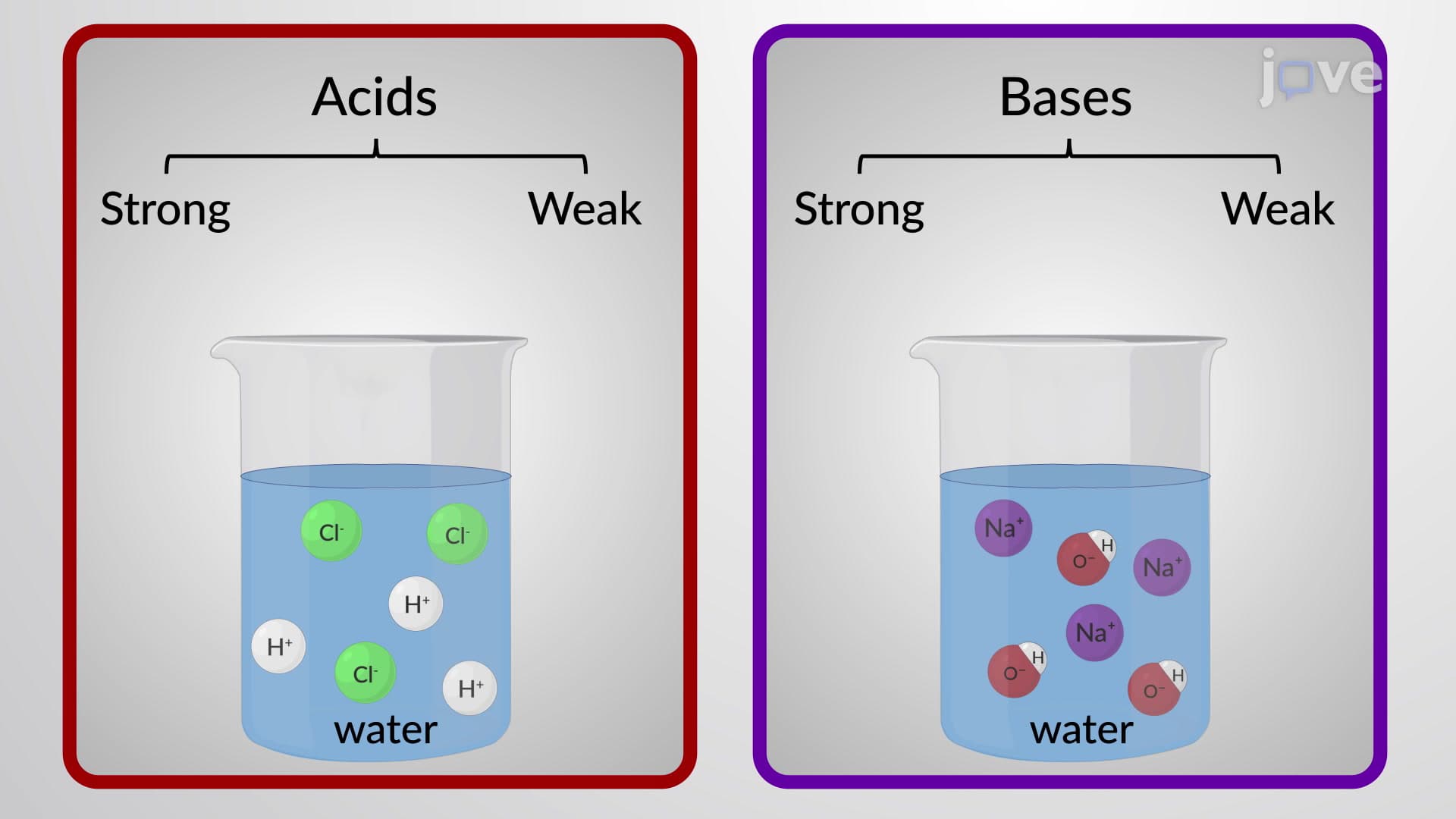
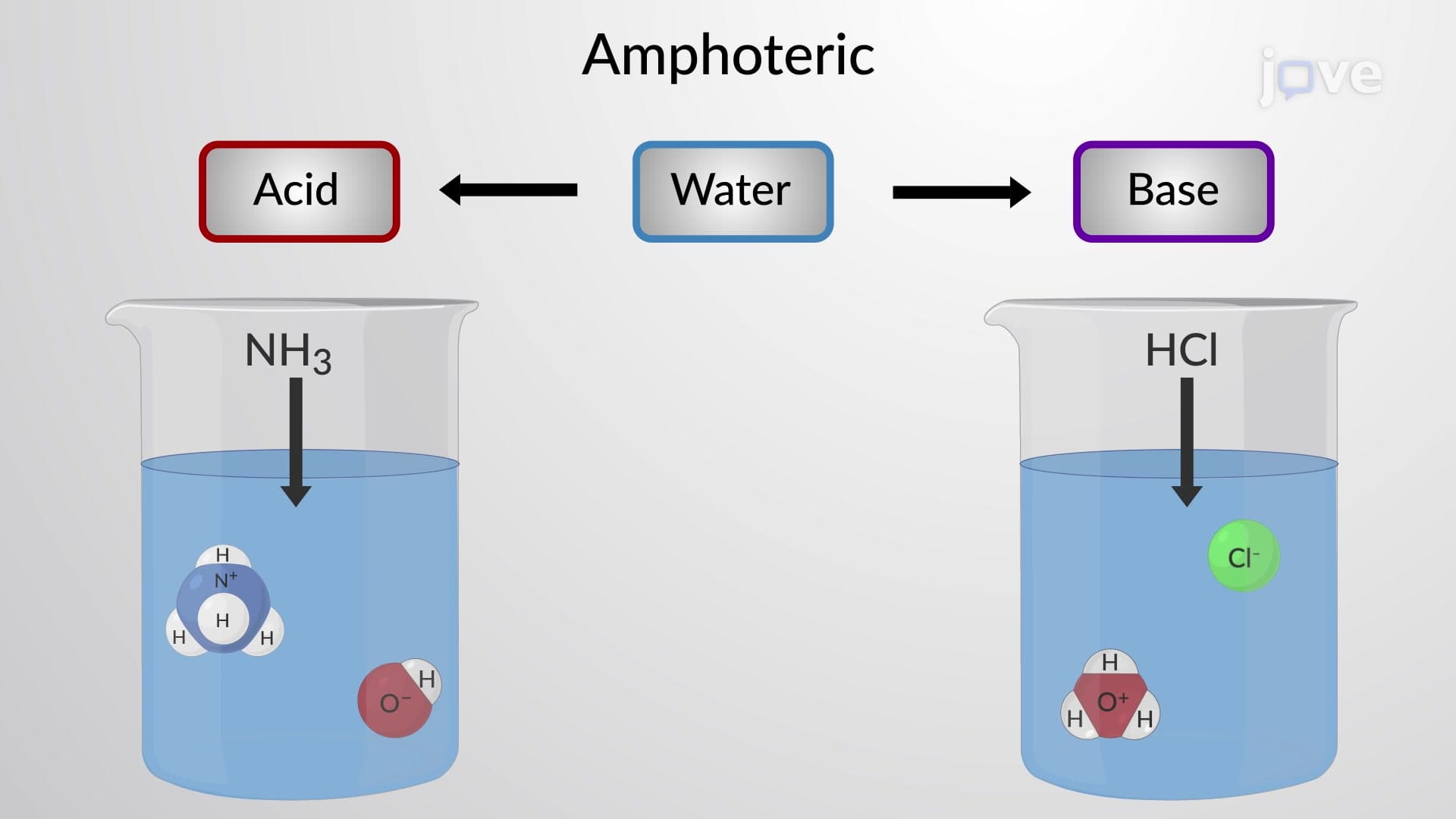
Water's remarkable ability to function as both an acid and a base makes it central to acid-base chemistry. According to Bronsted-Lowry theory, acids are proton donors while bases are proton acceptors. Water demonstrates both behaviors depending on the chemical environment, making it amphoteric-a property crucial for understanding biological systems and industrial processes.
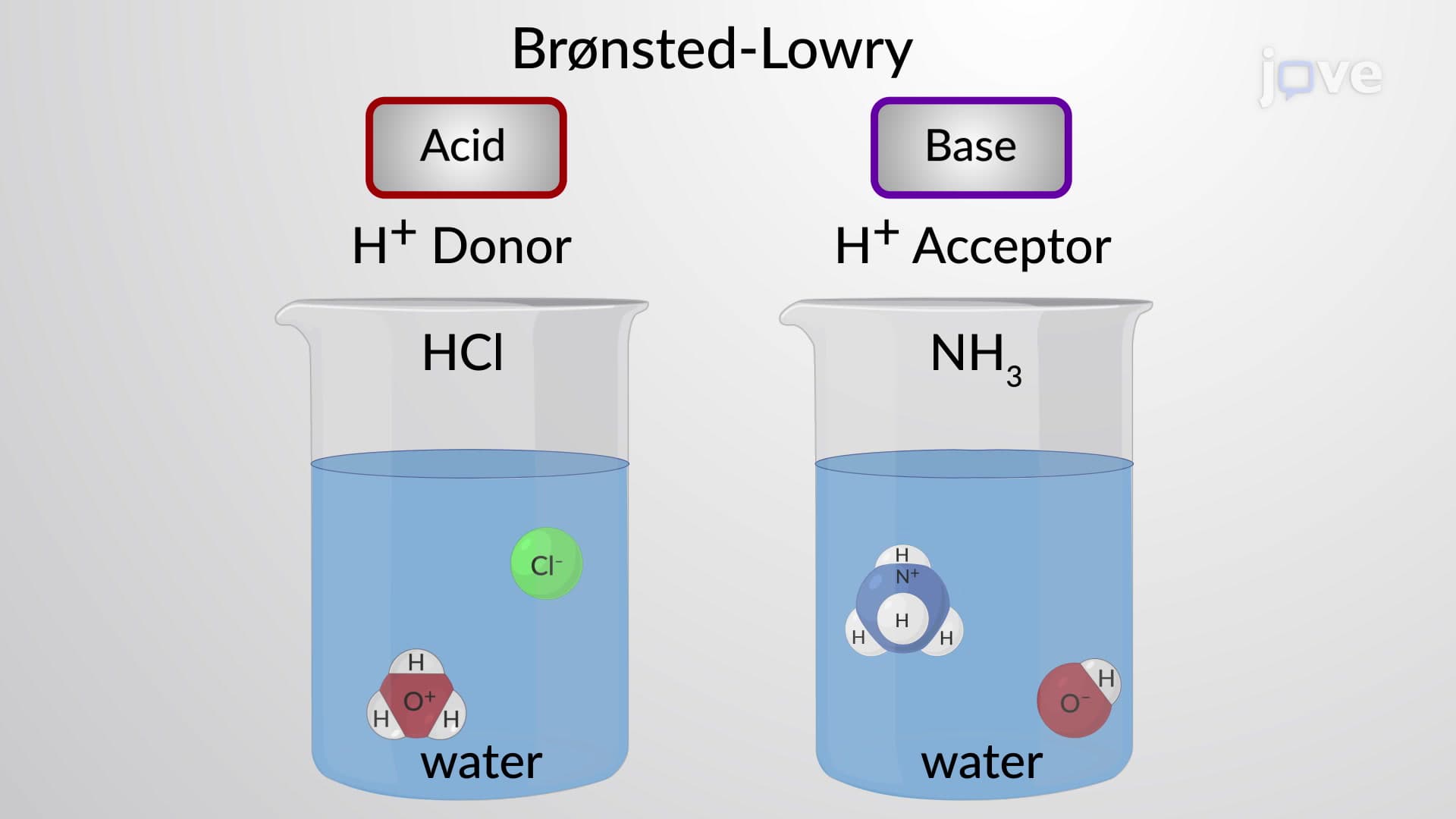
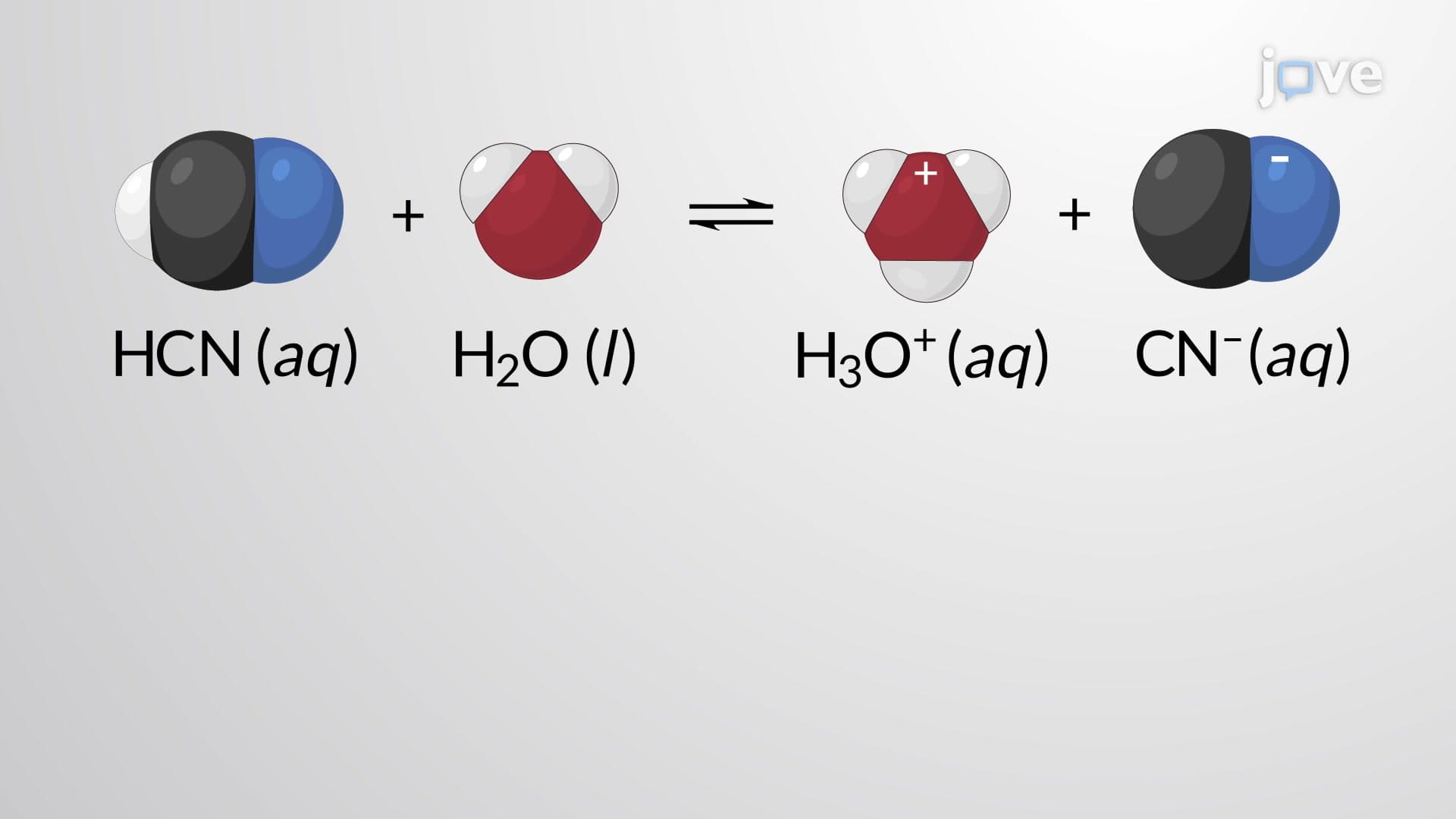
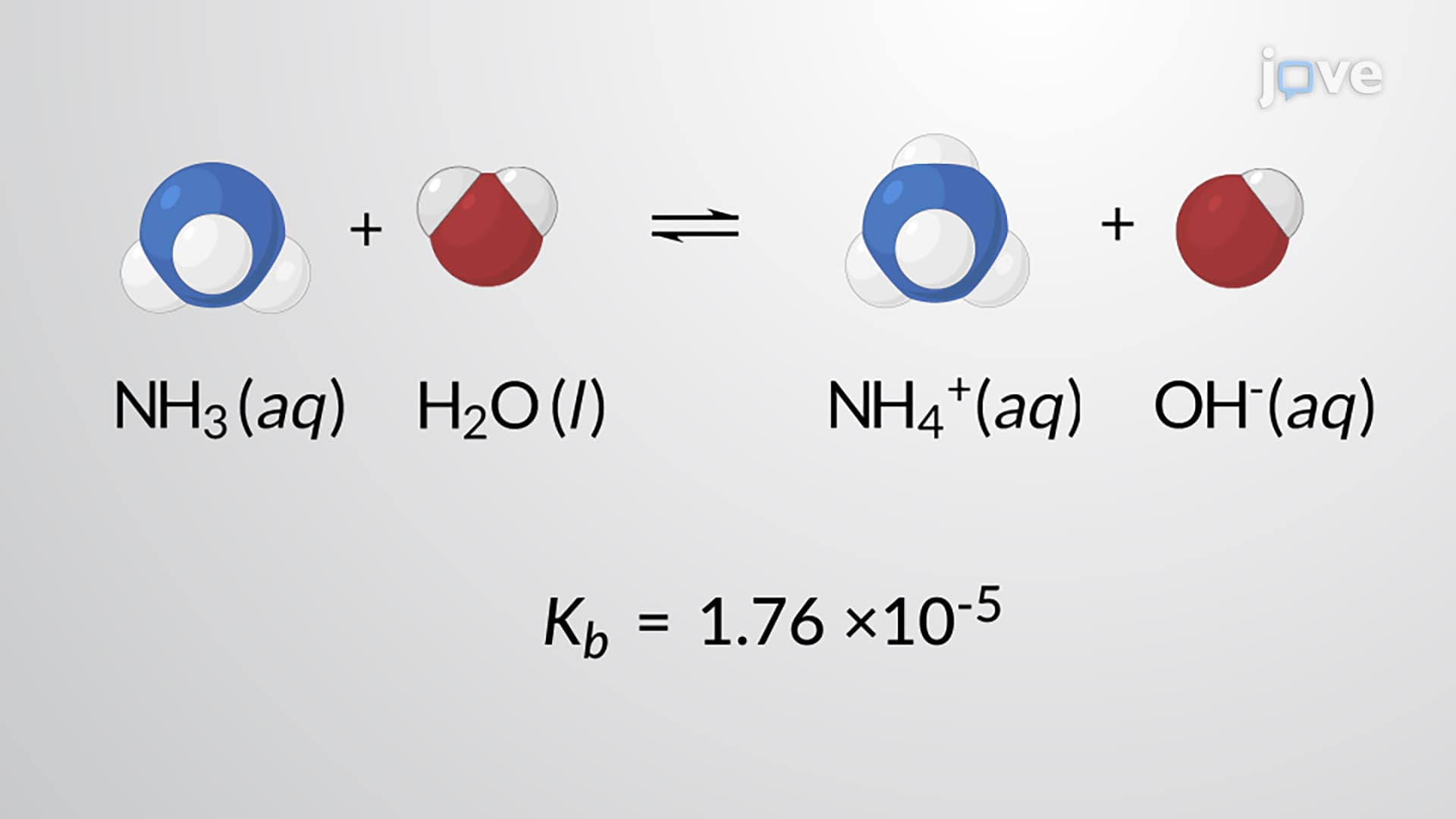
When water encounters a strong base like ammonia (NH₃), it acts as a Bronsted-Lowry acid by donating a proton: H₂O + NH₃ → OH⁻ + NH₄⁺. Conversely, when mixed with hydrochloric acid, water becomes a Bronsted-Lowry base by accepting protons: HCl + H₂O → Cl⁻ + H₃O⁺. This versatility explains why water serves as the universal solvent and medium for countless biological reactions.
Autoionization and the Ion-Product Constant
Water's most fascinating property involves its ability to ionize itself through autoionization. In this process, one water molecule donates a proton to another: 2H₂O ⇌ H₃O⁺ + OH⁻. This equilibrium establishes the foundation for all aqueous acid-base chemistry.
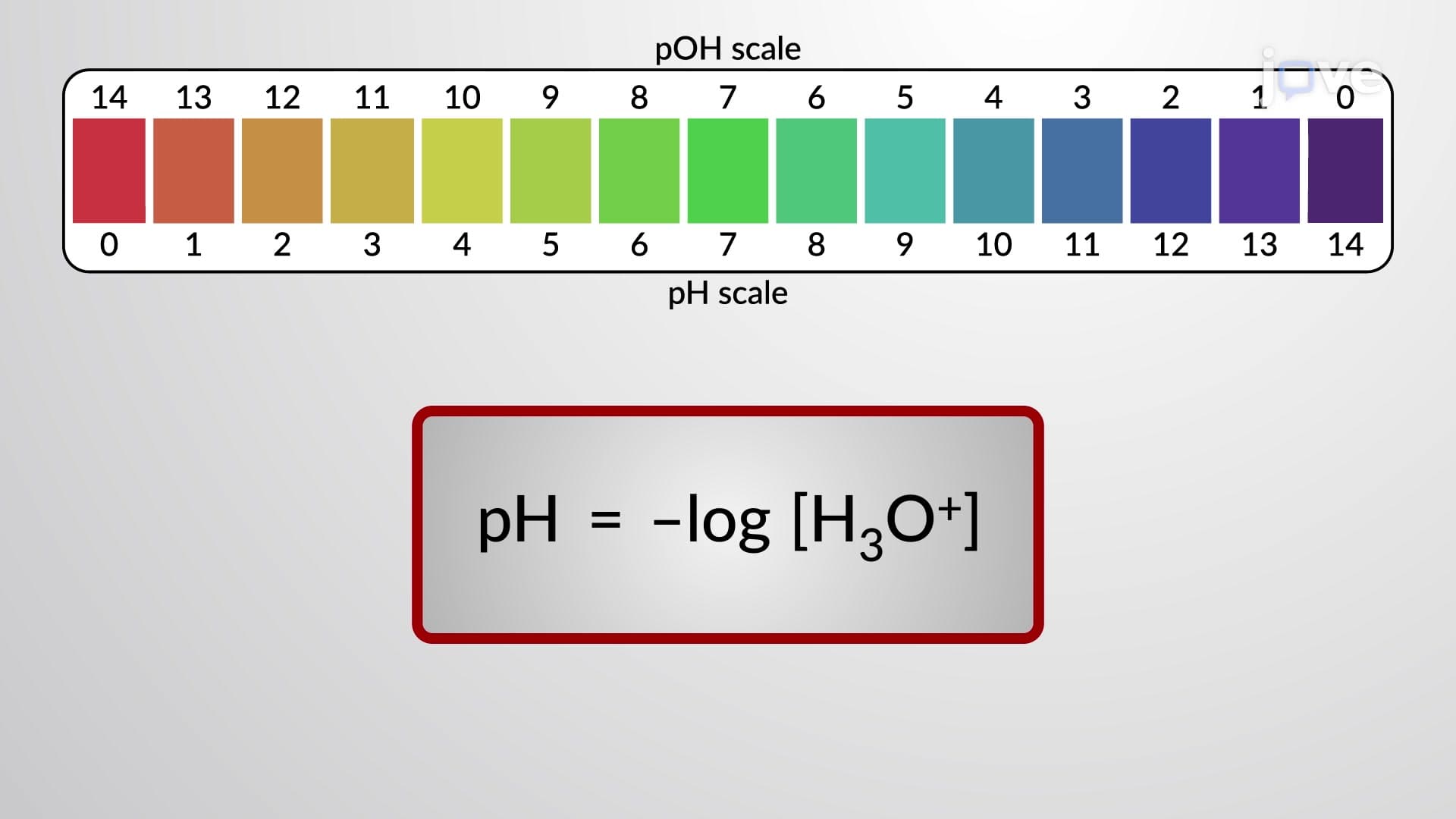
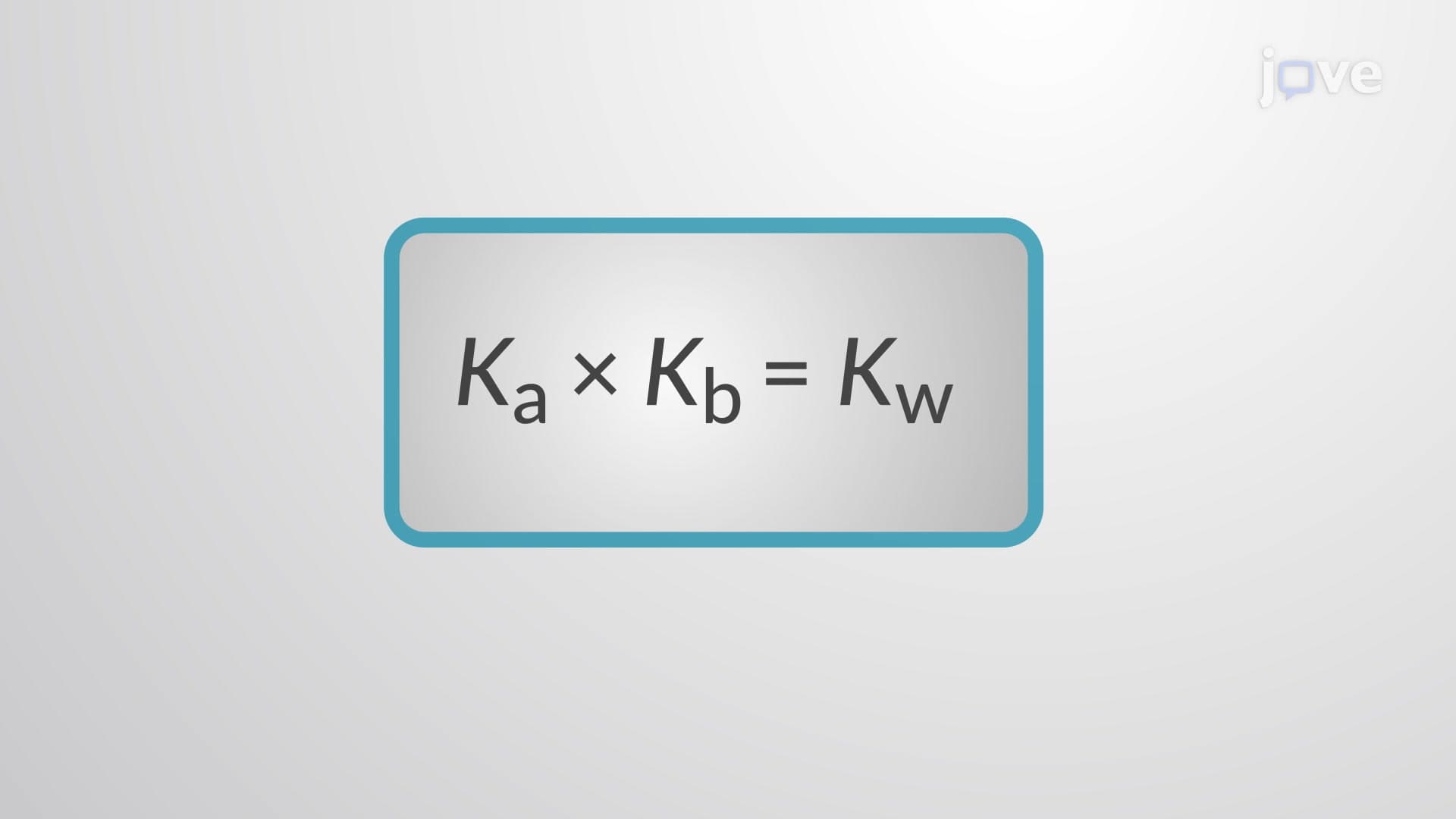
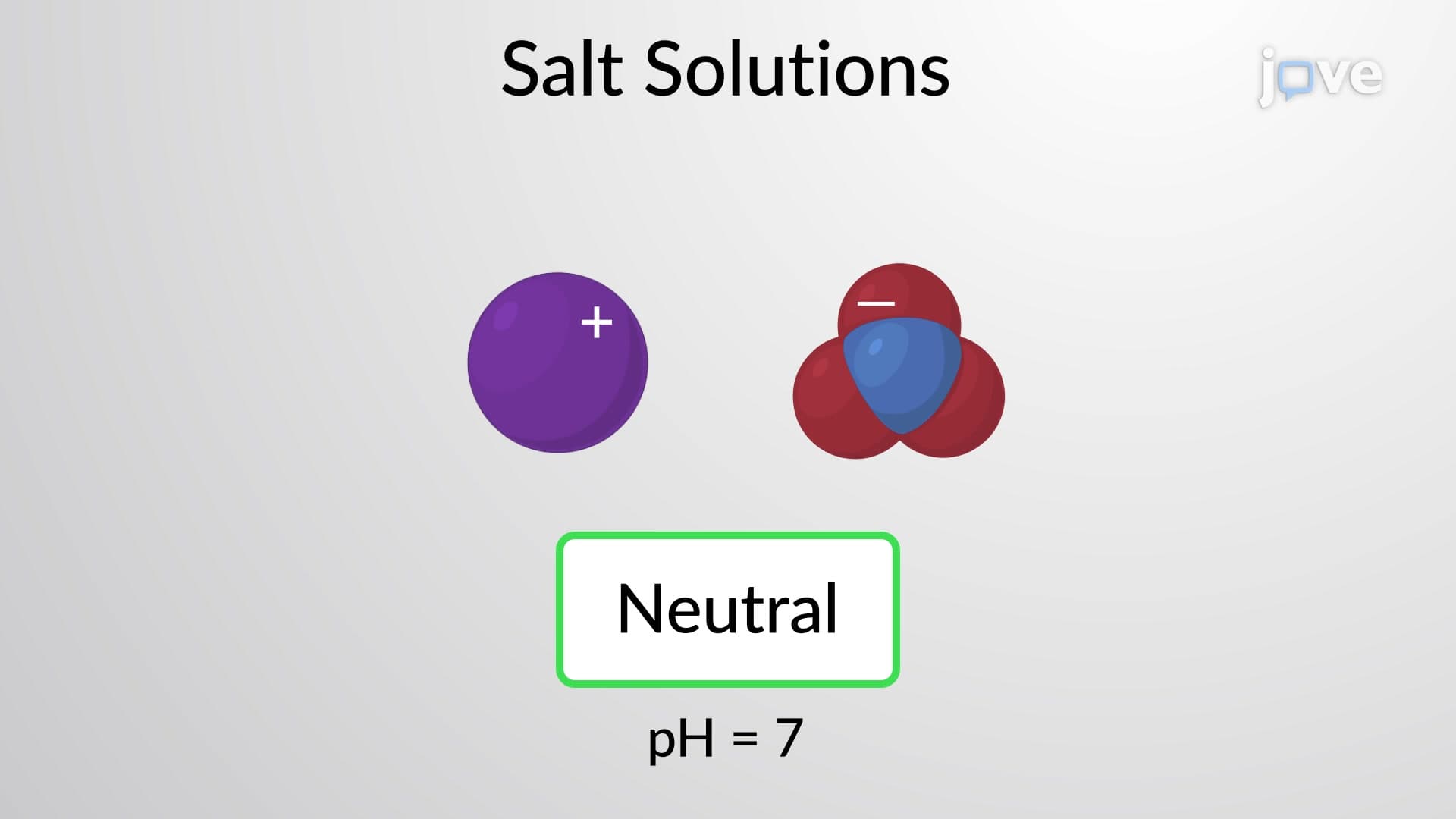
The equilibrium constant for this process, known as Kw (the ion-product constant), equals 1.0 × 10^-14 at 25°C. The expression Kw = [H₃O⁺][OH⁻] remains constant regardless of solution composition. In pure water, [H₃O⁺] = [OH⁻] = 1.0 × 10^-7 M, creating a neutral solution with pH 7.
Practical Applications in Chemistry and Biology
Understanding water's Bronsted-Lowry behavior proves essential for AP Chemistry exams and college coursework. Students encounter these concepts in buffer calculations, pH determinations, and biological system analysis. For instance, blood plasma maintains its pH around 7.4 through water's amphoteric nature working with bicarbonate systems.
In environmental science, water's dual acid-base behavior affects natural water pH, influencing aquatic ecosystems. Industrial applications include pharmaceutical manufacturing, where controlling water's proton donation and acceptance capabilities ensures drug stability and effectiveness.
Problem-Solving with Kw Calculations
Mastering Kw calculations enables students to determine unknown ion concentrations. If [H₃O⁺] = 5.0 × 10^-7 M, then [OH⁻] = Kw/[H₃O⁺] = (1.0 × 10^-14)/(5.0 × 10^-7) = 2.0 × 10^-8 M. Since hydronium concentration exceeds hydroxide concentration, the solution is acidic. These calculations appear frequently on standardized tests and provide the foundation for more advanced acid-base equilibrium problems.
Frequently Asked Questions
Water a Bronsted Lowry acid refers to water's ability to donate protons (H⁺) to other molecules, making it function as an acid according to Bronsted-Lowry theory. Water can also accept protons, acting as a base, which makes it amphoteric. This dual behavior allows water to participate in acid-base reactions by either giving up or receiving hydrogen ions depending on what other chemicals are present in solution.
AP Chemistry frequently tests water's amphoteric behavior through equilibrium problems, pH calculations, and acid-base reaction predictions. You'll encounter questions about autoionization, Kw calculations, and determining solution acidity based on ion concentrations. The College Board emphasizes understanding how water's dual nature affects buffer systems and biological processes, so practice problems involving both acid and base reactions with water.
The MCAT Chemical and Physical Foundations section heavily emphasizes acid-base chemistry, particularly in biological contexts. Water's amphoteric behavior underlies enzyme function, metabolic pathways, and drug interactions in human physiology. Understanding how water donates and accepts protons helps explain kidney function, respiratory gas exchange, and pharmaceutical mechanisms-all critical topics for medical school success.
Antacids in your medicine cabinet rely on water's ability to facilitate proton transfer between stomach acid and neutralizing compounds like calcium carbonate. Water treatment plants use this principle to adjust pH levels in municipal drinking water, while swimming pool maintenance involves water's amphoteric nature to balance chlorine effectiveness and swimmer comfort through careful pH control.
Not at all-this concept builds naturally from basic atomic structure and bonding principles you've already learned. If you understand that hydrogen atoms can lose electrons to become protons (H⁺), you're ready to grasp how water molecules can donate or accept these protons. Start with simple examples like water reacting with ammonia or hydrochloric acid before moving to more complex equilibrium calculations.
Focus on recognizing reaction patterns rather than memorizing equations-identify whether water acts as acid or base based on the other reactants present. Practice Kw calculations until they become automatic, then work through buffer and pH problems systematically. Create concept maps connecting water's amphoteric behavior to broader acid-base equilibria, and always check your answers using the relationship [H₃O⁺][OH⁻] = 1.0 × 10^-14.
Progress to buffer systems and Henderson-Hasselbalch equations, which build directly on water's amphoteric properties. Then explore polyprotic acids, acid-base titrations, and indicators-all concepts that rely heavily on understanding how water participates in proton transfer reactions. These advanced topics form the foundation for biochemistry, analytical chemistry, and pharmaceutical sciences coursework.
Related Micro-courses