Loading subject page…


641,506 views

Video Summary: What are Lewis Acids and Bases
Did you know that the aluminum in your antiperspirant works through Lewis acid chemistry? Lewis acids and bases represent a broader classification system than traditional acid-base theories, defining acids as electron-pair acceptors and bases as electron-pair donors. This concept explains how compounds like boron trifluoride-which lacks hydrogen entirely-can still exhibit acidic behavior in reactions with ammonia at industrial facilities across the US. What are Lewis acids and bases becomes clear when examining their electron-pair interactions rather than proton transfers. Watch the full video on JoVE Coach to master this concept with expert-led visuals and step-by-step explanations.
Lewis acids and bases fundamentally expand our understanding of acid-base chemistry beyond the traditional proton-transfer model. Developed by Gilbert N. Lewis at UC Berkeley, this theory defines acids as electron-pair acceptors and bases as electron-pair donors. This broader definition allows chemists to classify many more compounds as acids or bases, particularly those lacking ionizable hydrogen atoms.
The types of Lewis acids and bases encompass a diverse range of chemical species. Lewis acids typically include electron-deficient molecules (like boron trifluoride), metal cations (especially transition metals and aluminum), and molecules with expandable valence shells. For instance, aluminum chloride (AlCl3), commonly used in Friedel-Crafts reactions in US pharmaceutical manufacturing, acts as a Lewis acid by accepting electron pairs through its empty orbitals.
Lewis bases, conversely, are electron-rich species possessing lone pairs of electrons. Water, ammonia, and hydroxide ions serve as classic examples. In US water treatment facilities, the interaction between aluminum sulfate (a Lewis acid) and water molecules (Lewis bases) forms aluminum hydroxide precipitates that remove impurities through coagulation.
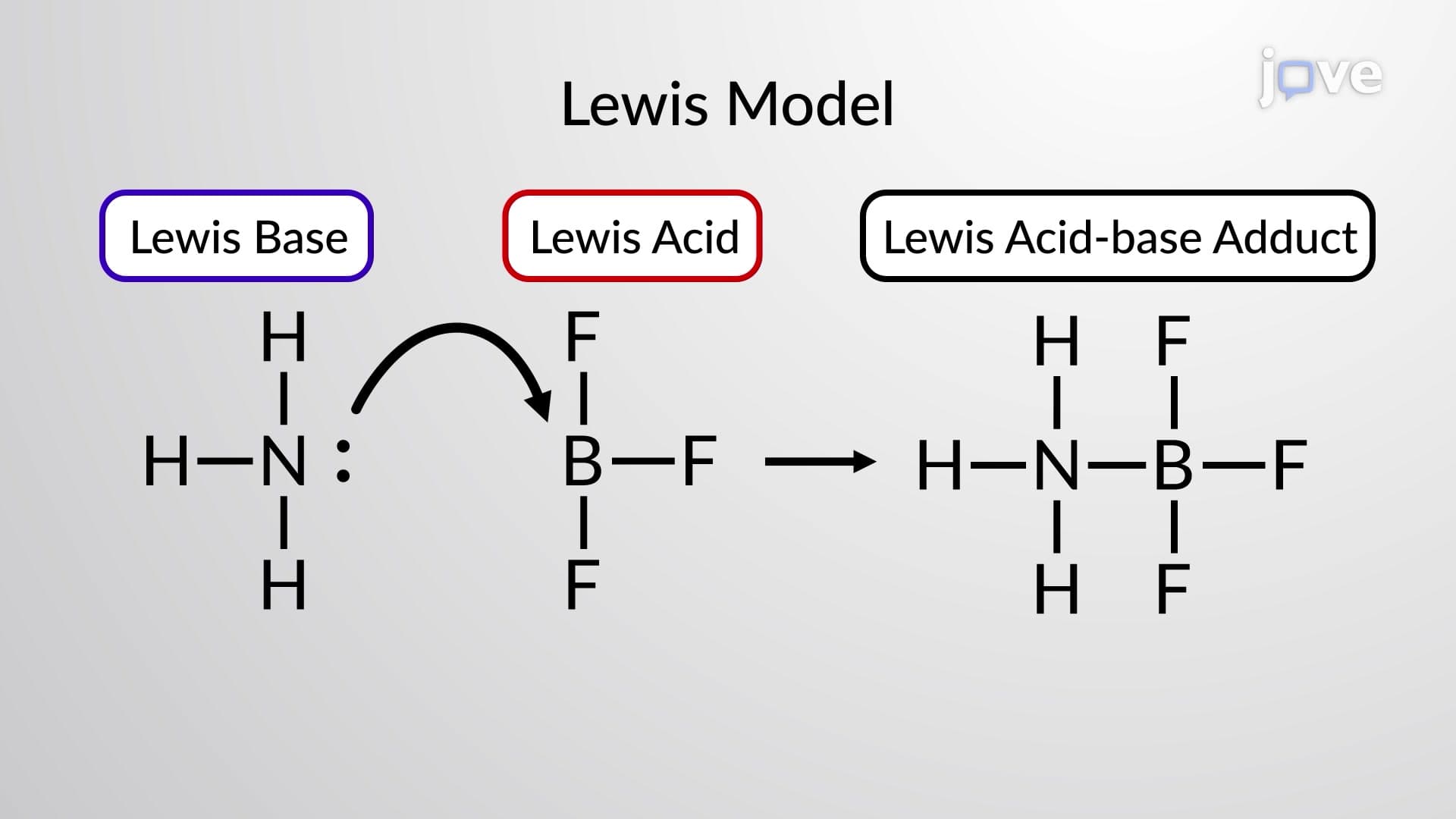
The Lewis acids and bases overview reveals sophisticated reaction mechanisms beyond simple proton transfer. When a Lewis acid encounters a Lewis base, they form coordinate covalent bonds, creating Lewis acid-base adducts. Consider the reaction between boron trifluoride and ammonia: BF3 + NH3 → BF3-NH3. The nitrogen atom in ammonia donates its lone pair to boron's empty orbital, forming a stable adduct.
This concept proves crucial for understanding catalysis in US industrial processes. For example, zeolite catalysts used in petroleum refining contain aluminum and silicon atoms that create Lewis acidic sites, facilitating hydrocarbon transformations essential for gasoline production.
For students preparing for the AP Chemistry exam or college-level general chemistry courses, understanding Lewis acids and bases requires recognizing electron configurations and molecular geometries. The MCAT frequently tests these concepts in the context of biological systems, where metal ions like Mg2+ and Zn2+ act as Lewis acids in enzyme active sites.
Metal aqua complexes, such as [Al(H2O)6]3+, demonstrate how Lewis acids interact with multiple Lewis bases simultaneously. These hexaaquaaluminum ions explain why aluminum salts create acidic solutions-the metal cation polarizes water molecules, facilitating proton release and lowering solution pH.
Related Micro-courses