Loading subject page…


411,800 views

Video Summary: Aqueous Solutions and Heats of Hydration Explained
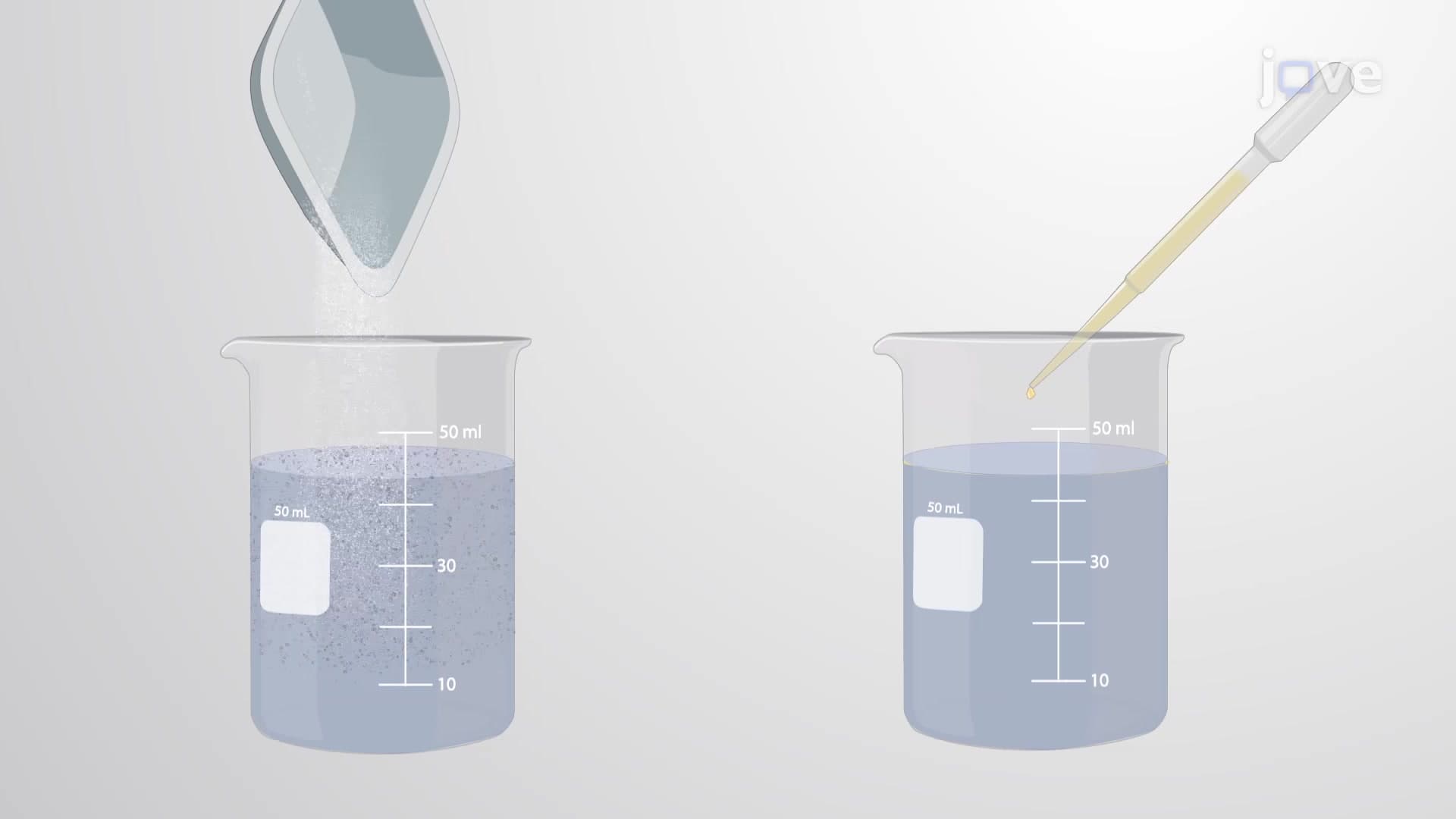
Ever wonder why some salts make water hot while others make it cold? Aqueous solutions and heats of hydration determine whether dissolving ionic compounds releases or absorbs energy. When you add sodium hydroxide (found in Drano) to water, the solution heats up dramatically, while ammonium chloride used in cold packs actually cools the water down. This phenomenon occurs because water molecules surround and stabilize dissolved ions through ion-dipole interactions, releasing energy in a process called hydration. Watch the full video on JoVE Coach to master this concept with expert-led visuals and step-by-step explanations.
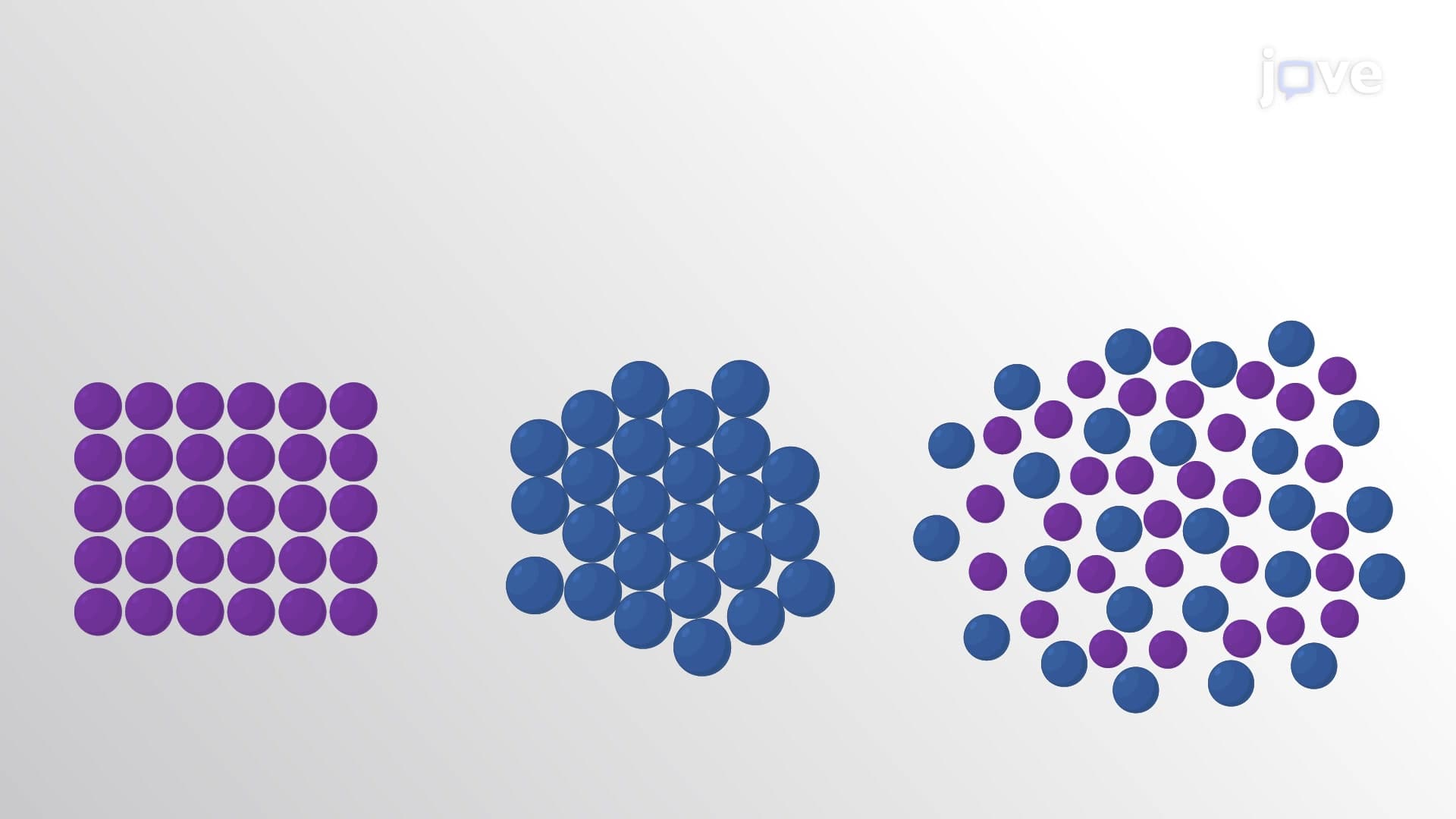
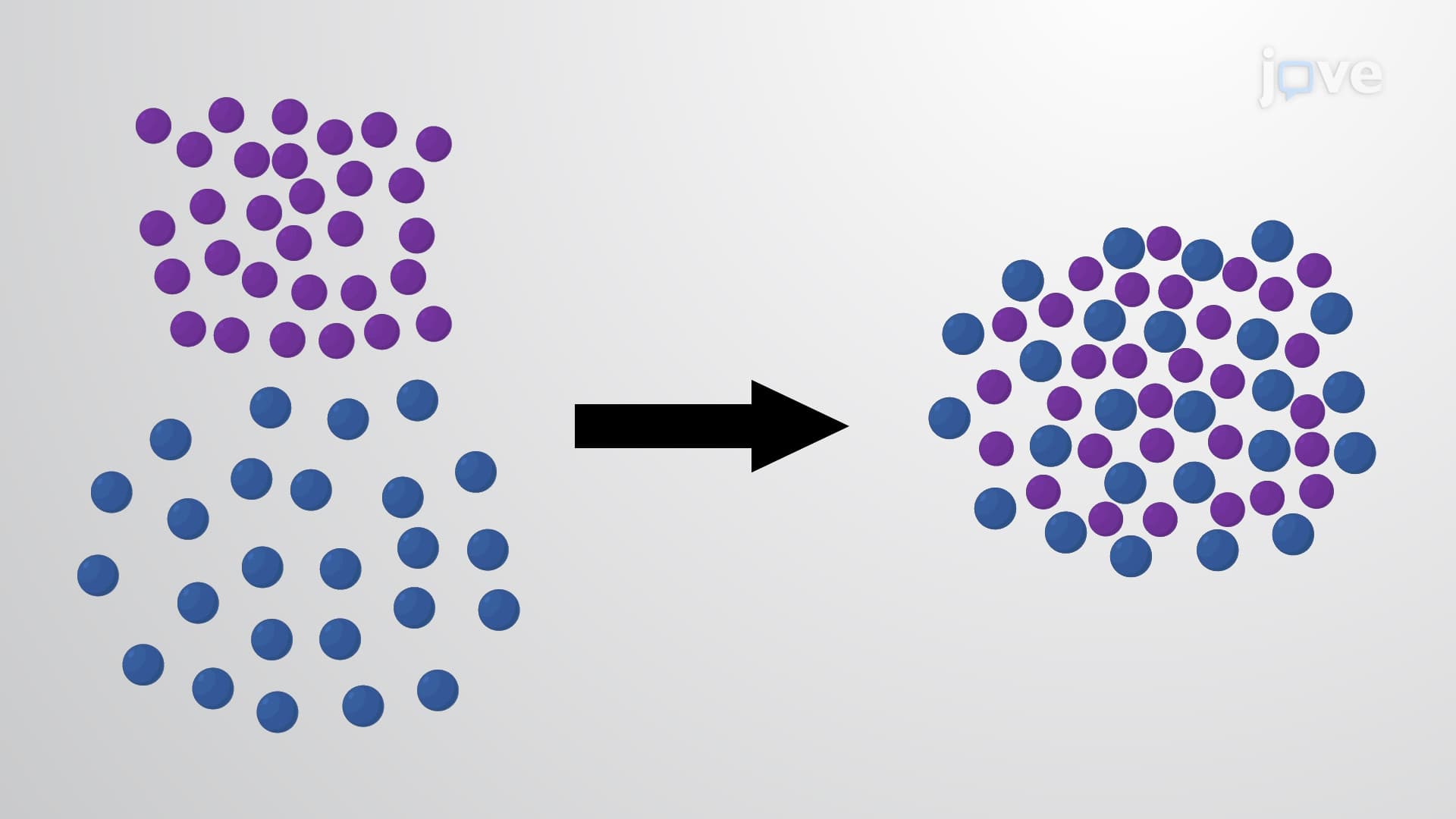
When ionic compounds dissolve in water, two competing energy processes determine whether the solution becomes hot, cold, or stays the same temperature. This balance between energy absorption and release forms the foundation of aqueous solutions and heats of hydration concepts tested extensively on AP Chemistry exams and college general chemistry courses.
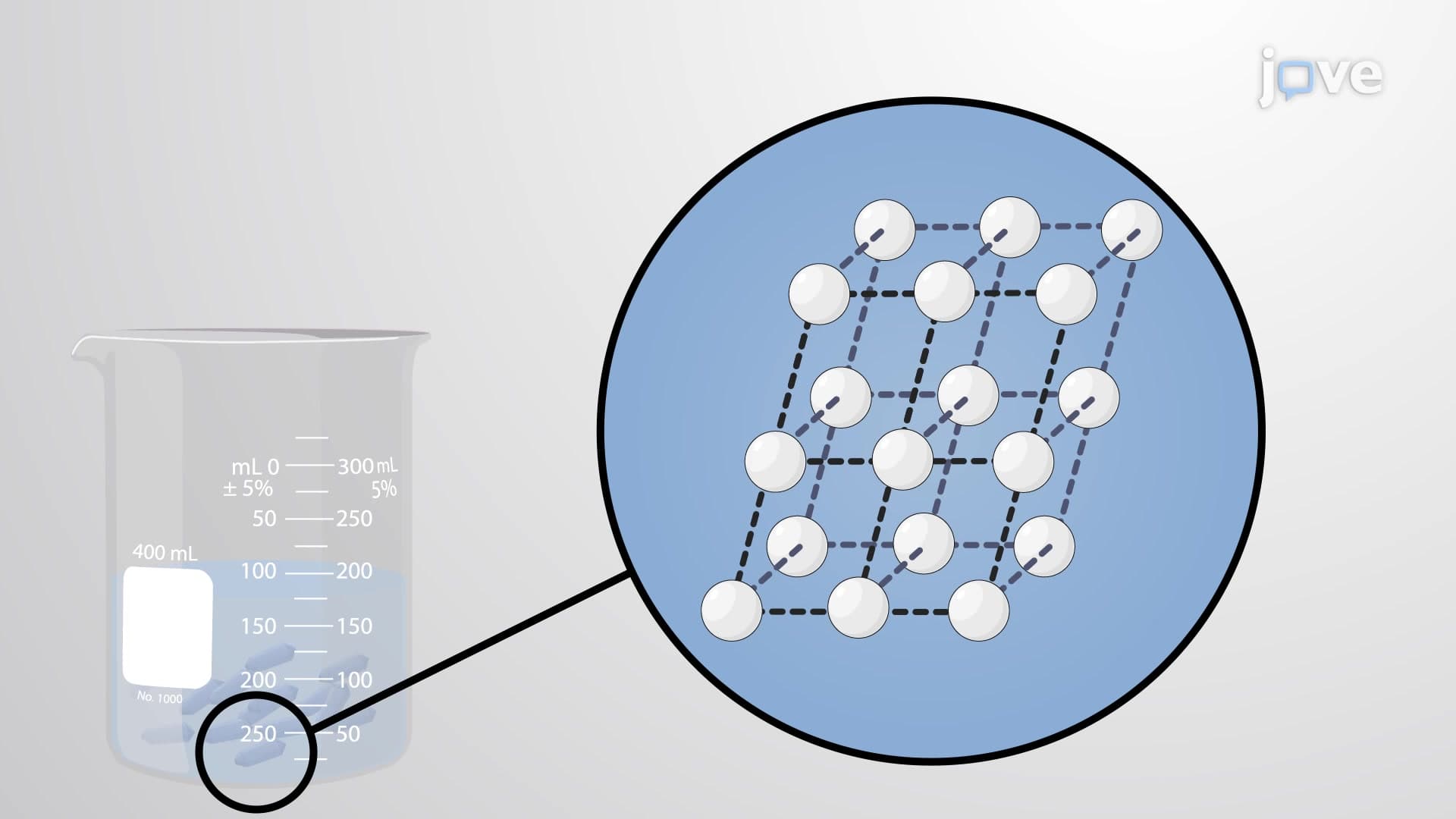
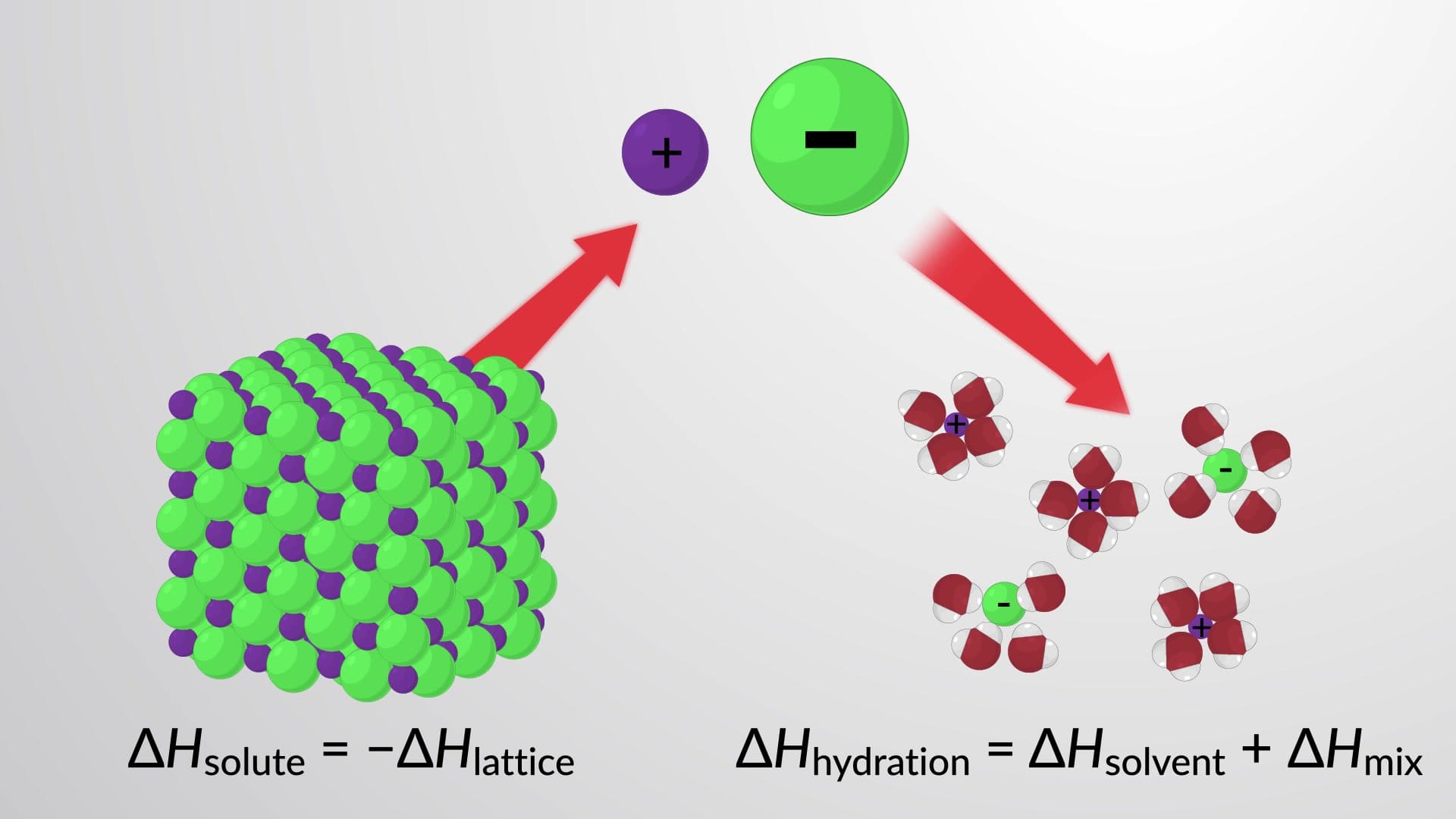
Dissolving ionic solids involves breaking apart the crystal lattice structure, which requires significant energy input due to strong Coulombic forces between oppositely charged ions. This lattice energy represents the energy needed to completely separate one mole of an ionic solid into gaseous ions. For example, breaking apart sodium chloride's cubic crystal structure requires substantial energy to overcome the electrostatic attractions holding Na⁺ and Cl⁻ ions together.
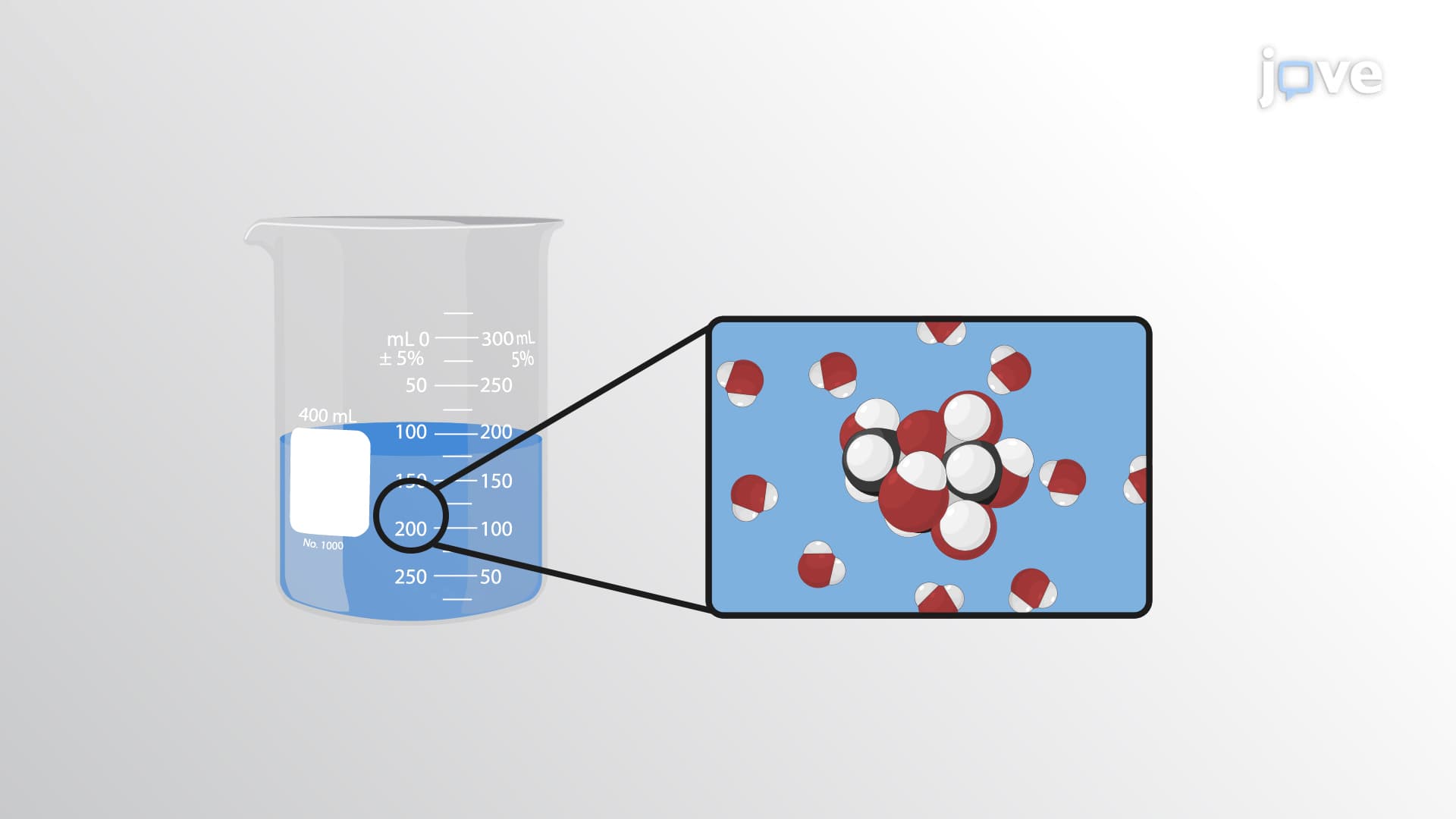
However, water molecules don't just passively accept these ions. Water's polar nature-with partially positive hydrogen atoms and partially negative oxygen atoms-creates powerful ion-dipole interactions with dissolved ions. Each ion becomes surrounded by a hydration shell of oriented water molecules, releasing energy in the process. This hydration energy typically exceeds the energy released by simple hydrogen bonding between water molecules.
The overall enthalpy of solution depends on which energy term dominates. When hydration energy exceeds lattice energy, dissolution becomes exothermic, heating the solution. Sodium hydroxide dissolution demonstrates this perfectly-adding NaOH pellets to water can raise temperatures by 20-30°C, making it useful in drain cleaners where heat helps break down organic blockages.
Conversely, when lattice energy exceeds hydration energy, dissolution becomes endothermic, cooling the solution. Ammonium chloride exemplifies this behavior in instant cold packs used by athletes and medical professionals. When the inner pouch breaks, NH₄Cl dissolves endothermically, dropping temperatures by 10-15°C.
Understanding these concepts proves crucial for MCAT preparation, where students must predict solubility trends and explain thermodynamic processes. College chemistry labs frequently demonstrate these principles through calorimetry experiments, measuring temperature changes when various salts dissolve. Industrial applications include designing controlled-release pharmaceuticals, where dissolution rates depend on hydration energies, and developing energy storage systems that exploit reversible dissolution processes.
Related Micro-courses