Loading subject page…

- Civil Engineering
- Flow in Pipes
- Pipe Flowrate Measurement
Micro-course: Flow in Pipes
11,970 views
Learn key concepts and earn your certificate.






Pipe Flowrate Measurement

00:00
01:28
Video Summary: What Is Pipe Flowrate Measurement
Ever wonder how engineers measure water flow through the massive pipes supplying New York City's 8.4 million residents? Pipe flowrate measurement problem solving involves using specialized devices like orifice plates, nozzles, and Venturimeters that cleverly narrow the flow area to create measurable pressure changes. These devices operate on Bernoulli's principle, where increased velocity leads to decreased pressure, allowing engineers at facilities like the Croton Water Treatment Plant to precisely monitor millions of gallons daily. Watch the full video on JoVE Coach to master this concept with expert-led visuals and step-by-step explanations.
- Understand the fundamental principles of pipe flowrate measurement and how flow restriction devices operate using Bernoulli's equation
- Identify the three main types of flow measurement devices: orifice meters, nozzle meters, and Venturimeters, and their structural differences
- Analyze how discharge coefficients account for real-world effects like turbulence, viscosity, and flow separation in practical applications
- Compare the accuracy, energy efficiency, and head loss characteristics of different flowrate measurement devices
- Evaluate the relationship between pressure drop, flow velocity, and measurement precision in pipe flowrate measurement systems
- Apply Bernoulli's principle to solve pipe flowrate measurement problems involving pressure differentials and fluid properties
- Recognize how diameter ratios, Reynolds numbers, and fluid density affect discharge coefficient calculations
- Explore real-world applications of flowrate measurement in water treatment plants, chemical processing facilities, and HVAC systems
Understanding Pipe Flowrate Measurement Fundamentals
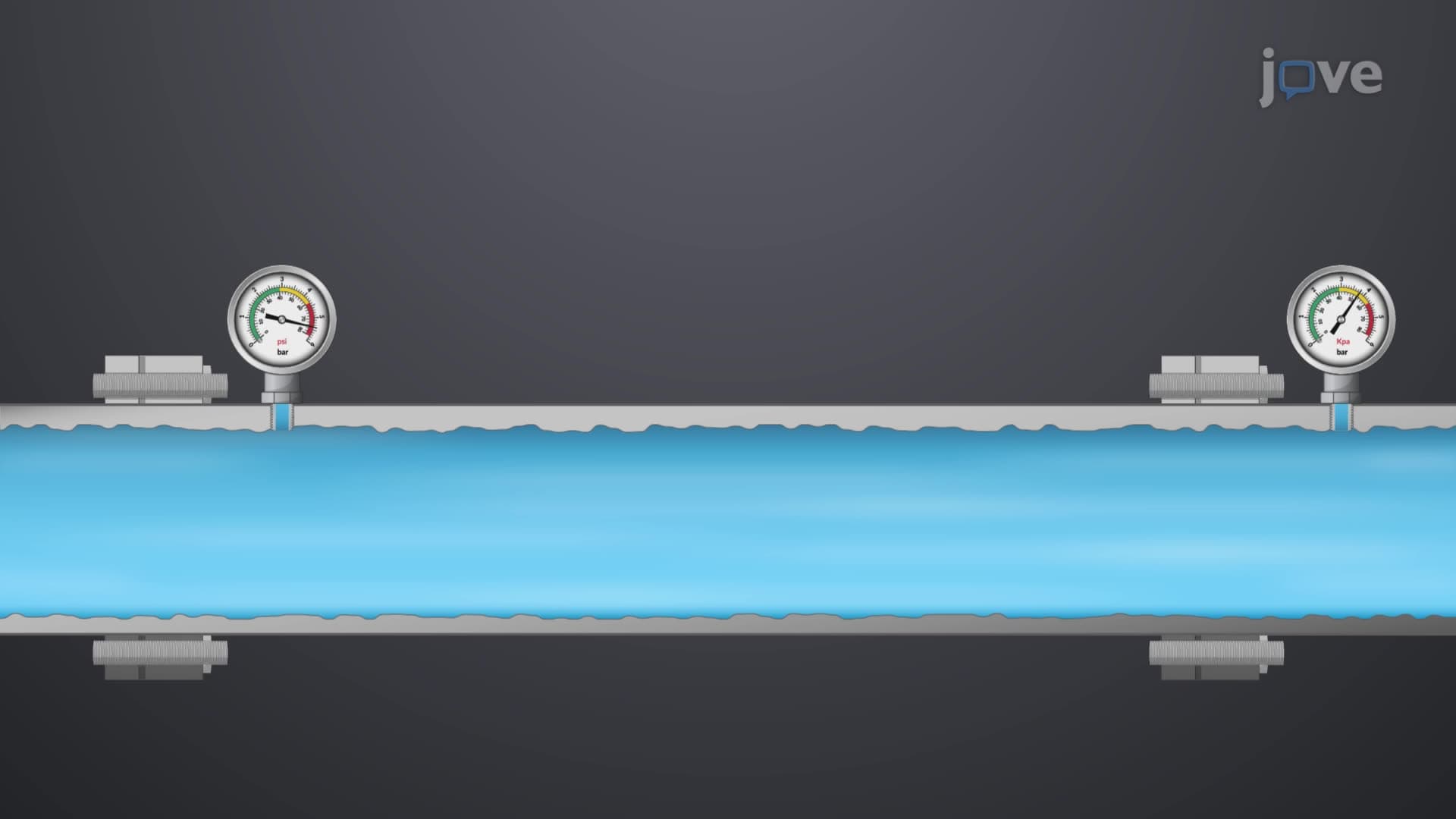
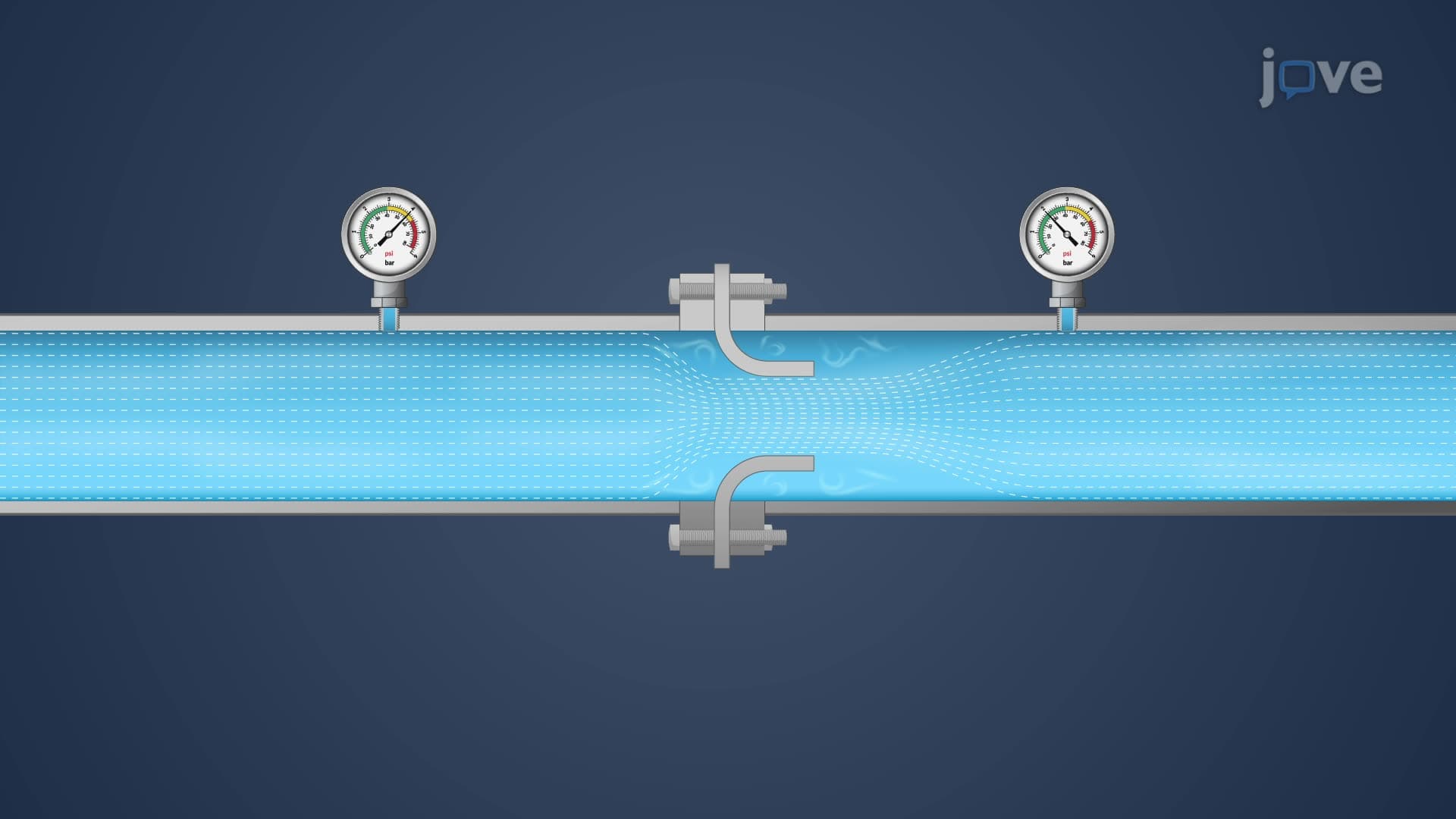
Pipe flowrate measurement represents a critical engineering challenge that affects everything from municipal water systems to industrial chemical plants. The fundamental principle relies on Bernoulli's equation, which states that as fluid velocity increases, pressure decreases proportionally. This relationship enables engineers to determine flow rates by measuring pressure changes across strategically placed restrictions in pipes.
Orifice Meters: Simple Yet Effective Flow Measurement
Orifice meters utilize a simple plate with a precisely machined hole that creates a significant flow restriction. When fluid passes through this constriction, velocity increases dramatically while pressure drops substantially. However, the sharp edges of orifice plates create turbulence and flow separation, leading to permanent pressure loss. The discharge coefficient (typically 0.6-0.65) compensates for these non-ideal effects. Despite energy losses, orifice meters remain popular in industries like petroleum refining due to their low cost and simple maintenance requirements.
Nozzle Meters: Improved Flow Characteristics
Nozzle meters feature a contoured, streamlined entrance that reduces flow separation compared to orifice plates. This smooth design results in higher discharge coefficients (0.95-0.99) and reduced permanent pressure loss. The gradual flow contraction minimizes turbulence, making nozzle meters ideal for high-velocity applications like steam flow measurement in power plants. Engineers frequently encounter nozzle meter calculations in thermodynamics courses and on exams like the Fundamentals of Engineering (FE) test.
Venturimeters: The Gold Standard for Accuracy
Venturimeters represent the most sophisticated flow measurement devices, featuring a smooth, gradual contraction followed by a gentle expansion section. This design minimizes head loss to just 10-15% of the pressure differential, compared to 75-85% for orifice plates. The high accuracy (±0.25%) and excellent pressure recovery make Venturimeters essential in water treatment facilities and pharmaceutical manufacturing where precise flow control is critical. Students studying for AP Physics or college fluid mechanics courses should understand how the Venturi effect demonstrates conservation of energy and mass.
Understanding these pipe flowrate measurement concepts prepares students for advanced coursework in mechanical engineering, environmental engineering, and industrial processes, where accurate flow measurement directly impacts system efficiency and safety.
Frequently Asked Questions
Pipe flowrate measurement is the process of determining the volume or mass of fluid passing through a pipe per unit time using devices that create measurable pressure changes. It's crucial for optimizing system efficiency, ensuring safety in chemical plants, monitoring water distribution networks, and meeting regulatory requirements in industries from pharmaceuticals to petroleum refining.
All three devices narrow the flow area to increase velocity and decrease pressure, but they differ significantly in design and performance. Orifice plates create sharp restrictions with high head losses, nozzles use contoured shapes for better flow characteristics, while Venturimeters employ gradual contractions and expansions for maximum accuracy and minimal energy loss.
AP Physics commonly includes Bernoulli's equation applications involving flow meters, pressure differential calculations, and continuity equation problems. Students should practice calculating flow rates using pressure measurements, determining discharge coefficients, and applying conservation of energy principles to fluid flow scenarios in pipes and restrictions.
The FE exam features fluid mechanics problems involving flowrate calculations using orifice meters and Venturimeters, discharge coefficient applications, and Bernoulli's equation with friction losses. Practice problems typically involve calculating flow rates from pressure differentials, determining pipe sizing requirements, and analyzing pump performance in distribution systems.
Municipal water treatment plants like those in Los Angeles use Venturimeters to monitor distribution flow, oil refineries in Texas employ orifice meters for petroleum processing, pharmaceutical companies rely on precise nozzle meters for drug manufacturing, and HVAC systems in commercial buildings use flow measurement for energy efficiency optimization.
Basic algebra and pre-calculus are sufficient for most pipe flowrate measurement calculations. The fundamental equations involve square roots, ratios, and direct proportional relationships rather than complex calculus operations, making these concepts accessible to high school physics students and early undergraduate engineering students.
Focus on mastering Bernoulli's equation applications, practice calculating discharge coefficients for different device types, and work through problems involving pressure measurements and flow rate conversions. Create a formula sheet with key relationships and practice dimensional analysis to avoid unit conversion errors during timed exams.
Progress to studying turbulent flow effects, Reynolds number applications, pump curve analysis, and pipeline network calculations. Advanced topics include computational fluid dynamics (CFD) modeling, non-Newtonian fluid behavior, and multiphase flow measurement techniques used in oil and gas industry applications.
Related Micro-courses