Loading video…


 13 Concepts
 12K views

Video Summary: What Is Laminar Flow Problem Solving
Did you know that the Boeing 737's fuel efficiency depends on engineers solving turbulent flow calculations to minimize air resistance? While this example demonstrates laminar flow problem solving in aviation, the same principles apply when calculating pipe flow in water treatment plants across cities like Denver and Phoenix. What is Laminar Flow Problem Solving involves determining critical parameters like minimum pipe diameter to maintain smooth, predictable fluid motion. Watch the full video on JoVE Coach to master this concept with expert-led visuals and step-by-step explanations.
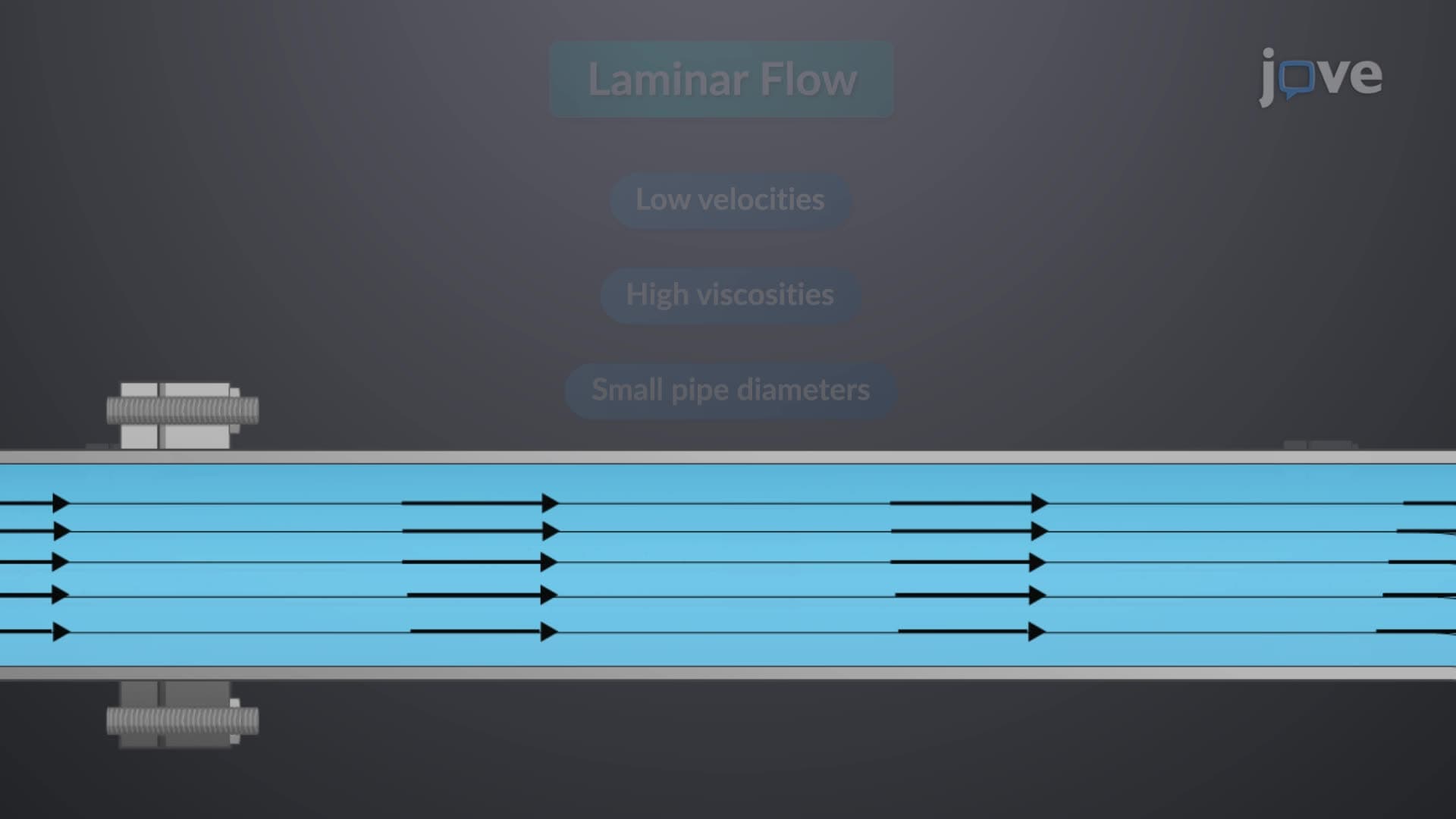
Turbulent flow represents one of the most complex phenomena in fluid mechanics, characterized by chaotic, irregular motion with rapid mixing and energy dissipation. Understanding turbulent flow definition becomes crucial when engineers must prevent it through proper system design. What is Laminar Flow Problem Solving encompasses the systematic approach to maintaining smooth, orderly fluid motion by controlling key parameters like velocity, pipe diameter, and fluid properties.
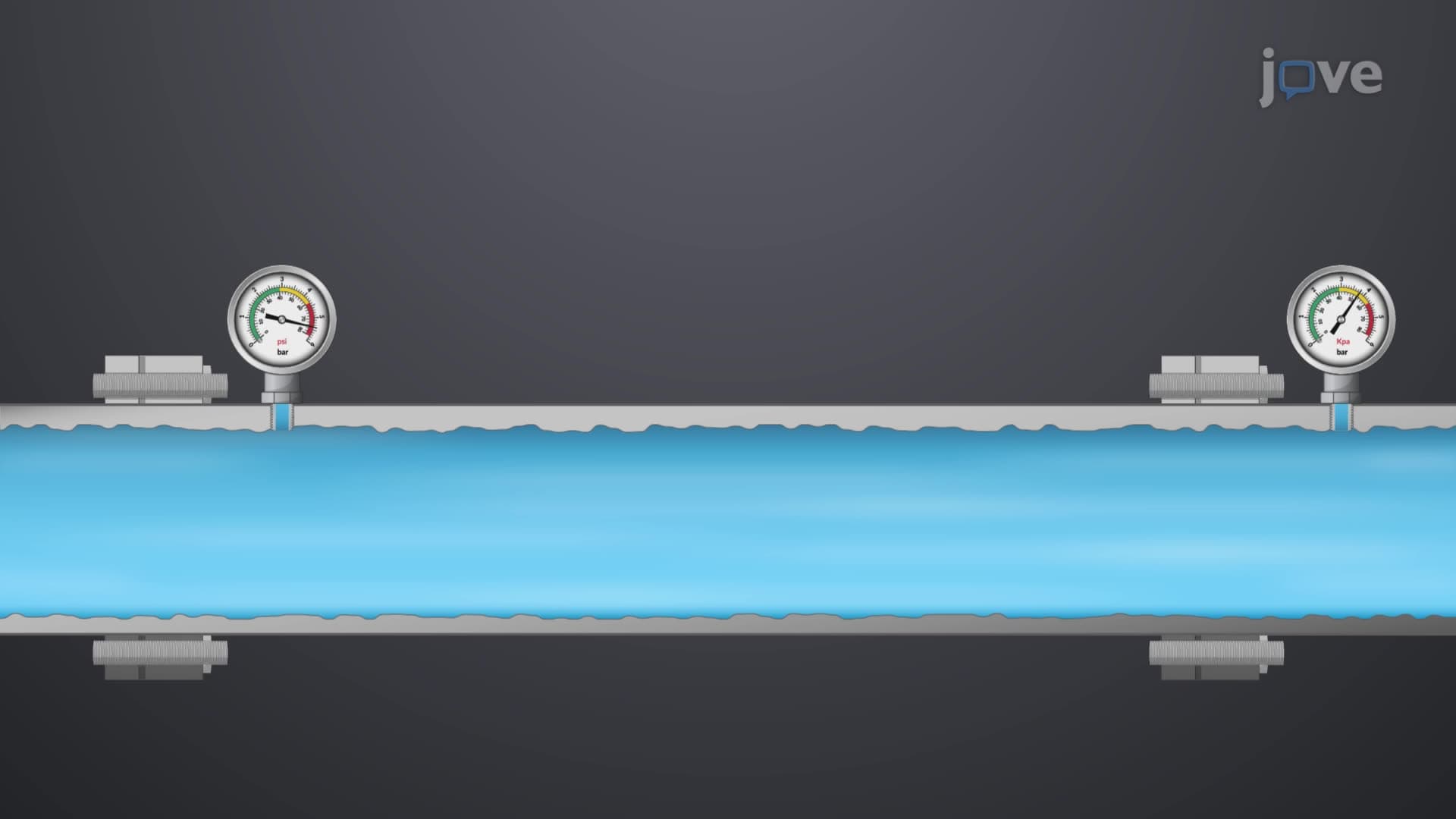
The turbulent flow concept emerges when the Reynolds number exceeds critical thresholds. For pipe flow, this transition occurs at Re = 2100, marking the boundary where smooth laminar motion becomes chaotic turbulent motion. What is turbulent flow in detail involves understanding that turbulent motion creates additional pressure losses, increased heat transfer, and unpredictable flow patterns that complicate system design.
The Reynolds number equation Re = (ρVD)/μ serves as the cornerstone for turbulent flow basics. Here, ρ represents fluid density, V indicates average velocity, D shows characteristic length (pipe diameter), and μ denotes dynamic viscosity. This dimensionless parameter predicts flow behavior across scales from microfluidic devices in medical diagnostics to massive pipeline systems transporting natural gas across Texas.
Understanding turbulent flow proves essential in numerous American industries. Water treatment facilities in California use laminar flow calculations to design settling tanks where particles must settle without turbulent mixing. Pharmaceutical companies in New Jersey rely on laminar flow principles for cleanroom ventilation systems that prevent contamination during drug manufacturing.
HVAC engineers designing systems for skyscrapers in New York City must solve laminar flow problems to ensure proper air distribution while minimizing energy consumption. Similarly, petroleum engineers working on Alaska's North Slope apply these principles when designing heated pipelines that maintain laminar flow of viscous crude oil in extreme cold conditions.
AP Physics students encounter laminar flow problems that integrate multiple concepts including fluid statics, thermodynamics, and mathematical modeling. College-level fluid mechanics courses expand this foundation with computational approaches used in industry. MCAT preparation includes biomedical applications like blood flow analysis, where understanding laminar-to-turbulent transition helps predict cardiovascular disease risks.
The turbulent flow study guide approach involves mastering dimensional analysis, recognizing when to apply continuity equations, and understanding how fluid properties change with temperature and pressure. This systematic methodology prepares students for professional engineering licensing exams and graduate school applications.
Related Micro-courses